Featured analysis

Latest analysis

EconoGraphics

Sep 17, 2018

Turkish Outbreak: Risk of Emerging Market Contagion?

By Christina Gay and Ole Moehr

With the strengthening of the US dollar in the wake of continued interest rate increases by the US Federal Reserve and brewing pressures in a number of emerging market (EM), portfolio flows into EM countries slowed from $13.7 billion in July to just $2.2 billion in August. Companies and banks in both Argentina and Turkey borrowed heavily in dollar denominated debt while interest rates were low and are now faced with mounting debt burdens, which, if not backed by sufficient reserves puts them at risk for default if investors lose confidence. The Turkish lira has fallen over 40 percent in 2018. Its sharp decline in August raised concern of contagion to other markets, as the Indonesian rupiah, the South African rand, and the Indian rupee have also come under pressure. This edition of the Econographic compares situation in Turkey with the Asian financial crisis in 1997, analyzes root causes of the current pressures in Turkey, and assesses the broader implications for EM economies.

Economy & Business European Union

EconoGraphics

Aug 8, 2018

JEEPA – Japan-EU Free Trade Agreement Leaves the US Out in the Cold

By Cecilia Pan and Ole Moehr

While President Trump is pursuing a protectionist trade agenda – halting negotiations for the Transatlantic Trade and Investment Partnership (TTIP), pulling out of the Trans-Pacific Partnership (TPP), and threatening trade wars against adversaries and allies – Japanese Prime Minister Shinzo Abe has been doing just the opposite. As part of Abenomics’ third arrow, the Prime Minister is forging global partnerships between Japan and other leading economies to foster economic growth. Case in point, the Japan-EU Economic Partnership Agreement (JEEPA) signed on July 17, 2018. This edition of the EconoGraphic will review this ambitious bilateral free trade agreement, assess its impact on the US economy, and explore the consequences of the United States’ retreat from its role as the global leader for free trade.

Economy & Business European Union

EconoGraphics

Jul 19, 2018

US Iran Sanctions Could SpOIL the Global Economy

By Ole Moehr

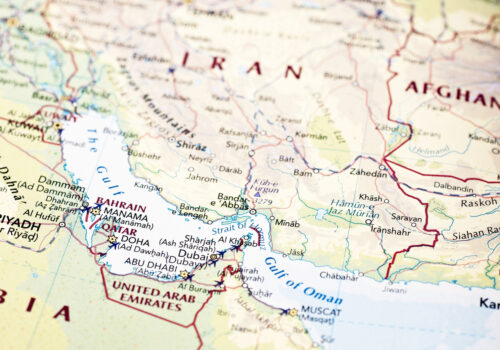
The Trump Administration’s “maximum pressure” approach against Iran to reduce Iranian crude oil exports to zero as soon as possible is expected to rattle markets and could undermine the credibility and effectiveness of US sanctions. This edition of the EconoGraphic outlines how re-imposed US sanctions against Iran will affect the global oil market, the price of oil, US consumers, and the American economy.

China Economy & Business

EconoGraphics

Jun 22, 2018

There’s a New Tariff in Town: Implications of Trump’s Steel Tariffs

By Ole Moehr

Economists consider tariffs a tax on consumers. Case in point, President Trump’s former chief economic advisor Gary Cohn. He recently warned that the administration’s twenty-five percent tariff on steel and ten percent tariff on aluminum combined with threatened duties on Chinese goods could cancel out the 2017 tax cut. This edition of the EconoGraphic provides an overview of how the Trump Administration’s steel tariffs might impact the US economy.

Economy & Business Trade and tariffs

EconoGraphics

Jun 4, 2018

GDPR’s Quest for World Domination

By Ole Moehr

On May 25, the European Union’s (EU) sweeping new data privacy regulation came into force. The General Data Protection Regulation (GDPR) provides EU residents with more control and protection of their data.

Brazil Economy & Business

EconoGraphics

May 18, 2018

US Sanctions’ Global Impact – A Case Study of RUSAL’s Supply Chain

By Ole Moehr

On April 6, 2018, the Trump Administration imposed stiff economic sanctions on 37 Russian oligarchs, oligarch-owned companies, Russian government officials, and state-owned companies.

Economy & Business Financial Sanctions and Economic Coercion

EconoGraphics

Apr 12, 2018

Africa Embraces the Promise of Free Trade

By Ole Moehr, Zachary Coles, and Alexatrini Tsiknia

Africa Embraces the Promise of Free Trade

Africa Economy & Business

EconoGraphics

Mar 20, 2018

Venezuela’s Cryptocurrency: Should OFAC Be Petrofied?

By Ole Moehr, Zachary Coles, and Alexatrini Tsiknia

Venezuela's Cryptocurrency: Should OFAC be Petrofied? The short answer is no.

Economy & Business Financial Sanctions and Economic Coercion

EconoGraphics

Feb 26, 2018

Are Italians giving the establishment the boot?

By Alexatrini Tsiknia and Ole Moehr

Italians go to the polls on March 4th to elect a new government. Under a new electoral system, the outcome is uncertain. The Global Business and Economics program looks at some key economic indicators that could influence the election.

Economy & Business European Union

EconoGraphics

Feb 6, 2018

Secondary Sanctions: A First Glance

By Ole Moehr

This edition of our EconoGraphic blog explains the difference between primary and secondary sanctions, outlines how secondary sanctions work, and uses a case study to demonstrate how the United States employs secondary sanctions in the real economy.

China Economy & Business

Content

EconoGraphics

May 21, 2026

Energy Sanctions Dashboard: October 2025

The October 2025 edition of the Energy Sanctions Dashboard analyzed China’s central role in the market for sanctioned oil and the techniques Russia, Iran, and Venezuela use to evade sanctions on oil.

Africa China

Econographics

May 20, 2026

The global push for local-currency cross-border payments is intensifying

By Hung Tran

More than one hundred countries now operate instant payment systems, and growing efforts to link them are reshaping how cross-border transactions get settled in local currencies.

Digital Currencies Dollar Dominance

Econographics

May 12, 2026

The IMF’s policy advice needs a louder voice

By Martin Mühleisen

At a time of energy shocks and trade tensions, the IMF’s surveillance work is more relevant than ever. Yet its challenge remains influence: can the Fund move from rigorous analysis to public-facing policy advice?

Economy & Business International Financial Institutions

Econographics

May 7, 2026

As the Trump-Xi summit draws closer, trade uncertainty still looms large

By Jessie Yin

What China and the United States manage to agree on in Beijing on key export controls or purchase agreements will significantly shape the Trump administration’s approach to rebuilding its tariff wall.

China Economy & Business

Econographics

Apr 29, 2026

What swap, Gulf?

By Charles Lichfield and Maxamillian Rajaobelina-Phipps

Amidst the chaos of the conflict in the Middle East, there’s been a buzz around offering dollar currency swaps to allies. Those have traditionally been the territory of central banks, but this time around, Treasury is taking the lead.

Economy & Business

Econographics

Apr 22, 2026

In renegotiating the USMCA, Mexico should neither rush nor stall

By Phil Lovegren, Ernesto Stein

With the USMCA under review, Mexico faces a delicate balance: rushing risks economic harm, but delay brings uncertainty—making patience a viable fallback strategy.

Economy & Business Financial Regulation

Econographics

Apr 14, 2026

The debt comes due—but there is no one to pick up the tab

By Bart Piasecki

Many of the IMF’s latest warnings center on the fallout of the Iran war. But another key message has focused on debt: because the world has neglected fiscal consolidation for more than two decades, the time to reverse course is now.

Economy & Business Macroeconomics

EconoGraphics

Apr 13, 2026

Inside the IMF-World Bank Spring Meetings as leaders grapple with war and supply shocks

By Atlantic Council experts

Amid war in the Middle East and an unprecedented energy shock, we sent our experts to the IMF and World Bank headquarters for their insights on the future of the global economy.

Economy & Business Energy & Environment

Econographics

Apr 2, 2026

No IMF and World Bank spring meetings without a global crisis

By Hung Tran

The Iran war's supply-side shock is testing the IMF and World Bank ahead of their 2026 spring meetings. While financial support is in the works, it’s unclear what policy recommendations they can offer member states to manage the fallout.

Economy & Business International Financial Institutions

Econographics

Mar 27, 2026

The Iran war’s economic fallout won’t stop at oil—agriculture and aluminum are next

By Eduardo Gomez Horta and Amin Mohseni-Cheraghlou

The Iran war’s impact isn’t limited to oil. Fertilizer shortages now threaten spring corn planting, while aluminum markets are strained—signaling broader disruptions to food prices, industry, and global supply chains.

Economy & Business