Recent analysis

Programs and initiatives

The Global Energy Center develops and promotes pragmatic and nonpartisan policy solutions designed to advance global energy security, enhance economic opportunity, and accelerate pathways to net-zero emissions.

Events

Global Energy Forum

Jan 9, 2020

International grid integration: Efficiencies, vulnerabilities, and strategic implications in Asia

By Phillip Cornell

In order to meet growing global demand for electricity, and in response to an increase in renewables, power networks and markets are evolving and becoming increasingly interconnected. South and Southeast Asia have already had some success with interconnections, and China’s vision and Belt and Road Initiative loom large in the region, but there are geopolitical concerns to contend with. Could a US model manage these concerns? What is the state of regional power markets in Asia and investment in regional grid infrastructure, and what responses are we already seeing to emerging trends?

Climate Change & Climate Action
Energy Markets & Governance

Global Energy Forum

Jan 9, 2020

Energy sector diversification: Meeting demographic challenges in the MENA region

By Bina Hussein

The Middle East and North Africa (MENA) region is projected to experience significant demographic growth by 2050, growth which will have to be met with commensurate economic expansion and job opportunities, or the region will risk an increase in political instability. To meet this challenge, countries in the region must diversify their economies beyond the energy sector and expand their energy sector beyond hydrocarbons. What are the key trends that MENA countries will have to contend with, what is already being done, and what further steps should be taken?

Energy Markets & Governance
Energy Transitions

Issue Brief

Jan 9, 2020

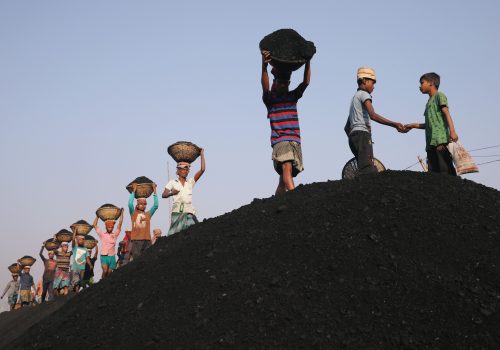
Transforming the power sector in developing countries: Geopolitics, poverty, and climate change in Bangladesh

By Robert F. Ichord, Jr.

As the South and Southeast Asian region faces increasing energy demand due to both population and economic growth, countries like Bangladesh must meet that demand while facing and overcoming critical environmental and energy security challenges. How is Bangladesh seeking to diversify its energy mix and establish more local and decarbonized power systems, and what are key opportunities for future government and foreign investment?

Bangladesh
Climate Change & Climate Action

Content

In-Depth Research & Reports

May 3, 2021

Brief 2: Producing clean hydrogen at scale in the United States

By David Yellen, Randolph Bell

This second brief in the Atlantic Council’s hydrogen policy sprint explores pathways for and the challenges and opportunities facing scaled clean hydrogen production in the United States.

Energy Markets & Governance
Energy Transitions

In the News

Apr 28, 2021

Jamil in Foreign Policy: Biden must back money with real strategy

By Atlantic Council

Climate Change & Climate Action
Energy & Environment

New Atlanticist

Apr 25, 2021

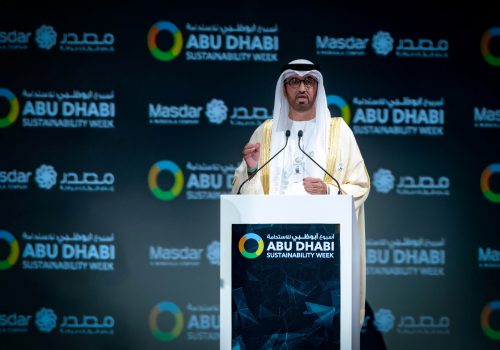
Climate diplomacy can help turn action into results: UAE minister

By Larry Luxner

Al Jaber, the United Arab Emirates’ minister of industry and advanced technology, reflected on the connection between climate partnerships and economic results.

Climate Change & Climate Action
Energy & Environment

EnergySource

Mar 30, 2021

Offshore wind and labor union partnerships: a boon for an equitable green recovery

By Margaret Jackson and Maria Castillo

The White House just released a plan to “jumpstart” the offshore wind industry in the United States, as one of the major catalysts to fulfill then-candidate Joe Biden’s campaign promise to boost the energy transition and create ten million clean energy jobs in the process. Within the first week of his presidency, President Biden issued […]

Energy & Environment
Renewables & Advanced Energy

EnergySource

Mar 12, 2021

These three baseload technologies are critical to achieving zero-carbon electric vehicles

By Bryant Jones

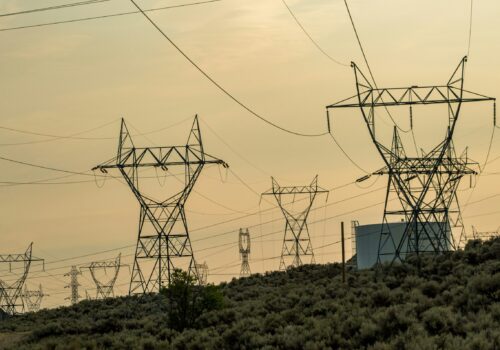
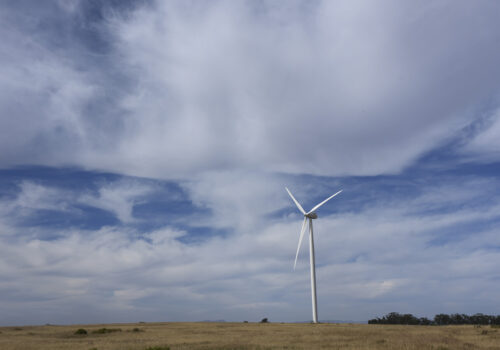
As electricity demand swells as the electric vehicle market grows, it is unlikely that short-term battery storage, intermittent renewables, and efficiency improvements alone can provide all of the necessary electrons. These technologies need to be paired with distributed, zero-carbon baseload capacity, and the debate about what technologies can meet anticipated demand is just beginning. Cue geothermal, hydroelectric, and nuclear power.
Energy & Environment
Energy Transitions

In-Depth Research & Reports

Mar 2, 2021

Brief 1: Has hydrogen’s time come in the United States?

By David Yellen, Randolph Bell

This first brief in the Atlantic Council’s hydrogen policy sprint examines the current state of hydrogen development in the United States and begins to explore pathways for clean hydrogen production across the country.

Energy Markets & Governance
Energy Transitions

UkraineAlert

Feb 20, 2021

Ukraine can play key role in Europe’s energy Green Deal

By Aura Sabadus

The International Renewable Energy Agency (IRENA), World Bank, and EU have all argued that Ukraine could become a world leader in renewable production.

Energy Transitions
Geopolitics & Energy Security

Global Energy Forum

Feb 8, 2021

How to design an energy transition that includes everyone—including the most vulnerable

By Katherine Golden

The COVID-19 pandemic has revealed an “interdependent” world with “huge issues of inequity,” said Sunita Narain, director general of the Centre for Science and Environment (CSE). Without addressing these realities, “we cannot deal with the virus, and it’s the same with climate change.”

Climate Change & Climate Action
Energy & Environment

Issue Brief

Feb 4, 2021

Ensuring Energy Security in a Renewables World

By Ben Hertz-Shargel

Renewable sources of energy are gaining an increasing share of the US energy mix, bolstered by state-level commitments as well as corporate power purchase agreements. However, while renewables have become increasingly cost competitive, they still face challenges, especially related to intermittency and storage. The Global Energy Center’s new issue brief, “Ensuring Energy Security in a […]

Energy & Environment
Energy Transitions

EnergySource

Feb 2, 2021

Developing countries offer enormous market potential for long-duration energy storage

By Sandra Chavez

Achieving deep decarbonization requires energy storage that can store more power for longer durations. Lithium-ion batteries, thus far, have played a key role in supporting the integration of renewable energy resources into the electric grid. But as the share of variable renewable energy in power systems grows around the world, new energy technologies that can store electricity for longer durations at low cost are needed. Developing countries present enormous market opportunities for innovative long-duration energy storage technologies that can support the integration of greater shares of variable renewable energy into weak power grids, replace diesel generators, and provide seasonal balancing.

Energy & Environment
Energy Transitions

Experts