
Last updated: 9:00 a.m. (ET), 03/18/2026
Operation Epic Fury is stressing military capabilities—aircraft carriers, bombers, missile defense systems—in ways that will have an impact in other theaters around the world. That includes US efforts to credibly deter Chinese aggression and prevail against China in a future conflict. Monitoring the military assets that are relevant to US strategy in the Indo-Pacific and currently deployed to Iran offers insight into how the war might affect the US military’s readiness to meet the threat posed by Beijing—the most consequential challenge the United States faces.
Actual numbers of US inventory and deployment data are classified. This tracker, developed by the Scowcroft Center for Strategy and Security’s Forward Defense team, provides estimates for a subset of assets where open-source information is most reliable. It will be regularly updated and expanded with new data and expert context.
Key takeaways
- Aircraft carriers: 40 percent of available US aircraft carriers are deployed to support Operation Epic Fury.
- The USS George H.W. Bush is now certified to deploy and is reportedly being considered to join Operation Epic Fury. With the USS Gerald R. Ford (CVN-78) traveling to Naval Support Activity Souda Bay for pierside repairs after an internal fire, the USS Bush might need to deploy.
- The USS Nimitz (CVN-68) was set to be decommissioned in May 2026, decreasing total US inventory to ten. However, in March 2026, the US Navy decided to extend the Nimitz’s service life to March 2027, with unclear impacts on its readiness.
- The USS Theodore Roosevelt (CVN-71) has finished maintenance, is training off the coast of San Diego, and is preparing for imminent deployment to a location not yet publicly disclosed.
- Landing Helicopter Assault (LHA) and Landing Helicopter Dock (LHD): The sole available ship in the LHA and LHD ship classes—the USS Tripoli—is stationed in Japan as part of the Forward Deployed Naval Forces Amphibious Ready Group/Marine Expeditionary Unit (ARG/MEU) but as of mid-March is redeploying to the Middle East. Expected transit time is two weeks.
- Following the July 2020 fire and the eventual decommissioning of the USS Bonhomme Richard (LHD 6), LHA and LHDs are not able to meet the Navy and Marine Corps’ goal of having 80 percent of the force ready to deploy.
- The only other known deployed LHD is the USS Iwo Jima (LHD-7) in the Caribbean. A 2024 GAO report noted that LHDs suffer from a high rate of maintenance issues.
- San Antonio amphibious transport dock (LPD): While it’s unknown how many LPDs deployed with the USS Tripoli, we estimate two have deployed based on typical ARG composition.
- Arleigh Burke-class destroyers: An estimated 26 percent of the entire available destroyer class is deployed in Operation Epic Fury.
- Arleigh Burke-class destroyers spend an average of nine years, 27 percent of their thirty-five-year service life, in maintenance.
- B-1 bombers: Nearly half of the mission-capable B-1 fleet is conducting strikes as part of Operation Epic Fury, with all operating from RAF Fairford in the United Kingdom.
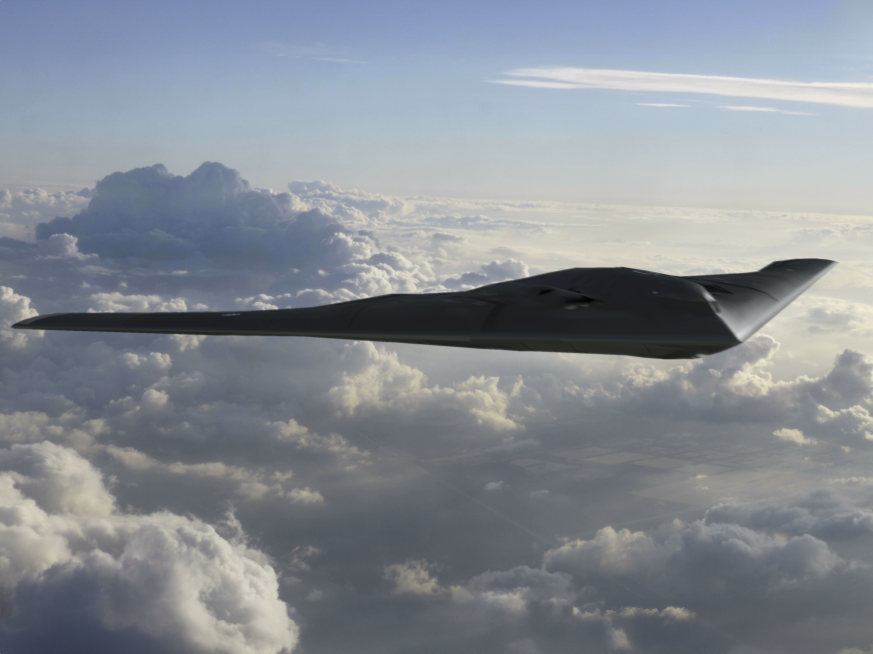
- B-2 bombers: B-2 deployments are highly classified. An estimated 26 percent of the entire available fleet could be deployed for Operation Epic Fury.
- B-2 bombers take an average of 119 maintenance hours per flight hour following a bombing mission. This indicates that at least the four B-2s used in the early phases of Operation Epic Fury might be currently unavailable, along with an unknown number of the seven B-2s that flew in the June 2025 strikes the United States and Israel conducted against Iran (Operation Midnight Hammer) and an unknown number currently under programmed depot maintenance.
- E-3 AWACS aircraft: An estimated 66 to 75 percent of the total available E-3 AWACS are deployed in Operation Epic Fury.
- In 2024, slightly more than half of the Air Force’s AWACS fleet was assessed to be “mission capable”—able to carry out at least one of the platform’s key missions, which includes air surveillance—and the aircraft is in the process of being retired.
- KC-135 Stratotankers and KC-46 Pegasus: An estimated 33 percent of mission capable KC-135s and KC-46s are involved in refueling missions in Operation Epic Fury. These planes are critical to supporting sustained air missions.
- MIM-104 Patriot missile batteries: An estimated 7 to 11 percent of available Patriot batteries are in the Middle East.
- Open-source reporting indicates that there is at least one Patriot battery in Saudi Arabia and one in Qatar, in addition to four batteries that were transferred to the region in spring 2025. It’s unclear whether any of these batteries were re-deployed from the theater since 2025.
- THAAD systems: An estimated 29 to 43 percent of available US THAAD systems are committed to Operation Epic Fury.
- Out of an estimated five operational THAAD systems that are outside the continental United States, two to three of them are in the Middle East. One is in Jordan and one is in Israel. It’s unclear if the second THAAD battery deployed to Israel in spring 2025 remains in place. The other two are permanently deployed in Guam and South Korea, respectively.
- In March, the United States also reportedly moved up to 48 THAAD interceptors from the THAAD launchers in Korea to the Middle East.
About the authors
Joe Costa is the director of the Atlantic Council’s Forward Defense Initiative.
Theresa Luetkefend is an associate director with the Forward Defense Initiative.
Moss Gillespie is a young global professional with the Forward Defense Initiative.
Explore the programs
Forward Defense leads the Atlantic Council’s US and global defense programming, developing actionable recommendations for the United States and its allies and partners to compete, innovate, and navigate the rapidly evolving character of warfare. Through its work on US defense policy and force design, the military applications of advanced technology, space security, strategic deterrence, and defense industrial revitalization, it informs the strategies, policies, and capabilities that the United States will need to deter, and, if necessary, prevail in major-power conflict.

The Scowcroft Center for Strategy and Security works to develop sustainable, nonpartisan strategies to address the most important security challenges facing the United States and the world.