
Scowcroft Strategy Scorecard:
Grading Trump’s second National Defense Strategy
On January 23, the Pentagon released the 2026 National Defense Strategy (NDS), a document that builds on the previously released National Security Strategy. The NDS gives the Trump administration a chance to define the military threats facing the United States and how it plans to counter them. Read on to see how our experts grade the latest strategy.
Matthew Kroenig
Vice president and senior director, Scowcroft Center for Strategy and Security
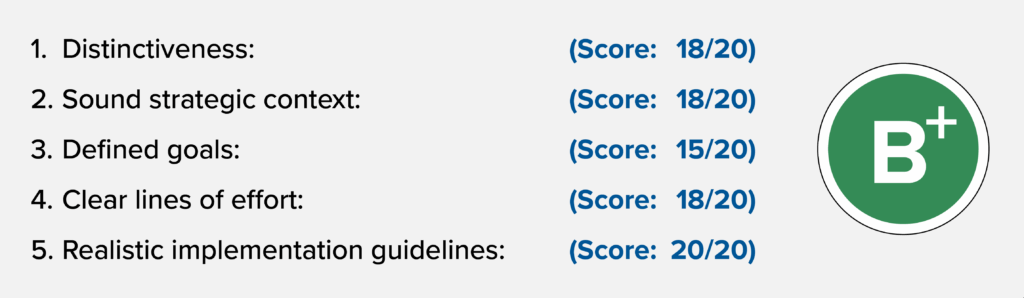
This strategy marks a shift from past National Defense Strategies, with a distinctive focus on the Western Hemisphere. It correctly recognizes the risk of a simultaneous conflict, but would have benefited from more clearly defined goals.
Distinctiveness
Is there a clear theme, concept, or label that distinguishes this strategy from previous strategies?
Prioritizing the homeland and the Western Hemisphere is distinctive and marks a shift from the past two National Defense Strategies, which both prioritized great power competition with China. The strong focus on both the Western Hemisphere and the Indo-Pacific, however, raises the question of whether hard decisions were taken about prioritization, or does this document instead reflect compromises between different factions within the administration focused on different theaters.
Sound strategic context
Does the strategy accurately portray the current strategic context and security environment facing the United States? Is the strategy predicated on any specious assumptions?
Yes, this strategy contains a dedicated section on the current security environment that outlines the challenges posed by China, Russia, Iran, and North Korea, and importantly recognizes the challenge of strategic simultaneity, the risk of multiple conflicts occurring in overlapping time frames. This section risks downplaying the threat from Russia and Iran. Several past administrations, going back to at least President Barack Obama, had also hoped to do less in Europe and the Middle East in order to pivot towards Asia, only to have serious security crises erupt and thwart their plans.
Defined goals
Does the strategy define clear goals?
The strategy would have benefited from a dedicated goals section. Past NDSs have laid out broader, global defense goals, such as deterring attacks against the United States and its allies, defeating adversaries if deterrence fails, and assuring allies. This strategy does not articulate such overarching goals. To be sure, it mentions more specific goals in the sections on lines of effort, such as deterring conflict in the First Island Chain, but would have benefited from providing a clearer vision of success.
Clear lines of effort
Does the strategy outline several major lines of effort for achieving its objectives? Will following those lines of effort attain the defined goals? Does the strategy establish a clear set of priorities, or does it present a laundry list of US foreign policy activities?
The strategy very clearly identifies four important lines of effort: defend the US homeland; deter China in the Indo-Pacific through strength, not confrontation; increase burden-sharing with US allies and partners; and supercharge the US defense industrial base. The section on China seems to incorrectly imply that a confrontational US stance raises the risk of conflict, when in fact the problem is the Chinese Communist Party’s stated revisionist goals.
Realistic implementation guidelines
Is it feasible to implement this strategy? Are there resources available to sustain it?
For more than four years, I have argued that the United States needs to do three things to resource the strategic simultaneity problem: revitalize the US defense industrial base, strengthen nuclear deterrence, and get allies to step up and do more. This strategy recognizes and affirms all three of these steps, with a heavy emphasis on revitalizing the US defense industrial base, which will be supported by US President Donald Trump’s promised $1.5 trillion 2027 defense budget, and increased allied burden sharing.
Joe Costa
Director, Forward Defense Initative, Scowcroft Center for Strategy and Security
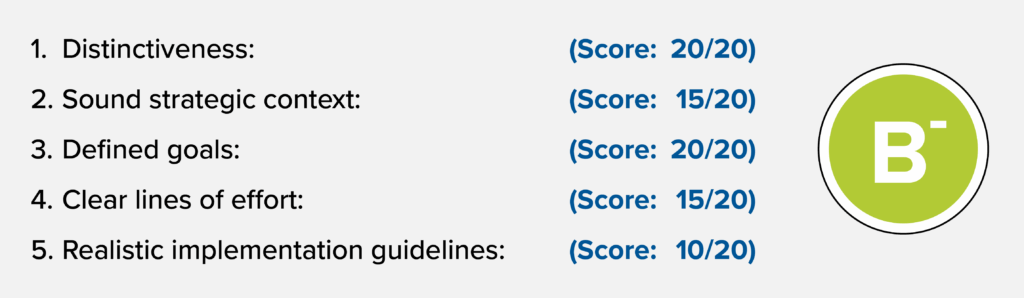
The strategy reaffirms longstanding US principles, such as nuclear deterrence, preventing adversary dominance in key regions, increasing burden-sharing, and reinvigorating the defense industrial base. It rightfully articulates the perennial problem that global requirements consistently outpace the demand of military forces, and therefore ruthless prioritization is required. The biggest risk is the reward and punishment approach toward allies and partners. Unquantifiable factors such as unity of purpose, trust, cohesion, and reliability are the essential elements for creating these durable military alliances. By largely ignoring the core values that hold US military alliances together, and explicitly stating that the Department of Defense (DOD) will prioritize cooperating with “model allies,” this strategy could create long-term structural risks that significantly limit the DOD’s ability to deter and prevail against adversaries.
Distinctiveness
Is there a clear theme, concept, or label that distinguishes this strategy from previous strategies?
Yes. Homeland defense is explicitly tied to border security and US “military dominance” in the Western Hemisphere. Allies and partners are implicitly rewarded or punished to take primary responsibility for their own defense. Economic interests prevail over core values that underpin military cooperation, and the threats posed by the United States’ adversaries are deemphasized in favor of the main message, which is: keep your “demands reasonable and cabined,” and we can maintain a “sustainable balance of power.”
Sound strategic context
Does the strategy accurately portray the current strategic context and security environment facing the United States? Is the strategy predicated on any specious assumptions?
Persistent threats posed by the United States’ adversaries are deemphasized in favor of the larger message on deconfliction and deescalation. The strategy makes three key assumptions that deserve serious examination:
- the DOD can achieve NDS objectives absent a coherent approach to allies and partners across the US government (e.g., if allied economies are hurt by tariffs, will they still spend more on defense?);
- allies and partners will respond to US rewards and punishments in a way that aligns with NDS objectives; and
- US adversaries will adjust their longstanding goals and accept the DOD’s “gracious offer” in favor of a “sustainable balance of power.”
Defined goals
Does the strategy define clear goals?
Yes. The four priorities are clearly stated throughout the document.
- Defend the US homeland
- Deter China in the Indo-Pacific through strength, not confrontation
- Increase burden-sharing with US allies and partners
- Supercharge the US defense industrial base
Clear lines of effort
Does the strategy outline several major lines of effort for achieving its objectives? Will following those lines of effort attain the defined goals? Does the strategy establish a clear set of priorities, or does it present a laundry list of US foreign policy activities?
Lines of effort are defined with varying degrees of specificity. Tradeoffs exist between the four priorities. For example, forces off the coast of Venezuela, and the naval “armada” recently redeployed from the Indo-Pacific to the Middle East, limit what’s available now and potentially degrade future readiness to deter China in the First Island Chain. If this new strategic approach erodes trust with allies and partners, it could adversely impact their collaboration in areas that are essential to achieving the strategy’s end states. How the DOD manages and balances the risks that come with these tradeoffs will determine the success of the overall strategy.
Realistic implementation guidelines
Is it feasible to implement this strategy? Are there resources available to sustain it?
Further analysis is required, but aspects of the strategy likely will have to be modified. For example, the Congressional Budget Office estimates the Golden Dome could cost more than $800 billion over twenty years, with other estimates going even higher. In addition, the full impact of the DOD’s personnel actions is still unclear—including reported reductions to the cyber workforce, which could adversely impact homeland defense. Lastly, it remains an open question how allies and partners will react to this shift in US defense strategy.
Alexander B. Gray
Nonresident senior fellow, GeoStrategy Initiative, Scowcroft Center for Strategy and Security
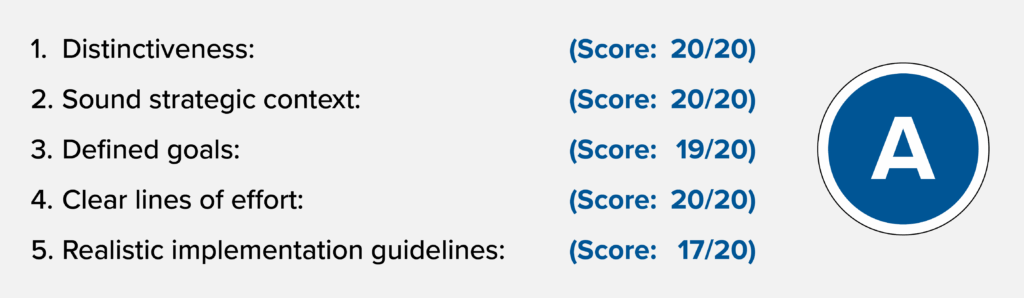
The NDS builds usefully upon the National Security Strategy (NSS) by carefully reflecting on the primary security threats to the United States and prioritizing those threats alongside the regional areas of greatest importance to core US interests. This exercise, while contrary to nearly four decades of US strategy, is both overdue and salutary in an era of rising great power threats and diminishing domestic resources. The NDS’s call for a wartime-level mobilization of the defense industrial base (DIB) reflects the seriousness of the challenge and the DIB’s criticality in meeting even the whittled-down priorities found in the NSS and NDS. Taken together, the NSS and NDS are an epochal shift in US strategy and represent a decisive break with post-Cold War conceptions of the United States’ limitless strategic bandwidth.
Distinctiveness
Is there a clear theme, concept, or label that distinguishes this strategy from previous strategies?
As with the National Security Strategy, the NDS represents an abrupt break from the strategic documents from previous administrations of both political parties. The NDS rejects explicitly the need to uphold the “liberal international order” and instead prioritizes the capabilities and requirements needed to implement the core US interests outlined in the NSS: defense of the homeland, the Western Hemisphere, and a “free and open” Indo-Pacific.
Sound strategic context
Does the strategy accurately portray the current strategic context and security environment facing the United States? Is the strategy predicated on any specious assumptions?
Building upon the NSS, the NDS captures both the greatest challenges facing the United States, beginning with China and its threat to the three core regions of US concern (the homeland, the hemisphere, and the Indo-Pacific), and the need to prioritize in a world of limited resources and domestic political constraints. By understanding the threats but also the limitations facing Washington, the NDS captures the unique environment at this moment in US security policy.
Defined goals
Does the strategy define clear goals?
The NDS forces clear priorities and largely explains how the administration envisions converting those priorities, whether regions of focus or a renewed emphasis on a revitalized defense industrial base, into actionable policy. In its ruthless focus on avoiding previous periods of strategic overstretch, the NDS (like the NSS) succeeds in a goal-oriented approach to strategy.
Clear lines of effort
Does the strategy outline several major lines of effort for achieving its objectives? Will following those lines of effort attain the defined goals? Does the strategy establish a clear set of priorities, or does it present a laundry list of US foreign policy activities?
The NDS is anything but a laundry list, and the prioritization exercise it represents will have a cathartic effect on both resource allocation and the time and attention of government officials across the chain of command. For each priority, the NDS explains broadly how the administration will define success, which will be useful in holding officials to account for execution.
Realistic implementation guidelines
Is it feasible to implement this strategy? Are there resources available to sustain it?
The strategy can be implemented but will face fierce congressional and institutional resistance by forcing prioritization on a bureaucracy and larger national security apparatus that has become accustomed to avoiding hard choices and doing everything, everywhere, simultaneously. The NDS is appropriate to available resources but must be advocated for consistently to avoid the inevitable mission creep that will be encouraged in many parts of Washington.
Imran Bayoumi
Associate director, GeoStrategy Initiative, Scowcroft Center for Strategy and Security
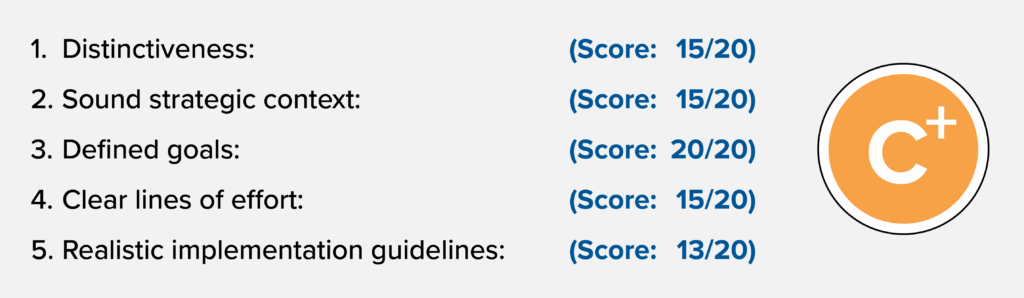
The National Defense Strategy makes clear the priorities of the Department of Defense. It has clear goals and lines of effort but lacks detail in how it plans to achieve these stated outcomes. The strategy overlooks key regions and allies, such as Taiwan and Australia, and risks underestimating the threat posed by China. Failure to account for the strategic reality and the nature of the threats that the United States finds itself facing will make it harder to achieve the goals set out within the strategy.
Distinctiveness
Is there a clear theme, concept, or label that distinguishes this strategy from previous strategies?
The 2026 National Defense Strategy builds on the 2025 National Security Strategy with its clear focus on defending the homeland, with the claim that “for decades, America’s foreign policy establishment neglected our nation’s Homeland defenses.” But past NDSs have also prioritized the homeland, including the 2022 NDS, which listed “Defending the homeland” as its top priority, albeit while recognizing the People’s Republic of China (PRC) as a pacing threat. The strategy is distinct through its continued promotion of the “Trump Corollary” to the Monroe Doctrine, but this concept is not expanded on throughout the document.
Sound strategic context
Does the strategy accurately portray the current strategic context and security environment facing the United States? Is the strategy predicated on any specious assumptions?
The strategy rightly recognizes that China, Russia, Iran, and North Korea all pose threats to the United States, but it does not mention China’s position towards Taiwan and seemingly downplays the global threat posed by Russia in Africa, the Arctic, and elsewhere. In Africa, the focus only on the threat from “Islamic terrorists” ignores the support provided by China and Russia to governments across the continent. At the same time, the strategy overstates some threats, saying that in the past “U.S. access to key terrain like the Panama Canal and Greenland was increasingly in doubt,” which is not true.
Defined goals
Does the strategy define clear goals?
The strategy has four clearly defined goals that build on the priorities set forth in the National Security Strategy.
Clear lines of effort
Does the strategy outline several major lines of effort for achieving its objectives? Will following those lines of effort attain the defined goals? Does the strategy establish a clear set of priorities, or does it present a laundry list of US foreign policy activities?
The strategy clearly lays out four lines of effort that build on the defined goals, but some are more detailed than others. More clarity on how the DOD seeks to deter China or supercharge the defense industrial base would be helpful.
Realistic implementation guidelines
Is it feasible to implement this strategy? Are there resources available to sustain it?
The strategy calls for having allies in Europe, in the Middle East, and on the Korean Peninsula take on more of a role in their own defense but does not detail changes in US force posture or presence that would likely be expected with such an announcement. The lack of details makes it difficult to understand how exactly the strategy will be implemented and how challenging it will be to do so.
Nate Freier
Nonresident senior fellow, GeoStrategy Initiative, Scowcroft Center for Strategy and Security
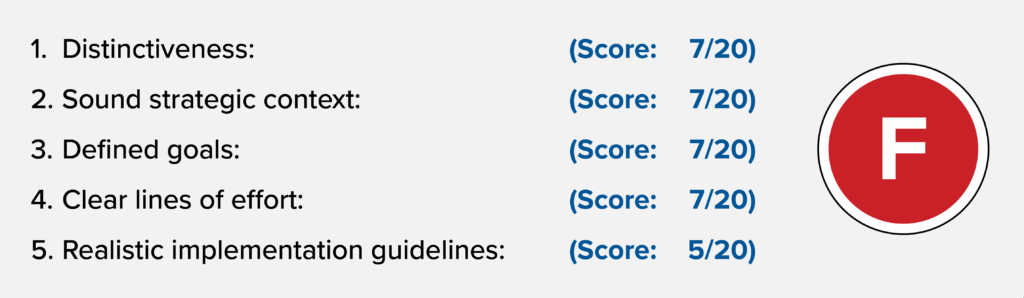
An ideal defense strategy includes: 1) focused and measurable ends (and why they are most important); 2) the hazards —purposeful and contextual —that pose the greatest menace to ends (and why they are the most compelling); 3) the relevant means available to pursue ends in light of hazards; 4) the courses of action or ways that combine means most effectively consistent with ends; 5) the risk of unacceptable outcomes given adopted courses of action (with, of course, a sense of planned risk mitigation); and, finally, 6) a clear vision for adaptation given inevitable changes in conditions. The 2026 National Defense Strategy is light on the first count (ends). It is unsophisticated on the second (hazards). It is thin on the third (means). It is inadequate on the fourth (ways). And, finally, it is silent on the fifth (risk) and sixth (adaptation). On the latter two, a meaningful risk assessment would expose the strategy’s overall high risk stemming from the sum of its tenuous assumptions. However, its silence on risk suggests the near inevitability that adaptation in extremis will follow as the NDS runs headlong into a disruptive reordering of international security as US defense policy becomes at once more overtly self-interested, bellicose, and activist.
Distinctiveness
Is there a clear theme, concept, or label that distinguishes this strategy from previous strategies?
The NDS is distinct. But distinct doesn’t imply thoughtful, prudent, or responsible. And its distinctiveness is the root of its high risk. It signals a disruptive worldwide US defense reset. It doubles down on the NSS’s revisionist themes by indicting prior post-Cold War US administrations as largely rash and irresponsible. It scraps a favorable US-inspired geopolitical orthodoxy by rejecting in its words “cloud-castle abstractions like the rules-based international order.” It is personalistic in the extreme, as it seems to invoke the name of the current president more than it does American values, the United States, or the US presidency as foundational institutions. And these, in combination, increase the odds of the United States overall becoming more isolated, unpredictable, and prone to transactional military action without the benefit of structure, convention, or the governing influence of collaborative international partnerships.
Sound strategic context
Does the strategy accurately portray the current strategic context and security environment facing the United States? Is the strategy predicated on any specious assumptions?
Prior American defense strategies have long perceived the United States as engaged in a dynamic rivalry with multiple opponents on multiple physical, virtual, and ideological fronts. They assumed rivals harbored counter-US intent and acted on that intent to neutralize and invalidate American power and influence wherever US interests collided with their own. The collective wisdom of those prior strategies still holds. Threats transcend geography—especially when as it is true now—rival interest in the United States isn’t focused solely on where it is physically but instead on who it is and what it represents in the international system. Therefore, rivals will continue to seek to isolate, nullify, and subordinate the United States regardless of its global defense disposition. This NDS misses this point. There is a high-risk assumption that strength at range is enough to blunt hostile intent and action. Recent history suggests that the kind of transformed American stance suggested in the NDS will instead invite and accelerate hostile counter-US maneuver and expose vacuums of exploitable gray space worldwide.
Defined goals
Does the strategy define clear goals?
The NDS suggests that the United States can find safe harbor in the abstract invocation of “peace through strength,” an implied withdrawal into a more expansive conception of hemispheric defense, and new age offshore balancing. In this regard, there are echoes of both former President’s Dwight D. Eisenhower’s “New Look,” as well as the philosophical foundations of former President George W. Bush’s 2001 Quadrennial Defense Review (QDR 01) in it. Yet, on the latter specifically, the NDS misses QDR 01’s declaration of the United States’ “unique” place in the world as “the basis for a network of alliances and friendships,” as well as its being a guarantor of “a general sense of stability and confidence.” Despite this nod to American leadership and partners, however, the Bush team too wanted to adhere to what this NDS would call “practical, concrete interests first,” offload responsibility to partners through “burden sharing,” and call the shots without excessive partner constraint. But narrowly defining interests did not then yield restraint in practice. Interests were reinterpreted by international dynamics and the kind of unachievable ends and interminable wars that the NDS decries followed. There is a cautionary tale here. If the current team got the context wrong—as is suggested above—rival encroachment will follow and “practical realism” will defer to what’s expedient in the moment, creating a high-risk imperative for in extremis adaptation absent deliberate prior consideration.
Clear lines of effort
Does the strategy outline several major lines of effort for achieving its objectives? Will following those lines of effort attain the defined goals? Does the strategy establish a clear set of priorities, or does it present a laundry list of US foreign policy activities?
The NDS does have clear lines of effort (LOEs) and priorities. However, that doesn’t mean they are optimal for strategic conditions. Goals, context, and LOEs should render a coherent and appropriate theory of the case for defense. Here the NDS falls short. To its credit, the NDS does largely get China right via “deterrence by denial”; note that the strategy’s parent 2025 National Security Strategy tells a more cogent and strategic story in this regard. But, given the reality of persistent rival resistance to US influence, it seems more appropriate to prioritize China within a broader strategic design that is intended to persistently and actively outmaneuver all our “most important, dangerous, and consequential” threats. China and Russia are top of mind here. Further, reimagining, re-energizing, and transforming the defense industrial base is spot on in theory. However, the NDS’s details are thin on exactly what constitutes the base—in light of the strategy and how the DOD plans to revive the base given concerted rival action against the United States.
Justifying the NDS’s rebalance to the hemisphere—in large measure based on the top three issues of migration, narcotics trafficking, and securing key terrain—is not compelling. In the first two cases, it embroils finite military capability over an indefinite period against problems of social science and law enforcement. And, with respect to the third, it creates pacing military demands against phantom threats where the combined application of non-military instruments of power in collaboration with partners would do the trick. With reference to mistakes of the War on Terrorism, the current course also hazards the kind of mission creep into “lesser included” demands that eroded the United States’ military edge in the first place.
Strong collaborative international partnerships, under US strategic leadership, allows the United States to set agendas and influence outcomes consistent with its interests. But “burden sharing” is admittedly an important strategic LOE. It promises to create economies of force and enable greater US freedom of action. However, sub-letting important responsibilities to partners—guided solely by “their own interests” vice common interests and values—is a recipe for potential disorder. As presented in this NDS, “burden sharing” seems to offer current and future partners three choices, with two yielding highly unfavorable outcomes for the United States. Some may pursue policies that are wholly consistent with US intent. Some with the requisite will and means will chart their own independent and potentially destabilizing courses, putting the United States in a thorny strategic bind. And finally, still others will be incentivized to accommodate rivals as a matter of interest, undermining their own and the United States’ strategic position. The latter two harbor the potential for unintentional and potentially irreparable harm to areas of enormous concern to US security and prosperity.
Realistic implementation guidelines
Is it feasible to implement this strategy? Are there resources available to sustain it?
The NDS lacks a clearly articulated implementation roadmap. Experience suggests guidance to the DOD on that subject is forthcoming. As it describes more aspiration and theory than substance, the NDS is feasible in spirit. However, judgement on its practical implementation requires more detail. Can the United States picket the Western Hemisphere and the First Island Chain, offload rivalry with Russia to Europe, and keep lesser included North Korea, Iran, and foreign terrorists in check? Perhaps. Can it do it so alone without close coordination with and substantial help from treaty and non-treaty partners? That’s highly unlikely. To be fair, the NDS doesn’t suggest it can. However, it does state plainly that the global framework of norms and conventions that allowed for and incentivized others to cooperate with the United States is no longer operative, creating meaningful fault lines in even this circumspect US defense outlook.
A second and perhaps more important issue lies in whether this strategy is suitable to the contemporary environment and acceptable given the hazards that the environment entails. Taking cues from military planning, feasibility, acceptability, and suitability are not the same. Prudent risk assessment of the NDS against the world we already have indicates that it would likely fail these two tests. And, in execution, it will expose high risk in these two dimensions and trigger an imperative for substantial strategic adaptation.
Related content


Explore the program

The Scowcroft Center for Strategy and Security works to develop sustainable, nonpartisan strategies to address the most important security challenges facing the United States and the world.