
Scowcroft Strategy Scorecard:
Grading Canada’s second-ever national security strategy
It’s been a whirlwind year for Canadian Prime Minister Mark Carney. He electrified Davos in January with frank talk of “rupture, not transition” in the global order and a call for middle powers to build something “bigger, better, stronger, more just.” Then there was Canada’s trade war with the United States, unfolding amid renewed conflict in the Middle East. Now Ottawa has a new security strategy, only the second in its history. Does it meet the moment? Read on to see how our experts at the Scowcroft Center for Strategy and Security grade The Plan for a Stronger Canada.
Imran Bayoumi
Deputy director, GeoStrategy Initiative, Scowcroft Center for Strategy and Security
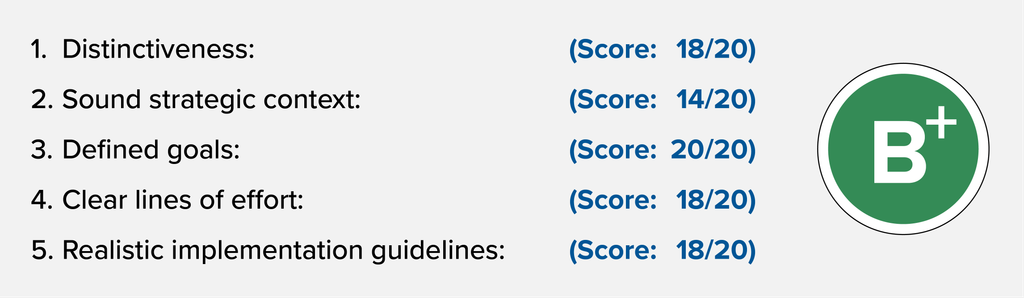
Carney has released Canada’s first national security strategy in over twenty years, making its existence alone distinctive. The document is extraordinarily ambitious, but it lacks detail at points, and its failure to explicitly call out Canada’s adversaries and the threats facing Ottawa weaken its potential impact. There are questions about what the strategy will look like in action. How will the government balance the inherent tension between pursuing a values-based society while partnering with new countries to best advance Canada’s interests? Still, the strategy is an important step for Canada as it starts to take issues of national security more seriously.
Distinctiveness
Is there a clear theme, concept, or label that distinguishes this strategy from previous strategies?
Canada’s new national security strategy, The Plan for a Stronger Canada, is distinct as it is only the second Canadian national security strategy ever published and the first one in over twenty years. While details are lacking (this strategy will be followed by five other sub-strategies on specific topics), The Plan for a Stronger Canada starts with economic security, not foreign policy or defense considerations. Such a focus is indicative of Carney’s approach to growing Canada’s sovereignty and self-reliance first and foremost.
Sound strategic context
Does the strategy accurately portray the current strategic context and security environment facing Canada? Is the strategy predicated on any specious assumptions?
Context is the strategy’s biggest weakness. There is no in-depth discussion of the strategic environment that the Carney government finds itself operating in. Russia and China are not mentioned, and NATO and the United States are each mentioned three times. For Canada, which finds itself rapidly confronting a deteriorating global security environment, explicitly calling out adversaries and allies would strengthen the strategy.
Defined goals
Does the strategy define clear goals?
Yes, the strategy clearly defines five goals, termed “national interests”: “Canadian sovereignty,” “a prosperous and inclusive Canadian economy,” “a cooperative, clear-eyed relationship with the United States,” “stability and security internationally,” and a “values-based society.”
Clear lines of effort
Does the strategy outline several major lines of effort for achieving its objectives? Will following those lines of effort attain the defined goals? Does the strategy establish a clear set of priorities, or does it present a laundry list of Canadian foreign policy activities?
The strategy clearly lists five lines of effort: economic security, foreign policy, defense policy, public safety, and intelligence. The strategy clearly notes that further plans for each of these five areas will be forthcoming; nonetheless, it does detail the goals to be achieved within each area with a fair degree of specificity.
Realistic implementation guidelines
Is it feasible to implement this strategy? Are there resources available to sustain it?
As with most strategies, implementation details are lacking. There are a few clear directives, including a first ministers’ meeting, a timeline to introduce relevant legislation, and a commitment to produce a new national security strategy every four years. The five forthcoming sub-strategies will hopefully go into more detail on implementation.
Philippe Dickinson
Deputy director, Transatlantic Security Initiative, Scowcroft Center for Strategy and Security
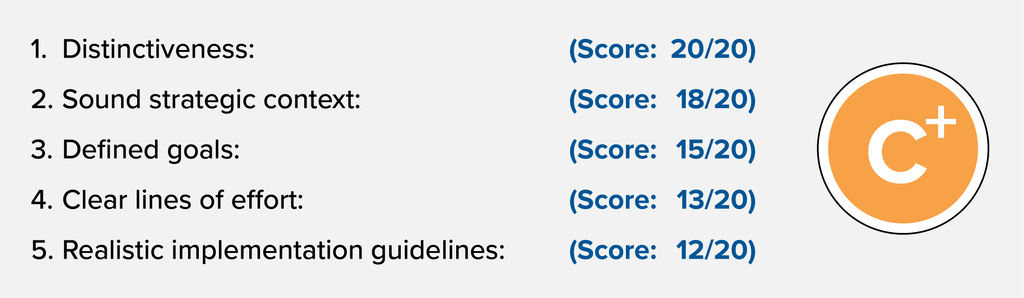
More than any other world leader, Canadian Prime Minister Mark Carney has confronted head-on the challenge that the new manifestation of great power rivalry poses to the democratic world’s middle powers. He has articulated an alternative vision for middle powers with unmatched conviction. But there are unanswered questions at the heart of this vision. How is this order to be organized? How can it be coherent with multiple power centers? How can it overcome parochial rivalries between its putative members? And how can it be sustained over the long term in an age of prolonged political turbulence? These are hard questions, and while this strategy is both highly distinct and clear-eyed about the challenge, it falls short in providing a feasible program for implementation.
Distinctiveness
Is there a clear theme, concept, or label that distinguishes this strategy from previous strategies?
The strategy is fundamentally a reflection of the profound upheaval in Canada’s global outlook that has resulted from the rapid, and in many ways traumatic, decline in Canada’s relationship with the United States. That trauma is laced throughout this strategy document and has been the driving force in Canadian politics and policy over the last eighteen months. A byproduct of this shock to the system has been strategic clarity and focus, most vividly articulated in Carney’s agenda-defining speech at the World Economic Forum in Davos in January 2026. The sharpness of this strategic clarity sets Canada apart from other allies that are also themselves trying to come to terms with the new geometry of the transatlantic relationship.
Sound strategic context
Does the strategy accurately portray the current strategic context and security environment facing Canada? Is the strategy predicated on any specious assumptions?
The nature of the challenge the rupture to the global order poses for Canada is appropriately reflected in this strategy. But the document at times obfuscates the clarity of Carney’s message at Davos. The United States is an almost Voldemort-like specter throughout, often invoked in unsubtle terms, but only explicitly named three times. The diplomatic reluctance to directly name the problem being confronted creates some inconsistencies. References to “reliable allies” feel pointed, while on one page the document laments problems created by “deep integration with other countries” later it goes on to describe “deepening collaboration internationally” as a means of building resilience to economic threats.
Defined goals
Does the strategy define clear goals?
The goals of this strategy are very broadly defined and high-level. Calling it a security strategy is somewhat misleading—it is a sovereignty strategy. At the very least, the terms “security,” “sovereignty,” and “strategic autonomy” appear almost interchangeably. The strategy prioritizes economic sovereignty as the starting point for national security. Its definition of what constitutes economic sovereignty is a blend of refreshed industrial policy and selective applications of mercantilism and protectionism that sit awkwardly alongside calls for expanding international economic partnerships. Though economic growth is unarguably an indispensable enabler of national security, the document glosses over the fundamental challenge of achieving this growth while also balancing away from Canada’s most important trading partner. The suggestion that new partnerships in the Middle East and Africa could adequately compensate for reduced economic integration with the United States has echoes of Brexiteer arguments ten years ago that the UK could flourish economically outside the EU by striking new trade deals globally—a proposition that economists mostly contend has not netted out positively for the UK.
Clear lines of effort
Does the strategy outline several major lines of effort for achieving its objectives? Will following those lines of effort attain the defined goals? Does the strategy establish a clear set of priorities, or does it present a laundry list of Canadian foreign policy activities?
The strategy devolves somewhat into group-project territory when it lists strategic capabilities in eight critical sectors, underpinned by a foundation of five policy categories. The document doesn’t fully elaborate on why these sectors specifically are included and how each ties into the strategic picture that Canada is facing. Why transportation? Why payments?
Realistic implementation guidelines
Is it feasible to implement this strategy? Are there resources available to sustain it?
While the strategy does list some specific policies and programs, the lack of concrete details or delivery timelines conveys a sense that the challenging task of turning this grand strategic vision into a series of implementable initiatives is incomplete.
Kathleen Larkin
Nonresident senior fellow, Transatlantic Security Initiative, Scowcroft Center for Strategy and Security
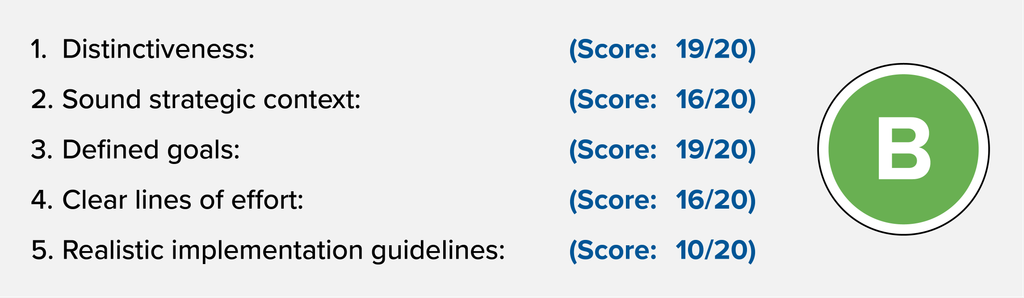
Carney lays out a sweeping vision for increasing Canada’s independence across multiple sectors and a plan to leverage the various arms of government to do so. While only alluding to turbulent global dynamics and trade wars, much of the strategy reads as a reaction to US President Donald Trump’s attempts to “rebalance” the relationship with Canada, outlining areas where Ottawa feels most reliant on Washington (defense, intelligence, trade) and prioritizing efforts to increase independence in those areas. What remains to be seen is if the Canadian public is prepared to underwrite the check needed to achieve it.
Distinctiveness
Is there a clear theme, concept, or label that distinguishes this strategy from previous strategies?
The clear theme of the strategy is sovereignty. It is couched as “strategic autonomy” and “national resilience” at various points but is summarized most effectively in the line “A Canada that controls its own destiny.”
Sound strategic context
Does the strategy accurately portray the current strategic context and security environment facing Canada? Is the strategy predicated on any specious assumptions?
The strategy reads as a reaction to Trump’s attempt to pressure or rebalance the relationship with Canada but offers enough flexibility to make it simultaneously a strategy for the moment and also for the long term. However, at times, the strategy fails to connect the dots for readers. For example, in this line, how do the solutions outlined connect to challenges identified? “To withstand the challenges from great power rivalries, authoritarian aggression, frontier AI, climate change, and pandemics Canada … must have access to reliable intelligence, space-based communications, secure telecommunications, and data storage. National resilience requires reliable access to vaccines, semiconductors, payment systems, capital, and more.”
Defined goals
Does the strategy define clear goals?
The strategy defines a clear goal: increase Canada’s strategic autonomy to better assert Canadian sovereignty. The chart is perhaps the most effective summary of the strategy.
Clear lines of effort
Does the strategy outline several major lines of effort for achieving its objectives? Will following those lines of effort attain the defined goals? Does the strategy establish a clear set of priorities, or does it present a laundry list of Canadian foreign policy activities?
While the goal is clear, the lines of effort to get there are mixed. The strategic capabilities section is never clearly defined and reads like a laundry list. For example, what is meant by “payments, settlement, and investment”? And why is that on the list? No explanation is offered. However, the “foundations” section (identifying economic security, foreign policy, defense policy, public safety, and intelligence as the foundation the plan rests on) is concrete and actionable.
Realistic implementation guidelines
Is it feasible to implement this strategy? Are there resources available to sustain it?
Elements of the strategy are feasible, and Canada is already moving out. In some ways, the strategy seeks to add coherence to the actions the government has already taken to meet the changing strategic environment. How the plans to achieve its most ambitious goals will be resourced is unclear, and in fact the strategy may be part of Carney’s effort to secure additional resources from Parliament.
Kimberly Talley
Associate director, Transatlantic Security Initiative, Scowcroft Center for Strategy and Security
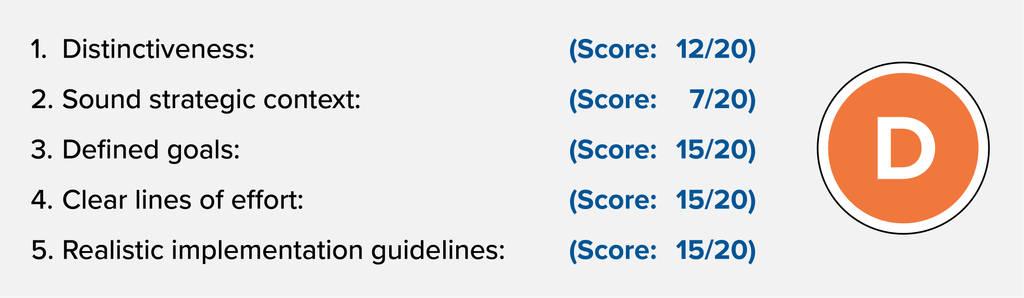
Alone, this document reads less like a strategy and more like a pitch deck to build a strategy. It is a deferral to the real substance forthcoming in the sub-strategies. The greatest handicap in this document is its reluctance to define the threats to Canada—you cannot counter an enemy you do not identify. Failing to name those threats is a disservice to the public and hinders the Canadian government from building a cohesive threat perception across the nation.
Distinctiveness
Is there a clear theme, concept, or label that distinguishes this strategy from previous strategies?
This document is distinct from its 2004 predecessor, but not necessarily in a positive manner. I am wary of a strategy document whose primary strategy is to create strategies, especially when the 2004 strategy was more comprehensive, clearer about where it was going, and why. This approach isn’t inherently bad—it has significant advantages in ensuring an adequate addressal of critical threats—but releasing it before the other strategies are prepared is a bold choice, with the payoff depending on the quality of the forthcoming sub-strategies.
Sound strategic context
Does the strategy accurately portray the current strategic context and security environment facing Canada? Is the strategy predicated on any specious assumptions?
The document lacks significant strategic context. It references threats, but dances around identifying what those threats are. While a nuanced, diplomatic approach to placing Canadian sovereignty as the foremost priority (especially when the most vocal instigator of concerns about Canadian sovereignty has been Canada’s closest neighbor) is understandable, failing to name any threats is a missed opportunity to ensure the Canadian public shares a cohesive threat perception that then drives government action.
Defined goals
Does the strategy define clear goals?
If the defined goals are to “produce a plan,” then yes, the goals are clearly defined. In all seriousness, however, it is useful that the government provides detailed bullets on what the sub-strategies are expected to entail, and these should be used as a metric to both evaluate the sub-strategies once they are out and to reevaluate this document with hindsight.
Clear lines of effort
Does the strategy outline several major lines of effort for achieving its objectives? Will following those lines of effort attain the defined goals? Does the strategy establish a clear set of priorities, or does it present a laundry list of Canadian foreign policy activities?
The document does lay out clear lines of effort and divides them up by strategic capability, which is helpful for implementation. Breaking down the efforts into sub-strategies that can properly devote space to each respective strategic capability is a good approach for overall comprehensive coverage.
Realistic implementation guidelines
Is it feasible to implement this strategy? Are there resources available to sustain it?
Perhaps the best and most important aspect of this strategy is that it lays out guidelines for updates to take place every four years. Given the pace of change in today’s security environment, building in iterative review and flexibility to meet the challenges threatening Canada’s security is paramount. The elements detailed in the implementation section all read as feasible, but also intentionally vague—such that it will be difficult to adequately measure success or failure.
Related content
Explore the program

The Scowcroft Center for Strategy and Security works to develop sustainable, nonpartisan strategies to address the most important security challenges facing the United States and the world.