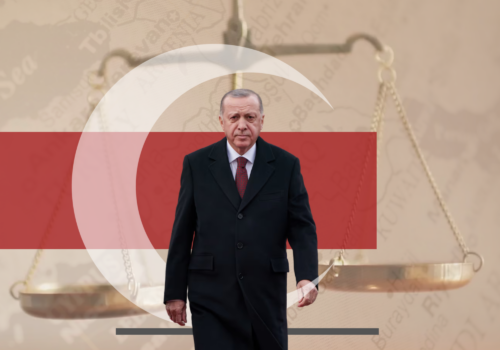
Before the Iran war began, a new but misleading narrative among Western commentators had begun to take hold: that the broader Middle East is splitting into two blocs. The war has only compounded this narrative. On one side, the story goes, is an arc consisting of the largest and historically most influential states in the region that have come together in alignment and dubbed themselves the “Regional 4” or “R4”—Saudi Arabia, Turkey, Pakistan, and Egypt. The first three further enhanced their trilateral alliance through the August 2026 Mecca Joint Defence Agreement. And when Riyadh came under sustained attack from the Iran-backed Houthis in October, Egypt, which is outside the agreement, proposed sending troops to help defend the kingdom as well.
On the other side is said to be a counter-amalgamation of countries anchored by Israel’s relationship with the United Arab Emirates that also includes some combination of Ethiopia, Somaliland, India, and Bahrain (another Abraham Accords signatory). There is no denying the war in Iran has advanced the relationship between the United Arab Emirates and Israel that the 2020 Abraham Accords formally codified years ago. But the relationship today is rooted not in that agreement but in a shared vision of the future of the region across security issues, such as Iran and Islamic extremism, and innovation.
The emerging and enhanced regional ties and developing partnerships that the “two bloc” narrative reflects are real. The R4’s convergence, the Mecca Agreement, Emirati and Israeli ties, and the structural shifts across the Middle East are all important developments helping to reshape the region. But what is transpiring is not the reshaping or division of the Middle East into two distinct blocs.
A true bloc does not need all members to have identical policies, but it would compel binding commitments and subordination of preferences that constrain members when their core interests diverge. What is emerging is the opposite. Every state in the Gulf, and many beyond, is recalibrating the totality of its foreign and domestic policies because of the war and the questions it prompts about the future of Gulf countries’ own security and the reliability of allies—a trend that has pushed states in the region to emphasize a new era of strategic autonomy.
Cooperation? Sure. Binding constraints? No
Middle East states are engaging in modular alignment, not bloc formation. Modular alignment should be understood as a country pursuing its foreign policy interests through discrete, sector-specific cooperation with other states that are enabling partnerships, or even an alliance, in one domain, while accepting rivalry with the same counterpart in another.
The question isn’t whether these states will cooperate; it’s whether their cooperation generates obligations that constrain what they can do elsewhere and with whom. Most Gulf states actively avoid, in practice even if not in rhetoric, inflexible alliances, given their objection to the type of institutional commitment that would actually make an alliance mean something.
Just as they have balanced relations and cooperation between the US and China across different sectors, regional states will now prioritize advancing their relationships sector by sector. Sometimes that will generate natural common-cause alliances in a specific sector: for example, the political effort by the R4 to unite to end the conflict with Iran. At other times those same countries will find themselves in opposition, as the R4 have been on Syria, Libya, the Horn of Africa, and the India–Middle East–Europe Economic Corridor (or IMEC).
The political divisions in the R4 run deep
The Saudi-Turkey-Egypt-Pakistan grouping may be broadly united in their view that accommodating Iran is the better way to ensure regional stability. But some of the bilateral relationships between the four countries are riddled with conflicts that their shared threat perceptions—over the war with Iran, frustration with Israel’s increased tempo of regional military operations, and even frustration with the US—paper over.
Between Ankara and Cairo
Three years ago, Turkey and Egypt restored diplomatic ties following a decade of estrangement. But in doing so, they left unresolved a set of conflicts that still persist today: over Libya, where Ankara and Cairo backed opposing factions in the country’s civil war; over maritime boundaries in the Eastern Mediterranean; over Turkey’s continued exclusion from the East Mediterranean Gas Forum (while Egypt engages Cyprus on it); and divergent positions on support to the government of Syrian President Ahmed al-Sharaa—whom Egypt accuses of not only harboring but giving key positions of authority to known terrorists.
The rapprochement between Ankara and Cairo was born of looming economic calamity. Turkey was trying to manage the collapse of the lira and sought access especially to Gulf capital, for which reconciling with Egypt (and taking a harder line on the Muslim Brotherhood) was likely a prerequisite. Cairo was in desperate need of investment and expanded trade markets to stabilize a severe foreign exchange crisis. The result was a shift to managed tensions and commercial cooperation, not the strategic cohesion that a bloc across sectors would require.
Between Ankara and Riyadh
Turkey and Saudi Arabia—after hostilities diminished cooperation at the beginning of the decade—now trade more and invest more in each other’s economies, especially in the defense sector. The two countries signed a multibillion-dollar contract for drones in 2023, and Baykar, the Turkish drone company, is setting up production lines in the kingdom. But despite commercial improvements, they still compete for regional influence and security in ways that make their permanent alignment in a bloc across sectors implausible—no country in the alliance is actually willing to subordinate its preferences to another.
Among the most prominent examples of diverging interests is Syria. While both Riyadh and Ankara have strongly backed the Sharaa government, they have conflicting visions of the roles they should each be playing with Damascus. Riyadh views itself as the leader of not only the Arab world but the Islamic world writ large. It is skeptical of Turkey’s motivations in Syria given the Islamist connection shared by Sharaa and Turkish President Recep Tayyip Erdoğan, and wary of Syria ultimately becoming a Turkish client state. Having begun backing Sharaa’s Hayat Tahrir al-Sham group in 2017, Turkey views itself as the Syrian president’s indispensable benefactor and is unlikely to permit its most ideologically aligned neighbor to simply move out of its orbit of influence.
But the ideological split and competing desire for influence is a theme replicated throughout much of the Levant. Ankara sought for months to be a security guarantor in Gaza, and while such an offer was always going to be a nonstarter with Israel, it also drew no meaningful support from Saudi Arabia, since it would have placed a non-Arab state, which also continues to engage Hamas and its leadership, at the middle of the most distressing issue in the Arab world. When it comes to Lebanon, a network of Turkish citizens have been accused of providing a new pathway for Iran to finance Hezbollah, at a time when Saudi Arabia and the broader Gulf continue to be under fire from Iran.
Between Islamabad and Riyadh
The Pakistani-Saudi relationship is viewed as increasingly in lockstep, a result of Islamabad deploying troops to Saudi Arabia in April 2026. But the broader strategic security relationship is less extensive than it appears on the surface. The September 2025 Strategic Mutual Defense Agreement, for example, resulted in public ambiguity as to whether Pakistan’s nuclear weapons would be provided to Saudi Arabia if needed, spurred originally by Pakistani Defense Minister Khawaja Asif implying that they would before quickly reversing course. And Riyadh’s significant partnership with India—including joint military training in early 2024 followed by army-to-army discussions last year—would have to be meaningfully diminished across multiple sectors to realistically enable the kingdom to enter into a true bloc commitment with Pakistan.
On the question of Libya and its long-running political crisis, in December 2025 Pakistan finalized a four-billion-dollar weapons agreement with the Libyan National Army (LNA). The significance should not be underestimated when seeking to understand the broader bloc argument. In arming the LNA, Pakistan—a signatory to the Mecca Agreement, which excludes the United Arab Emirates—was providing material support to the primary beneficiary and ally of the UAE in Libya, essentially advancing a core foreign policy objective of the UAE. More consequential, however, is that Islamabad’s arms transfers are in direct competition with its Mecca Agreement co-signatory in Ankara. Turkey continues to provide support to the Government of National Unity, despite having made its first outreach to the LNA around the same time as Pakistan’s weapons agreement.
While Pakistan’s relationships with Egypt and Turkey have fewer tensions, most of the other bilateral relationships within the R4 have a range of political and security strains that preclude long-term strategic alliances—and the kind of formal bloc commitment shown by countries moving holistically together across issues and sectors, even when some members disagree.
The other “bloc” is even less cohesive
The much-heralded UAE- and Israel-led bloc, the apparent counterweight to the R4, is not a bloc at all. While both countries are part of the Abraham Accords, the UAE and Israel have not signed a cooperative defense agreement. Neither has done so with any other country in the region either. The Abraham Accords, which are open for others to join, were never designed to put together a comprehensive bloc but rather to bring together countries willing and ready to normalize relations with Israel.
As a result, it would be a mistake to view the UAE as the anchor of a competing bloc. It is pursuing its own national objectives, ones that often rival Saudi Arabia’s—and that means simultaneously working more closely with Israel for its security, while also investing in Egypt.
The UAE and Israel strengthened their bilateral relationship in the security sector, where there’s broad agreement on the threat posed by Tehran, through concrete demonstration of shared capabilities—most prominently Israel’s deployment of Iron Dome missile interceptors to the UAE. The Abraham Accords do not provide for collective security, but mechanisms to promote it can emerge and strengthen on a case-by-case bilateral basis, as has been the case during the war.
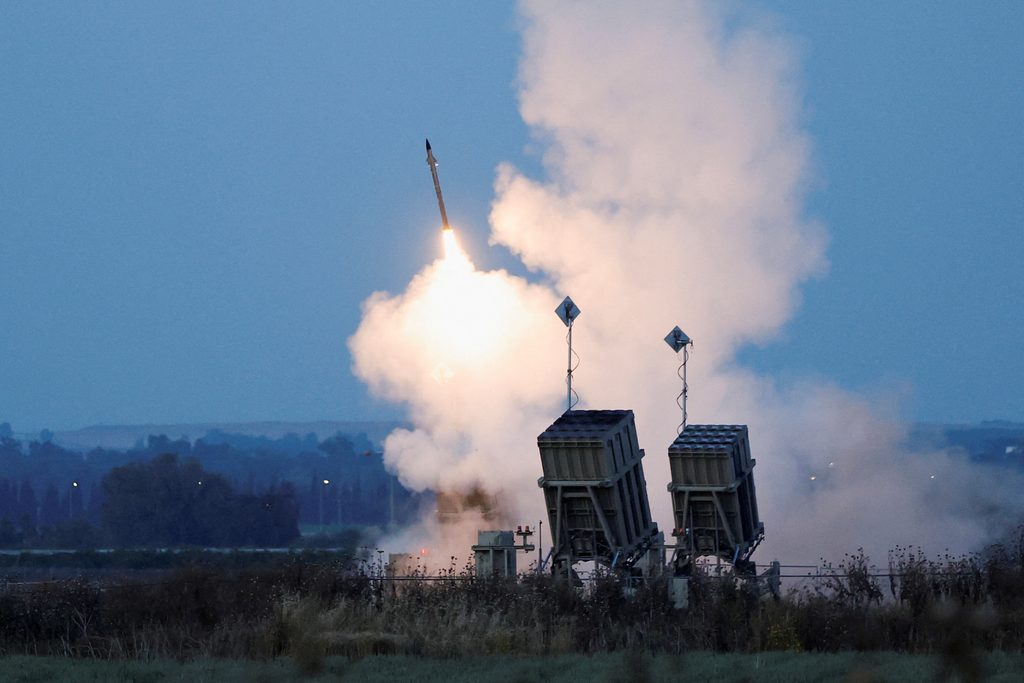
But the UAE and Israel strengthening ties during wartime is not building a broader bloc. It reflects modular alignment: increased cooperation on the Iranian threat, even as Jerusalem and Abu Dhabi are at odds over Israel’s approach to the Palestinian question. In September 2025, Abu Dhabi publicly warned Israel (and clearly sought to send a message to the US as well), that Israeli annexation of the West Bank would be a redline for the Abraham Accords—a position consistent with its original demand when the Accords were signed for Israel to suspend planned annexation then. Later that same month after Israel struck Doha with an attack targeting Hamas officials, Abu Dhabi likewise united with the rest of the Gulf Cooperation Council, including both Qatar and Saudi Arabia, to denounce the action as “cowardly.”
There are also divisions and ties that complicate the picture when it comes to the broader group of countries purported to be part of a UAE-Israel bloc, among which are India, the self-declared independent Somali territory of Somaliland, and Bahrain. India, for example, is Saudi Arabia’s second-biggest trading partner, and the kingdom is New Delhi’s fifth-biggest partner. New Delhi advocates for and demonstrates its strategic autonomy as much as any Gulf state does.
Washington will almost certainly lose leverage in this new paradigm, but it would be folly to mistake less leverage for zero leverage.
Across the Gulf of Aden from Yemen, Somaliland—which in December 2025 Israel became the first country to recognize as an independent state—hosts an Emirati port in Berbera. Though these circumstances might suggest alignment with the UAE and Israel and thus not with Saudi Arabia, it is easy to envision Riyadh, if it ends up facing a sustained, consistent threat from Yemen’s Houthis, seeking additional accommodation with Somaliland, even as it would likely stop short of offering formal recognition. And Pakistan itself, in arming the Libyan National Army, as previously noted, took an action whose primary beneficiary was Abu Dhabi.
Finances are the real bloc killer for the R4
Equally meaningful is the investment landscape, creating additional ties that would be unlikely were the countries in truly competing blocs. Egypt today remains structurally solvent, ironically, in large part due not to any country in the R4 but rather to a country in the “other bloc”: the UAE. Abu Dhabi injected $35 billion through the 2024 deal to develop Egypt’s Ras al-Hikma peninsula, despite their taking opposite sides of the conflict in Sudan. Meanwhile, earlier this year, Israel and Egypt advanced a $35 billion gas export deal, one that will be critical to Egypt’s energy security for the coming decade and a half. Saudi Arabia’s second-biggest source of imports is the UAE, and both Saudi Arabia and the UAE are critical energy suppliers to Pakistan. And three years ago, Turkey and the UAE signed a comprehensive economic agreement reducing tariffs and other trade barriers across key sectors that has expanded trade between the countries to three times its level before the agreement, reaching over $45 billion in 2025.
The bottom line is that countries aligning with opposing blocs do not generally also seek to advance each other’s economies or core foreign policy objectives. The region-wide political and security divergences alone are enough to undermine the emergence of Cold War–like bloc formation, but it’s the economics and finances that ultimately make a durable bloc implausible.
Saudi Arabia recorded a nine-billion-dollar budget deficit in the second quarter of 2026 alone—and that was after a jump in oil revenue of approximately 22 percent. Even before the Iran war, the original ambitions of the country’s flagship economic-diversification plan, Vision 2030, exceeded what was realistically achievable. To Riyadh’s credit it has consistently sought to reexamine and redefine the contours of its economic diversification, including scrapping projects that no longer made economic sense (most prominently the planned city of Neom, but that is far from the only one).
And yet, expectations of Gulf financial largesse by the international community, and particularly the West, continue to frustrate Gulf capitals. Persistent pronouncements from Western leaders that the Gulf will altruistically provide the financial support needed to reconstruct the economies of the region—from Syria to Yemen, Gaza to Iraq—misunderstand the thinking of Gulf leaders, who are willing to invest if it makes genuine financial sense but are no longer willing to simply bankroll and give away capital.
That is true for Saudi Arabia when it comes to supporting those areas emerging from conflict and desperate for reconstruction, but it will also apply to potential Saudi support for the other R4 states. Even when considering the Mecca Agreement’s potential for Pakistan to supply manpower, Turkey to supply drone production and some supporting troops, and Saudi Arabia to supply the financing for future joint defense, Riyadh will seek to leverage the alliance to the extent it contributes to Crown Prince Mohammed bin Salman’s economic vision.
The Mecca Agreement is a serious shift away from the US security umbrella, but not a break with it.
Bin Salman’s singular and overriding goal is to ensure the kingdom’s successful diversification away from hydrocarbons, an effort that will require Saudi hydrocarbon revenues to be reinvested into other productive sectors. And while Ankara, Cairo, and Islamabad surely hope that a closer and more formalized security and political relationship with Riyadh puts them on a glide path to more generous financial support or loan terms, in the end, any such support is likely to be around the margins. The kingdom cannot afford to stabilize the economy of one of these countries, let alone all three, while diversifying its own—precluding the formation of a bloc financially predicated on a benefactor-beneficiary relationship. Rather, each state is far more likely to guard its own resources to meet its domestic requirements—the opposite of the burden-sharing a bloc demands.
In Turkey, meanwhile, sustained defense sector growth over the last three years saw the country’s defense industry expand from $4.4 billion in 2022 to $10.5 billion in 2025. But inflation continues to undermine economic growth in the country with rates near 30 percent, while interest rates are at 37 percent, and the lira has lost more than 30 percent of its value against the dollar in the last twenty-four months. Its bilateral defense deals are the kind that Saudi Arabia sees good value in, but the sales revenue accrues to Turkey and is not going to meaningfully boost a broader bloc economy.
Pakistan has entered more than twenty International Monetary Fund programs since 1958 and remains dependent on extensive external support to service its existing obligations. As of last year, Islamabad’s debt stood near $91.8 billion, with a debt-to-gross-domestic-product ratio still around 68 percent. And Egypt, today, remains solvent due to the $35 billion UAE investment. Combined with Egypt’s decision to fully float the pound, this investment helped to unlock an additional five billion dollars in loans from the IMF.
These are not the economic circumstances under which a country is likely to foreclose potential investment opportunities by committing itself to one bloc or another.
The probable limitations of Mecca’s mutual defense promises
On security matters, it’s worth comparing the R4 to NATO, a successful alliance that—recent internal tensions notwithstanding—sustains its capabilities and security architecture through approximately €5 billion in direct and indirect contributions from its member states annually. This financial support enables forces, integrated command, pre-positioned equipment, and automatic activation mechanisms.
The Mecca Agreement between Saudi Arabia, Turkey, and Pakistan builds on Riyadh and Islamabad’s Strategic Mutual Defense Agreement signed last fall. The agreement presents a potentially serious effort by the countries to develop a new strategic counterweight to what some Middle Eastern states, especially Saudi Arabia, have long viewed as an insufficient US security umbrella. The agreement’s second article, according to media reports, is meaningfully analogous to NATO’s Article 5—treating an attack on any one of the countries as an attack on all of them. But the politics and economics underpinning the Mecca Agreement are likely to prevent it from functioning like NATO’s Article 5.
NATO’s Article 5 has often meant a willingness to contribute troops or other assistance for the country attacked should it go to war with its attacker—and the article obligates each state to support the other, but how to fulfill that obligation is left up to each individual country. It would be viewed as disappointing and perhaps even insufficient, but nothing compels a member state to provide more than supportive public rhetoric.
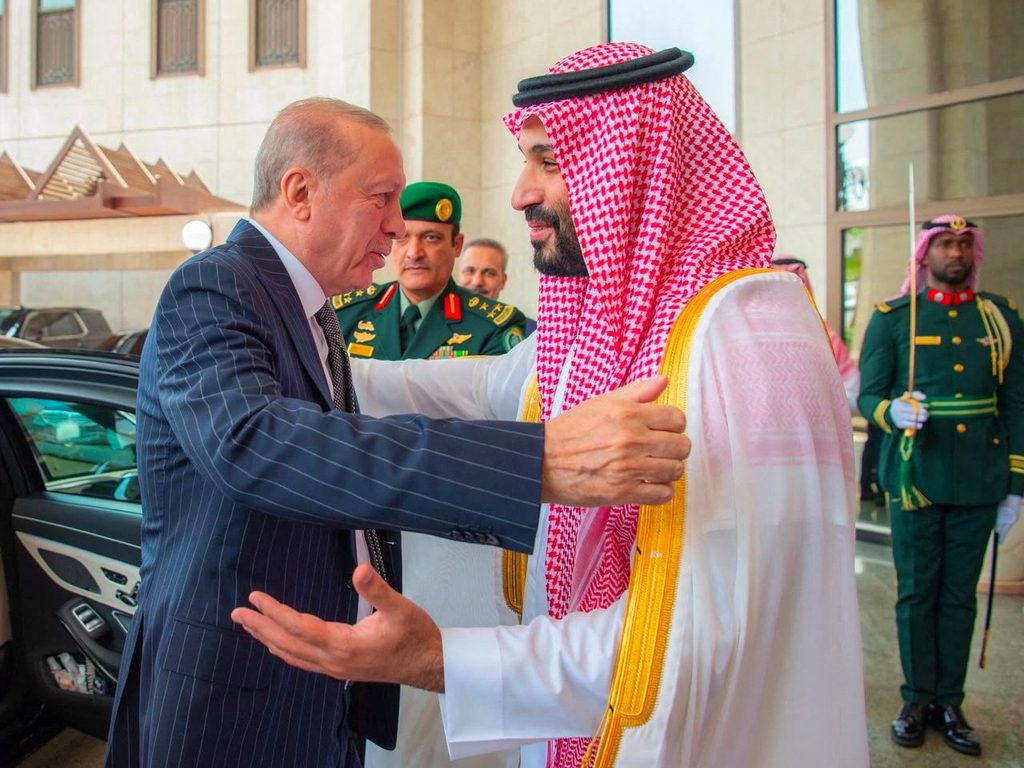
The Mecca signatories, however—while agreeing to “cooperate closely” on defense and security (Article 3), engage in “regular consultations” (Article 4), “strengthen existing cooperation” (Article 5), “strengthen their defence capabilities” through joint cooperation (Article 7), and increase intelligence sharing (Article 9)—did not sign up to develop the joint infrastructure that would enable their militaries to fight together, or a unified force with every country agreeing to have its forces serve under a Saudi, Pakistani, or Turkish flag officer. The signatories are establishing a secretariat headquartered in Riyadh (Articles 5 and 6) with retired Pakistani lieutenant general Nauman Mahmood as its first head. Though the secretariat is likely to help serve as a meaningful point of coordination, it is difficult to see it overriding the valuable relationships that individual signatories have with states that their fellow signatories view as their greatest threat.
For example, if India and Pakistan return to war in Kashmir, Riyadh’s rhetoric of support might well be strong, but it would be imprudent to assume Saudi troops would join the fight against India, or that Riyadh would cut oil supplies to New Delhi. With its domestic economic transition as priority one, two, and three, Saudi Arabia is unlikely to risk undermining that for any country or agreement.
Similar limitations can be found for Pakistan. Iran has already attacked Saudi Arabia multiple times since the war broke out in February, and Pakistan has sent thousands of troops to Saudi Arabia. But there is no indication that they have played an active role in meaningfully defending the kingdom directly from Iranian strikes, let alone striking back—a move that would not only jeopardize Islamabad’s role as a mediator of the conflict but also risk making itself a viable target in Tehran’s eyes.
Moreover, Islamabad’s now explicit rejection of the possibility of its nuclear umbrella covering Saudi Arabia as part of the Strategic Mutual Defence Agreement should not be underestimated. The statement makes clear not only for the Mecca Agreement signatories but their adversaries as well that there are limits to how far they will go to defend each other.
Likewise, Turkey will sell drones to Pakistan and Saudi Arabia, and perhaps even prioritize those sales as Mecca Agreement Articles 7 (“the ‘Parties’ shall, on the basis of mutual agreement, support technology sharing among defence-industry institutions”) and 10 (“the ‘Parties’ shall provide one another with logistical support in peacetime, wartime, and other emergencies, including weapons, ammunition, fuel, spare parts, and other equipment”) would imply. But it is not going to war with Iran in support of Riyadh given its extensive economic and trade ties with Tehran, any more than one would expect Islamabad or Riyadh to send troops to Cyprus if conflict resumed between the globally recognized Republic of Cyprus and the Turkish Republic of Northern Cyprus, whose independence, to this day, is recognized by no country except Turkey.
In this new Middle East, states are aligning issue by issue, not choosing sides.
The one area where the three countries have begun to demonstrate some meaningful security cooperation, beyond what would have been expected before the agreement was signed, is in the fight against the Houthis—notably a nonstate actor, which a plain reading of Article 1 of the agreement (“If the territorial integrity, sovereignty, or internationally recognised borders of any of the ‘Parties’ are threatened or endangered, the ‘Parties’ shall use all necessary means to eliminate such threat(s)”) would seemingly cover. Houthi attacks against Saudi Arabia have caused not only death and destruction in the kingdom but also ended the fragile détente the group had with Riyadh the last four-plus years.
The difference between then and now is the support Riyadh has received from Islamabad and may yet receive from Ankara. Media reporting claimed that Pakistani fighter jets were being used to support Saudi operations in Yemen against the Houthis. Islamabad denied that claim while noting that it has stationed troops in the kingdom to provide defensive support. Ankara is considering defensive support, but has already said that it would not provide offensive assistance—which is probably needed to defeat the Houthis rather than just undermining the group temporarily.
Such support matters, and as a first test of the Mecca Agreement, it probably meets the minimum requirements. But the distinctions between offensive versus defensive support, and between a militia and a state, are critical to understanding the Mecca Agreement—and why it should be viewed as meaningful, but limited, not as a constituent element of an emerging bloc or a reflection of the region’s division into two blocs.
Islamabad and Ankara’s support in helping to provide defensive protection to the kingdom should not be belittled. It matters, but it is also likely to have minimal cost. The Houthis probably lack the ability, or desire, to retaliate against either Pakistan or Turkey. Nor are Islamabad and Ankara risking any financial losses through, for example, reduced trade with the Houthis. Compare that to the costs of supporting Riyadh in its confrontation with Iran, or Pakistan in a next conflict against India, or Turkey in Iraq, against the state or the Kurds. Invocation of the Mecca Agreement against nonstate actors and terrorist groups makes it a meaningful new and narrow tool for these states’ cooperation. But it falls short of the type of security arrangement a true bloc would offer.
Flexibility is the new must-have
The Mecca Agreement is better understood as emerging modular alignment. It is a serious shift away from the US security umbrella, but not a break with it. The war in Iran accelerated a process that has been under way for years, one in which successive administrations, Democratic and Republican, have in word and deed undermined Middle East allies’ confidence in a system where they relied almost solely on the US. At the same time, the US has been frustrated that most Arab allies, with the exception of the UAE and Bahrain, have not done enough to account for their own defense—and therein lies the irony.
The war—in which the UAE, Saudi Arabia, Kuwait, and Bahrain have all participated in retaliatory attacks against Iran—has further persuaded Gulf states of the need to seek out new and varying partners, rather than doubling down on Washington alone. Diversification away from US suppliers was going to happen no matter what; the US defense industrial base is simply insufficient, within current obligations, to supply its allies with the totality of their requirements—a reality that has become more acute as the war with Iran continues in a state of uncertainty, neither concluded nor a full-scale conflict.
The Mecca Agreement may well see the three countries providing drones and sharing intelligence with each other over or instead of other countries in the region and with the US. But there is little reason to believe that outside of defense and security—in the areas of trade, commerce, governance, technology, the economy, energy, or human capital—there will be the alignment needed to divide the region into two competing blocs. Not one of Turkey’s biggest import partners comes from the Middle East; save for its neighbor Iraq, its biggest export partners are in Europe. Moreover, Pakistan’s biggest export market is the US.
On March 1, 2026, the day after the Iran war began, Gulf countries issued a communiqué from the extraordinary session of the Gulf Cooperation Council (GCC) in which the council highlighted its right to respond. Over the following months, many GCC ambassadors went together to see senior officials at the White House, State Department, Pentagon, and Capitol Hill. But the lack of a coordinated military response to Iran, or agreed-upon policy toward Tehran by GCC members, reflected more than disagreements. It suggested a structural unwillingness, by all member states, to subordinate national judgments to a collective mechanism.
If such collective action could not be summoned during the Gulf states’ biggest crisis in decades, then Saudi Arabia is not going to subordinate itself to Pakistani or Turkish preferences, any more than the UAE will to Israel’s. Instead, when they are in alignment on an issue like regional security, they will move together. When they are not, they won’t.
Why the bloc framework persists—and why it misleads
The emerging two bloc thesis of the Middle East gives Western policymakers a familiar framework through which to try to understand the shifting dynamics of the region and a clear foundation on which to build a regional strategy (or two). And the thesis correctly assesses patterns of cooperation, ideological affinity, and formal agreements between states.
But the conclusion some draw from those patterns—that these new agreements are driving forward the development of a new bloc or blocs—misunderstands their narrow scoping and the demand by participants for flexibility in their alliances. The differences between states engaging in new minilateral arrangements—whether political, financial, ideological, or strategic—are not gaps to be filled. States in the broader Middle East have concluded that whatever gaps exist with allies on one issue will be filled by different ones. Commitments are only specific to a sector (e.g., defense), or even at times a sub-sector (e.g., drones).
Turkey is likely to view the Mecca Agreement as an opportunity to isolate and target Israel, but Saudi Arabia will have zero appetite to be aligned with Ankara in its war of words with Jerusalem, any more than it would be willing to subordinate itself to Islamabad or Ankara’s preferences if they even marginally risk undermining Saudi domestic goals. Instead, the kingdom will probably leverage the current conflict with the Houthis as a defining test case for the agreement. For the test to be a successful basis for future security cooperation that involves the deployment of each other’s troops in defense of a member under attack, Pakistan’s and Turkey’s support will need to help Riyadh meet its strategic objectives, to include providing sufficient capabilities on a timeline dictated by the kingdom, and not by Islamabad or Ankara.
The policy implications for the US are significant. Washington will almost certainly lose leverage in this new paradigm, but here too it would be folly to mistake less leverage for zero leverage. The US will remain a key supplier of weapons, a destination for investment, and a sought-after source for its technology—even as China seeks to compete in all of these sectors.
For Washington, if the Middle East is moving toward modular alignment rather than consolidating into two blocs, then there is no need to explicitly choose between those countries who are associated with the Abraham Accords and those who have signed up to the Mecca Agreement. The Trump administration will continue to push the Abraham Accords, with the president believing it to be one of his most important foreign policy legacies from his first term. But viewing the Mecca Agreement as directly counter to the Abraham Accords—even if some of the originating states viewed it to have such potential—would almost certainly, and unnecessarily, squander the leverage the US has remaining. It would also likely prompt an additional negative outcome by accelerating Egypt, Saudi Arabia, Pakistan, and Turkey’s turn toward Beijing. Washington is in the advantageous position of not having to choose between them, and it shouldn’t.
The better approach would be to compete the way the region itself now operates: sector by sector. The US will be the preferred partner on the files where it holds a competitive advantage—military capabilities and training, deep capital markets, frontier technology, and intelligence—and should accept that Middle Eastern states will look elsewhere on other files, as the US should. Washington has already proven it can succeed in ensuring consistent policy across presidential administrations—and with varying regional stakeholders—when it truly prioritizes doing so, as its agreements on artificial intelligence with both Saudi Arabia and the UAE demonstrate.
Moreover, such an approach would exploit an existing asymmetry the US holds over China, which has repeatedly demonstrated that it will sell military hardware to the region but will not act as a security guarantor when the fighting starts. Washington should press the advantage of its bases and existing force posture and engage Middle East capitals in what will be a difficult but critical conversation on what the US and its partners need from each other to deepen mutual commitments. A strategy built on being the best modular partner, rather than the architect of a bloc the region does not want, can ensure the US retains leverage rather than loses more.
In this new Middle East, states are aligning issue by issue, not choosing sides. Their strategic autonomy is no longer emerging, it’s arrived. The more commitments across sectors and issues between two states, the stronger the relationship will be. But the desire for flexibility will remain—and that is something no single bloc can accommodate.
about the author
Jonathan Panikoff is senior director of the Scowcroft Middle East Security Initiative at the Atlantic Council. Panikoff served from 2015 to 2020 as deputy national intelligence officer for the Near East at the National Intelligence Council.