
Last updated: 3:30 p.m. (ET), 05/15/2026
What is the US military committing to the war in Iran? And what does that mean for a potential conflict with China?
Operation Epic Fury is stressing military capabilities—aircraft carriers, bombers, missile defense systems—in ways that will have an impact in other theaters around the world. That includes US efforts to credibly deter Chinese aggression and prevail against China in a future conflict. Monitoring the military assets that are relevant to US strategy in the Indo-Pacific and currently deployed to Iran offers insight into how the war might affect the US military’s readiness to meet the threat posed by Beijing—the most consequential challenge the United States faces.
Actual numbers of US inventory and deployment data are classified. This tracker, developed by the Scowcroft Center for Strategy and Security’s Forward Defense team, provides weekly estimates for a subset of assets where open-source information is most reliable.
Key developments as of May 15, 2026:
- Despite the ceasefire, the United States has maintained a large destroyer presence in the Middle East. Destroyers carry large inventories of US missiles that are critically low due to the ongoing war.
- The US Navy announced that it will delay delivery of the next two amphibious warships by one year, to 2027 and 2031 respectively, likely extending deployment cycles for existing amphibious ships, further degrading readiness levels.
Percentage of key ship classes deployed to Operation Epic Fury
This chart shows the percentages of key ship classes that are currently deployed to Operation Epic Fury, not deployed to Epic Fury but available, and unavailable. Unavailable ships are either in scheduled maintenance or training. Available ships are currently deployed in other theaters or estimated to be surge-ready.
Air, naval, and missile defense assets deployed to Operation Epic Fury
Status of key assets as of May 15, 2026:
- Aircraft carriers: Two of three available US aircraft carriers—the USS Abraham Lincoln (CVN-72) and the USS George H.W. Bush (CVN-77)—are deployed to support Operation Epic Fury. After the longest carrier deployment since the end of the Vietnam War, the USS Gerald R. Ford (CVN-78) is now on its way back to the United States.
- The USS Nimitz (CVN-68) was set to be decommissioned in May 2026, decreasing total US inventory to ten. In March 2026, the US Navy decided to extend the Nimitz’s service life to March 2027, with unclear impacts on its readiness.
- The USS Nimitz (CVN-68) was set to be decommissioned in May 2026, decreasing total US inventory to ten. In March 2026, the US Navy decided to extend the Nimitz’s service life to March 2027, with unclear impacts on its readiness.
- Mine countermeasures: Two of four Avenger-class mine countermeasure ships—the USS Pioneer (MCM-9) and USS Chief (MCM-14)—are reportedly en route to the Middle East. One of four littoral combat ships equipped with mine countermeasures mission packages—the USS Canberra—is in the Arabian Sea supporting the US blockade. Another, the USS Tulsa, passed through the Strait of Malacca in early April, and is likely to be nearby, though its location is not yet confirmed.
- The US Fifth Fleet, headquartered in Manama, Bahrain, has three littoral combat ships (LCS) outfitted with mine countermeasures mission packages. In mid-March, two were in Singapore for a “scheduled maintenance and logistics stop,” with the third reportedly in the Indian Ocean—presumably to avoid Iranian attacks.
- LCS are modular and can be outfitted with a variety of mission packages. Only four of the twenty-eight LCS have been equipped with the mine countermeasures mission package, according to the Navy.
- The Navy decommissioned four of its eight Avenger-class ships assigned to the US Fifth Fleet in September 2025. The four remaining Avengers are homeported in Sasebo, Japan.

- Landing Helicopter Assault (LHA)/Landing Helicopter Dock (LHD): One of the three ships available from the LHA/LHD classes—the USS Tripoli (LHA-7)—is committed to Operation Epic Fury as part of the deployment of an amphibious ready group and Marine expeditionary unit (ARG-MEU). Another, the USS Boxer (LHD-4), is potentially en route to the Middle East.
- The USS Tripoli group, homeported in Japan, is operating in the Arabian Sea.
- The USS Boxer group, homeported in San Diego, is reportedly on its way to the region, but it remains unclear whether it will join or replace the Tripoli.
- The only other known deployed LHD is the USS Iwo Jima (LHD-7) in the Caribbean.
- Following the July 2020 fire and the eventual decommissioning of the USS Bonhomme Richard (LHD-6), LHA and LHDs are not able to meet the Navy and Marine Corps’ goal of having 80 percent of the force ready to deploy.
- Amphibious transport dock (LPD) and dock landing ships (LSD): The USS New Orleans (LPD-19) and the USS Rushmore (LSD-47) are with the USS Tripoli ARG-MEU in the Arabian Sea.
- The USS Boxer group includes the USS Portland (LPD-27) and USS Comstock (LSD-45).
- The Government Accountability Office assessed in 2024 that nine out of ten LSDs were in “poor material condition.”
Analysis: Amphibious ready group deployments
The USS Boxer amphibious ready group and Marine expeditionary unit (ARG-MEU) is near Indonesia and reportedly on its way to the Middle East, where the USS Tripoli amphibious ready group is operating. The USS Iwo Jima amphibious ready group is currently in the Caribbean. The deployment of a third ARG-MEU—typically comprising an LHA/LHD and a combination of two LPD/LSD—matches Marine Corps Commandant General Eric Smith’s plan for three forward-postured ARG-MEUs. However, under current maintenance and training realities, deploying the USS Boxer ARG-MEU now is a surge of US capabilities and does not signify a true achievement of the commandant’s goal. Deploying the USS Boxer early could limit the availability of ARG-MEUs in the future and prevent the United States from achieving a sustainable and ready three-forward-postured ARG-MEU plan. Unless the United States builds more ships for ARG-MEUs, the overextension of this limited capability will have significant long-term readiness implications.
Check out the Forward Defense program’s work on US shipbuilding here.
- Arleigh Burke-class destroyers: An estimated 33 percent of the entire available destroyer class is deployed in Operation Epic Fury.
- Arleigh Burke-class destroyers spend an average of nine years (27 percent of their thirty-five-year service life) in maintenance.
- Arleigh Burke-class destroyers spend an average of nine years (27 percent of their thirty-five-year service life) in maintenance.
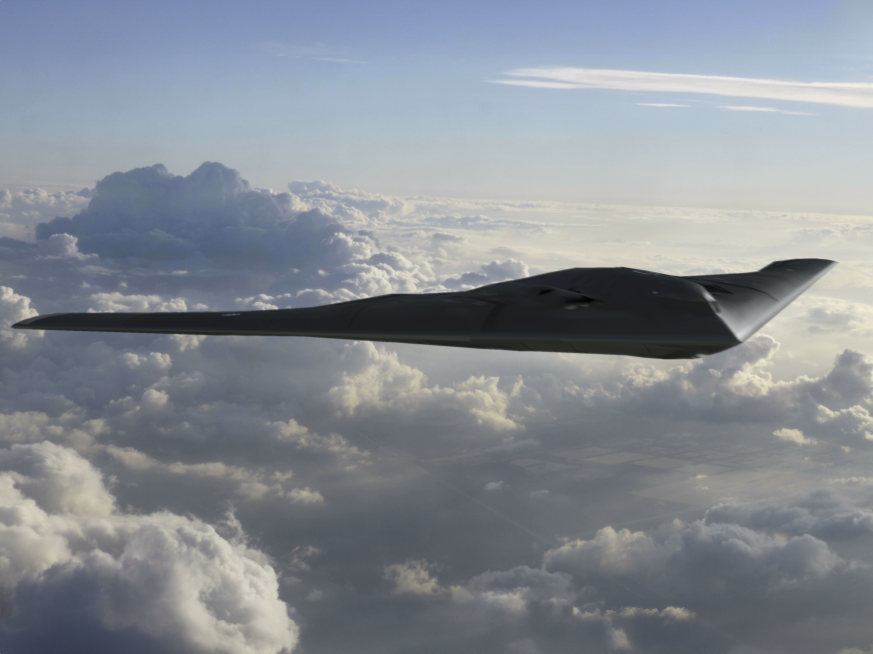
- B-1 bombers: 60 percent of the mission capable B-1 fleet is conducting strikes as part of Operation Epic Fury, with all operating from Royal Air Force (RAF) Fairford in the United Kingdom.
- The US maneuvered three more B-1 bombers to RAF Fairford on March 26. This likely exceeds the record for a concentrated B-1 deployment in the post-Cold War era.
- The US maneuvered three more B-1 bombers to RAF Fairford on March 26. This likely exceeds the record for a concentrated B-1 deployment in the post-Cold War era.
- B-2 bombers: B-2 deployments are highly classified. An estimated 26 percent of the entire available fleet could be deployed for Operation Epic Fury.
- Based on a statement from Chairman of the Joint Chiefs of Staff General Dan Caine, it is likely that B-2s conducted the eighteen missions in Operation Epic Fury that were flown out of the United States.
- B-2 bombers take an average of 119 maintenance hours per flight hour following a bombing mission. This indicates that B-2s used in Operation Epic Fury might be currently unavailable, along with an unknown number currently under programmed depot maintenance.
- E-3 AWACS aircraft: An estimated 63 to 71 percent of the total available E-3 AWACS are deployed in Operation Epic Fury.
- An Iranian drone severely damaged an E-3 AWACS at Prince Sultan Airbase, Saudi Arabia, on March 27.
- In 2024, slightly more than half of the Air Force’s AWACS fleet was assessed to be “mission capable”—able to carry out at least one of the platform’s key missions, which includes air surveillance—and the aircraft is in the process of being retired.
- MQ-9 Reaper: The total number of MQ-9s used in Operation Epic Fury is not known.
- The United States rotates MQ-9s in “orbits,” in which several of the aircraft are loitering over enemy airspace at a given time. MQ-9s are capable of sustained day-long loitering missions.
- Open-source reporting indicates that the United States has lost sixteen MQ-9s since the start of Epic Fury, building on an estimated loss of ten percent of the fleet since 2023.
- The US Air Force plans to reduce the MQ-9 inventory to 140, though recent losses of MQ-9s will likely affect this decision.
- Editor’s note: Previous updates to this tracker included estimates for the cost of the MQ-9 Reapers lost in Operation Epic Fury. Because those estimates were based on the cost of an MQ-9 plus its associated equipment, they were incorrect and have been removed.
Analysis: Intelligence, surveillance, and reconnaissance (ISR)
The US military employs a variety of fixed-wing manned and unmanned intelligence, surveillance, and reconnaissance (ISR) assets that collect, process, and distribute data on adversarial forces, terrain, and the operational environment. Extensive and exquisite ISR is vital for military operations. To ensure 24/7 access to this critical information and to prevent the US military from losing situational awareness if one platform is lost, the inventory of ISR assets is designed with redundancies. Budget changes, new technologies, and shifting requirements, however, have made it so that some ISR capabilities lack these necessary redundancies.
In addition to the E-3 AWACS and MQ-9 Reaper, the US military has confirmed that it is employing additional ISR platforms in Operation Epic Fury, including the P-8 Poseidon, EA-18 Growler, and RC-135 Rivet Joints.
The MQ-4 Triton high-altitude reconnaissance drone offers an example of potential readiness effects on ISR platforms. Though there is little public information about their specific locations, since late 2024, the US military has been deploying three MQ-4 unmanned patrol squadrons of four aircraft each. This formation allows for three aircraft performing the mission, while one can undergo maintenance. Losing one disrupts this process. On April 9, the US Navy lost one of its twenty existing MQ-4s in the Persian Gulf. With per-drone costs estimated to be as high as $400 million, the Navy procured far fewer systems than it originally planned to. Under these circumstances, the loss of just one platform can ripple across the entire fleet.
- KC-135 Stratotankers and KC-46 Pegasus: An estimated 33 percent of mission capable KC-135s and KC-46s are involved in refueling missions in Operation Epic Fury. These planes are critical to support sustained air missions.
- Iran has damaged or destroyed approximately a dozen aerial refuelers, although exact numbers are not known.
- The US inventory of refuelers is large but finite. The US does not plan to purchase more KC-135s, but does intend to purchase more KC-46s.
- Patriot missile batteries: An estimated 7 to 11 percent of available Patriot batteries are in the Middle East.
- Open-source reporting indicates that there is at least one Patriot battery in Saudi Arabia and one in Qatar, and four batteries were transferred to the region in spring 2025.
- Open-source reporting indicates that there is at least one Patriot battery in Saudi Arabia and one in Qatar, and four batteries were transferred to the region in spring 2025.
- THAAD systems: An estimated 29 to 43 percent of available US THAAD systems are committed to Operation Epic Fury.
- Out of an estimated five operational THAAD systems that are outside the continental United States, two to three of them are in the Middle East. One is in Jordan and one is in Israel. It’s unclear if the second THAAD battery deployed to Israel in spring 2025 remains in place. The other two are permanently deployed in Guam and South Korea, respectively.
- In March, the United States also reportedly moved up to 48 THAAD interceptors from the THAAD launchers in Korea to the Middle East.
About the authors
Joe Costa is the director of the Atlantic Council’s Forward Defense Initiative.
Theresa Luetkefend is an associate director with the Forward Defense Initiative.
Moss Gillespie is a young global professional with the Forward Defense Initiative.
related content


Explore the programs
Forward Defense develops and shapes policy solutions that build US military power to deter war and secure the future.

The Scowcroft Center for Strategy and Security works to develop sustainable, nonpartisan strategies to address the most important security challenges facing the United States and the world.