
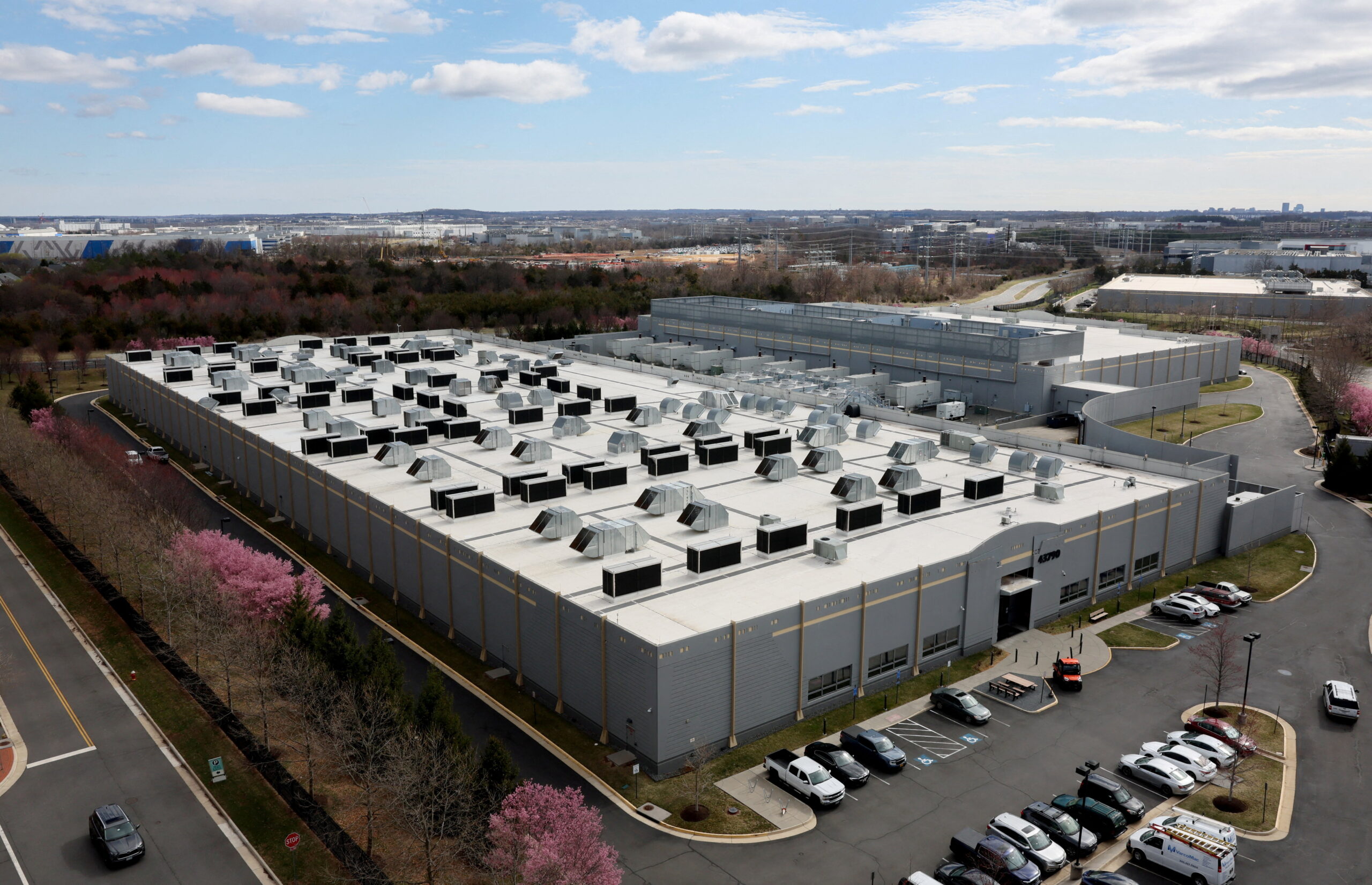
At an October meeting of the North American Electric Reliability Corporation, the authority on grid reliability in the United States and Canada, the agency’s president and CEO declared that the United States is facing “a five-alarm fire” when it comes to providing reliable electricity. This was due, he explained, to an “escalating toxic soup” of causes. This warning of a reliability crisis in the US power grid demonstrates a growing problem: power demand is outpacing the installation of new supply. But some resolutions to this reliability crisis are driving prices and electricity bills higher, creating an energy affordability crisis that is every bit as urgent.
Americans are paying more for their power for several reasons. For instance, power companies are making necessary grid upgrades and replacing aging distribution and transmission infrastructure. They are also responding to wildfire- and storm-related damages. But there is another contributing factor as well: increasing electricity demand driven primarily by new data centers and electrification, the costs of which are often (though do not have to be) passed on to consumers.
For example, a report from the independent market monitor for the PJM Interconnection, the grid operator responsible for the power grid across thirteen states and the District of Columbia, and a follow-up investigation by the Union of Concerned Scientists found that PJM customers are paying an additional $13.6 billion for the July 2025 to July 2026 delivery year for upgrades needed solely to accommodate increasing data center capacity. These additional costs effectively force ordinary ratepayers to subsidize the tech industry’s growing power bills. In November, PJM’s market monitor filed a formal complaint to the Federal Energy Regulatory Commission (FERC), suggesting that PJM should not approve any more new large data center interconnections until procedures improve, citing reliability and affordability concerns.
Too often, US grid planning prioritizes reliability and neglects affordability considerations, which contributes to skyrocketing energy bills. According to an August 2024 report from the consulting firm Brattle Group, more than 90 percent of all US transmission investments are made based on the justification that they are needed for reliability. And since utilities can pass most grid upgrade costs directly to consumers, they lack market incentives to optimize their spending on grid infrastructure absent oversight.
In some cases, this singular focus on reliability is leading utilities to forgo grid investments that can help reduce overall costs and improve the financial sustainability of the power system, oftentimes because they lack regulatory incentives to do so. While reliability remains paramount for maintaining a functioning power grid, affordability objectives and the pursuit of grid-related cost savings must become a central pillar of grid planning alongside reliability and resilience.
The gold standard of grid reliability—and its limitations
Grid reliability is in fact under significant threat in many regions across the United States. Power demand is growing rapidly, and generators are reaching retirement age faster than new ones are being built and connected to the grid. However, cost is often underemphasized in grid planning due to the way regulated utilities are structured. Utilities typically earn a guaranteed return on equity for incurred capital expenditures, known as the rate base, and pass operational costs directly to the consumer through rates approved by state public utility commissions and—if the utility’s service territory or a project crosses state lines—FERC.
Since higher capital spending yields a higher return, this model encouraged utilities to build more infrastructure. But it can also incentivize utilities to build more than necessary or pursue incremental upgrades that add up to higher costs, instead of more affordable holistic grid solutions. Without prudent regulation, utilities can stack up unnecessary capital investments (known as “gold plating”) that are then paid by captive consumers. In other cases, utilities lack regulatory incentives to make improvements to the grid, as is the case for many advanced transmission technologies.
As a result, transmission and distribution costs have increased rapidly, which have caused retail rates and bills to rise at a fast pace. Nationally, the average residential electricity rate has increased more than 30 percent since 2020. Moreover, average electricity rates are projected to grow between 15 and 40 percent by 2030, straining already tight household budgets.
The burden has tended to most acutely impact consumers near data center hubs. Seventy percent of the price node increases across the country—the points throughout the grid where prices are determined—were in locations near significant data center activity, with costs growing by as much as 267 percent. Among the regions affected are “Data Center Alley” in Northern Virginia, Silicon Valley, and, increasingly, the Dallas-Fort Worth metropolitan area.
Thus, plans for system upgrades and grid expansion must incorporate cost-benefit analyses alongside reliability considerations, rather than presuming that any reliability benefit justifies the cost. In other words, utilities should use planning and investment criteria that take into account grid upgrades that avoid high generation or operating costs, especially during times of peak demand or extreme weather.
Improving grid planning
There are several grid planning reform efforts that could lower prices for end users and help ensure that costs are properly distributed among ratepayers, all while increasing the pace and volume of the buildout of energy infrastructure needed to meet US power needs.
Beyond Order 1920
FERC’s Order 1920-B is a landmark FERC order issued in April that requires utilities to conduct long-term, ten-year-horizon planning studies to better predict and procure energy infrastructure needs. However, Order 1920-B does not reform existing utility processes, some of which are outdated. Utilities should complement these long-term efforts by reforming existing processes within their authority that are still driven primarily by reliability.
Designate more national interest transmission corridors
The Department of Energy (DOE) should accelerate the designation of additional national interest electric transmission corridors (NIETCs), land predesignated for transmission infrastructure development aimed at improving project timelines and certainty. If successful, this could vastly improve the prospects of building interstate and interregional transmission lines, which are notoriously difficult to complete.
The DOE currently has three NIETCs heading toward approval, but several regions with valuable opportunities to build high-capacity, interstate transmission infrastructure have been dropped from the initial round of designations due in part to concerns over limits to funding and capacity. The DOE should quickly initiate a second round of designations using the latest research, including a recent report on the tremendous value of interregional transmission lines. New transmission infrastructure is urgently needed, so identifying land on which these projects can be built is essential. The NIETC process has thus far contributed little to the development of additional energy infrastructure but could be crucial to informing national grid planning if its progress is accelerated.
Require cost-benefit-based planning and prudent cost allocation
Utilities and energy commissions must develop new, forward-looking grid planning strategies that incorporate cost-benefit analyses and ensure fair cost allocation of investment expenses.
Experts have recommended several reforms for improving planning outcomes. For example, utilities should co-locate generation sites with large loads to reduce system upgrade costs and the risk of grid congestion. Utilities and transmission developers should install advanced transmission technologies that can expand the capabilities of existing infrastructure at lower cost than building new lines. Meanwhile, policymakers should pass legislation and regulation that allows utilities to recover such investments through their rate base. And they should offer energy efficiency and demand response programs to consumers to lower consumption, which would also lower energy bills.
Consideration of alternatives has long been part of utility decision-making. Incorporating cost-benefit analyses and balancing multiple variables in grid planning is core to securing a reliable and affordable power system.
Develop new rate structures for large-load and “reliability-driven” customers
Utilities should also consider new rate designs for data centers and other large-load customers that are driving the need for new infrastructure. They should also consider rate design for customers with stringent reliability needs, such as hospitals, fire stations, and critical telecommunications facilities. Customers who are less willing to pay to avoid blackouts should be able to opt in to demand response programs, which can curtail power delivery when necessary.
System operators should also consider how market structures may lead to unfair expense allocation due to grid upgrades that are only required for data centers. Proper cost allocation between the primary beneficiaries of network improvements is critical, especially when data centers are outpacing every other demand category.
For instance, some utilities are considering creating a new customer class for data centers—in addition to residential, commercial, and industrial users—with a specialized rate. Other utilities have enacted temporary moratoria on new data center interconnections so that they can reliably serve the existing load while new rules are established for data centers. Calls for moratoria on new data centers are gaining national traction. On the markets side, Southwest Power Pool, which serves areas spanning from Montana to Arkansas, has proposed an accelerated interconnection process for “high-impact large loads.” The DOE has also requested that FERC create a rulemaking for large load interconnection to interstate lines, which could introduce solutions to meet the energy demand challenge of hyperscale data centers nationwide. Independent organizations should analyze these solutions to determine which are effective and replicable in other service territories.
How federal action can shape the grid
There is broad consensus in Congress on the urgency to accelerate construction of new grid infrastructure. To unlock a better US power system, legislators should supplement industry-led efforts by streamlining permitting processes and mandating proactive, cost-benefit-based system planning. In September, a bipartisan caucus released a Permitting Reform Framework, which includes several recommendations that could help control costs.
Public-private partnerships can also accelerate development timelines, increase investor certainty, and decrease the cost of capital. This month, the DOE extended a $1.6 billion loan guarantee to enable the reconductoring of five thousand miles of transmission infrastructure in five states.
These partnerships require consistency in agency decision-making on investments. In July, the DOE canceled a $4.9 billion loan guarantee for the Grain Belt Express line that would have delivered low-cost power from Kansas to Indiana. As the DOE continues to review existing loan guarantee program contracts, a higher threshold should be applied to transmission projects before initiating cancellation.
Consider the costs
While reliability is critical, transmission planners and government entities must also prioritize cost-effectiveness. Failing to do so will risk saddling Americans with high-cost power by stalling the buildout of transmission infrastructure and preventing less expensive generation solutions. Relying solely on old generation will increase costs. A report by the energy consulting firm Grid Strategies published in August estimated that DOE orders to keep coal plants open past their economic life will cost consumers at least $3.1 billion.
Instead, the DOE should focus on facilitating the rapid deployment of new, cost-effective power grid and generation assets. The United States needs an all-of-the-above approach to grid solutions and electricity generation, because when all options are allowed to compete, the result is efficient markets, lower costs, and reliable power. Effective transmission systems enable this competition. By considering available cost savings alongside reliability in grid planning, planners and regulators can ensure a resilient, modern power grid that delivers affordable electricity for all Americans.