
As a turbulent year comes to a close, the Middle East is entering another period of acute strategic tension. There is a complex web of players involved: Israel, Iran, Lebanon, Iraq, and Yemen, alongside armed nonstate actors including Hezbollah, Hamas, the Houthis, and multiple factions within Iraq’s Popular Mobilization Forces. No one should confuse the patchwork of temporary cease-fire agreements in place throughout the region for sustainable deterrence and peace, as underlying issues remain unresolved and adversaries’ desired end states remain diametrically opposed.
There is an elevated risk of renewed multi-theater conflict over the coming months. This risk is driven by three converging dynamics: Iran’s effort to reconstitute strategic strike and deterrent capabilities, the continued refusal of Hezbollah and Hamas to disarm, and the increasing linkage between regional theaters from Gaza and southern Lebanon to Iraq and the Red Sea.
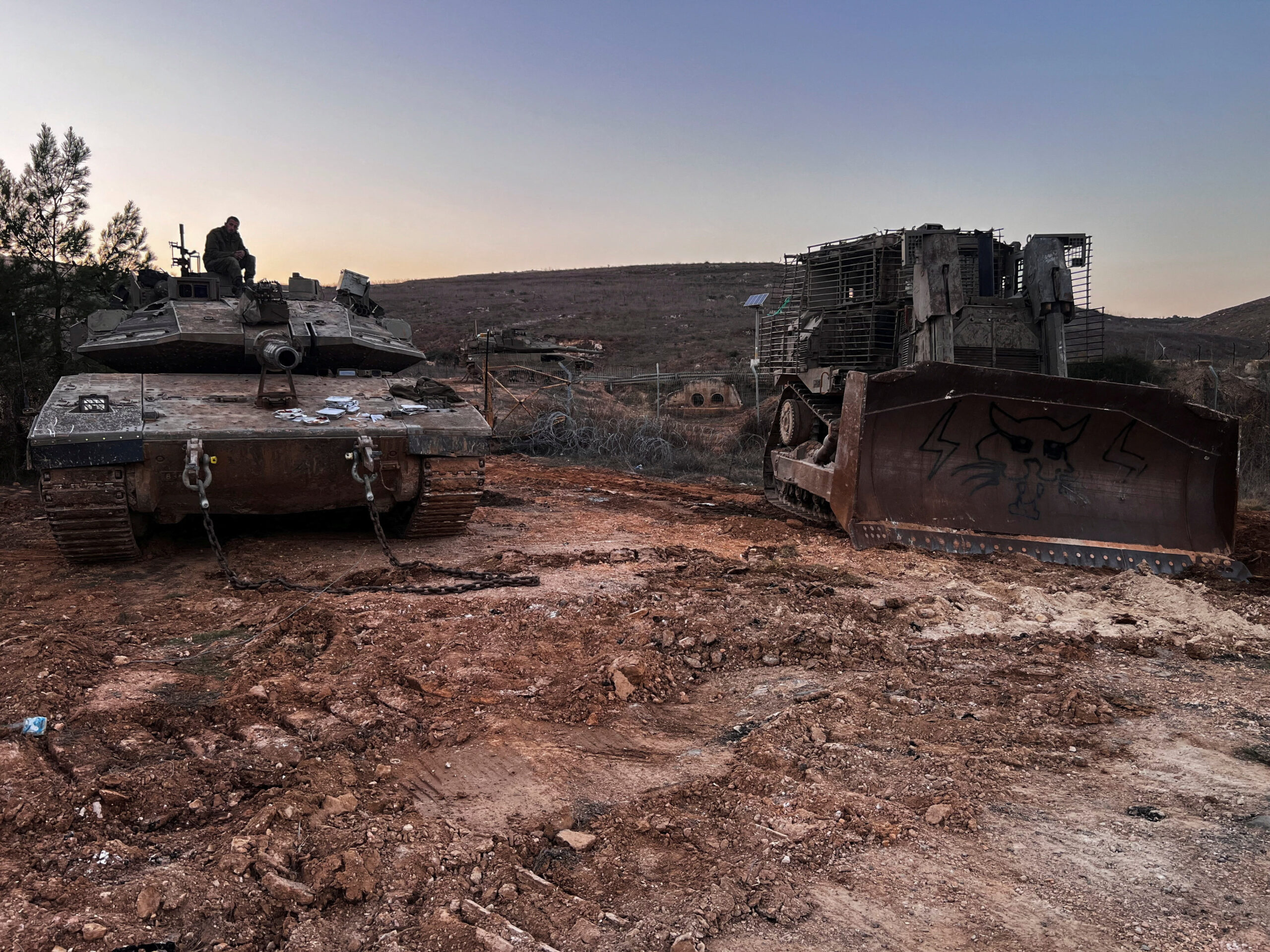
Israeli leaders have publicly stated that diplomatic arrangements to stabilize Israel’s northern border cannot remain open-ended. Israel has indicated that Lebanon has until the end of the calendar year to demonstrate meaningful compliance with United Nations Security Council Resolution 1701, particularly regarding Hezbollah’s armed presence south of the Litani River. Absent such progress, Israeli officials have signaled that they may consider military action to be a matter of necessity rather than choice. Israel could also escalate to achieve its goals of disarming Hamas and ensuring Iran no longer possesses a ballistic missile or nuclear threat.
What distinguishes the current moment is not just the persistence of these conflicts, but the degree to which escalation in one theater is increasingly likely to trigger responses across others. With Washington focused on a military buildup in the Caribbean and negotiations to end the war in Ukraine, US policymakers should not take their eye off the prospect of a renewed crisis in the Middle East.
Iran, proxies, and the reconstitution of deterrence
Iran’s regional strategy has long relied on a layered deterrence model built around proxies, long-range fires, and ambiguity rather than direct state-to-state confrontation. This model seeks to impose cumulative costs on adversaries while insulating Iran from direct retaliation.
According to repeated assessments by the US Department of Defense and the United Nations, Iran maintains the largest and most diverse missile force in the Middle East and continues to invest in survivability, underground basing, and production capacity. These capabilities are complemented by Iran-aligned armed groups operating across Lebanon, Gaza, Iraq, Syria, and Yemen.
From Israel’s perspective, this proxy-based deterrence architecture is an existential threat. Hamas’s October 7, 2023, attack fundamentally altered Israeli threat perception by demonstrating that Iran-aligned groups could inflict a strategic shock without triggering immediate regional war. Israeli officials have since made clear that they will not allow Iran to reestablish a deterrence environment that sets conditions for similar attacks in the future.
This dynamic significantly narrows Israel’s tolerance for Iranian rearmament and proxy consolidation, particularly when combined with explicit timelines it has set for Hezbollah on its northern border.
Hezbollah, Lebanon, and the limits of state authority
Among Iran-aligned groups, Hezbollah remains the most capable militarily. Independent assessments estimate that Hezbollah possesses tens of thousands of rockets and missiles, including increasingly accurate systems capable of striking deep into Israel.
United Nations Security Council Resolution 1701, which ended Israel’s 2006 war with Lebanon, requires the disarmament of nonstate armed groups in southern Lebanon and the extension of Lebanese state authority. Nearly two decades later, Hezbollah has explicitly refused to disarm, framing its arsenal as a necessary resistance force.
The Lebanese government and the Lebanese Armed Forces have acknowledged that they are unwilling or unable to forcibly disarm Hezbollah. Public statements by Lebanese officials and international reporting confirm that the state lacks the capacity and consensus to enforce Resolution 1701 without risking internal conflict.
This reality has increasingly shaped Israeli planning. Israeli officials have framed the issue not as Lebanon’s unwillingness to disarm Hezbollah but its inability to do so. They have also argued that continued Hezbollah entrenchment along the border is incompatible with long-term stability. Since the 2024 cease-fire was signed between Israel and Hezbollah, Israel has been sporadically striking targets in southern Lebanon, and Iran has attempted to resupply Hezbollah with funds and weapons, exacerbating tensions that could reach a tipping point.
Gaza, phase two, and the missing path to disarmament
In Gaza, Hamas remains an armed political actor despite sustained Israeli military operations and international mediation. Hamas has explicitly rejected disarmament as a condition for any cease-fire or post war arrangement.
The US proposal for phase two of the Gaza cease-fire envisions a transition from active combat to a sustainable security and governance arrangement. However, none of the regional or international actors that have expressed willingness to participate in a future international or Arab-led stabilization force in Gaza have committed to forcibly disarming Hamas.
Arab states have made clear in public and private statements that they will not assume responsibility for Gaza if it requires direct confrontation with Hamas. As a result, phase two currently lacks an enforcement mechanism capable of eliminating Hamas’s armed capacity, leaving Israel skeptical that any interim arrangement can prevent future attacks.
This gap reinforces Israeli concerns that de-escalation without disarmament merely postpones rather than resolves conflict.
Cascading triggers across theaters
The central risk facing the region is cascading escalation.
Israeli military action in Gaza could intensify pressure along the northern border with Lebanon. Escalation with Hezbollah could increase the likelihood of direct or indirect confrontation with Iran. Iranian or Israeli strikes could, in turn, prompt the Houthis to resume missile and drone attacks against Red Sea shipping or launch long-range systems toward Israel, as they have previously done in response to regional military action.
Simultaneously, escalation elsewhere has historically coincided with increased activity by Iran-aligned groups in Iraq, including rocket and drone attacks on US and coalition facilities.
These pathways are not theoretical. They reflect repeated patterns observed over the past decade, now compressed by explicit timelines, rearmament efforts, and eroding deterrence.
Policy and the challenge of a stable end state
US policy should help shape an end state in which Israel’s security is credibly guaranteed and regional actors believe that further escalation will not produce strategic gain.
This is an exceptionally difficult balance. Historically, Iran’s use of proxies to establish deterrence has rested on its ability to convince adversaries that attacks on Iranian interests will produce widespread retaliation throughout the region. Israel, particularly after October 7, is unwilling to accept that framework and is increasingly determined to dismantle it rather than manage it.
US policy should therefore focus on restoring deterrence rather than pursuing temporary de-escalation alone. This means reinforcing credible regional defense postures, protecting maritime commerce, and ensuring that Iran and its partners understand that further proxy escalation will impose direct and cumulative costs.
At the same time, policy should define enforceable security arrangements, not aspirational ones. Stabilization frameworks in Gaza or Lebanon that lack credible disarmament or enforcement mechanisms are unlikely to reassure Israel or deter future attacks.
Finally, the creation of escalation management mechanisms that preserve decision space during crises. These include crisis communication channels, regional military deconfliction, and diplomatic engagement designed to prevent miscalculation even when underlying conflicts remain unresolved.
The region is not yet in open war. But the convergence of unresolved conflicts, proxy-based deterrence, and explicit timelines for disarmament has sharply reduced the margin for error. Preventing escalation now requires addressing not only immediate triggers, but the deterrence structures that made them possible.