
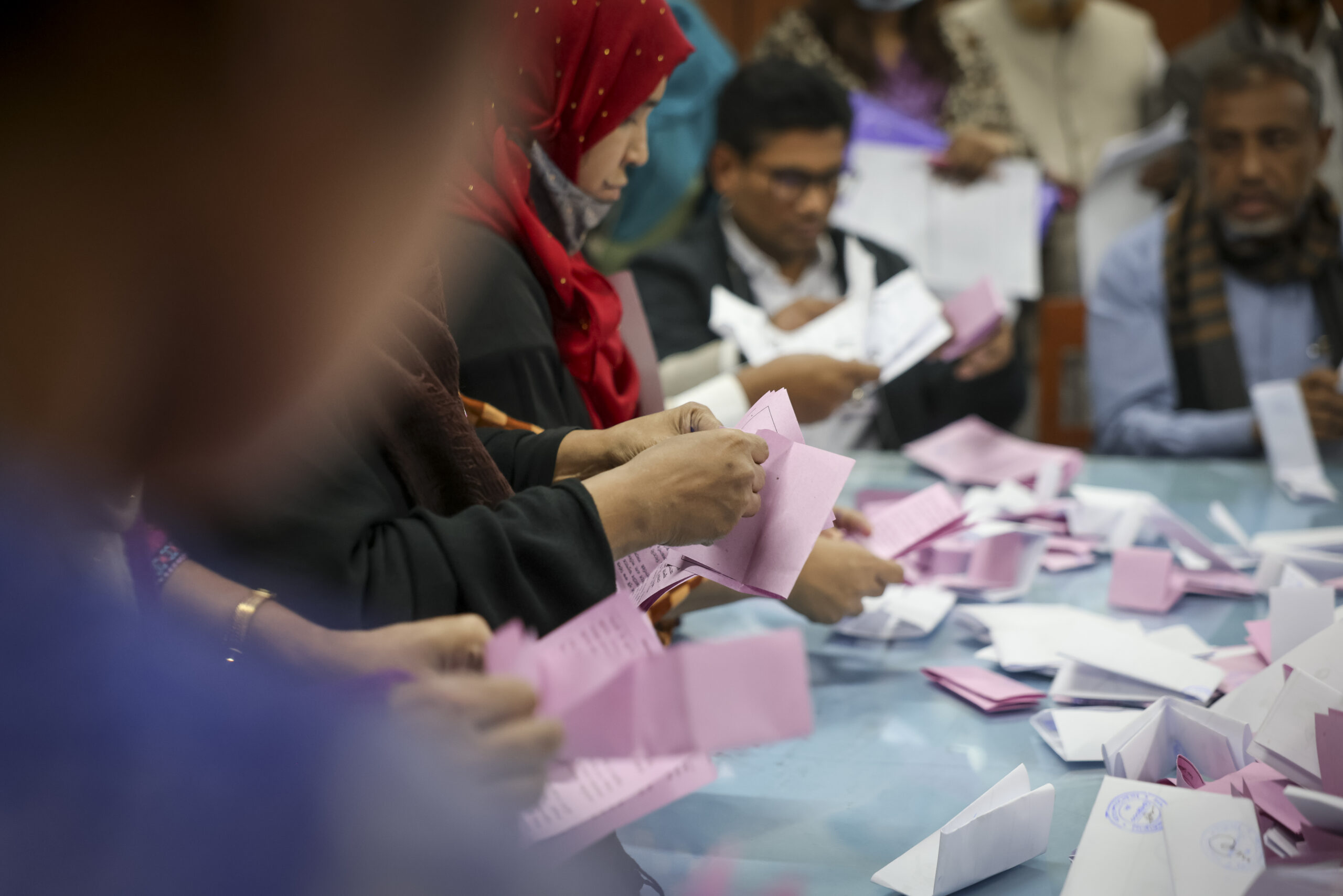
Will a sweeping victory translate into sweeping change? On Thursday, the Bangladesh Nationalist Party (BNP) won a two-thirds parliamentary majority in the first national elections in Bangladesh since a student-led movement ousted former Prime Minister Sheikh Hasina in August 2024. Bangladesh also held a referendum on constitutional changes, including changes to the legislature and term limits for prime ministers, which passed by an overwhelming margin. Our experts share their answers below to the most important questions about these results.
1. Why did BNP win?
Kugelman: Of all the participating parties, the BNP has the largest base and pot of resources. BNP was also helped by the fact that the Awami League—the other large and established party in Bangladesh—was banned from the election, because of its horrific crackdown on peaceful protesters shortly before it lost power in 2024 and its refusal to apologize for or even acknowledge those abuses.
Shahid: This victory reflects a combination of structural and political factors. Strong anti-incumbency sentiment—particularly in the context of the Awami League’s exclusion from this election—appears to have driven a significant shift of former Awami League supporters toward the BNP. Given that these two parties have historically dominated Bangladeshi politics, public dissatisfaction has often resulted in voters shifting between them rather than fragmentation across smaller parties. Coalition dynamics also played a role, as the prospective influence of Islamist actors in the Jamaat-e-Islami coalition prompted reflection among segments of the electorate—particularly some women—regarding the social and policy direction of governance.
2. How is BNP likely to govern?
Shahid: BNP’s previous time in office, between 2001 and 2006, was marked by controversy, including allegations of corruption involving senior leadership figures—many of whom later faced legal proceedings while out of power. At the same time, the party today presents a somewhat different profile, with a mix of experienced leadership and a younger cohort that seeks to recalibrate its image. The BNP has articulated ambitious economic goals, including making Bangladesh a trillion-dollar economy by 2034. Much will depend on whether the party can translate its electoral mandate into effective governance, particularly when it comes to addressing unemployment, strengthening institutional accountability, and restoring investor confidence.
Kugelman: The BNP has a poor track record of governance marked by corruption and repression. But because of the spirit of the 2024 revolution and the thirst for political change that continues to course through Bangladeshi society, it will face pressure to practice cleaner and softer governance.
3. Will the constitutional reforms come into effect, and what impact might they have?
Shahid: If implemented, the constitutional reforms that passed in the referendum could introduce a more structured balance of power—particularly through the institutionalization of a two-term limit for the prime minister, making the legislature a bicameral system with an upper and lower house, and expanding the number of seats in the legislature reserved for women.
On paper, these changes would represent a significant shift toward institutional checks and broader representational inclusion. One potentially sensitive area concerns preferential recognition frameworks. Past debates over privileging veterans of the 1971 war of independence and their descendants became politically contentious and fed into broader public grievances. Current discussions about provisions in the proposed constitutional changes that would recognize the “July warriors” who participated in the protests that led to Hasina’s ouster may evoke similar sensitivities, especially if it means they will receive state benefits.
Kugelman: This will be a key initial signpost for BNP rule. If the party is truly ready to break with the past, and to show that it’s no longer a reflection of the old politics that so many Bangladeshis deplore and want expunged, then it will implement the reforms. This is especially the case since the public gave the reforms such a ringing endorsement in the referendum vote.
4. What is the state of the protest movement at this point?
Kugelman: A party associated with the very things—dynastic politics and corruption—that the protest movement wants to go away has now come to power. That may be a setback for the 2024 revolution. But at the same time, the National Citizen Party, which is comprised of student protest leaders, won a number of seats and will likely play a robust role in the opposition. And the fact that the referendum was approved by such a wide margin suggests that the politics of change that animated the protest movement continue to resonate.
Shahid: The post-transition period following the fall of the previous government has been marked by significant strain on law and order, reflecting both institutional fragility and heightened public expectations. Various groups continue to mobilize and voice demands on a near-daily basis, underscoring the depth of unresolved grievances. Managing this dynamic civic landscape—while restoring stability and maintaining democratic space—will be one of the central challenges facing the new BNP-led government.
5. What impact will these results have on the wider region?
Kugelman: The BNP’s win is arguably the best outcome for the region. China and Pakistan have historically had cordial ties with the party. And even India, which is closely allied with the Awami League, will view the BNP victory as a good thing. The other main contender was Jamaat-e-Islami, a conservative Islamist party that is viewed unfavorably in New Delhi.
Shahid: With the BNP’s victory now confirmed, Bangladesh’s election is poised to shape political rhetoric in neighboring Indian states, which are also having elections within the next few months. Bangladesh’s outcome is likely to be incorporated into ongoing debates about cross-border migration, demographic change, and border governance. In Assam in particular—where questions about citizenship and identity remain highly politicized—the emergence of a new government in Dhaka may feature prominently in campaign rhetoric surrounding border security in the sensitive “chicken’s neck” corridor, undocumented migration, and competing claims about national belonging.