
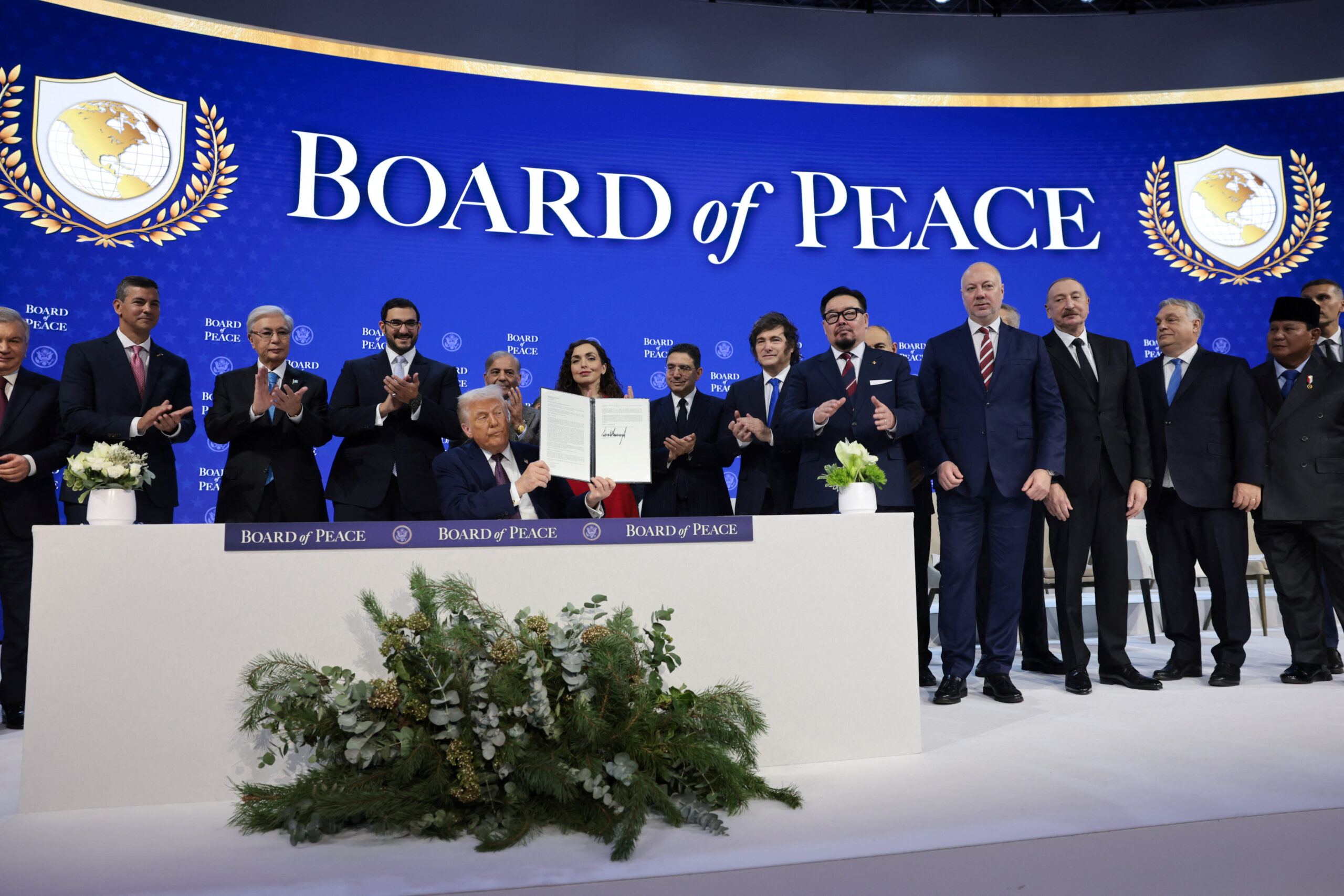
ABU DHABI—The inaugural meeting of US President Donald Trump’s new Board of Peace will be held in Washington, DC, on February 19. Expectations in the White House are high, with Trump announcing on Sunday that the upcoming gathering would unveil five billion dollars in pledged humanitarian and reconstruction aid for Gaza. “The Board of Peace has unlimited potential,” the US president said.
But with the board’s novelty and ambition also comes uncertainty. It would place Gaza’s administration in the hands of a newly created international body while maintaining a significant role for Israeli security concerns. Its transactional approach and selective membership raise questions about the limits of its effectiveness. Instead of ensuring stability, the plan could falter in Gaza and thereby undermine broader commitments to universalist principles in international law.
While the Board of Peace itself is new, what it is attempting to do, broadly speaking, is not. Historical precedents offer several cautionary examples that international oversight in post-conflict environments often struggles or fails when it does not sufficiently involve local populations or when its authority is poorly defined.
Drawing on lessons from the past
The Board of Peace, established and endorsed by United Nations (UN) Security Council Resolution 2803 on November 17, 2025, bears similarities to several earlier transitional administrations led by the UN.
The UN established the United Nations Transitional Administration in East Timor (UNTAET) and took full control of the territory from late 1999 until independence in 2002. The mission had to rebuild government institutions and basic services amid major instability following the violence that accompanied the 1999 vote for independence from Indonesia. UNTAET made significant progress in some areas: it helped restore security, organized elections, established new administrative structures, and laid the groundwork for an independent state that eventually became East Timor.
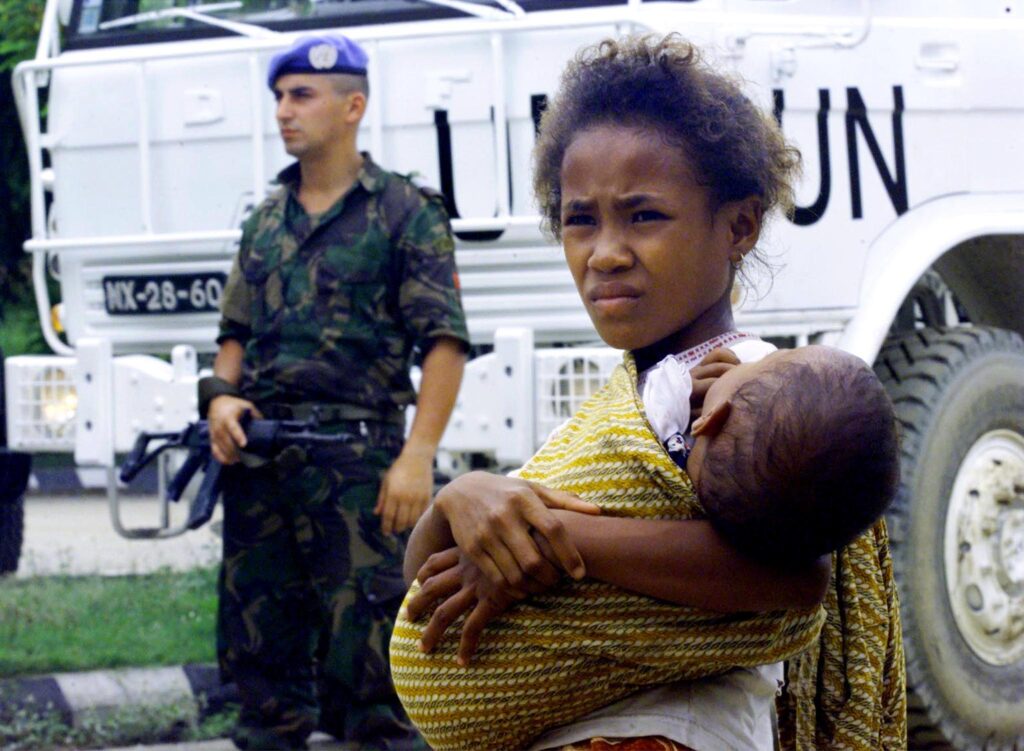
Nevertheless, the mission was criticized for being overly top-down. Decisions were largely made by international staff, with little substantive input from Timorese leaders or communities, especially at the outset. Local participation was limited throughout much of the administration, which frustrated many East Timorese and left the new institutions feeling disconnected from everyday people and traditional modes of social organization.
A similar pattern emerged with the UN Interim Administration Mission in Kosovo, established in 1999 under Security Council Resolution 1244. Although the mission held a broad mandate to govern the territory and promote self-government, its highly centralized structure, in which international officials retained ultimate control, intensified ethnic divisions, slowed progress toward local rule, and left Kosovo in prolonged uncertainty over its final political status.
Going further back, the League of Nations’ administration of the Saar Territory from 1920 to 1935, established under the Treaty of Versailles, serves as another cautionary example. An international commission administered this coal-rich region as a neutral buffer zone. However, the largely German population strongly resented external rule, and when the promised plebiscite finally took place in 1935, over 90 percent voted to reunite with Germany—even though it was then under Nazi control.
A more recent example is the Coalition Provisional Authority (CPA) in Iraq following the 2003 invasion. The US-led authority dismantled the Iraqi army, pushed through sweeping policies that barred many former Baath Party members from government jobs, and attempted to impose new technocratic structures alongside free-market reforms. These decisions played a major role in sparking the rapid rise of insurgency, sectarian violence, and instability that cost hundreds of thousands of lives in the years that followed.
Similar issues appear in other cases. One example is the UN Temporary Executive Authority administration of West New Guinea from 1962 to 1963. The UN temporarily assumed control to oversee the territory’s transfer from Dutch to Indonesian rule, under an agreement between the two countries. The mission focused primarily on ensuring a smooth transition rather than on long-term local governance. However, the rapid transfer and the 1969 “Act of Free Choice” process, widely criticized as heavily managed by Indonesia, left enduring disputes over self-determination among the Papuan population.
The 2003 Road Map for Peace, put forward by the Quartet (the United States, the European Union, the United Nations, and Russia) to address the Israeli-Palestinian conflict, offers another instructive example. Although the plan outlined phased steps toward a two-state solution, including security commitments and institutional reforms, it faced sustained criticism for vague timelines, failure to address core issues decisively, and an inability to halt violence or settlement expansion.
Another relevant case is the post-Dayton governance structure in Bosnia and Herzegovina following the 1995 peace agreement. International high representatives were given extensive “Bonn Powers” to impose laws, remove officials, and override local decisions when deemed necessary. While these authorities helped bring initial stability and enabled early state-building steps, critics argue that they also deepened ethnic divisions, increased dependence on foreign oversight, allowed local elites to evade genuine compromise, and contributed to recurring political deadlocks through expansive veto mechanisms rather than addressing the underlying drivers of conflict.
To succeed in the present
Taken together, these cases reveal a recurring pattern. When external actors rely heavily on top-down governance or loosely designed institutional frameworks, they tend to displace genuine local ownership and undermine the long-term prospects for sustainable self-government.
The Board of Peace incorporates several distinctive features that could potentially improve upon these earlier efforts. With Trump holding the charter-based permanent chairmanship, the body benefits from high-level direction and a deal-making approach reminiscent of initiatives like the Abraham Accords. The tiered membership structure, in which permanent seats are allocated based on a one-billion-dollar commitment, concentrates participation among states and entities willing to make substantial financial investments in outcomes.
If the board emphasizes high-level diplomacy, investment, and reconstruction oversight, it does so, however, without any Palestinian representation. Similarly, the Gaza Executive Board, which includes overlapping members, has no Palestinians among its appointees.
The structure excludes remaining Hamas factions, which continue to hold influence in parts of northern Gaza.
Day-to-day operations are managed by the National Committee for the Administration of Gaza, a separate Palestinian technocratic body intentionally insulated from Hamas influence and current Palestinian Authority leadership. This body oversees routine administrative functions and seeks guidance from international experts. Such institutional separation aims to allow reconstruction priorities, including humanitarian aid distribution, infrastructure repair, and institution-building, to advance without becoming entangled in factional political disputes.
Oversight of the arrangement involves Arab administrative staff, potentially significant Gulf financial backing, and a security framework led primarily by the United States, even though it carries a UN label. The structure excludes remaining Hamas factions, which continue to hold influence in parts of northern Gaza. Meanwhile, the Palestinian Authority remains sidelined pending reforms whose specific details have yet to be finalized.
The charter employs relatively general language. Although UN Resolution 2803 describes the arrangement as a “transitional administration with international legal personality,” the charter itself references only its status as an international organization and does not explicitly define Gaza’s legal status. It establishes no firm deadlines, measurable benchmarks for progress, or clear enforcement mechanisms. This ambiguity could generate prolonged uncertainty and delays, similar to challenges experienced by the UN in East Timor, where the mandate lacked a clearly defined endpoint. Early signs, such as the partial reopening of the Rafah border crossing under EU supervision, indicate that the ceasefire mechanism might, even in a limited and reversible form, provide tangible humanitarian and mobility improvements.
The exclusion of certain political actors, however, may create instability. Marginalizing Hamas elements may resemble aspects of the CPA’s de-Baathification policies in Iraq, decisions that contributed to insurgency and later extremist mobilization in the country. Such exclusions could also reinforce perceptions of inequitable governance, similar to criticisms sometimes directed at the Palestinian Authority in the West Bank. Past experience indicates that externally driven governance arrangements often face significant challenges when they lack strong local legitimacy. In Bosnia, international oversight halted violence but struggled to bridge deep ethnic divisions. In Iraq, CPA policies contributed to prolonged instability and violence.
The donor-led coalition-of-the-willing model
Legally, the board’s relationship with the United Nations remains ambiguous. Resolution 2803 invokes Chapter VII enforcement authority, yet the open-ended nature of external governance raises complex questions under customary international law concerning Palestinian sovereignty and the application of the 1949 Geneva Conventions governing occupied territories.
The arrangement raises broader questions about the UN Charter’s foundational commitment to equal respect for fundamental human rights. By structuring peacebuilding around donor-led coalitions, an innovative but selective mechanism, the board sidelines less-resourced states. It also risks reducing the influence of neutral institutions such as the International Criminal Court, by centralizing control over territory, aid, and governance, which can obstruct independent investigations, and excluding justice-focused mandates from the peace framework, focusing instead on economic recovery and stabilization without addressing alleged atrocities.
This dynamic could foster the perception that peace is accessible primarily to actors with sufficient financial leverage, potentially weakening principles of self-determination and encouraging unilateral initiatives, including controversial land policies or externally driven regional projects. Over time, arrangements of this nature could also erode established multilateral norms and diminish long-standing commitments to universal fairness.
At the same time, the board’s design attempts to address several common pitfalls. It avoids direct foreign rule by incorporating a Palestinian technocratic governance layer, aims at securing substantial funding from dedicated donors, and promotes active Arab participation to enhance regional legitimacy and sustainability.
