
WASHINGTON—Is the United States prepared for 2026? If the recent past is any indication, the country will likely face hurricanes, fires, and floods that will place significant strain on preparedness systems in the year ahead. The nation’s midterm election and its 250th anniversary celebrations could draw on these preparedness resources, too. And all of this is occurring amid rising civil unrest, persistent cyber threats to critical infrastructure, and an expanding reliance on the National Guard for domestic missions that move troops away from their local communities.
But what distinguishes this moment is not the presence of risk. It’s the convergence of risk with diminished federal surge capacity. The federal disaster workforce shrunk this past year, and several important Federal Emergency Management Administration (FEMA) advisory bodies were dismantled. As a result, US state governments are expected to manage complex, multi-domain crises with fewer federal backstops than in previous decades. In practice, governors are no longer simply implementing federal plans; they are operating as strategic national security actors, often without commensurate recognition or supporting architecture.
It’s clear that US preparedness strategy must evolve to reflect a reality already evident on the ground: Governors, the National Guard, and durable public-private platforms now constitute the functional core of domestic resilience.
The National Guard: A strategic asset hiding in plain sight
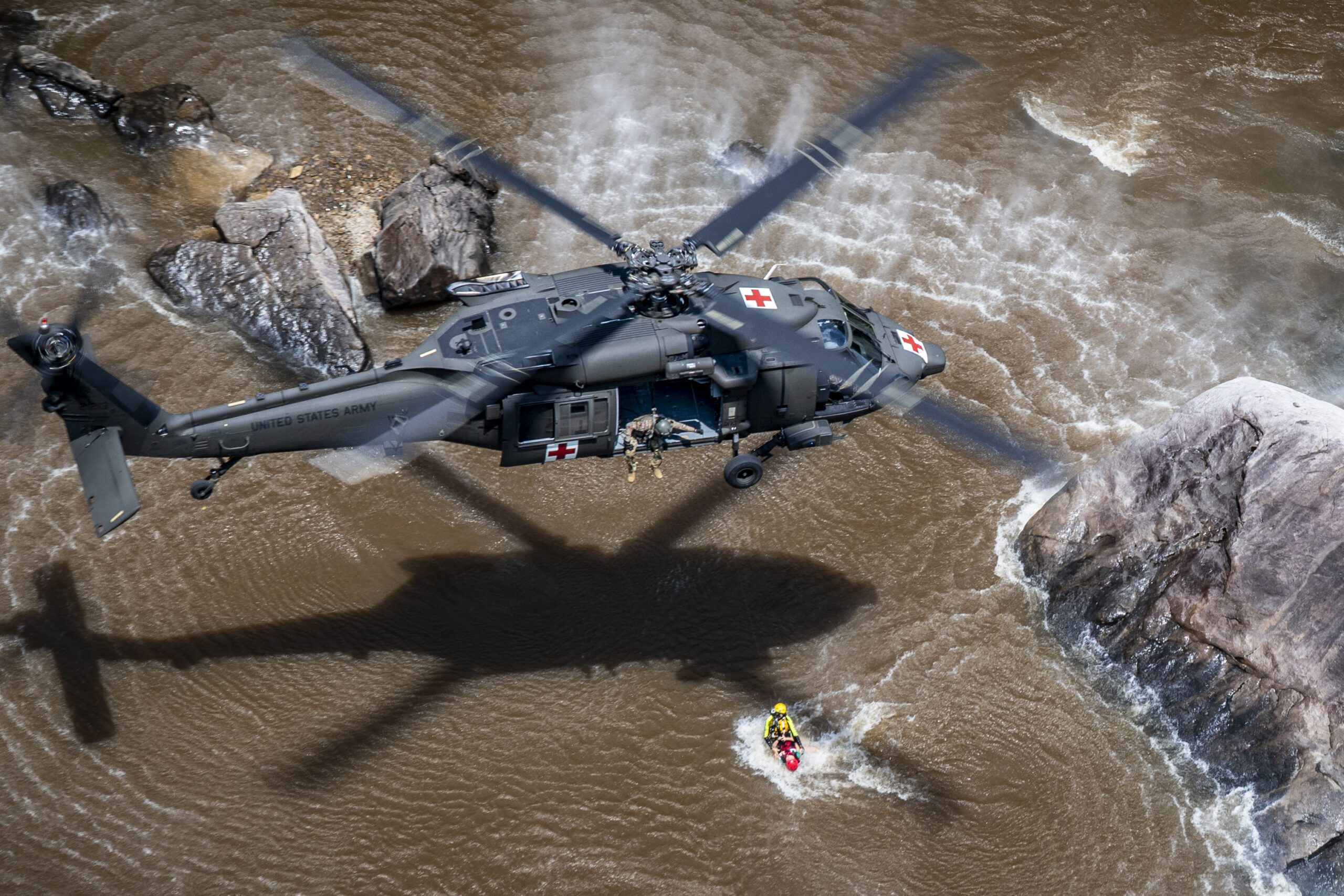
Across nearly every major domestic operation—from SEAR-1 events to statewide COVID-19 pandemic responses—the National Guard has been central to mission success. Today, National Guard units routinely support cyber defense, wildfire and severe weather response, public-health surges, mass care and sheltering, infrastructure stabilization, and continuity of government.
The National Guard’s strategic value lies not simply in its scale, but in its dual-mission structure. Guard members operate with military discipline while remaining deeply embedded in civilian institutions, infrastructure systems, and local communities. This hybrid role makes the Guard uniquely suited to contemporary threats that blur traditional boundaries between civil response, cyber defense, public health, and security operations.
Despite this operational centrality, the Guard remains under-integrated into national planning and readiness frameworks. Federal strategies frequently presume that federal agencies will be executing them, even as real-world response increasingly depends on state-led action. The result is a persistent mismatch between responsibility and design: States are expected to deliver outcomes without full integration into strategy, intelligence, or readiness planning. The costs of this misalignment are measurable: wasted public funds, delayed evacuations and restoration efforts, degraded infrastructure resilience, extended economic disruption, and, at times, preventable injury and loss of life.
A model proven in real operations
Across the country, states are quietly building public-private operational platforms that integrate emergency management agencies, Guard units, and private-sector operators into a shared situational picture. In practice, this means co-located coordination centers where state emergency managers, National Guard planners, utility operators, hospital systems, transportation authorities, and major venue security directors operate from the same dashboard during incidents. It means common operating platforms that fuse weather modeling, infrastructure status data, cyber threat indicators, supply-chain analytics, and real-time field reporting into a unified view accessible to decision makers across sectors. It also means pre-negotiated information-sharing agreements, joint exercises, and clearly defined decision authorities that allow leaders to move from awareness to action without bureaucratic delay.
The effectiveness of this approach is not theoretical; these systems have been tested under sustained pressure. During major storms, mass gatherings, and public-health emergencies, integrated platforms have enabled synchronized evacuation planning, coordinated Guard logistics with private fuel and transportation providers, prioritized power restoration to hospitals and water systems, and aligned cyber defense measures with physical infrastructure protection.
As co-chair of the Massachusetts Large Venue Security Task Force from 2019 to 2023, one of the authors—Jeanne Thorpe—worked directly with major venue operators statewide to identify operational gaps, assess cyber vulnerabilities, and strengthen physical security. That effort demonstrated how structured public-private platforms can elevate readiness without expanding formal authorities or adding bureaucratic complexity.
High-profile special events—such as the Boston Marathon, Independence Day celebrations, and other SEAR-1 operations—demonstrate the value of real-time information sharing across public agencies, private partners, and the Guard. The advantage of these platforms is not speed alone, but decision coherence—the ability to align action across institutions operating under intense time pressure.
The complexities of events at large venues, including stadiums and convention centers, further underscore the necessity for this level of coordination. These environments bring together transportation systems, utilities, public safety workers, healthcare workers, and private security, often amid rapidly shifting conditions. Shared situational awareness allows leaders to adapt to crowd dynamics and weather volatility, as well as to manage infrastructure stress without fragmentation or delay.
These same dynamics were evident during the COVID-19 pandemic. Coordinated engagement among hospitals, supply-chain partners, laboratories, emergency management agencies, and Guard units stabilized testing, vaccination, and logistics operations at scale. Across contexts, the lesson has been consistent: resilience emerges from integration, not hierarchy. Traditional crisis models often rely on a linear chain of command in which information flows upward for validation and decisions flow downward for execution. That structure works in discrete, single-domain emergencies. But contemporary crises rarely unfold that way. Wildfires intersect with grid instability. Cyber intrusions affect hospital systems. Severe storms disrupt supply chains and telecommunications simultaneously. In these compound scenarios, a purely hierarchical model slows decision-making and fragments situational awareness across stovepiped agencies.
An integrated approach does not eliminate authority; it aligns it across sectors in real time. Emergency managers, Guard commanders, infrastructure operators, and private-sector leaders work from a shared operating picture and coordinate actions laterally as well as vertically. Decisions can be made at the level closest to the operational problem, informed by cross-sector visibility rather than routed through sequential layers of approval. The result is not less order, but more adaptive coherence under pressure.
Why the National Guard matters to states
The consequences of misaligned authorities and priorities are not abstract. They are felt most acutely by communities already under strain.
For example, West Virginia’s geography makes it one of the most flood-prone states in the country. Each year, floods, mudslides, and other natural disasters devastate rural communities and destroy homes, which risks overwhelming local response capacity. This past year, significant portions of the West Virginia National Guard were deployed to Washington, DC, sent by the governor to support federal missions at the request of US President Donald Trump. While the deployment itself was lawful and aligned with federal needs, its timing exposed a critical vulnerability in the nation’s preparedness architecture.
For West Virginians navigating disaster recovery, the absence of Guard forces is not a political question. It is an operational one. The Guard is often the only rapidly deployable force capable of reaching remote areas, restoring access, supporting evacuations, and stabilizing essential services. When those units are unavailable, the gap cannot be quickly filled by federal assets or private contractors—particularly in rural states with limited surge capacity.
This episode underscores a structural reality: Governors must retain meaningful access to the National Guard as a critical, time-sensitive resource for their own populations, even as Guard units continue to support federal missions. Domestic preparedness is not just a matter of whether the Guard can deploy, but of where and when it is available. When Guard forces are pulled away from disaster-prone states at moments of acute need, resilience becomes uneven and public trust in government response erodes.
The lesson is not that federal missions are illegitimate. It is that preparedness strategy must account for trade-offs in real time and ensure that governors are equipped with both the authority and situational awareness needed to balance national demands against immediate state-level risk.
Why governors must be central to national security planning
If the United States is serious about domestic resilience, then governors must be integrated into national security planning in a structured and sustained manner. This does not require new constitutional authorities, but it does require alignment between responsibility and design. Four principles should guide this alignment:
First, governors and adjutant generals should be formally integrated into national planning processes. National risk assessments, intelligence priorities, critical-infrastructure protection strategies, cyber defense frameworks, and continuity planning all depend on state execution. Federal national security agencies should formally integrate governors and adjutant generals into the design of these strategies, while governors must assert their role as operational stakeholders. Without structured, two-way integration, national plans will continue to rely on state implementation without incorporating state insight, undermining effectiveness downstream.
Second, states require timely access to intelligence and situational awareness. Guard units and emergency management agencies cannot respond effectively without visibility into cyber threats, infrastructure vulnerabilities, public-health indicators, climate-risk modeling, and supply-chain disruptions. Federal departments and intelligence agencies must establish routine, real-time sharing with governors, adjutant generals, and state emergency management directors, reducing unnecessary classification barriers and expanding state access to relevant briefings and fusion centers. Preparedness improves when those responsible for execution have timely access to the intelligence shaping national risk decisions.
Third, sustained investment in state-level resilience platforms is essential. States must prioritize and institutionalize the systems that allow governors to coordinate public agencies, Guard forces, and private-sector partners. At the same time, Congress and federal homeland security agencies should direct funding and grant structures toward interoperable data platforms, joint exercises, and public-private integration at the state level. These systems form the backbone of modern crisis response.
Fourth, national readiness frameworks must reflect state capability. Measuring preparedness solely through federal assets obscures where response capacity actually resides. A framework that treats the Guard as peripheral rather than connective tissue is strategically incomplete.
Building a stronger security architecture
The United States can no longer afford a domestic security strategy that treats states as downstream implementers rather than upstream partners. In emergencies, governors are often the first to act and directly accountable for the systems that keep communities functioning.
