
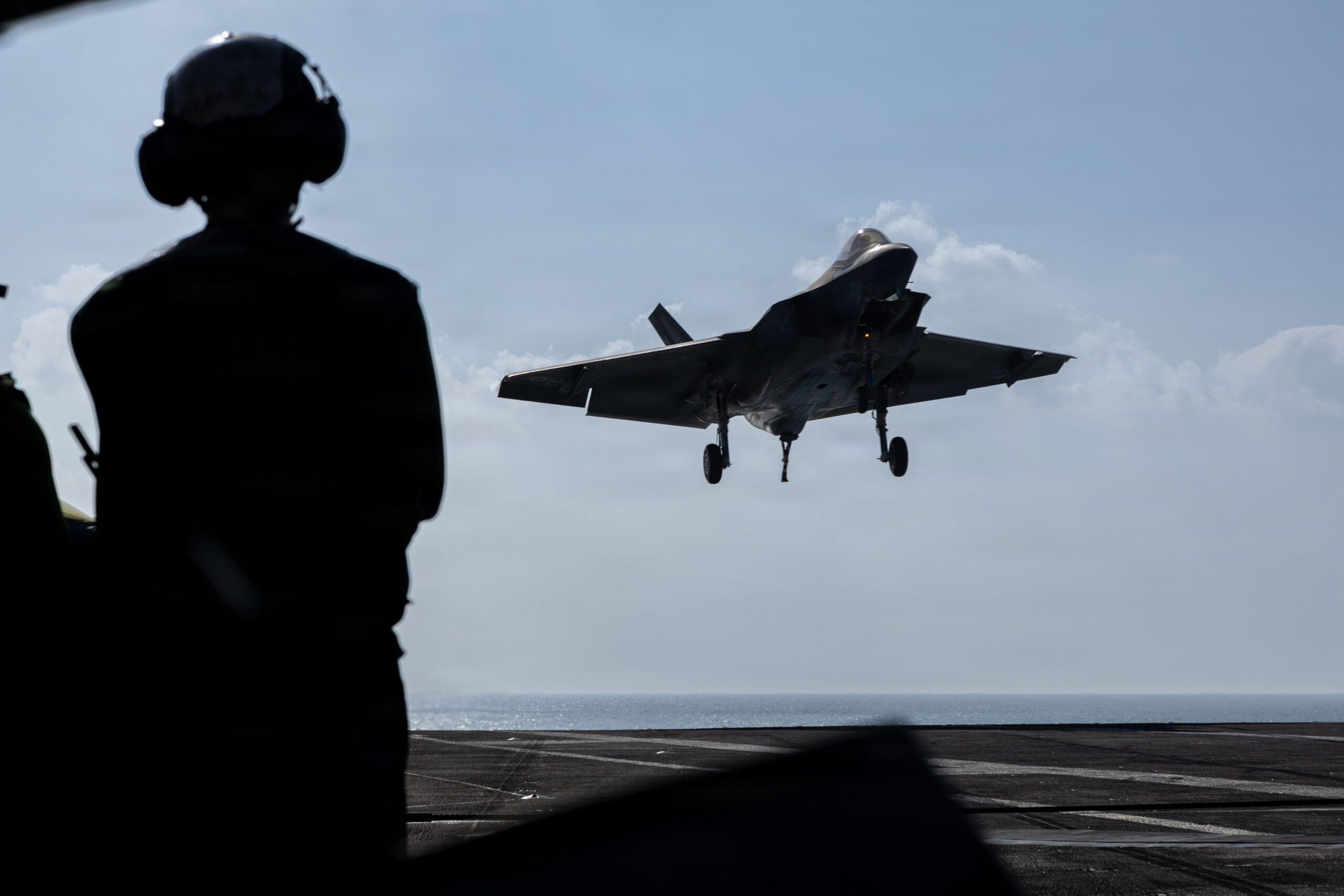
WASHINGTON—With negotiations seemingly headed nowhere, a new conflict with Iran looks increasingly likely, if not inevitable. The United States has gathered the most air power in the Middle East since the 2003 Iraq war. A US military operation in Iran would likely be a massive, weeks-long campaign that would look more like a full-fledged war than the early January operation to remove Venezuelan strongman Nicolás Maduro from power.
At this moment, there’s no clarity on whether the United States will strike, what in Iran it would strike, or what might follow. In the absence of answers, it’s all the more important to ask the right questions. Here are six questions that US policymakers should be asking:
1. What is the objective of a military campaign?
The White House has yet to outline what the administration is hoping to achieve in a military campaign. There are three likely options: 1) US President Donald Trump believes an attack will strengthen his hand in nuclear and disarmament negotiations. 2) The administration is seeking to significantly degrade or decapitate Iran’s leadership, potentially including Supreme Leader Ali Khamenei. 3) Military strikes will largely be symbolic, fulfilling the US president’s promise to support Iranian protesters and responding to his “red line” warning the regime against using lethal force against demonstrators.
If these are the administration’s objectives, there are significant obstacles to achieving them. No matter how weak Iran is, it is highly unlikely that Khamenei will capitulate on key issues, such as Iran’s missile program, as the regime seems to have determined that it would be risker to dismantle its capabilities than suffer a military strike. Ideologically, Khamenei would likely rather die a martyr than be seen bowing to the United States. If regime change or decapitation is the goal, then this presents the obvious challenge of backing a successor. US Secretary of State Marco Rubio’s sober testimony to Congress on January 28 indicated that he believes a successor would most likely come from within the regime, but there is no clear Delcy Rodríguez figure in Iran. There is also no guarantee that Khamenei’s replacement would be better.
2. What might Iran do in response?
The risk of Iranian miscalculation in determining its response to a new round of strikes is high. In the run-up to this potential conflict, Iran has repeatedly threatened to unleash a regional war on the United States and Israel. But in the past, Iran has mostly calibrated its military responses to foreign attacks to be proportional (in its estimation) to the original attack. Therefore, if Iran perceives that US strikes are primarily symbolic, then it may calibrate its response accordingly. At the same time, Iran is facing a perplexing dilemma that extends beyond this conflict. Tehran cannot win an extended war with the United States (or Israel), but there is a growing perception inside the regime that the military needs to inflict US casualties to restore a measure of deterrence against future attacks.
There is another unknown variable to consider, as well: Iranian proxies. While these groups have largely been absent from Iran’s past response to US and Israeli military strikes, Iran will have to quickly decide whether to seek an immediate off-ramp or, as the regime sees it, try to restore deterrence against future attacks. Otherwise, from Iran’s perspective, the United States and Israel will just continue to target Iran whenever they see fit.
3. Will Trump face any consequences this time around?
Part of Trump’s rationale for considering another Iran attack is that he likely has concluded that there were no real military or political repercussions for US involvement in Israel’s twelve-day war against Iran in June 2025 or the Maduro operation this past month. Perhaps—depending on the scope of a campaign—this trend continues. However, the Trump administration may find it more difficult to define the scope of a new campaign against Iran compared with the earlier, limited operations in Iran and Venezuela. If Iran does try to hit back, Trump might be compelled to expand his objectives and the trajectory of a conflict. In that case, it will be harder to replicate his pattern of decisive action and equally decisive off-ramps this time around.
4. Is there a feasible diplomatic off-ramp prior to conflict?
Probably not. Iran reportedly has two weeks to show concrete progress toward US red lines, but a new conflict might not wait that long. More importantly, Iran does not seem capable of making the necessary concessions needed for a meaningful deal. So far, Iran has insisted on only talking about its nuclear program, and it appears committed to the “right to enrich” even though it isn’t enriching uranium right now. Iran also foolishly objected to regional foreign ministers joining the talks, and it had to walk back some of its expected concessions (specifically shipping out its 60 percent enriched uranium) before talks even got under way.
More broadly, Iran is trying to negotiate a Joint Comprehensive Plan of Action 2.0, while what the Trump administration wants is likely closer to an Iranian surrender pact. There isn’t much overlap or a short-term miracle in the offing. A European with regular connections to the Iranian government recently told me that some factions in Iran believe that if the country can survive another attack and inflict some damage on the United States in return, then this might help Iran’s future negotiating position. That’s another potential misperception.
5. How will the Iranian people respond to a military campaign?
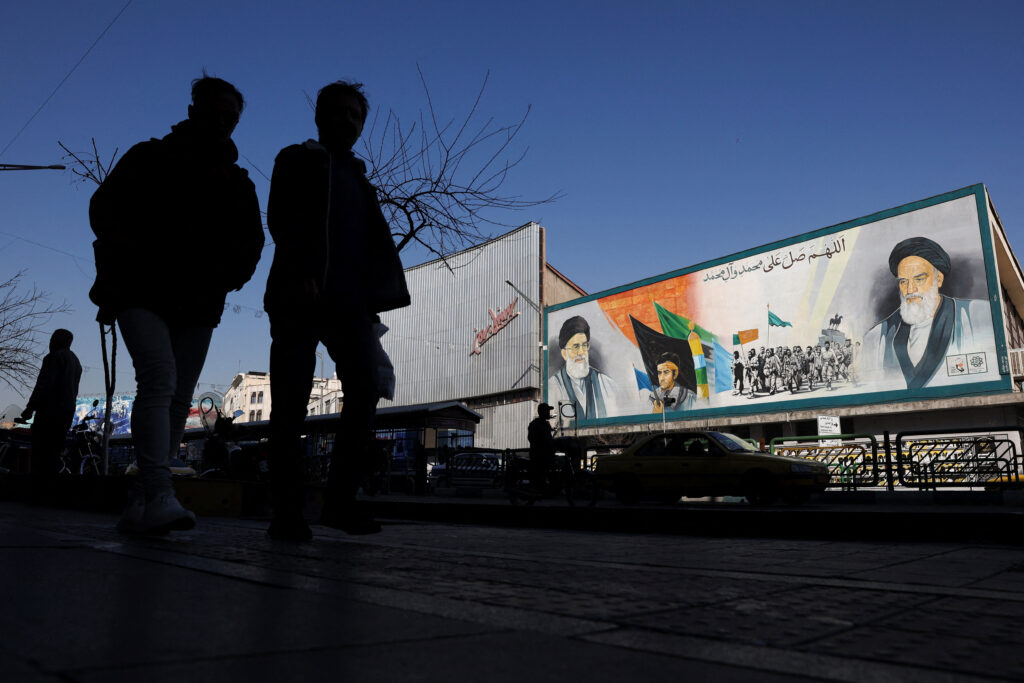
After a severe crackdown on Iranian protesters in January, Iran’s security services have regained control of the street. Therefore, the window for “helping” protesters has probably passed. Still, it’s hard to predict how most Iranians will react to a new US military campaign. Nine hundred Iranians reportedly died in the twelve-day war, including many civilians. Most Iranians calling for military intervention now are probably hoping for surgical strikes, not a weekslong campaign that risks more civilian casualties. Strikes that target the security establishment might bring more Iranians back to the streets, but the Trump administration shouldn’t count on this possibility, since Iranians did not respond to outside calls to protest or rise up during the twelve-day war.
6. What role will US regional partners play?
For much of the past month, Arab and Turkish partners of the United States have urged the Trump administration to deescalate and avoid conflict with Iran. Many of those partners also host US troops in their countries and have been targets of past Iranian aggression. As conflict becomes more likely, watching their next steps will be a crucial indicator. Back in 2019, during the US “maximum pressure” campaign, Iran successfully targeted the United Arab Emirates (UAE) and Saudi Arabia, causing significant changes in their respective policies toward Iran. The Iran-Gulf relationship is certainly stronger now, and the UAE and Saudi Arabia have already publicly said that the United States cannot use their airspace for attacks. But the United States’ Gulf partners clearly have an impact on Trump, and the Iranians know it. Will Iran lash out at the Gulf if it can’t deescalate the situation quickly this time around?
On the other side of the region, it is probably fair to assume that Israel will participate in the campaign in one form or another. Israeli Prime Minister Benjamin Netanyahu has been clear about the threat that Iran’s missile program poses to Israel. One indicator that might impact the length of a conflict is whether Israel has sufficient air defense interceptors.
One final point: Americans’ opinions will likely factor in how this conflict plays out, too. Editorials urging Trump not to be like US President Barack Obama probably have an impact on his calculus. On the other side of the issue, 70 percent of Americans oppose military intervention in Iran. Trump is generally sensitive to US polling, and he has consistently campaigned against ending “stupid forever wars.”