
On paper, 2020 and 2021 should have marked the beginning of a new chapter for Sudan. Following the ouster of Sudan’s former authoritarian leader Omar al-Bashir in 2019, the United States removed the country from the State Sponsors of Terrorism (SST) list in late 2020. This ended nearly two decades of trade restrictions, giving Sudan access to support from international financial institutions such as the International Monetary Fund (IMF) and the World Bank, and opened up the prospect of much-needed foreign investment. The first Trump administration committed to a variety of economic sweeteners, including investment guarantees and development assistance conditioned on reform milestones. And in June 2021, Sudan qualified for debt relief under the Highly Indebted Poor Countries (HIPC) initiative. Under HIPC, Sudan became eligible for a more than $50 billion reduction in its public external debt—the largest HIPC debt relief operation ever undertaken.
The United States and its partners were cautiously optimistic that Sudan could finally right its long-mismanaged economy and make progress toward democratization. But in October 2021, Sudan’s moment of opportunity collapsed. The country’s fragile civilian-military governing coalition fell apart in the wake of a military coup, derailing hopes for an eventual democratic transition and leading to the indefinite suspension of its landmark debt relief program. Five years on, democracy remains elusive.
Today, Sudan is embroiled in a brutal civil war between military factions and suffers one of the worst humanitarian crises in the world. Sudan’s experience suggests that sanctions relief and promises of economic support following the removal of an autocratic leader do not automatically dismantle the patronage networks, security coalitions, and illicit economies that sustained the regime. Nor do they spontaneously regenerate the civic institutions and independent organizations destroyed over decades of authoritarian rule.
Sudan’s experience offers important lessons for the United States as it looks to stabilize Venezuela and rebuild its economy following the capture of Nicolás Maduro last month. To be sure, there are important differences between these two cases. Nevertheless, Sudan’s experience during its fragile political transition from 2019 to 2021 is a case study worth analyzing as the US forms its approach to Venezuela.
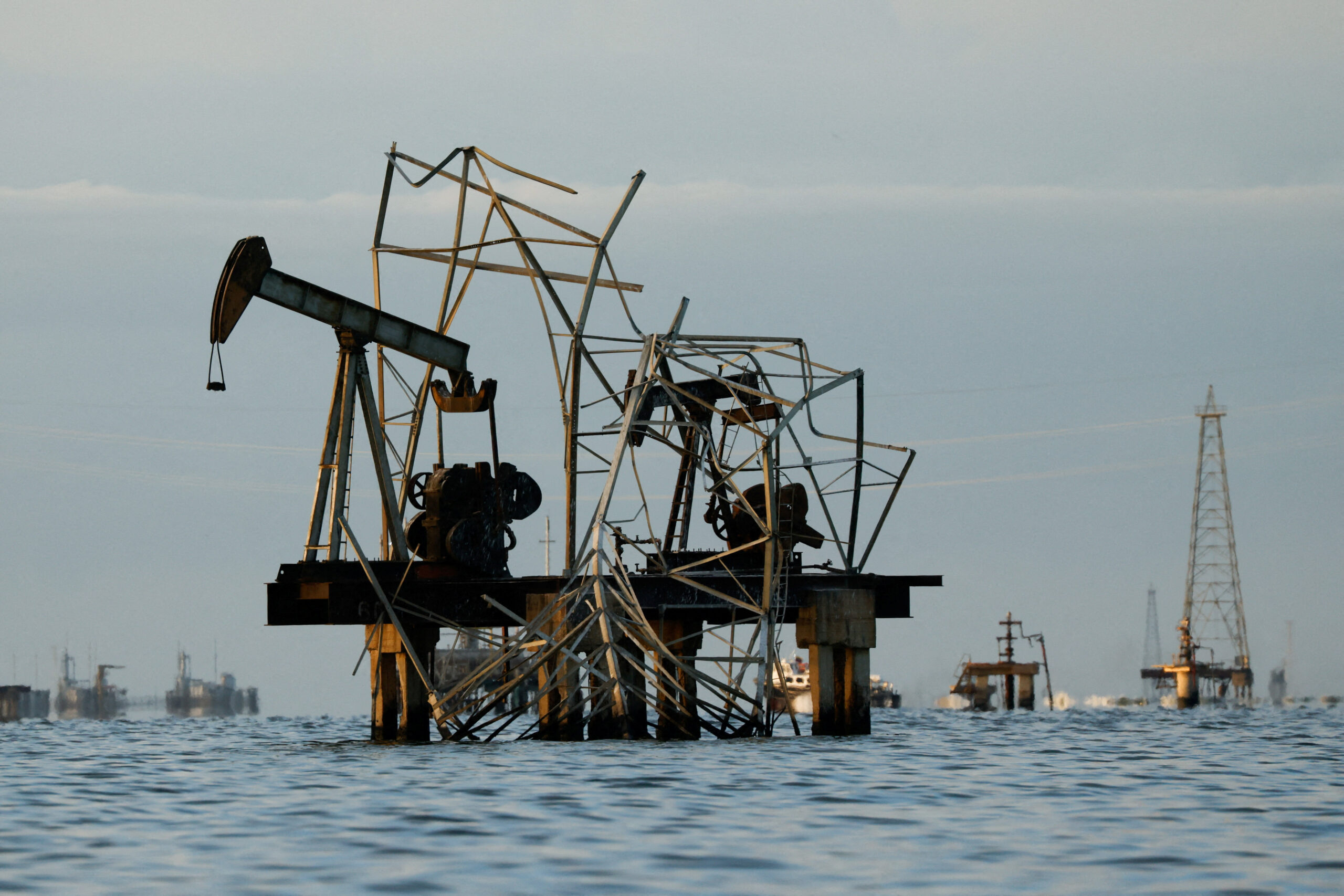
Both countries, for example, experienced dramatic economic deterioration under decades of authoritarian misrule, leaving poverty in their wake. In each case, natural resource wealth that should have benefited citizens was instead captured by regime-connected actors: Venezuela’s oil industry was gutted through politicization and purges of skilled workers, while Sudan’s gold and oil revenues flowed to military and paramilitary networks. Sudan and Venezuela also both suffered mass emigration crises, decimating their professional workforces. Both face the challenge of entrenched security apparatuses and criminal networks deeply embedded in state structures. And in both countries, decades of repression systematically hollowed out civil society and concentrated power in personalized patronage networks, leaving institutions severely compromised and unfit to constrain authoritarian actors or mobilize for democratic reform.
Sudan’s collapse demonstrates that sanctions relief and economic incentives alone cannot secure democratic outcomes without addressing deeper structural challenges. Drawing from Sudan’s experience, three policy approaches offer the United States a path to avoiding the same mistakes with Venezuela.
Pursue phased, conditional sanctions relief
Phased sanctions relief that conditions each tranche of relief on verifiable, irreversible institutional reforms offers the Trump administration its best leverage for lasting change. The United States removed key sanctions on Sudan in 2017 and rescinded the SST designation in 2020, leaving the United States with limited leverage when military leaders staged their October 2021 coup. In contrast, Venezuela remains under comprehensive sanctions targeting its oil sector, senior officials, and mining operations. This sanctions architecture carries significant weight, but only if deployed strategically. It is essential that the administration articulate specific benchmarks to the Venezuelan government and tie each category of sanctions relief to corresponding institutional changes.
Initial relief tranches could address humanitarian concerns and basic economic functions, conditioned on political prisoner releases and freedom of assembly guarantees. Subsequent phases could then target deeper structural reforms. Sectoral oil sanctions, for instance, would come off only after the establishment of independently audited mechanisms for petroleum revenue distribution that prevent capture by military or criminal networks. Financial sector sanctions relief, in turn, would be contingent on Venezuela establishing demonstrable central bank independence and ending its politicized monetary policy. And unfreezing official assets would be tied to concrete progress on electoral preparations with international observation.
Benchmarks are most effective when they represent institutional changes that are difficult to reverse, such as constitutional amendments, international monitoring mechanisms, or the integration of paramilitary forces into civilian-controlled military structures. Sudan’s experience demonstrates that front-loading sanctions relief without securing irreversible democratic gains creates a dangerous dynamic in which spoilers face no consequences for derailing transitions. Resisting pressure for rapid, comprehensive sanctions removal—and maintaining leverage throughout what will likely be a yearslong transition process—remains in the Trump administration’s clear interest.
Send a clear message to the private sector on sanctions relief
Sanctions relief will be most effective if it is paired with policies that actively facilitate private sector reengagement with Venezuela’s economy and financial system. Sudan’s experience following its 2020 SST delisting starkly illustrates this challenge: Despite formal sanctions removal, US companies remained reluctant to enter Sudan due to persistent political uncertainty, reputational concerns, extremely high levels of corruption and opacity, elevated compliance costs, and a weak and ineffective anti-money laundering and combating the financing of terrorism (AML/CFT) regime. Most critically, Sudan lacked the functioning correspondent banking relationships necessary for commercial transactions. Even as Sudan’s transitional government desperately needed foreign investment to demonstrate the dividends of democratic reform, the country remained largely disconnected from the international financial system. This undermined the country’s attempts at economic recovery, which might have provided political legitimacy to civilian leaders.
While major US energy companies have expressed near-term reluctance to restart operations in Venezuela, preparing the ground for eventual reentry requires directly addressing the structural impediments to commercial engagement. This could include detailed, sector-specific guidance from the US Treasury Department that provides safe harbors for permissible transactions, and reducing compliance uncertainty for companies and their legal counsel. This could also include high-level outreach to major correspondent banks—whose participation is essential for restoring payment channels—to rebuild relationships that have atrophied over years of sanctions. The US International Development Finance Corporation (DFC) could also consider establishing clear parameters for political risk insurance available to early-mover companies willing to invest in Venezuela’s reconstruction, explicitly protecting them against expropriation and political violence.
Finally, the Trump administration would benefit from making clear what actions from the Venezuelan government would trigger snap-back sanctions, allowing companies to conduct meaningful risk assessment rather than fearing arbitrary policy reversals. This strategy recognizes that sanctions removal, while necessary, is insufficient: Without deliberate efforts to rebuild commercial infrastructure and reduce transaction costs, Venezuela risks following a path similar to that of Sudan’s—remaining economically isolated even after formal sanctions are removed.
Deploy strategic economic incentives and technical assistance
Sudan’s experience is instructive: while the United States offered economic inducements, these arrived too slowly, at insufficient scale, and without a coordinated strategy to mobilize private capital and rebuild technical capacity in Sudan’s economic policymaking institutions.
In Venezuela, restoring the country’s institutional credibility requires deploying a comprehensive package combining economic incentives with technical assistance. This could include DFC guarantees for infrastructure investments, Export-Import Bank support for US equipment exports, and preferential access to reconstruction contracts for US companies willing to take the lead in a post-Maduro Venezuela.
The United States can also support a negotiated debt restructuring process with Venezuela’s creditors—the country faces roughly $150–170 billion in external obligations, with defaulted bonds alone estimated at $60 billion—and help enable access to resources from the IMF and multilateral development banks. (The IMF’s ties to Venezuela are currently suspended and Venezuela is in arrears to the Inter-American Development Bank). Paired with these mechanisms, addressing the absence of credible economic data and technical capacity remains a critical priority: Venezuela’s central bank and statistical agencies, politicized and hollowed out under the Chávez and Maduro regimes, have failed to produce reliable indicators on inflation, economic growth, employment, and fiscal balances. Technical assistance from the US Treasury Department will be essential to restoring monetary policy independence, implementing transparent foreign exchange mechanisms, and rebuilding capacity for credible economic data collection and reporting. The World Bank and IMF can also provide technical expertise for reconstructing Venezuela’s statistical agencies and establishing transparent budget processes that prevent resources from being diverted to spoiler networks.
Importantly, these incentives are most effective when coordinated with multilateral institutions. This would mean active support for Venezuela’s World Bank and IMF reengagement, coordination with the Inter-American Development Bank for reconstruction financing, and facilitating an international oil company consortium to comprehensively rebuild Venezuela’s state-owned PDVSA rather than allowing piecemeal asset-stripping. The scale and speed of economic support would need to be sufficient to demonstrate tangible benefits quickly enough that Venezuela’s population sees concrete rewards for supporting a democratic transition. This would provide opposition leaders with the political legitimacy to resist military encroachment and the other factors that ultimately destroyed Sudan’s fragile democratic opening.
