
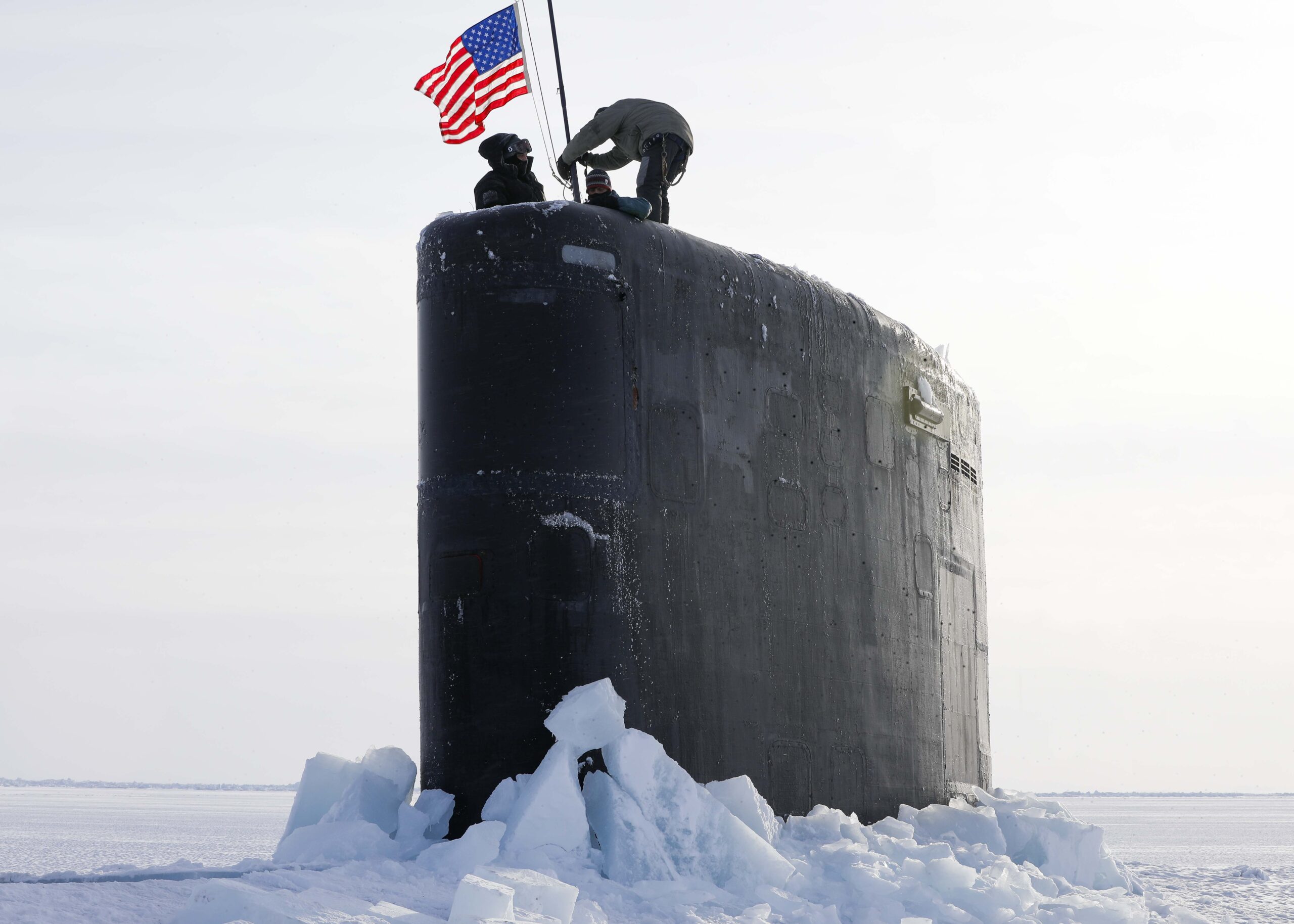
WASHINGTON—The recent debate over the future of Greenland sparked by US President Donald Trump has brought Arctic security to the American public’s attention, but there’s a wider story to tell about the region’s importance, too.
The Arctic is an increasingly important region for global energy, security, and geopolitics. Melting sea ice continues to open access, yet heightened great-power rivalry has transformed the High North into a front line of strategic competition. Russia’s dominance over half the Arctic coastline and China’s deepening “no limits” partnership with Moscow are reshaping access to resources, routes, and influence, raising risks of escalation.
While there are many attention-grabbing hotspots in the world, policymakers in Washington besides the president need to focus more on the Arctic—not only on how it is changing and what opportunities are emerging, but also on how Moscow and Beijing are acting in the region.
Significant reserves of oil, gas, and critical minerals
The Arctic holds immense untapped hydrocarbon reserves—estimated at ninety billion barrels of oil (16 percent of global undiscovered totals) and natural gas reserves—as well as significant deposits of valuable minerals essential for cutting-edge technology and the clean energy transition.
Given these resources, Russia’s Arctic development remains a national priority, fueling its economy through projects along the Northern Sea Route (NSR). While lacking Arctic territory but self-identifying as a “near-Arctic state,” China, too, has invested heavily in resource extraction and infrastructure, often through partnerships with Russia. This includes joint ventures in mining, energy projects, and critical minerals, positioning Beijing to secure supplies for its industrial and tech needs. Western sanctions on Russia have accelerated this Sino-Russian economic alignment, with China providing capital and markets in exchange for discounted resources and access.
Greenland also features prominently in this resource competition due to its substantial deposits of rare earth elements and other critical minerals vital for defense, renewable energy technologies, and high-tech industries. While Greenland’s development remains under Danish oversight, and the territory prioritizes strong Western partnerships, concerns persist about potential external interest—particularly from China—in these assets, which could imperil the security of these Arctic supply chains.
New shipping routes and the Northern Sea Route
Thinning ice has made the NSR and the Northwest Passage more viable, promising shorter transit times between Asia and Europe/North America. Russia treats the NSR as a sovereign waterway, promoting it for international shipping while building ice-capable infrastructure. China integrates this into its “Polar Silk Road” extension of the Belt and Road Initiative, funding icebreakers, ports, and navigation tech.
Recent developments include plans for high ice-class container ships, which can maintain their speed through thick ice, and joint training for polar navigation. These routes could disrupt global trade patterns, reducing reliance on traditional chokepoints such as the Suez and Panama canals, but they also heighten concerns over control, freedom of navigation, and potential militarization.
Geopolitical competition: The Russia-China axis
Russia has long viewed the Arctic as core to its security and economy. As a result, it has sought to modernize its military bases, air defenses, and nuclear capabilities in the region while conducting operations to deter NATO. Over half of the Arctic Ocean coastline is Russian, and Moscow has rebuilt dozens of Soviet-era sites and facilities to assert dominance. The shortest route for ballistict and cruise missiles to strike North America is over the Arctic.
China’s role has expanded significantly, from observer status in the Arctic Council (since 2013) to active economic, scientific, and dual-use engagement. Beijing builds icebreakers (five have been completed so far), conducts research expeditions (often paying Russia for access), deploys satellites for polar coverage, and pursues subsea cables and infrastructure with potential military applications. Sino-Russian cooperation has deepened markedly: joint naval and coast guard patrols (including in the Arctic Ocean and near Alaska), air patrols with bombers, maritime law enforcement agreements, and collaborative research. NATO leaders have flagged this as a concern, noting increased joint exercises and patrols that challenge Western presence.
Greenland’s role as a vantage point for surveillance and emerging shipping routes underscores its importance in the broader great-power contest.
This Beijing-Moscow partnership—bolstered by mutual isolation from Western sanctions and shared interests in countering US and NATO influence—displays unity in signaling Arctic ambitions, though underlying tensions persist over sovereignty and influence (e.g., Russia’s wariness of Chinese encroachment). The Arctic Council, once a model of cooperation, faces paralysis due to Russia’s isolation following its invasion of Ukraine, creating governance gaps that Russia and China exploit through bilateral ties and alternative frameworks.
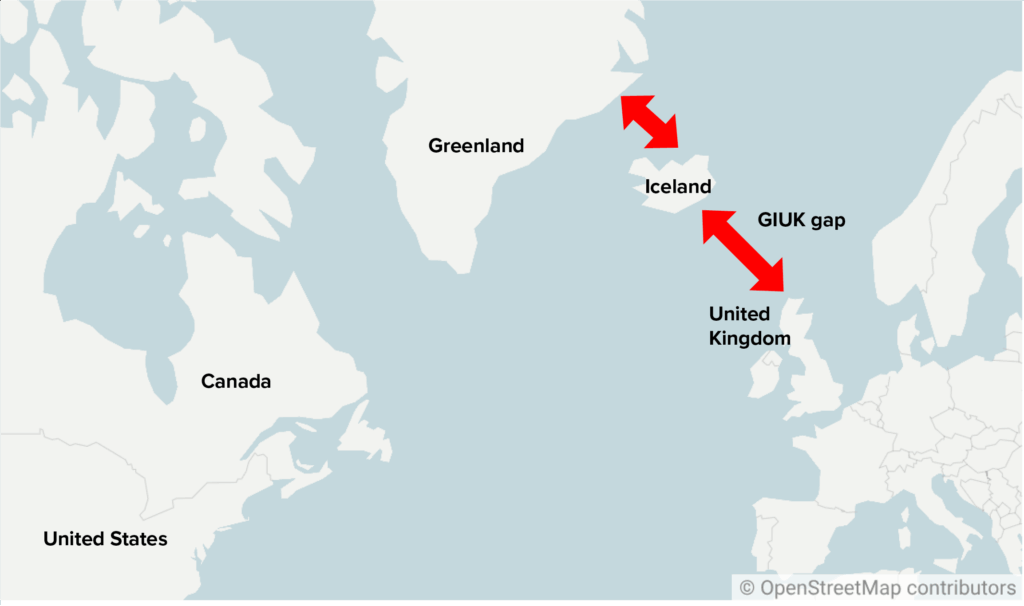
Greenland’s strategic location further amplifies these dynamics. Positioned at the intersection of North America, Europe, and the Arctic, it anchors the western edge of the critical Greenland-Iceland-UK (GIUK) gap, a maritime corridor for monitoring and containing Russian naval forces transiting to the North Atlantic. The United States maintains Pituffik Space Base (formerly Thule Air Base) in Greenland under longstanding defense agreements with Denmark, supporting Golden Dome missile early warning, space surveillance, and homeland defense—capabilities that enhance NATO’s deterrence posture amid rising Russian militarization and Chinese activities in the region. Greenland’s role as a vantage point for surveillance and emerging shipping routes underscores its importance in the broader great-power contest, while respecting Denmark’s sovereignty and the strong allied cooperation that underpins regional security.
New frontier for energy and security implications
Beyond fossil fuels, the Arctic offers potential for both renewable and nuclear power, the latter through small modular reactors. However, geopolitical tensions overshadow these. US policy emphasizes defending homeland interests, including Arctic approaches, amid concerns over Russian militarization and Chinese dual-use activities. Enhanced NATO presence (with Finland and Sweden’s accession to the Alliance) counters this, but it also increases the risk of miscalculation in a confined space.
The Arctic—a fragile home to Indigenous peoples and unique ecosystems—remains threatened by rogue actors and melting sea ice, yet strategic priorities now dominate discourse. Protecting routes, resources, and stability requires robust diplomacy, but the Russia-China dynamic introduces new risks of sub-threshold competition and hybrid challenges.