
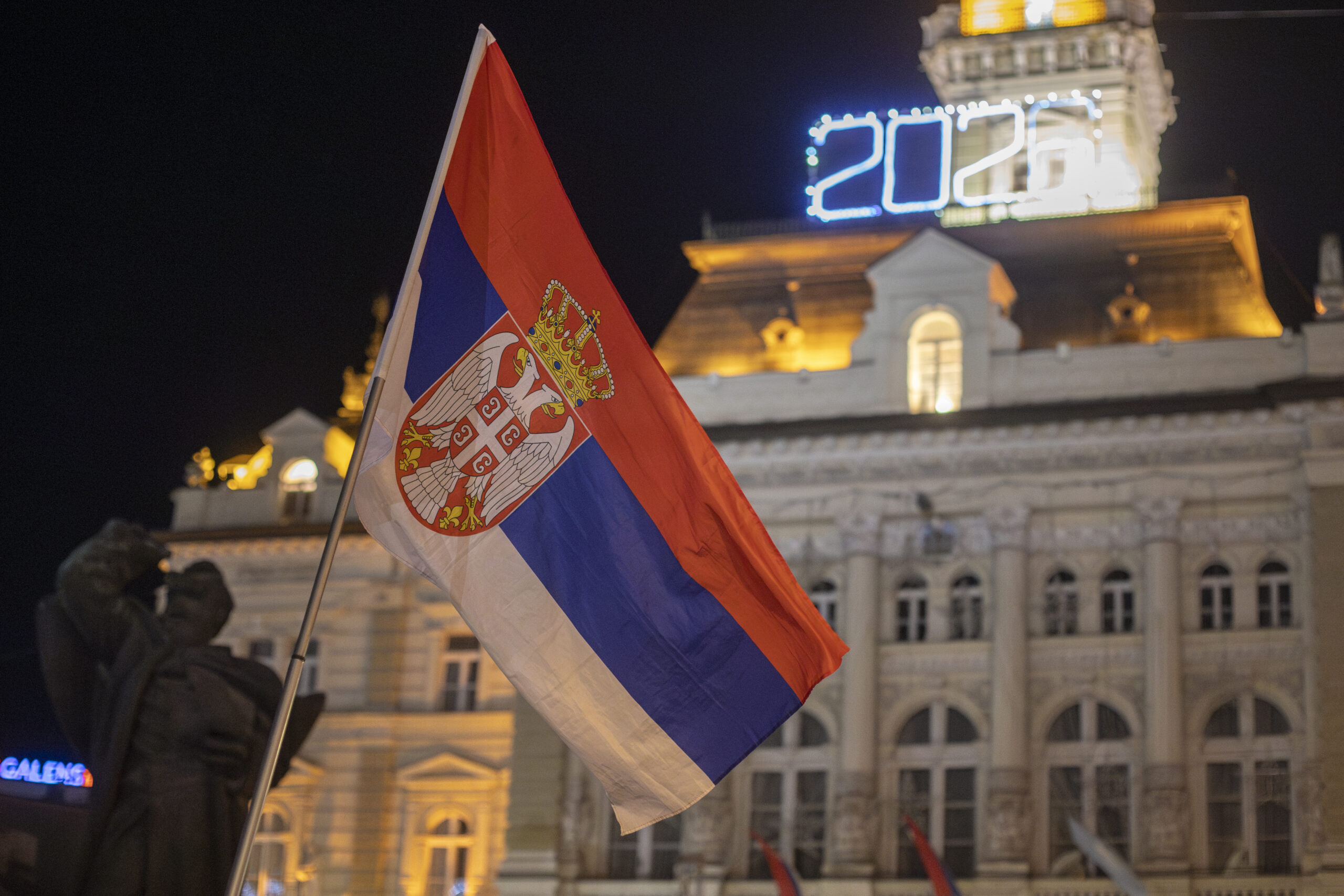
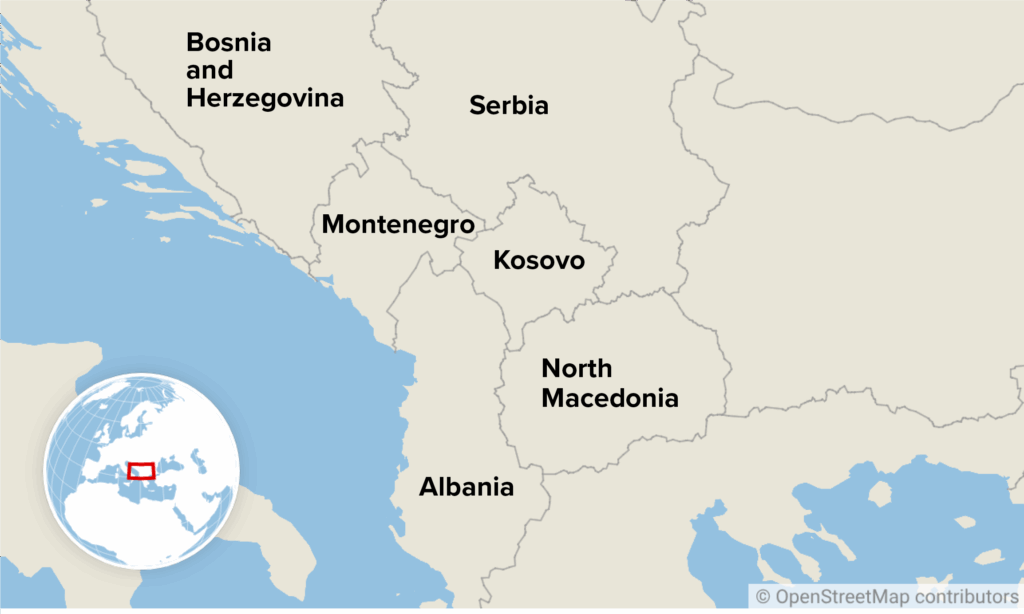
WASHINGTON—The past year was a dynamic one for transatlantic relations, and the Western Balkans were no exception. In 2025, countries in the region continued to look to the United States, the European Union (EU), and each other for increased economic investment, expanded infrastructure connectivity, and greater regional stability. At the same time, Washington delivered several mixed signals about the scope and durability of its future engagement with Europe, while Brussels remained ambiguous about the timeline for EU accession for several Western Balkan countries.
If the trends evident in 2025 persist into the year ahead, then Western Balkan countries may increasingly need to assume greater agency in shaping their own trajectories. What follows is an overview of key developments in the past year and the issues to watch in the year ahead in this important region.
Bosnia and Herzegovina
For Bosnia and Herzegovina, 2025 was in part about looking to the past, as leaders marked the thirtieth anniversary of the US-brokered Dayton Peace Agreement that ended the Bosnian War. There were several notable commemorations of the anniversary, including in Dayton at the NATO Parliamentary Assembly Spring Session, as well as in Sarajevo and Washington. These events were marked by gratitude but also uncertainty over the country’s future. The agreement was never intended to be Bosnia and Herzegovina’s lasting constitutional framework, but it has served that function for the past three decades.
The past year also raised questions about the future, with the White House and Congress bringing a sense of uncertainty to this region by sending mixed and, at times, conflicting signals. Take, for example, the Western Balkans Democracy and Prosperity Act, which was attached to the Fiscal Year 2026 National Defense Authorization Act and signed into law in December. The act calls for sanctions on those who have “undertaken actions or policies that threaten the peace, security, stability or territorial integrity of any area or state in the Western Balkans.” But just weeks earlier, the US Treasury lifted sanctions on Milorad Dodik, Republika Srpska’s Kremlin-friendly former leader, as well as his associates, even though he has long threatened secession from Bosnia and Herzegovina.
More broadly, the 2025 US National Security Strategy (NSS) cast doubt on the US commitment to Europe going forward. If the United States reduces its engagement and presence in Europe, then Bosnia and Herzegovina, which has relied on international support since the 1990s for its institutional stability and capacity for effective governance, could be affected. Furthermore, the NSS created more than slight anxiety in Europe with the veiled threat of US intervention in domestic European politics.
As it adjusts to any US changes in the year ahead, Bosnia and Herzegovina should also advance its own agenda. Sarajevo should, for example, aim to advance major constitutional reforms and demonstrate its ability to complete major infrastructure projects. One such project that will test Bosnia’s capacity for governance is a proposed US-Bosnia southern interconnector pipeline, which would reduce the country’s dependence on Russian energy by importing gas via Serbia, terminating in Croatia. The pipeline is perhaps the best near-term example of a project that, if properly structured, can strengthen Bosnia’s institutions and take account of ethnic minority concerns but not be beholden to their demands.
Serbia
Serbia has been rocked by student protests since November 2024, when a railway station canopy collapsed in Novi Sad, killing sixteen people in what the protesters view as a preventable tragedy resulting from state corruption. Whether the protesters will be successful in their demand for early elections is uncertain, though President Aleksandar Vučić has publicly alluded to the possibility.
While the EU has long shown greater patience with Vučić than many in Serbia may have hoped, the bloc’s statements in 2025 were increasingly stern regarding Belgrade’s arguably antidemocratic handling of the protests. Expect this European concern to continue in 2026 should Vučić fail to meaningfully address these protests and their underlying causes. However, Washington’s perspective toward Belgrade may diverge from that of Brussels, as the Trump administration in September 2025 committed to a new US-Serbia strategic dialogue, which signals a willingness to find common ground and work together.
Another key issue to watch in 2026 is Serbia’s move to force Russian state oil company Gazprom to divest from the Naftna Industrja Srbje (NIS) refinery in Pančevo after it became the target of US energy sanctions on Russia in October 2025. Removing Gazprom’s control from NIS is critical for Serbia’s energy and security agenda. Failure to divest would allow Russia to continue its effective control of Serbian energy and keep Serbia in US and European crosshairs when it comes to energy sanctions. Washington gave Serbia until March 24 to find an alternate owner; Hungary’s MOL Group on January 19 reached a provisional agreement to buy Gazprom Neft’s majority stake.
Albania
Albania will likely continue to make headlines in 2026 as one of the frontrunners for EU accession alongside Montenegro, and hopes are high in Tirana that it could finish negotiations by 2027. Albania is also preparing to host the 2027 NATO Summit.
However, corruption scandals among Albania’s governing elite threaten to stall the country’s accession progress. Last year, Tirana Mayor Erion Veliaj was detained on charges of corruption and money laundering, and separately corruption charges against former Deputy Prime Minister Belinda Balluku led to her temporary removal from office. Further, the National Agency for Information Society (AKSHI), the government’s main digital and information technology body, is under investigation for allegedly rigging public tenders.
These developments underscore Albania’s corruption challenge and the deepening contest between the country’s anti-corruption institutions and its entrenched political and economic interests. While Prime Minister Edi Rama’s negotiations with the EU have been effective, these recent scandals will put his government under more pressure from Brussels and could potentially slow the country’s accession timeline.
Kosovo
Prime Minister Albin Kurti has presided over an increasingly calcified caretaker government and worsening relations with Washington. In September 2025, the United States suspended the US-Kosovo strategic dialogue, the key platform for US engagement with Pristina. According to the Trump administration, it suspended the dialogue for two reasons: First, Kurti’s government failed to make measurable progress toward creating an Association of Serb Municipalities in northern Kosovo, one of the terms of the 2023 EU-brokered Ohrid Agreement between Pristina and Belgrade. Second, Kurti has proved unable to form a governing coalition after his party’s electoral victory last February.
In the aftermath of snap parliamentary elections this past December, Kurti’s Vetevendosje party will still need the support of coalition partners to form a government, but his increased share of seats in the new parliament will make this easier than after the parliamentary election in February 2025. The upcoming presidential election in March of this year will be another opportunity to help end the political paralysis in Pristina. The incumbent president, Vjosa Osmani, who is known for her positive efforts to align and cooperate with the international community, is running for reelection.
Montenegro
In 2025, Montenegro drew closer to Europe, expanded economic development, and strengthened its security and defense posture. It closed multiple EU accession chapters, welcomed a European Investment Bank office, and contributed to NATO and European efforts to push back on Russian aggression in Ukraine.
Among Western Balkan countries, Montenegro is widely seen as the frontrunner for the next EU accession. While the European Commission’s reports on the Western Balkans in 2025 highlighted more challenges than cause for praise, Montenegro continues to advance structural reforms, increase investment opportunities, and modernize its military capabilities. The next EU Enlargement Package, expected in late 2026, will be another opportunity for Brussels to assess Podgorica’s progress.
Looking ahead, Montenegro will likely continue to project a European and regional leadership role. In June, it will host the EU-Western Balkans Summit, which focuses on EU enlargement and accession. And throughout 2026 Montenegro will chair the meetings and events for the Berlin Process, the German-led initiative advancing economic integration in the Western Balkans. Beginning in November, it will also chair the Committee of Ministers of the Council of Europe, an influential post enabling Montenegro to set the Council of Europe agenda, promote initiatives, and provide leadership on sensitive political issues.
North Macedonia
North Macedonia made incremental, if limited, progress toward EU accession in 2025. According to the 2025 Enlargement Package report, North Macedonia made some gains in rule of law, public administration reform, and the functions of democratic institutions. However, Skopje continues to hold an understandably pessimistic view of the EU accession process as driven more by political leverage than technical sufficiency.
In 2019, the country implemented the Prespa Agreement, changing its official name to the “Republic of North Macedonia” in exchange for Greece dropping its threat to veto Skopje’s accession. But North Macedonia is still bound by a 2022 agreement levied by the French adding additional requirements to overcome Bulgarian concerns by amending its constitution to recognize the Bulgarian minority in the country.