
BEIJING—The United States will not prevail in its competition with China if it does not understand the nature of the game and its competitor’s strengths and weaknesses.
In that spirit, the Atlantic Council recently teamed up with the Hoover Institution to bring a delegation to Beijing. In part, we wanted to better understand the latest developments regarding emerging technologies in China and how Chinese leaders are viewing them. Our sense prior to the trip was that many of Washington’s assumptions are out of date—such as the adage that “China doesn’t innovate; it just steals from the West.” What we saw and heard over a week on the ground in China went a long way toward refuting that simplistic view—and previewing what form US-China competition could take next.
Below are my four biggest takeaways from the trip.
1. Chinese leaders are bullish about their leverage over Washington going into 2026
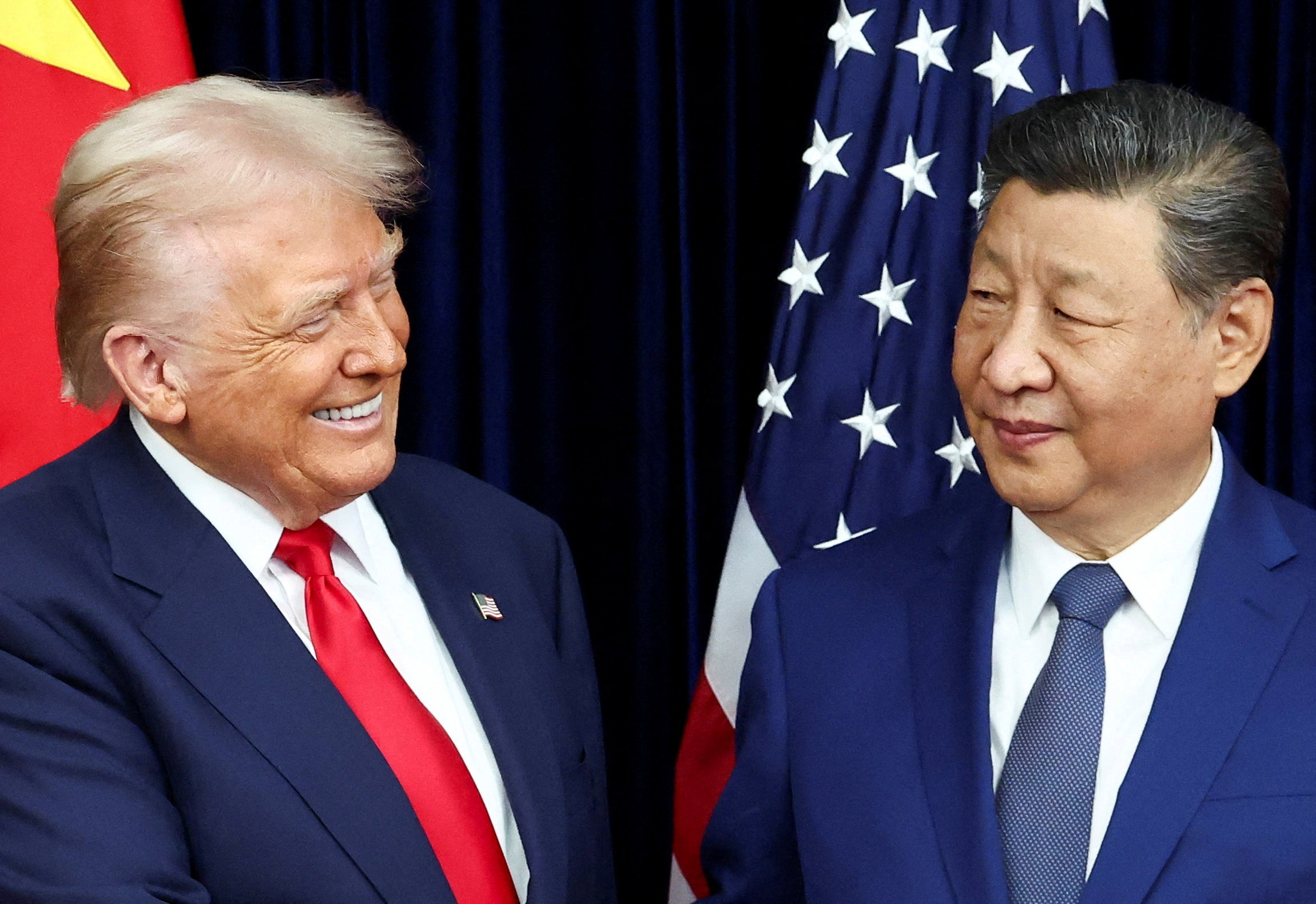
Our group met with senior Chinese officials engaged in US–China negotiations. They expressed a high degree of satisfaction regarding where relations stand following US President Donald Trump’s October 30 summit with Chinese President Xi Jinping in Busan, South Korea. Their confidence stems from two factors: their ability to use rare earths as leverage and Trump’s demeanor with Xi. According to the Chinese side, Trump was jovial and magnanimous in person. But hearing this, I couldn’t help but think of Trump’s meeting with New York Mayor-elect Zohran Mamdani, who was in the Oval Office the same week we were in Beijing. Trump was magnanimous with him too—but how long do savvy Washingtonians expect that to last? Trump’s mood toward Xi could shift just as quickly.
Beijing believes its dynamic with Washington since April 2025 has been one of “good cop, bad cop,” in which it would walk away from meetings with Trump or US Treasury Secretary Scott Bessent thinking they had a good plan forward, only to be surprised when different cabinet agencies (usually the Commerce Department) popped up with surprise anti-China actions. But now Chinese leaders seem to think they are dealing solely with the “good cops” of Trump and Bessent. That sentiment is echoed in the Chinese readout of a November 24 phone call between Trump and Xi, in which they quote Trump as stating that “President Xi is a great leader” and that he “fully share(s) your comments about the China–U.S. relationship.”
Maybe Beijing is right, and Trump will keep the normal irritants in bilateral relations at bay throughout 2026 in a bid to keep Chinese rare-earth exports and soybean purchases flowing. But more bumps in the road are likely. And rare earths are likely to be among the first.
2. There’s a lot of confusion around rare earths
The Trump administration expects China to issue the United States a “general license” to import rare earths through at least October 2026. After the Trump administration rolled out new China tariffs in April, Beijing retaliated by restricting US access to rare-earth magnets and other products the United States can only get from China—moves that threatened the wider US economy. In October, China rolled out even more restrictions, ostensibly in response to a US Commerce Department action (though more likely as part of a long-running Chinese government plan to lock down rare earths). These moves sent the White House scrambling to deescalate.
The White House readout from the Trump-Xi meeting states that “China will issue general licenses valid for exports of rare earths, gallium, germanium, antimony, and graphite for the benefit of U.S. end users and their suppliers around the world,” and that this move amounts to “the de facto removal of controls China imposed since 2023.” Many in Washington also assume that Beijing will stand by as the United States works with allies and partners to bring alternative rare-earth supply online so that, once the one-year truce times out, China will no longer have this lever to use against the United States.
But Beijing has found a magic lever, and Chinese leaders are unlikely to relinquish it easily. From their perspective, that one lever got them to a state of parity with Washington and brought Trump under control. Why would they give it up? Beijing did not issue a readout of the Trump-Xi meeting that gets into as much detail as Washington’s. The most authoritative readout came via a Ministry of Commerce press conference on October 30, in which a ministry spokesperson stated that, in parallel with the United States suspending its “50 percent rule” for export controls, “China will suspend its related export control measures announced on October 9 for one year and will study and refine specific plans.”
The devil is in the details, and China has not publicly committed to many specifics when it comes to rare-earth exports. Two hiccups are likely. The first is that, although China has begun issuing licenses to specific companies, those licenses will not be as “general” and broad-brush as the Trump administration is hoping for. The second: Beijing may seek to undermine US plans to bring new rare-earth projects online. China did just that in previous decades, by dumping rare earths on the global market at low prices that no one else could match, putting alternative mines and processing facilities out of business.
As Washington works to bring new rare-earth projects online throughout 2026, no one should expect Beijing to sit on the sidelines. Instead, China will most likely use its current market position to make it as expensive and difficult as possible for Washington to escape Beijing’s vise in this sector.
3. China is deploying artificial intelligence and robotics at scale
Our group toured an advanced factory using artificial intelligence (AI) and robotics to speed up manufacturing. We also rode in robotaxis under development around Beijing. The pace and scale of China’s domestic “AI + robotics” deployment is striking. Beijing is creating space for companies to quickly deploy the technologies in manufacturing and consumer products. Robots are becoming ubiquitous around Beijing. The technology is not perfect, but companies are pushing it out anyway and tweaking it as they go. And, in many cases, the technology is pretty darn good.
We spent nearly an hour riding in Pony.ai robotaxis around Beijing. I haven’t ridden in a Waymo (they aren’t available yet for consumer use in Washington, DC), but we had a few folks in our group who have spent substantial time in Waymo taxis, and they reported that Pony.ai delivered a higher-quality driving experience.
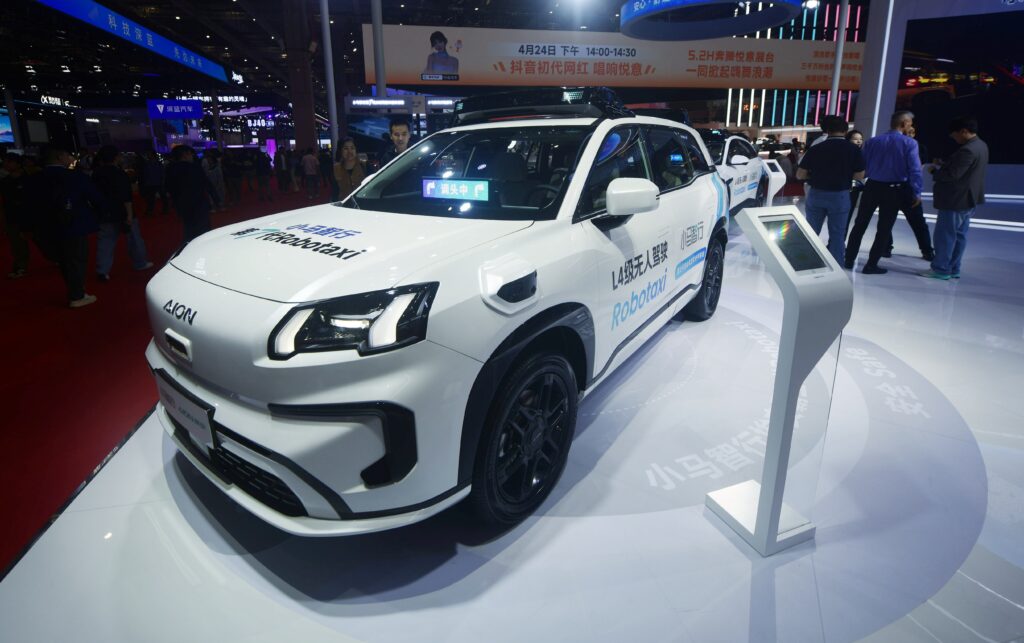
Washington needs to understand two facts that we witnessed on the ground. First, the new generation of Chinese technology is—at least in some sectors—as good or better than what US companies are producing. Second, China is deploying AI faster than the United States is, and that trend is about to go global. US companies are spending way too much time competing with each other and fretting over who will get to artificial general intelligence (AGI) faster. China, in contrast, is doubling down on deployment. And deployment is the ultimate success metric. US companies should focus more on this global deployment competition, and much of that will come down to cost.
If US firms can’t figure out how to deliver AI solutions at costs global markets are willing to pay, then it will be expensive Western alternatives versus the ubiquitous Huawei deal all over again.
4. Members of Congress—and their staff— should visit China
In the months before this trip, I heard multiple congressional staffers cite the saying that “China doesn’t innovate.” If the United States just cuts China off from American technology, they reasoned, then Washington will stay ahead of Beijing. Those staffers need to do some fieldwork.
Multiple things can be true at once. Yes, intellectual-property theft by China is a major issue. Yes, Beijing siphons off US technological know-how to boost Chinese companies at the expense of US companies. Yes, Beijing tilts the global economic playing field in its favor, and the United States should do more to counter that. Yes, there are major weaknesses across China’s domestic economy.
But China is a big country. A lot of things—contradictory things—are happening at once. That includes some stunning innovation. US policymakers need to understand exactly how the China model is working in 2025 if the United States is going to compete effectively with it.
If members of Congress really understood the current nature of the China competition, then they would surely realize, for example, that the United States doesn’t have enough leeway to gut the National Institutes of Health and other science funding and still maintain the remaining leads the country has. The United States now has a peer competitor. That competitor is already leading in some technology sectors, and it is gearing up quickly in others. American business leaders know this, but they are currently struggling with how to convince Washington that the US government needs to put more effort into running faster. Export controls and other such measures are important, but they are no longer enough.