
WASHINGTON—The transatlantic divide over Greenland just deepened, with US President Donald Trump announcing on Saturday that he will impose escalating tariffs on Denmark and other European nations until they agree to a deal for the United States to purchase Greenland. At this precarious moment, three lines of effort are underway to avoid a catastrophic clash over the world’s largest island.
One is diplomatic: through the high-level working group agreed to at a January 14 meeting in Washington between US, Danish, and Greenlandic officials. The second includes congressional efforts to block an outright US invasion of Greenland. The third is deterrence: an increase of Danish and NATO member states’ military presence and exercises in and around Greenland.
This problem should not have arisen. But it is still possible to achieve an outcome that leaves NATO and the transatlantic alliance intact and Arctic security strengthened.
What does the White House want with Greenland (and what might it settle for)?
The United States has longstanding and legitimate security interests in Greenland. Because of these interests, Washington has sought several times since the mid-nineteenth century to acquire it. After World War II, the United States addressed its security interests through the 1951 Defense of Greenland Agreement, which gives the United States extensive military basing rights on the island and does not question Denmark’s sovereignty or Greenland’s status. That agreement served US interests well throughout the Cold War and is still in force.
Those interests do not seem to be driving policy, however. Currently, notwithstanding White House claims of Chinese and Russian threats to Greenland, neither Trump nor his administration has cited specific, unmet US security requests related to Greenland. Nor has the Trump administration taken steps to increase US military presence in Greenland. The Trump administration also has not cited unmet requests with respect to Greenland’s mineral deposits.
As it often does, the Trump administration is starting with an extreme position that is not simply tactical. Trump seems to really want to plant the American flag in a nineteenth-century expansionist style. The US president recently told The New York Times that annexation of Greenland “was psychologically needed for success.” Asked by CNN about Greenland, White House Deputy Chief of Staff Stephen Miller claimed that the “iron laws” of the world include strength, force, and power, and little else, and that therefore the United States can take Greenland if it so decides. While seeking to purchase Greenland seems the administration’s preferred route, it has not ruled out the use of force to acquire the island.
Nevertheless, the Trump administration has sometimes backed off extreme initial positions when faced with counterpressure, as it has with tariff policy. Can counterpressure against the administration’s most extravagant ambitions in Greenland open up the possibility for a diplomatic deal?
The January 14 US-Danish/Greenlander meeting achieved about as much as it could have. The sides agreed to keep talking, and they announced the creation of an important working group. The intention of this group is to discern whether US interests in Greenland could be reconciled with Denmark’s red lines, including the integrity of the Kingdom of Denmark. The White House’s characterization of the working group as merely a mechanism to discuss US acquisition of Greenland didn’t help, but diplomacy still has a chance.
If the White House is interested in a deal, then there is space to make one through this working group. The group could affirm the generous terms of the Defense of Greenland Agreement or even renegotiate it. Though it is hard to see what more the United States could want in a renegotiated agreement, the ceremony of signing a new deal similarly generous in its terms could be claimed as a feather in the cap of the Trump administration.
The working group could also address one contingency in a useful way. Some Greenlanders have been pushing for independence. An independent Greenland would be unable to provide for its own security, and the working group could address that challenge. The Trump administration might insist that an independent Greenland join with the United States in, for example, a Compact of Free Association similar to US agreements with some of the smaller Pacific Island states. But a less fraught alternative might be to agree to apply the Defense of Greenland Agreement to an independent Greenland, if that were to happen, and to bring an independent Greenland into NATO. As a member of NATO, an independent Greenland would be in a position similar to Iceland, which has no military of its own but whose security has been assured by the Alliance. Iceland is home to an air base that is an important asset for US force projection.
Enter Congress and Europe
Given the Trump administration’s continued pressure, the US-Danish working group by itself is unlikely to lead to a solution. But the administration’s talk of annexation also has generated counter moves from the US Congress and from Europe that, if sustained, could create conditions for a more productive outcome.
In Congress, bipartisan bills have been introduced in both the House and Senate that would prohibit the use of appropriated funds for any military action against a NATO ally—including against Danish and other European forces defending Greenland. Whether those bills could capture a veto-proof majority is not clear, but public support among Americans for annexing Greenland is low (17 percent support annexation and only 4 percent support doing so through use of force). Senator Thom Tillis (R-NC) has said that if US military action against Greenland appeared imminent, legislation to block it could pass with veto-proof majorities.
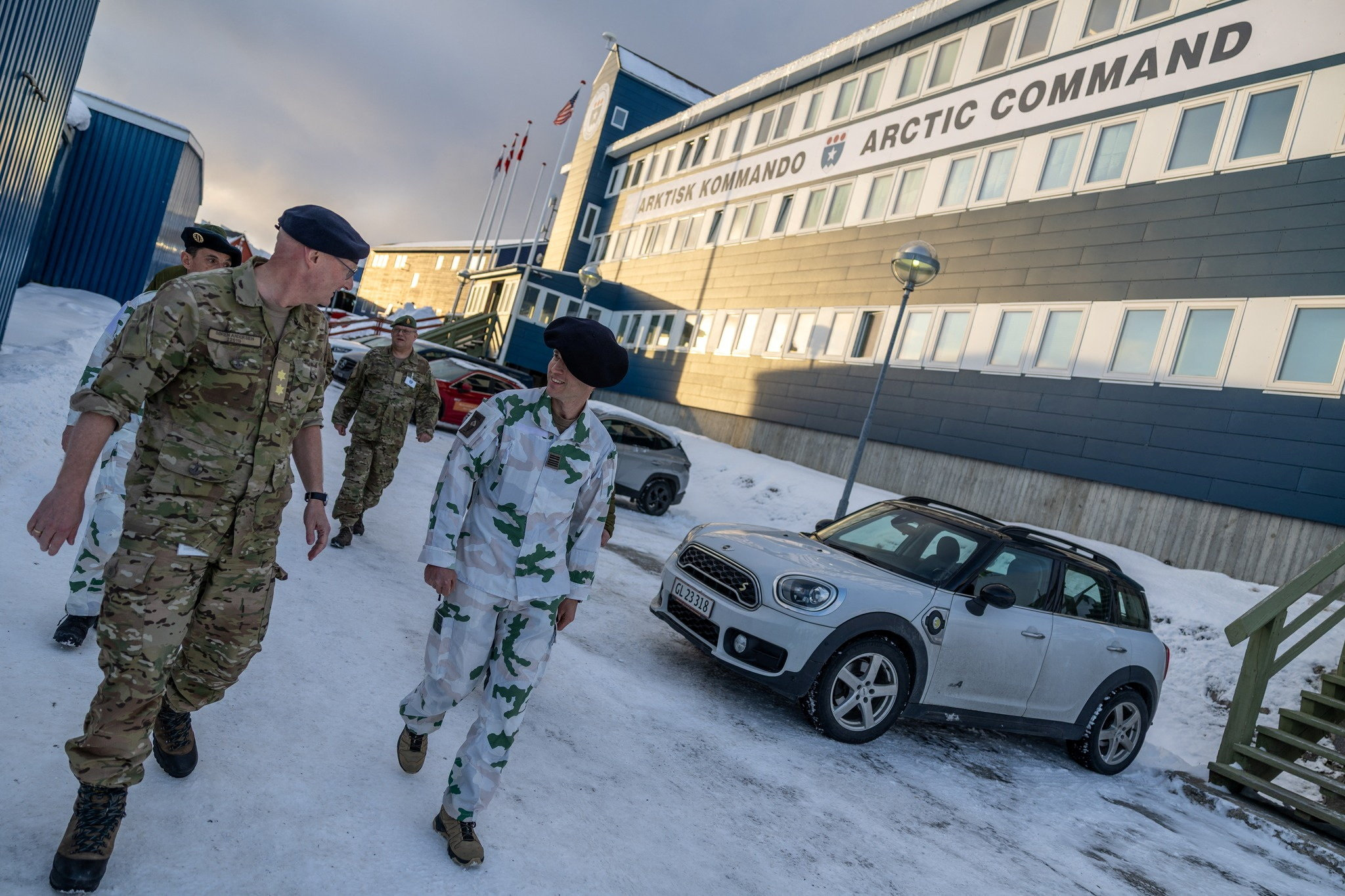
Europe is responding as well. In the days since the Trump administration’s rhetoric about Greenland has intensified, Denmark has announced plans to increase military exercises and its military presence in Greenland. European NATO members—Germany, Sweden, France, Norway, the Netherlands, Finland, and the United Kingdom—have announced plans to send small military contingents to Greenland, with some already arriving. The contingents are likely to grow, and they could be supplemented by Danish special forces, some of which are working with the United States in the Middle East against the Islamic State of Iraq and al-Sham and other common adversaries. Trump’s response has been to accuse these countries of playing a “very dangerous game” and threaten them all with tariff increases of 10 percent as of February 1 and 25 percent by June.
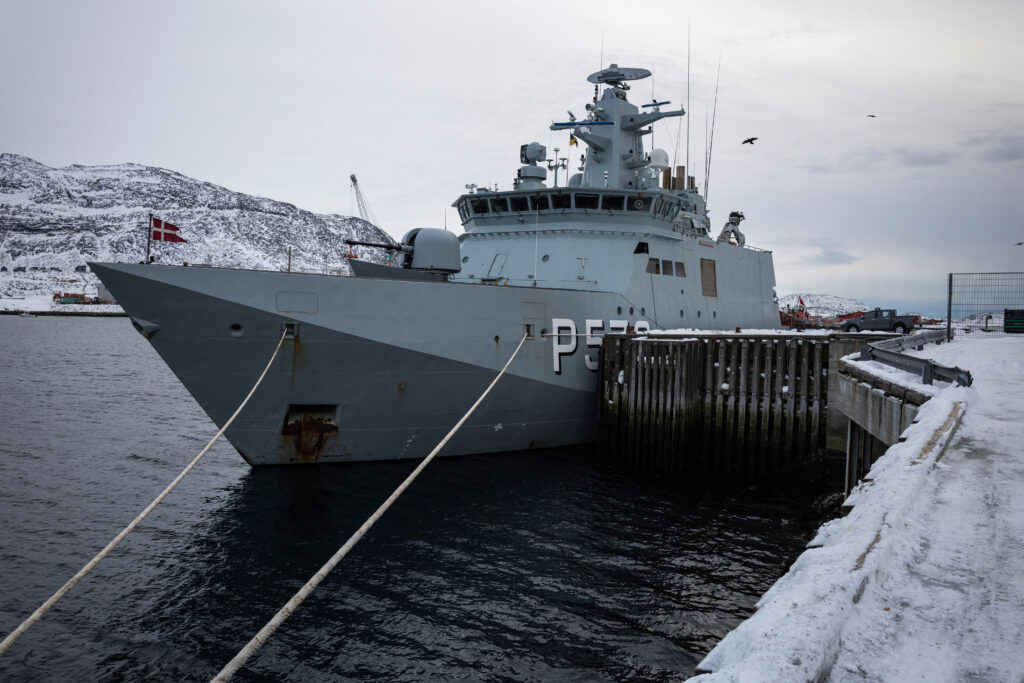
The Danish military presence in Greenland, supplemented by modest European contingents, is unlikely to withstand a determined US assault. But it could succeed in complicating US planning, effectively removing from consideration a risk-free and low-cost military occupation of Greenland’s capital Nuuk. Wisely, Danish and other Europeans have spoken in general terms about bolstering Arctic security and not about the threat from the United States. But they have used the word “deterrence.” For Europeans to speak in such terms about the United States, even implicitly, is a low point, but it is needed.
There’s a deal to be done
With counterpressure from Congress and European allies, the Trump administration may see the real opportunity to make a good deal without continuing down the risk-filled road to forced annexation.
Trump and his administration are capable of redefining their objectives quickly, and in so doing achieving real, positive results. Faced with inadequate defense spending by NATO allies, the Trump administration squeezed hard, even seeming to threaten to leave NATO. This effort achieved what US presidents had sought for decades: allied commitments at NATO’s 2025 Summit in The Hague to increase defense spending to 5 percent of gross domestic product for defense and defense-related infrastructure. Trump could claim, with a basis in fact, that his unorthodox and sometimes confrontational style achieved something that had eluded his predecessors back to President Dwight Eisenhower.
So it could prove with Greenland. US security in the Arctic is better achieved by working with Denmark and NATO allies, not against them, from Greenland to Norway’s Svalbard and Sweden’s Gotland. If NATO’s European members and Canada agreed to contribute more forces to Arctic security, the Trump administration could assert that its pressure tactics worked; Trump could claim a win and retroactively claim vindication for his initial threats.