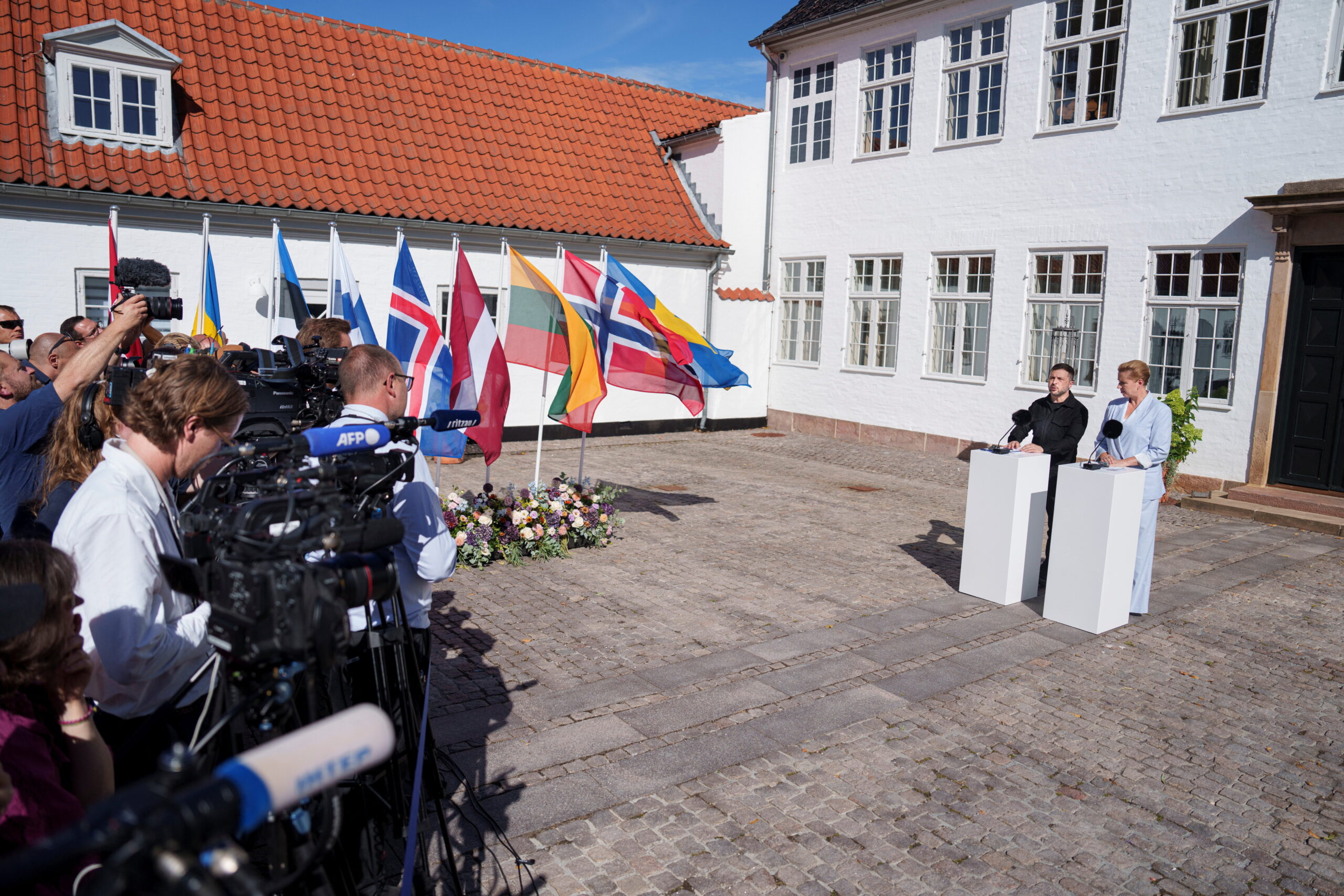
STOCKHOLM—When US President Donald Trump escalated the Greenland crisis in early January by insisting on US ownership of the island and not ruling out military force, Denmark quickly received support from its Nordic and Baltic neighbors. This was no coincidence. Over just a few years, the Nordic-Baltic Eight (NB8)—Denmark, Finland, Norway, Sweden, Iceland, Estonia, Latvia, and Lithuania—has become far more proactive and agile in shaping European security policy.
Unity matters, and strong joint statements matter too. But in a European security debate characterized by constant declarations and uneven follow-through, matching words with action is what has truly built credibility for this Northern European forum.
If 2024 marked the year the Nordic-Baltic states became more “visible and relevant” in European security, and 2025 the year they emerged as Europe’s forward security hub—acting early and speaking clearly—then 2026 is shaping up to be the year their model will be tested under pressure.
A regional forum with strategic intent
As the year begins, Estonia assumes the rotational chairmanship of the NB8, with an agenda focused on strengthening cooperation and raising the group’s international profile. This ambition underscores that the group’s influence is not tied to a single crisis or a particular leadership term. It is becoming structural. Coordination rotates, but strategic intent remains stable, backed by a growing track record of action and results.
Even as Greenland dominates headlines, Ukraine remains the issue that anchors the NB8’s credibility. Throughout 2025, the group turned recurring joint signaling into a near-institutional voice, with coordinated statements issued in February, August, September, and November. Together, the members formed a sustained narrative: rejecting any settlement imposed on Kyiv, insisting that borders cannot be changed by force, and reaffirming that support for Ukraine must continue as long as Russia refuses a genuine cease-fire.
What gives the NB8 credibility, however, is not just what it says but what it does—specifically, what it funds and delivers. Not only are the Nordic and Baltic states well on track—or already meeting—NATO’s defense spending target of 5 percent of gross domestic product (GDP), they are among the leading contributors of military support to Ukraine relative to GDP. Increasingly, this support is coordinated. In November, all eight Nordic-Baltic states jointly financed a $500 million package of US-sourced military equipment and munitions for Ukraine through NATO’s Prioritised Ukraine Requirements List. This was one of the largest coordinated European contributions of the year and a clear example of what a European coalition looks like when political alignment translates into operational effect.
Over the course of 2025, Nordic-Baltic states moved from drawing down stockpiles to building sustainable capacity, including co-production with Ukraine. Sweden’s work with Kyiv on future air capabilities and Denmark’s efforts to facilitate Ukrainian defense manufacturing on Danish territory signal a shift from short-term transfers to enduring war-fighting capacity.
That industrial turn has been matched by a dense ecosystem of Nordic-Baltic-led coalitions: Latvia driving Europe’s most dynamic drone procurement for Ukraine, Lithuania anchoring multinational demining efforts, Estonia committing a fixed share of GDP to sustained military support, and a broader Nordic-Baltic initiative training and equipping Ukrainian brigades alongside Poland. Together, these efforts translate political will into deployable capabilities, reaching the battlefield faster and with fewer institutional frictions than those of larger European formats.
Countering Russia in the Baltic Sea is yet another example of Nordic-Baltic action. Today, the Baltic Sea is one of the most monitored maritime spaces in Europe, with continuous naval patrols, air surveillance, and undersea infrastructure protection driven largely by Nordic-Baltic contributions. The launch of NATO’s Operation Baltic Sentry in early 2025, combined with Sweden’s first major NATO maritime deployments, signals that the Alliance’s northern defense posture is moving from political concept to operational reality.
This effort has expanded beyond ships and aircraft to the legal and regulatory domain. Countering Russia’s shadow fleet and grey-zone maritime activity, enforcing sanctions, and coordinating maritime regulation have become part of the same security logic, reflecting a Nordic-Baltic approach that treats coercion at sea as both a governance and a military challenge.
The signal to Moscow is clear, and Beijing is registering it too. Coordinated European action, when sustained and enforced, carries strategic weight.
This message is particularly poignant today, as deterrence is increasingly about the ability to stay the course for years—whether in supporting Ukraine, countering hybrid threats, or maintaining political clarity on values and interests. Against this backdrop, Nordic-Baltic states are far from the “small” actors they’re often assumed to be. Together, their combined economic weight rivals that of Europe’s largest powers—a reminder that scale in security is often a political choice. The Nordic-Baltic states have acted on this insight, translating pooled resources into procurement decisions, industrial planning, and sustained policy commitments.
The next phase of Nordic-Baltic leadership
What comes next is likely to follow two main tracks. First, Greenland will remain a test of allied norms and Nordic-Baltic cohesion, requiring sustained political backing as diplomacy with the United States continues. For years, Nordic-Baltic defense policy rested on a familiar logic: stay close to Washington, prove seriousness, and earn reassurance. That logic still matters, but the Greenland crisis shows it can no longer be taken for granted. In response to the US escalation, Denmark and its Nordic-Baltic partners have focused on keeping the issue firmly within a diplomatic and legal framework, while reinforcing the principle that Arctic security remains a collective NATO responsibility.
Second, Ukraine will remain the central credibility test, demanding resistance to premature settlements and continued investment in military, industrial, and political support.
There is also a broader strategic task. The NB8 is well-positioned to strengthen the European pillar within NATO while bridging gaps between NATO and the European Union, particularly in areas where security, industrial capacity, and sanctions enforcement increasingly overlap. Equally important, the group must avoid becoming a northern island detached from the rest of Europe. The new habit of including Poland and Germany in the NB8 meetings is wise in this regard. However, credible deterrence and resilience across Europe require wider networks beyond the region, including engagement with partners in the south and the ability to connect regional leadership to continental cohesion.
The deeper lesson, however, is the same across Greenland and Ukraine: credibility is cumulative. It is built by acting together early, speaking clearly about principles, and turning solidarity into capabilities and delivery.
In 2026, Europe will spend more time debating which coalitions can be relied upon, which will hold under pressure, and which can shoulder responsibility amid ongoing geopolitical uncertainty. Increasingly, the answer points north—not because the members of the NB8 are Europe’s largest powers, but because they consistently deliver on their promises.