JUST IN
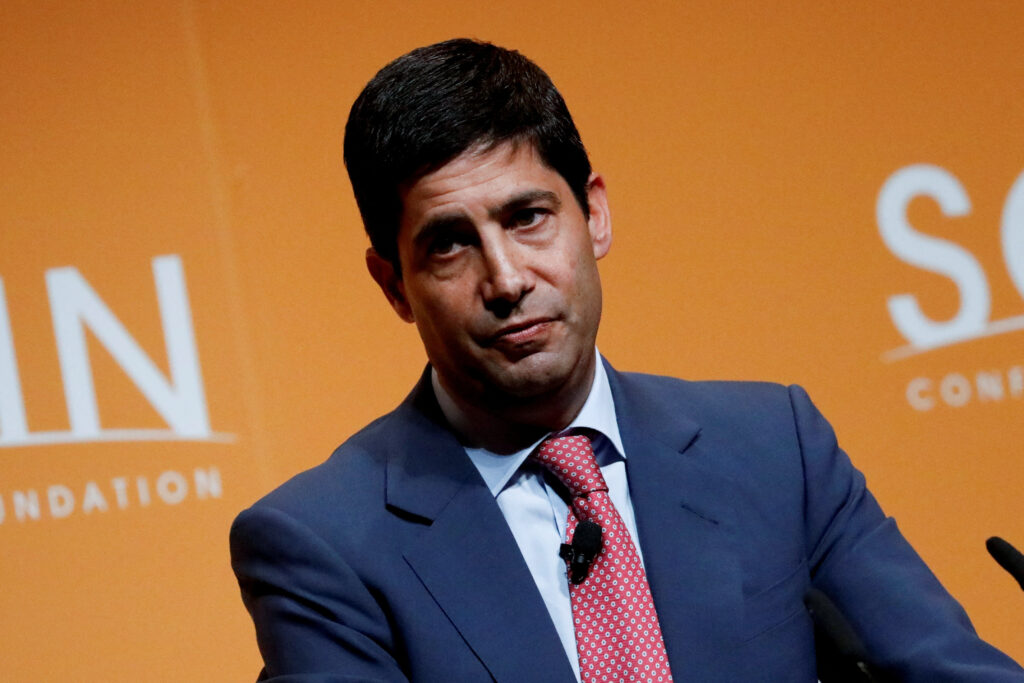
There’s a new chair in town. On Friday, US President Donald Trump announced that he will nominate Kevin Warsh as the next Federal Reserve chair. If confirmed by the Senate, Warsh, who was a member of the Federal Reserve Board of Governors from 2006 to 2011, will replace Jerome Powell, who has publicly sparred with Trump over interest rates and other issues. Below, Atlantic Council experts share their insights on what a Warsh chairmanship could mean for the US economy.
TODAY’S EXPERT REACTION BROUGHT TO YOU BY
- Martin Mühleisen (@muhleisen): Nonresident senior fellow at the GeoEconomics Center and former International Monetary Fund chief of staff
- Josh Lipsky (@joshualipsky): Chair of international economics at the Atlantic Council, senior director of the GeoEconomics Center, and former International Monetary Fund advisor
Who is Kevin Warsh?
- “Warsh brings real credentials,” Martin says. Given his experience on the Fed board during the 2008 global financial crisis, “he understands the institution’s machinery and the weight of its decisions.”
- Josh calls Warsh “a curious choice for a president determined to get lower interest rates,” since he was considered “one of the most hawkish members” on fighting inflation during his time as a Fed governor.
- However, Josh adds, the “prevailing wisdom is that Warsh has changed his views since then and is now focused on an artificial intelligence-induced productivity boom,” which could allow for lower interest rates.
Sign up to receive rapid insight in your inbox from Atlantic Council experts on global events as they unfold.
A reset at the Fed
- Like US Treasury Secretary Scott Bessent, Warsh has been critical of “what he sees as the Fed exceeding its mandate and using a range of expanding tools outside setting interest rates, including buying bonds and mortgage-backed securities,” Josh explains. According to this view, such quantitative easing has “helped assets on Wall Street at the expense of Main Street.”
- Not everyone will see it that way. “Critics will recall that [Warsh] urged premature tightening after the financial crisis, a view that, in hindsight, could have slowed recovery,” Martin says.
- Picking up on how Warsh responded to the 2008-2009 crisis, Josh looks ahead: “If you’re a country looking to the Fed to jump into the fray during an economic crisis, you may be in for a rude awakening” with Warsh at the head of the Federal Reserve, Josh argues, reflecting on Warsh’s response to the financial crisis. He adds that Warsh would put the onus on Congress or the US Treasury to act in those circumstances.
- At the same time, Martin explains, Warsh’s “previous skepticism toward prolonged ultra‑easy monetary policy would bode well should the Fed come under pressure to subordinate monetary policy decisions to the federal government’s financing needs”—as borrowing costs rise with the soaring national debt.
The word on the street
- “Wall Street will breathe a small sigh of relief,” about Trump choosing Warsh, Josh tells us. “Whatever his views on the balance sheet and Fed overreach, he is a relatively conventional pick—especially given some of the other names that were in the running.”
- Josh expects “to see mortgage rates going higher this week,” as a result of Warsh’s past hawkishness on interest rates.
- But the big question is Federal Reserve independence. Warsh’s “proximity to the first Trump administration, where he served as an economic adviser, will invite scrutiny,” Martin notes.
- Markets and governments will view the Federal Reserve’s independence and credibility as inextricably linked. “If Warsh wants to cement the Fed’s standing,” Martin advises, “he will need to act—and be seen to act—as an independent guardian of price stability and full employment.”
Further reading
Fri, Jan 30, 2026
Trump finally got the Fed chair he always wanted (or so he thinks)
Dispatches By Josh Lipsky
The president announced Kevin Warsh as his nominee for Federal Reserve chair Friday morning.
Mon, Jan 12, 2026
How will the Trump-Powell clash shake the global economy?
Fast Thinking By Josh Lipsky
The US Justice Department is undertaking a criminal investigation into Federal Reserve Chair Jerome Powell. Our chair of international economics explains how this could impact US and global markets.
Tue, Aug 26, 2025
Trump’s economic agenda is set to collide with the Supreme Court
New Atlanticist By Josh Lipsky
The court will likely have to weigh in on both the president’s use of emergency powers and his escalating war with the Federal Reserve.
Image: Kevin Warsh, Fellow in Economics at the Hoover Institution and lecturer at the Stanford Graduate School of Business, speaks during the Sohn Investment Conference in New York City, U.S., May 8, 2017. REUTERS/Brendan Mcdermid/File Photo