
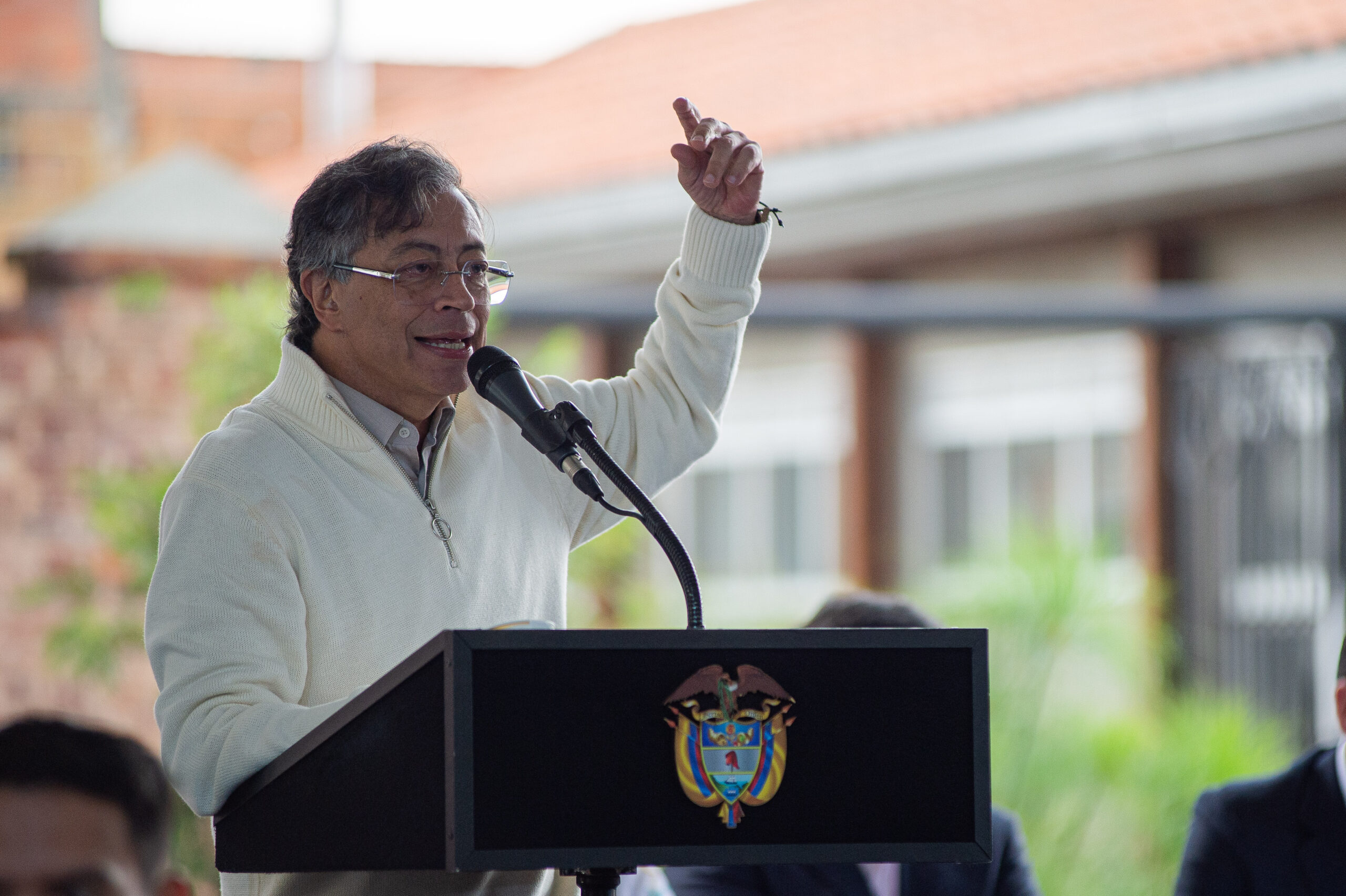
Colombian President Gustavo Petro’s Oval Office visit on February 3 comes on the heels of the tensest year in the US-Colombia relationship in the past three decades. Based on significant policy disagreements and inflamed by the US and Colombian presidents’ affinity for bombastic declarations, the two nations careened from crisis to crisis over the past twelve months.
There have been several notable low points: In January 2025, Petro refused to accept deportees from the United States, only to back down after US President Donald Trump threatened to levy crippling tariffs on Colombia. In September 2025, Petro made an outrageous speech in New York, calling on US troops to ignore Trump’s orders. Trump retaliated by revoking visas from several Colombian officials, including Petro. And in October, the US Treasury Department’s Office of Foreign Assets Control sanctioned Petro and his family. But all this was just a prelude for an even more dramatic moment—when last month, Trump suggested that the United States might stage military operations inside Colombia, possibly even targeting Petro. For two nations accustomed to close cooperation and a long tradition of defusing disagreements in private, this seemed to be a startling display of how far the two governments had diverged.
However, that may not be fully accurate. On key issues such as stability in Venezuela and the need to address transnational criminal activity, including illegal migration and drug trafficking, Colombia and the United States appear to agree on the ends they seek, even if they differ on how to reach those ends. The Trump administration obviously favors a more aggressive approach on transnational crime, including the use of military force and restarting the aerial eradication of Colombian coca crops. Petro’s team understands the threat posed by transnational crime but has failed to achieve a negotiated solution. It is in the interests of both nations that Venezuela again become a “normal” nation, a good commercial partner that no longer suffers from such turmoil that it causes millions of its citizens to flee as migrants.
So what would a productive approach to US-Colombian relations look like? Petro has some cards to play when it comes to counternarcotics and Venezuela. With the failure of his Paz Total (Total Peace) strategy, Petro is now willing to use force against illegal armed groups. That needs to be done in the context of a rigorously designed strategy—an approach that the Colombian armed forces are well prepared to develop and execute. And consistent with the long and successful history of bilateral military cooperation, US support could underpin the execution of a serious and effective military effort to push back on illegal armed groups to the benefit of both nations. Petro asking for such help is likely to get a favorable response from Trump.
Additionally, Colombia should want the US effort in Venezuela to be a success and should say so. It appears that the meaning of Trump’s claim that the United States will “run” Venezuela is that Washington has taken control of Caracas’s petroleum industry and is giving nonnegotiable instructions to the Bolivarian regime on issues such as the release of political prisoners, as well as Venezuela’s commercial and security relations with Cuba, Iran, Russia, and China. The ultimate goal, which US Secretary of State Marco Rubio described in his Senate testimony last week, is that Venezuela again become a stable partner in the region.
Real stability in Venezuela is profoundly in Colombia’s interest. No country has received more Venezuelan migrants than Colombia, so no nation would benefit more from the return of those individuals to their home country. But they will only return to a stable and safe Venezuela. Further, Colombia would benefit economically from trade with a stable Venezuela. In 2008, two-way trade between those two nations peaked at more than seven billion dollars. Colombian exporters will be anxious to recover those markets; Petro would be wise to use this meeting to position Colombian businesses to benefit from these opportunities.