
“I hope I am wrong. My gut tells me we will fight in 2025.”
—Leaked internal US Air Mobility Command order, late January 2023
WASHINGTON—Three years after I made that prediction, and with 2025 fully behind us, I can now say that I was wrong. That is good. But I know it was right to sound the alarm.
I was the commander of the US Air Force’s Air Mobility Command when I issued an order to my command to aggressively prepare for possible conflict in the Pacific. I was grappling with a critical question: How can the United States project power across the Pacific—the largest ocean on Earth—fast enough to deter and if necessary decisively defeat a peer adversary that has geographic positional advantage?
When I took over my post in October 2021, I was given clear direction to go faster in preparing for conflict with China. Air Mobility Command moves nearly everything the US military needs to fight—from troops and fuel to missiles and medical care. I was selected for that role because of my experience in the Indo-Pacific, where air maneuver is the difference between arriving in time and arriving too late.
More than a year into the job, despite progress, the pace of change was uneven. Urgency had not penetrated every level of the force. After a decade watching China up close, I could see that Beijing was still accelerating faster than Washington was adjusting.
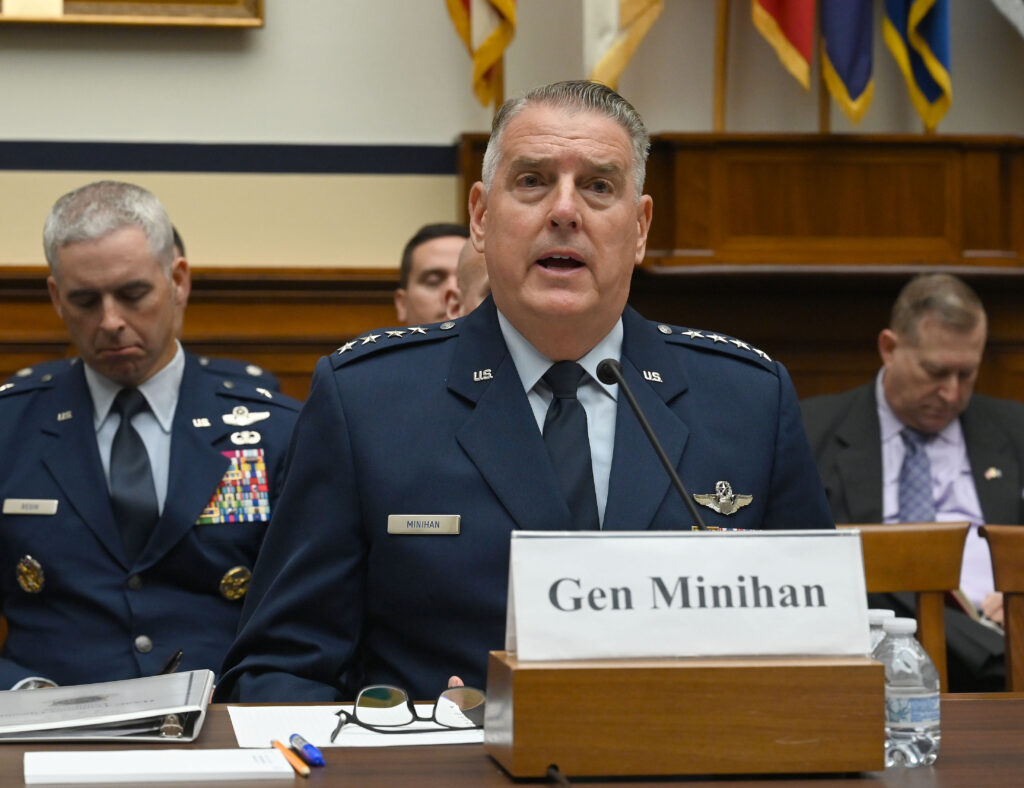
In late January 2023, I issued an internal order to force urgency and action. I was deliberately direct. Military orders exist to change behavior and accomplish missions, not to accommodate comfort. Noting that Chinese President Xi Jinping had secured a third term as president and that presidential elections in Taiwan and the United States were coming in 2024, I shared my gut feeling that war between the United States and China could erupt in 2025. I directed my commanders to accelerate their training with specific benchmarks for the coming months. The goal was a “fortified, ready, integrated, and agile Joint Force Maneuver Team ready to fight and win inside the first island chain,” the line stretching from Japan to the Philippines, with Taiwan at the center.
Within hours of its release, the order was stripped of its classification markings and posted on social media without authorization. What had been an internal directive was suddenly public, detached from its context, and portrayed as reckless rhetoric. The US Department of Defense publicly distanced itself from the memo.

Click on the banner above to explore the Tiger Project.
The controversy was less important than what followed. Later that year, my command conducted an exercise called Mobility Guardian. It was not a scripted display or a tabletop drill. It was a rehearsal for how the United States would bring real forces into a contested Pacific theater. Thousands of airmen, hundreds of aircraft, and equipment moved across long distances into an environment where runways were threatened, communications were degraded, and bases could not be assumed safe.
This was not sustainment of an allied force at a distance, as in Ukraine or Israel. It was a rapid surge of US military force into a theater of conflict, appearing quickly and visibly in the Pacific—right on China’s doorstep. US allies saw what was possible. China noticed too and felt the presence of the United States’ uniquely powerful air-mobility capability.
The exercise exposed strengths and weaknesses. Some planning assumptions held, like partner and ally integration. Others failed. Command relationships as well as command and control suffered most. Redundancy mattered. Simplicity mattered. Speed mattered. Readiness mattered. Integration mattered. Agility mattered. The result was a decisive shift from untested, assumption-based planning to valuable rehearsal-based planning.
The Joint Force is capable, but it is not yet as ready, integrated, or agile as it must be for a high-end Pacific fight. Too much planning remains assumption-driven. Too many caveats are managed rather than resolved. Mobility Guardian and exercises like it provide critical insights to rapidly advance on China. Readiness in a contested environment requires more than traditional availability metrics, such as head count and status of equipment. It requires commanders who drive their units hard and units that train, operate, and rehearse like the future of their country depends on it. Because it does.
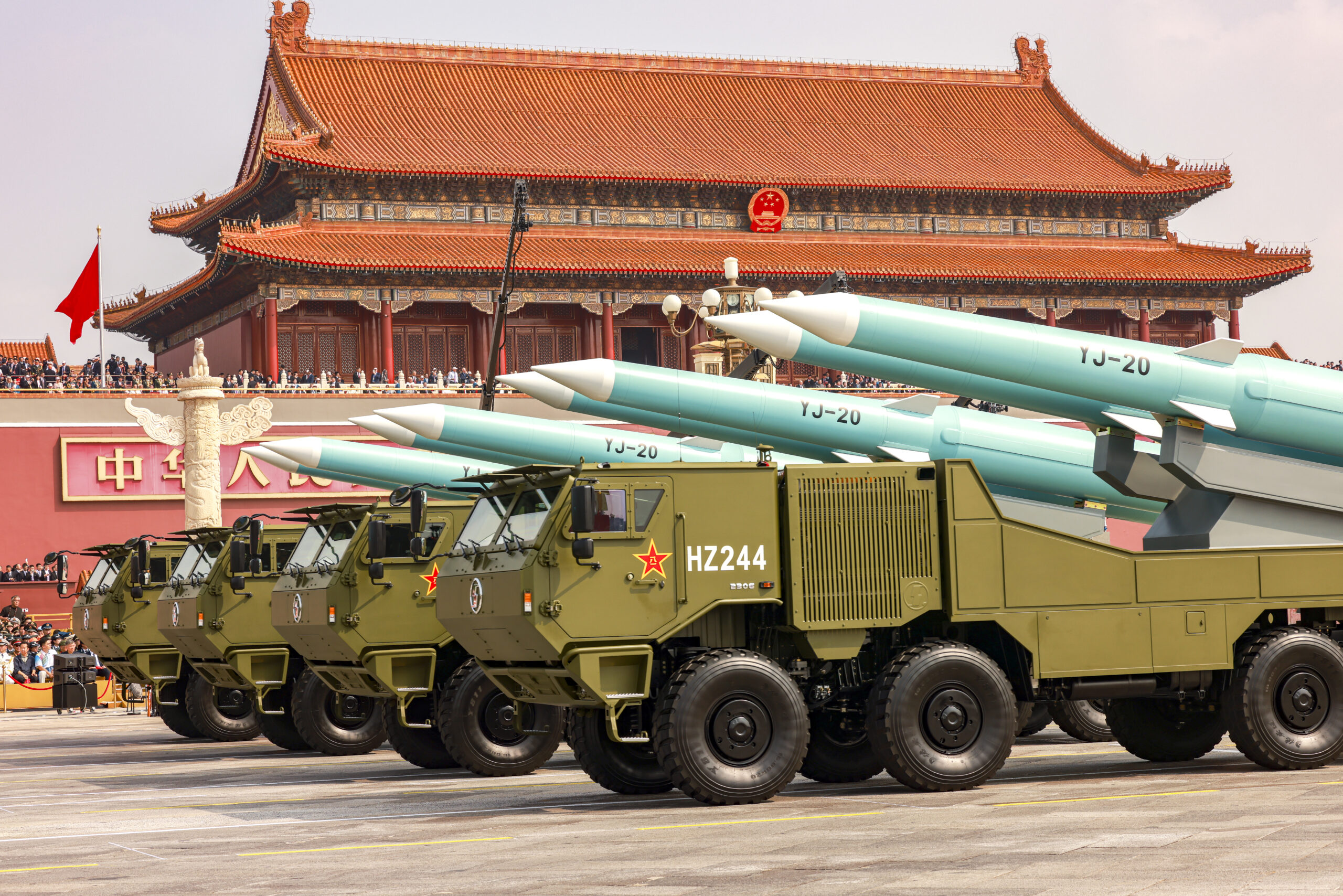
Beijing continues to expand its military, rehearse large-scale joint operations around Taiwan, and assert control across the South China Sea. At the national level, the real question is operational: Can the United States deliver winning capabilities to the warfighter more quickly than China can? That challenge extends beyond doctrine into areas such as industrial capacity, supply chains, national will, and risk tolerance. The United States is experiencing a rare moment where executive authority and acquisition reform are aligned for speed.
There is nothing more powerful than a US military that believes in itself. That belief comes from preparation and from knowing the nation will deliver what the mission requires. I am glad I was wrong about the timeline for a US conflict with China, because the Joint Force has become more ready, integrated, and agile in the time since I made my prediction. Those gains matter. But the US military still has much more work to do.