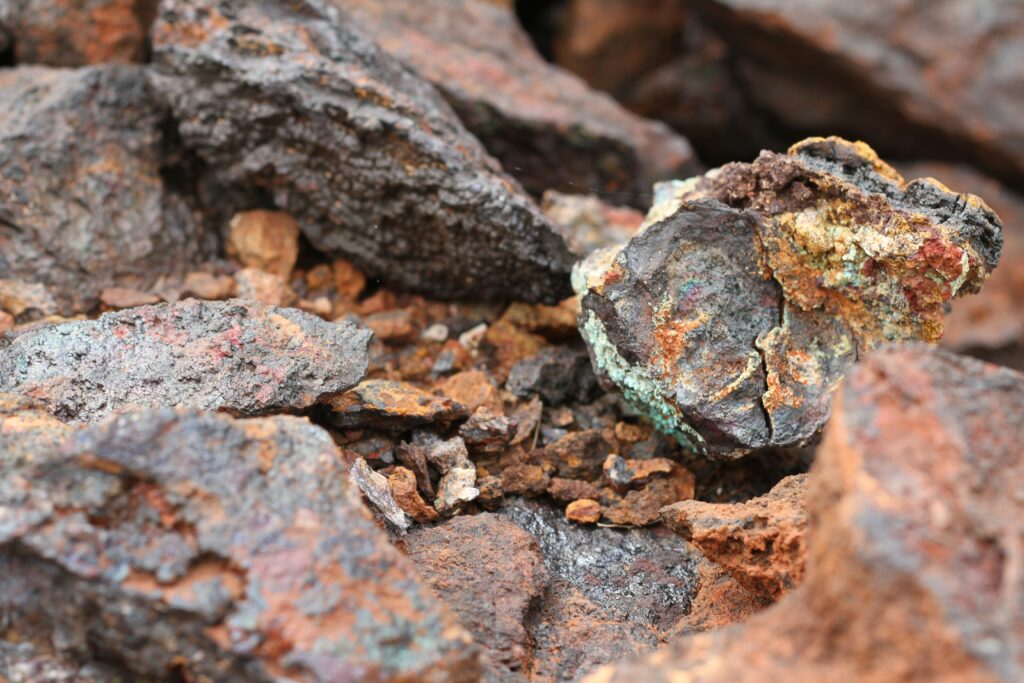
The US announcement of a new critical minerals effort, dubbed Project Vault, is a long time in the making. Stockpiling has been at the center of years of debate around the best way for the US to promote mineral supply security. This new investment appears positioned to bring commercial purchase commitments and government stockpiling together to advance US critical minerals supply chain security.
But a stockpile is not a monolithic concept. Stockpiles can be implemented in multiple ways to achieve many different goals, from providing a backstop for manufacturers to a tool for making purchases to bolster new supply options. The wave of recent export controls from China restricting access to commodities like antimony, gallium, germanium, and rare earths has led industry advocates and government officials to call for physical stockpiling of key material to help companies weather supply disruptions. Continued price manipulation that makes it difficult for Western producers to operate competitively has led many of those same groups to call for some form of economic backstop for US and allied producers. Critical minerals cooperation between allies, including on price support mechanisms, has been the subject of high-level dialogues hosted by Secretary of State Rubio and Treasury Secretary Bessent in the last month alone.
With the introduction of Project Vault, the US government has clearly demonstrated it believes that stockpiles have a role to play in promoting supply security. Credit is due to the National Security Council and Export-Import Bank (EXIM), which led these efforts, for moving beyond talk and putting a real solution, backed by real capital on the table. What we don’t know yet is exactly how the stockpile will be designed and in what way it will be used to strengthen mineral supply chains.
What is Project Vault?
Project Vault isn’t the critical minerals version of the Strategic Petroleum Reserve (SPR), which many have drawn comparisons to. Those SPR references elicit images of a government program storing physical piles of material deep within caverns spread out across the country to be released under orders from the president. In contrast, the Project Vault stockpile will be established as a public-private partnership to act on behalf of participating companies based on upfront purchase commitments. Stockpiled minerals will then be procured and stored on companies’ behalf. Upon release, reserves will be sold back to the specific companies who made purchase commitments rather than into the open market. The stockpile will be established as an independent entity with its own management team and board, a more private sector aligned structure than the SPR.
EXIM will provide a loan of up to $10 billion and up to $1.67 billion in preferred equity from private investors, which have not yet been named. This is a big move for EXIM, which more than doubled the size its previous largest investment, a nearly $5 billion loan for a Mozambique LNG project that was first approved in 2019.
Key questions as the stockpile takes shape
EXIM’s Project Vault fact sheet describes the stockpile’s objective as “reducing dependence on foreign-controlled supply chains, strengthening the domestic industrial base, and ensuring uninterrupted access to materials essential for advanced manufacturing and critical technologies.” Those are big, and laudable, goals. While the initial Project Vault announcement outlined the concept for the plan, it’s likely that final terms are still being worked out. As Project Vault moves to implementation, there are a few key areas worth watching that will define the scope and success of the new initiative.
What minerals will be purchased and stored?
The cross-section of companies referenced in initial reporting shows the stockpile will focus on more than just defense applications. That’s positive for some industries that have important economy-wide implications, including automotive (i.e., General Motors) and energy technology manufacturers (i.e., GE Vernova), but have struggled to get government support from increasingly defense-centric funding priorities. EXIM’s Chairman has said the stockpile will include all sixty critical minerals with an initial focus on rare earth elements. In practice, that will be very difficult to do at scale. The size of the budget seems best suited to providing a backstop for low-volume, high-criticality minerals that are necessary in manufacturing processes. It also means the stockpile is unlikely to have a meaningful impact on higher volume markets like copper. Importantly, it appears that the ultimate decision on what will be purchased and stored will be directed by end-customers rather than a centralized attempt to predict future market needs.
Where will these stockpiled minerals be sourced from, and will this stimulate offtake?
Experienced trading houses Hartree Partners LP, Traxys North America LLC, and Mercuria Energy Group Ltd. will manage the initial purchase of material for the stockpile. But where those minerals come from is an open question. Will the US government insist that products be purchased from non-Chinese sources that often don’t exist? If so, can that be done at prices that consumers will be happy with? Or will the structure allow trading firms to buy today at the lowest prices available to build a reserve that can be drawn down when supplies are disrupted?
Long-term offtake is the holy grail for companies looking to develop a Western critical minerals supply chain. Miners and processors have long-lamented the difficulty of getting deep pocketed OEMs or big-tech companies to lock in future purchases for fixed volumes at prices that support Western producers. In the absence of commercial contracts, direct purchasing through a government stockpile is often cited as the next best alternative to provide project developers with the cash flow certainty needed to secure financing. The absence of either option keeps projects stuck in an endless loop of financiers requiring offtake before they’re comfortable deploying capital, and potential offtakers requiring projects to demonstrate that they have financing before they’re seen as serious options for meeting supply needs.
Using the stockpile to purchase from Western suppliers could provide a lifeline to some emerging mining and midstream operations. However, their higher prices may make participation less appealing to end-consumers. Whether the demand signal from the stockpile is enough for Western miners and refiners to invest their own money, and private financiers to put their money on the line alongside them, to bring new supply to market will be critical to the mechanism’s success if the US government intends for the stockpile to help rebuild the US mining industry. While some individual suppliers will undoubtedly benefit from offtake commitments, it’s more likely that the stockpile will act as a shock absorber without the ability to restructure entire mineral supply chains.
What happens to companies not in the club is also an open question. If a significant amount of non-Chinese supply is captured by the stockpile, it risks distorting commodity markets and further squeezing US or allied companies looking for the same feedstock.
Is this enough to incentivize long-term purchasing?
Many within the industry have argued that manufacturers have been reluctant to pay higher prices to secure less vulnerable supplies despite recognizing the threat posed by supply disruptions. Cheap financing from EXIM and bulk purchasing and storage on behalf of multiple companies should result in more attractive all-in economics for participants than if they were looking to secure supplies on their own. The ability to lock in future prices with limited money out of pocket should also incentivize upfront purchase commitments. It remains to be seen whether the Project Vault structure will be enough to change a consumer dynamic that has historically prioritized pricing and flexibility—resulting in an addiction to lowest cost sourcing and an unwillingness to commit to fixed volumes of offtake far into the future. The subsequent announcement of the revamped Minerals Security Partnership, now known as the Forum on Resource Geostrategic Engagement (FORGE), provides another potential avenue for ensuring that minerals sourced from US and allied producers end up in US supply chains.
There’s no right or wrong answer on some of these questions. How Project Vault is implemented over the coming months will show exactly what problem the US government expects the stockpile to solve, where a stockpile fits with the myriad of other critical minerals actions being taken by the United States and its allies, and how willing industry is to be a partner in that effort. The one thing we do know today is that experts will undoubtedly continue to disagree about the best use of a critical minerals stockpile.
Evan Musolino is a senior vice president in the critical infrastructure practice at Venn Strategies. He was formerly a managing director at the US International Development Finance Corporation and coordinated US government-wide strategic investment on the White House National Security Council staff.
stay connected
Sign up for PowerPlay, the Atlantic Council’s bimonthly newsletter keeping you up to date on all facets of the energy transition:
related content
our work
The Global Energy Center develops and promotes pragmatic and nonpartisan policy solutions designed to advance global energy security, drive economic opportunity, and foster a sustainable energy future.