
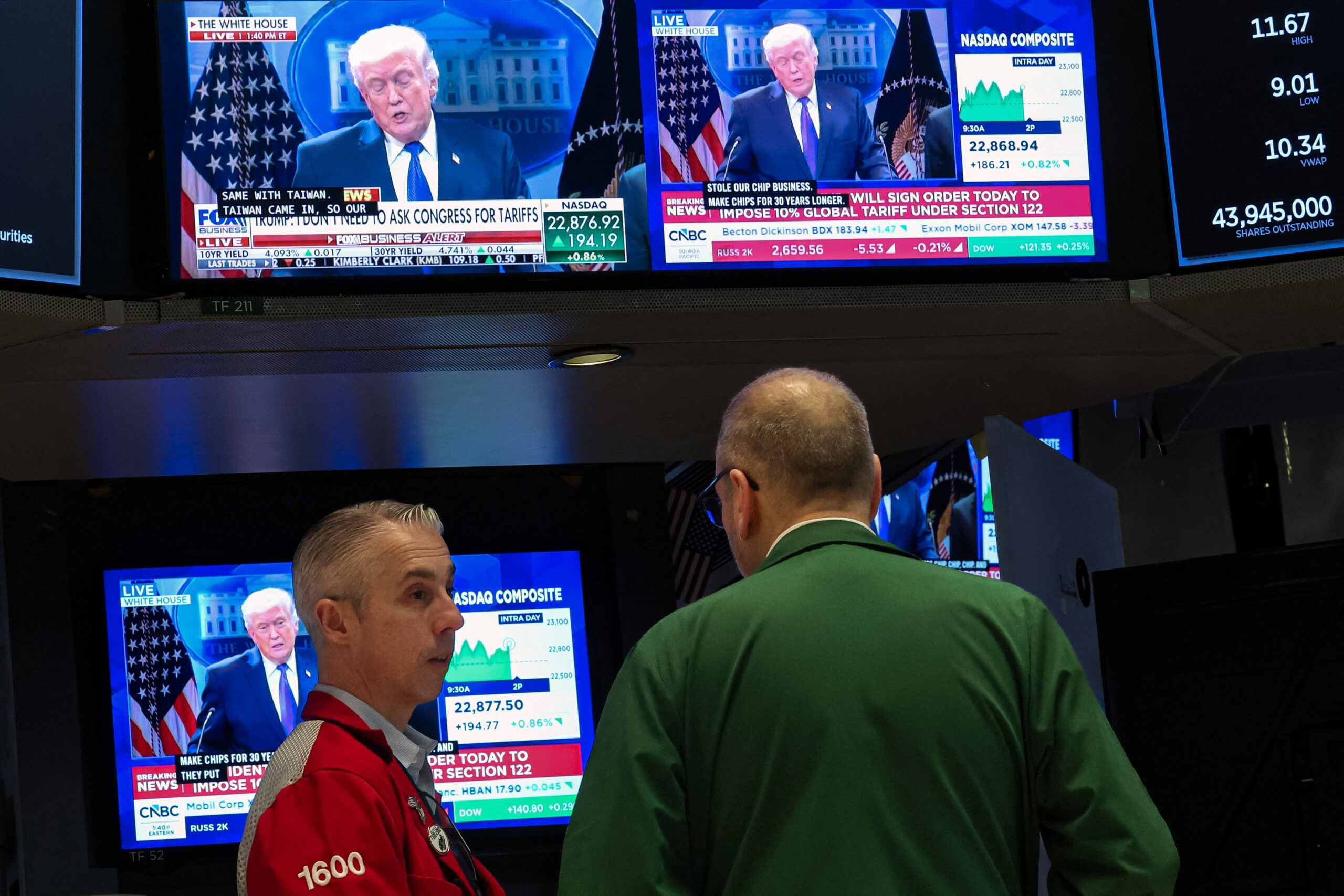
Confused about the past week’s tariff news? You’re not alone. On Tuesday, US President Donald Trump imposed 10 percent tariffs on most global imports despite previously announcing on social media that the levies would be set at 15 percent. This latest tariff announcement comes on the heels of the US Supreme Court’s ruling on Friday that the president does not have the authority to impose import duties under of the International Emergency Economic Powers Act (IEEPA). It’s made for a busy few days for the Trump Tariff Tracker. But we’re left with several burning questions about how this will all play out. Our experts have the answers below.
1. Will companies get refunds, and if so how?
It is likely that importers of record will eventually get refunds for IEEPA tariffs they already paid. However, the Supreme Court did not address remedies, and the mechanics and timings of any eventual refund are uncertain. In general, it is prudent for companies to keep all options on the table, including administrative protests and filing a lawsuit at the Court of International Trade, to maximize the chances of getting a full refund. Yesterday, for example, FedEx filed a lawsuit against the US government for a “full refund” for the IEEPA tariffs it paid.
—Brian Janovitz is a nonresident senior fellow with the Atlantic Council GeoEconomics Center and a national security and global trade partner at DLA Piper, where he advises on geostrategic risk, supply chain planning, US trade policy, and trade litigation.
2. Will US consumers get refunds, and if so how?
Refunds would be owed to the importer of record. In the absence of de minimis treatment for low-value goods, it is very rare that a consumer would ever be the importer of record. It is unlikely that consumers that absorbed the tariffs through increased prices, but did not pay the tariffs, would ever be reimbursed at any real scale.
—Brian Janovitz
3. Which countries gain from the tariff changes?
Right now, Brazil, India, and, believe it or not, China, are the biggest winners from the change. That’s because those countries—along with a range of Asian nations including Vietnam, Malaysia, and Thailand—were facing IEEPA tariffs above 15 percent. Brazil was a particularly complex case, with the stacked IEEPA tariffs reaching 50 percent. But now, with the global rate down to 10 percent—though the White House says it is working on increasing it to 15 percent soon—these countries have at least a temporary reprieve. For China especially, this might mean a surge in exports to get ahead of potential future section 301 tariffs, which are certainly coming based on the new trade investigations the Trump administration opened this weekend.
—Josh Lipsky is the chair of international economics at the Atlantic Council and the senior director of the GeoEconomics Center. He previously served as an advisor at the International Monetary Fund.
4. Which countries are harmed by the tariff changes?
On the other end of the stick is the United Kingdom and the European Union (EU). Because the Section 122 tariffs stack on top of most favored nation (MFN) tariffs, the EU countries could soon be paying above the 15 percent rate they agreed to in the Turnberry deal last year. For the United Kingdom, it’s not even close. The United Kingdom was proud to be the first one out of the gate with the 10 percent deal and said as much to most other nations. But now they are in the same 15 percent boat and must be asking what the value is of a deal that can change so quickly.
The administration is likely arguing behind closed doors that while its hands are tied temporarily, once it finishes the 301 investigations, it can resume a more country-by-country approach and ensure that the United Kingdom gets better treatment. But whether that kind of arrangement can work for British Prime Minister Keir Starmer and European Commission President Ursula von der Leyen has as much to do with domestic politics across Europe and the United Kingdom as it does with trade law.
—Josh Lipsky
5. How is the EU responding?
The EU is responding to the announcement of new tariffs under section 122 by suspending the process of implementing its obligations under the US-EU bilateral agreement. It is seeking clarity about whether the new tariffs are contrary to the United States’ commitment to a 15 percent cap on reciprocal tariffs, since if MFN tariffs are added to the 10 percent levy, then rates for some EU products will exceed 15 percent.
Look for the United States to clarify how these new tariffs will work, as well as a likely resumption of the EU’s implementation process. There has been a pattern of blanket and ambiguous announcements from the United States followed by more precise clarifications; there is little indication that this time will be different since both sides have an interest in maintaining the agreement.
—L. Daniel Mullaney is a nonresident senior fellow with the Atlantic Council’s Europe Center and GeoEconomics Center. He previously served as assistant US trade representative for Europe and the Middle East in the Office of the United States Trade Representative.
6. Which countries will try to negotiate new deals?
Countries that have not finalized deals with the United States, such as India, may want to consider delaying finalizing agreements until there’s more clarity from the United States. Already, we saw an Indian delegation temporarily postpone a trip, but they are now planning to reengage. So, much will depend on how clear the administration is on the new tariff rates and what its plans are for future tariffs.
—Josh Lipsky
7. What is happening with the de minimus exemption for goods under $800?
The Trump administration had suspended the de minimis rule (under which duties are not collected on shipments valued at under $800) under IEEPA. After the Supreme Court invalidated the IEEPA tariffs, the administration continued suspending the de minimis rule under a separate executive order on February 20; the administration’s authority to do so is unclear and will likely be subject to further litigation.
—L. Daniel Mullaney
8. How will the midterm elections play into Trump’s tariff calculations?
The midterms won’t be as much of a factor as some think. It’s unlikely that Congress will be asked to vote on tariffs during the summer going into the elections. But regardless, Trump has made clear that he believes he has all the authorities he needs and has had little interest in asking Congress for more, despite Supreme Court Justice Neil Gorsuch’s opinion in the case, which made it clear that Congress was the answer the president is looking for. The bottom line is that the president believes in tariffs as economic policy. He will continue to wield that tool not just for the next year, but for the next three years. His ability to wield tariffs is more constrained now without IEEPA, but it is still a powerful economic lever. Those expecting certainty and stability on tariff rates will be looking in vain.
—Josh Lipsky