
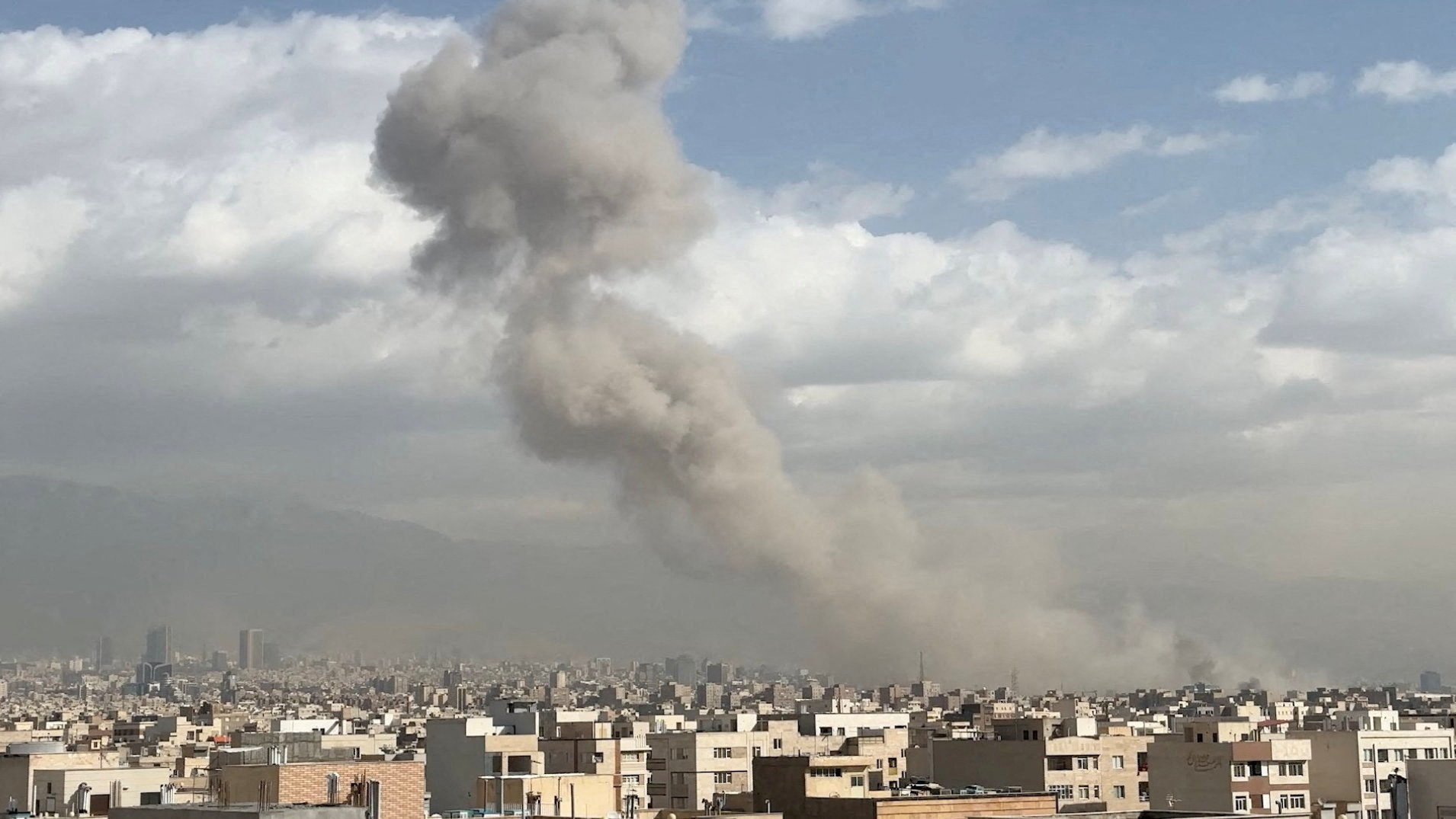
He went big. On Saturday morning, US and Israeli forces unleashed Operation Epic Fury, what US President Donald Trump called “a massive and ongoing” campaign against Iran. He called on the Iranian people to overthrow the regime once the fighting is done. Iran responded quickly by attacking Israel and US bases in the region. Below, our experts assess the unfolding war and where it goes from here.
Click to jump to an expert analysis:
Nate Swanson: We know the objective—and little else
Jonathan Panikoff: The Iranian regime is under unprecedented strain, but beware ‘IRGCistan’
Matthew Kroenig: A high-risk, high-reward campaign
Jennifer Gavito: Iran’s retaliation signals that it is not planning to deescalate
Daniel Shapiro: Trump’s order leaves questions for the American people
Danny Citrinowicz: A campaign with an abstract objective and no clear endgame
Thomas S. Warrick: This war will have a home front in the United States
Celeste Kmiotek: This campaign has serious implications for international law
Rob Macaire: The pathway to a stable Iran just got narrower
Alex Plitsas: Iran could be deliberately holding some of its missiles in reserve
Hagar Hajjar Chemali: The operation will only accelerate the Iranian regime’s economic collapse
C. Anthony Pfaff: Previous strikes have followed a pattern toward de-escalation
Michael Rozenblat: The experiment of the Islamic Revolution is done
Andrew Peek: Now the campaign turns on diplomacy, logistics, and opposition forces in Iran
Joe Costa: Sustaining the operation could impact readiness for other priorities
Colin Brooks: The US has a critical interest in what comes next
Tressa Guenov: Iran’s proxy networks are down but not out
Kelly Shannon: Real regime change requires more than bombs
We know the objective—and little else
By launching a massive joint attack with Israel on Iran, Trump is gambling that that he can inflict enough damage on the Islamic Republic’s core security and political institutions that the regime will fall.
By choosing to initiate this war, Trump has diverged from his past pattern of decisive actions with immediate and pain-free off-ramps. This is an enormous gamble with questionable legal justification. Trump did not outline an imminent threat from Iran, nor a detailed plan for what comes next in Iran if the United States succeeds in decapitating the regime. Trump also acknowledged the significant risk to US troops in the region.
As this operation moves forward, I am looking at three interconnected questions:
- Will Iran successfully inflict costs on the United States? Facing a truly existential threat for the first time since the Iran-Iraq war, the Iranian regime will likely respond with everything it has, including its full missile arsenal and proxies. How much damage Iran inflicts on the United States and Israel could very well determine the regime’s fate.
- Polling consistently shows Americans are deeply opposed to intervening in Iran. If there are significant US casualties or impacts on global energy prices, will Trump stay committed to this campaign?
- Trump has defined a successful campaign as one where the Iranian people rise up and end the Islamic Republic. Absent ground troops or an armed opposition, this requires significant defections within Iran’s security apparatus. Is there a plan for how that will come together?
Finally, while I am a deep skeptic of this operation, it is important to acknowledge the depravity of the Iranian regime and my genuine desire to see the Iranian people freed. I welcome the prospect of an Iranian government replaced with one that is a responsible international actor and more responsive to its people. But initiating a major war with a nation of 93 million people, 2,500 years of history, significant retaliatory capabilities, and no clear opposition within the county is a significant risk.
—Nate Swanson is a resident senior fellow and director of the Iran Strategy Project at the Atlantic Council’s Scowcroft Middle East Security Initiative. Beginning in 2015, he served as a senior advisor on Iran policy to successive administrations, including most recently as director for Iran at the National Security Council.
The Iranian regime is under unprecedented strain, but beware ‘IRGCistan’
Trump’s decision to launch major strikes against Iranian regime targets goes beyond his promise to protesters that “help is on the way.” This is an extensive campaign designed to kill the leadership, not a few hours of targeted, narrow strikes.
But neither protests nor airstrikes alone are likely to end the regime’s grip on power. History suggests it will require either the varying Iranian security forces stand aside, as happened in 1979, or at least a part of the security establishment to switch sides to the opposition. One of those two results may be more likely than it was previously, however. The breadth of economic pain felt across the country, the water crisis, and the regime’s brutal reaction to the protests, killing thousands—perhaps tens of thousands—makes this moment unique among the Iranian public’s history of protests since the revolution.
Indeed, this time, something fundamental has changed in Iran. And even if the regime does not collapse immediately, it’s critical to remember that the 1979 revolution took a year to unfold. This iteration of protests, therefore, should be viewed as the start of a new era, not another failure to bring change to the country.
But what that new era entails is unclear. The end of the regime is less likely to foster democracy as it is to birth what some are calling “IRGCistan”—a military-controlled state that might offer a new supreme leader as a symbolic token to millions of conservative Iranians, but with power firmly vested in the hands of the Islamic Revolutionary Guard Corps (IRGC). Such a result would provide three pathways forward.
An IRGC-run Iran could initially be a bigger regional and domestic threat, staking out even harder-line stances in seeking to consolidate power and focused on ensuring no other insider can outflank it. Second, it could seek to quickly gain the support of the Iranian people by showing greater flexibility for a deal with the United States in exchange for an economic boost in the form of sanctions relief. Third, it could lead to a period of confusion and jockeying for power in which Western states will have to decide how much to try to jump into the fray and influence the outcome.
—Jonathan Panikoff is the director of the Atlantic Council’s Scowcroft Middle East Security Initiative and a former deputy national intelligence officer for the Near East at the US National Intelligence Council.
A high-risk, high-reward campaign
Some have argued that Trump has not effectively made his case for US and Israeli strikes on Iran, but this military action became all but inevitable in January. Trump set a redline, warning the Iranian regime not to kill protesters. The clerics ignored the redline and massacred tens of thousands of their own people anyway. Trump’s advisers likely argued that he had to follow through on his threat or risk undermining US credibility. He did not want to follow in the footsteps of former President Barack Obama, who drew a redline over Syrian chemical weapons use only to back down later.
The only remaining question then concerned the target set. In late 2025, it was reported that Israel and the United States were considering strikes on Iran’s reconstituted missile program. Limited strikes on these targets could have made sense, at least as a starting point. Instead, having witnessed the vulnerability of the Iranian regime in January, Trump, his advisers, and regional partners, saw an opportunity to remove the Islamic Republic once and for all.
This path comes with higher risks and a higher potential reward. In past conflicts, like Operation Midnight Hammer last summer, Iran engaged in only token military retaliation, hoping to avoid a massive war with the United States. Now, with their backs against the wall, the clerics have little reason not to hit back with everything they’ve got. On the upside, the Islamic Republic is a card-carrying member of the Axis of Aggressors and has posed one of the greatest threats to US national security for decades. Removing it from the chess board could result in a transformational improvement of the regional and US global security environment.
—Matthew Kroenig is vice president and senior director of the Atlantic Council’s Scowcroft Center for Strategy and Security and the Council’s director of studies.
Iran’s retaliation signals that it is not planning to deescalate
Iran’s initial response to what now seems to be a regime-change campaign by the United States and Israel reinforces that the regime believes this to be an existential crisis. As such, the type of de-escalatory responses that we have become accustomed to in previous conflicts, including last summer’s twelve-day war, are at least for now off the table. The scope, speed, and scale of Iran’s initial retaliation, including against the Gulf countries (excluding Oman), reinforce the potential for this quickly escalating to wider conflict and widespread disruption. Already, air traffic in the region has ground to a halt and shipping flows through the Strait of Hormuz are slowing.
In these early hours, as the United States and its allies acclimate themselves to the potential for instability and economic disruption, key questions that will shape that trajectory remain to be answered. Chief among them are the intent and preparedness of Iran’s proxies to join the fray. In Iraq, Kataib Hezbollah has indicated it will seek to strike US facilities in Iraq in response to “American aggression,” while the Yemen-based Houthi movement is expected to resume attacks on shipping lanes in Red Sea corridor. And already today, the Lebanese government has warned Hezbollah against dragging the country into conflict, but the terror organization’s response remains to be seen.
Meanwhile, on the other side of the ledger, Saudi Arabia and the United Arab Emirates (UAE) have already condemned Iran’s strikes on several Middle Eastern countries that have killed at least one civilian in Abu Dhabi. A critical indicator of how this may all unfold is whether Middle Eastern countries lift their restrictions on US use of their airspaces to undertake its operations against Iran—or offer even more direct support for the campaign.
—Jennifer Gavito is a nonresident senior fellow with the Scowcroft Middle East Security Initiative. She previously served as deputy assistant secretary of state for Iraq and Iran.
Trump’s order leaves questions for the American people
Many Americans were probably surprised to wake up this morning to discover that the United States was at war in the Middle East. Trump, in his brief statement overnight, as in his recent State of the Union address, described the well-known (and accurate) list of the Iranian regime’s misdeeds: its pursuit of nuclear weapons, its extensive ballistic missile program, its support of terrorist proxies, and its brutal suppression of the Iranian people. What he did not explain is the urgency or the imminent threat that required a war now.
Typically, before launching such major operations, presidents and their senior advisers have explained to the American people the reason major military operations are required, and the strategic objective they are intended to achieve. They also customarily brief Congress, so the people’s representatives can express their view—even authorizing or supporting the operation—and seek allies and partners to join (or at least offer support for) the operation. Except for one briefing for eight congressional leaders, and of course, Israel’s participation, the president did none of these.
For the first time, the president did describe a strategic objective in his statement—to change the Iranian regime. As desirable an outcome as that is, it was a startling declaration for a president who has criticized previous regime-change wars, and had only days earlier sounded content to settle for a nuclear deal (admittedly, one that had little chance of being reached). But he also distanced the United States from responsibility to achieve regime change, calling on the Iranian people to do it. He can now claim he made good, perhaps belatedly, on his pledge to Iranian protesters in January that “help is on the way.” And many protesters may indeed welcome strikes against regime leaders and security organs that crushed the protests. But the linear progression suggested by his statement—US and Israeli strikes on nuclear, missile, and regime targets, leading to renewed protests, leading to the fall of the regime—is far from certain.
Iran’s air defenses, highly degraded in the twelve-day war in June, is no match for the combined power of the US and Israeli militaries. Iran will suffer severe damage, which could well weaken the regime. But Iran will land some blows as well, as it already has on the first day, with missile strikes against US bases and dozens of missiles launched toward Israel. If Iran is able to absorb the punishment, keep launching ballistic missiles, and continue to crush dissent at home, US and Israeli air defenses could soon be stretched and US munitions stocks run down to dangerous levels. So tough decisions may lie ahead, and tough conversations with the American people, if the regime, battered and bruised, manages to outlast aerial attacks, leaving the strategic objective of regime change out of reach with the means the president has employed.
—Daniel B. Shapiro is a distinguished fellow with the Atlantic Council’s Scowcroft Middle East Security Initiative. From 2022 to 2023, he was the Director of the N7 Initiative. He served as US ambassador to Israel from 2011 to 2017, and most recently as deputy assistant secretary of defense for the Middle East.
A campaign with an abstract objective and no clear endgame
The United States and Israel have launched an unprecedented campaign aimed at creating the conditions for regime change in Iran—through the targeted killing of senior officials, strikes on regime institutions, and attacks against Iran’s strategic military infrastructure.
This is not a classic preventive strike. There was no immediate Iranian threat triggering the operation. Rather, the logic appears to be the exploitation of what is perceived as regime weakness in order to generate profound political change inside Iran.
The campaign is built upon the intelligence and operational advantages of the United States and Israel, as well as unprecedented firepower intended to pressure the regime to such a degree that internal actors—or the broader public—might ultimately move against it.
Despite early tactical achievements, the central question remains unresolved: what is the endgame? Can external military pressure realistically rely on an Iranian public that lacks cohesive leadership, particularly when facing a regime that has operated for forty-seven years under the disciplined control of the Islamic Revolutionary Guard Corps (IRGC)?
Complicating matters further is Iran’s apparent preparedness for this confrontation and its determination to preserve retaliatory capabilities over time. The risk of regional expansion is significant—especially following Iranian strikes against US bases in the Gulf and the possibility that Iranian-aligned actors in Yemen and Iraq could enter the conflict more directly.
Yet the greatest danger may be a prolonged campaign that fails to produce dramatic internal change in Iran and lacks a clearly defined termination mechanism, resulting in an open-ended conflict with no visible conclusion on the horizon.
—Danny Citrinowicz is a nonresident fellow with the Atlantic Council’s Middle East programs. He is also a fellow at the Institute for National Security Studies. He previously served for twenty-five years in Israel Defense Intelligence.
This war will have a home front in the United States
Trump announced the goal for this operation only after it started: sustained attacks to weaken Iran’s security and strategic targets, including Iran’s leadership, until the Iranian people overthrow the regime. This represents a gamble not just in the skies and streets of Iran but on the home front as well. The American people, by a significant majority, wanted Trump to focus his second term on domestic affairs, the economy above all. Because he did not seek the support of Congress and the American people in advance, he will own the outcome. If it succeeds, he may receive a mild domestic boost, but he risks a significant setback to his domestic agenda if he fails.
Trump’s postwar plan for Iran appears to rest on an obviously untested proposition: that the Iranian people will be able to overthrow an entrenched, if weakened, Islamic Revolutionary Guards Corps determined to hold onto power.
But there is another untested proposition: that the United States can resist whatever asymmetric efforts the Iranian regime will try here in the United States. Given Iran’s peculiar sense of symmetry, Trump’s targeting of Iran’s leadership will almost certainly lead to attempts to target Trump and other top US officials. The Secret Service, the Federal Bureau of Investigation, and the US Capitol Police will all be tested in the coming weeks and can afford zero failures. Iran will try every cyber trick it can mount, testing the Department of Homeland Security, the private sector, and US cyber defenses. Iran tried in the past, unsuccessfully, to meddle in US elections, and would almost certainly fail to have any impact this time. Even though the United States imports very little oil from the Middle East, energy prices may spike, setting back the US economy.
This war will have a home front, and Trump needs to find ways of broadening support at home.
—Thomas S. Warrick is a nonresident senior fellow in the Scowcroft Middle East Security Initiative and a former deputy assistant secretary for counterterrorism policy in the US Department of Homeland Security.
This campaign has serious implications for international law
The Islamic Republic of Iran (IRI) is responsible for an untold number of domestic and international human rights abuses and serious violations of international law, including crimes against humanity against the 2022 Woman, Life, Freedom protesters. Indeed, after Trump promised to “rescue” Iranians who launched the latest round of wide-scale anti-regime protests in January, the IRI responded by massacring, arresting, and executing protesters in the tens of thousands—a scale that is unprecedented in Iran’s history and globally.
However, the US and Israeli strikes on Iran violate international law. Use of force against a state is prohibited under the United Nations (UN) Charter, with exceptions for self-defense and Security Council authorizations. Self-defense must be in response to an imminent threat—and there is no indication such a threat existed to either the United States or Israel. Likewise, there are no Security Council authorizations. As such, this appears to not only violate the UN Charter, but indeed constitutes the crime of aggression as defined by the UN General Assembly and prohibited under customary international law.
US and Israeli strikes against Iran triggered an international armed conflict, and international humanitarian law (IHL) now applies. IHL demands that strikes only target combatants and legitimate military objectives, while taking precautions to limit incidental harm to civilians. Information is still coming in on what US and Israeli strikes hit in Iran, and what Iran strikes hit in Gulf states. Reports that dozens were killed in US or Israeli strikes on a girls elementary school warrant investigation, as do reports of IRI strikes on a hotel in Dubai. If either were hit intentionally or because insufficient precautions were taken to protect civilians, they would almost certainly be clear violations of international law. All parties to the conflict must ensure their actions comply with IHL.
There is much that can be said on the imperative to constrain and hold accountable actors like the IRI, which inflict atrocity crimes against their domestic populations and globally. But flagrant violations of international law against the IRI by the United States and Israel will only continue to erode international norms and further endanger civilians globally.
—Celeste Kmiotek is a senior staff lawyer for the Strategic Litigation Project at the Atlantic Council.
The pathway to a stable Iran just got narrower
From a European perspective, there is a lot of attention on whether these military strikes are in breach of international law, but that seems not to have been a dominant consideration in the decision process. Arguments about legality would have to focus on the intent of the military action, but the intent remains somewhat obscure. Both Trump and Israeli Prime Minister Benjamin Netanyahu’s statements as the strikes were launched talked about hitting nuclear, missile, and naval capabilities, but also encouraging the Iranian people to overthrow the regime. “This is the moment for action, do not let it pass,” Trump told the Iranians. And he threatened the IRGC and other security forces with “certain death” if they do not lay down their arms.
But the IRGC alone has some 190,000 active members: it doesn’t seem realistic that the president can kill them all or, indeed, guarantee their safety if they defect from their posts. If the Iranian regime emerges decimated, bloodied but still in power, its leaders will declare survival as victory. But if these attacks are devastating enough to collapse the regime, despite its preparations and resilience, it is possible that the whole authority of the state collapses with it. Either way, the pathway to a stable resolution that ends Iran’s threat to its neighborhood and oppression of its people may have become narrower.
—Rob Macaire is a nonresident senior fellow at the Scowcroft Middle East Security Initiative. He previously served as British ambassador to Iran.
Iran could be deliberately holding some of its missiles in reserve
The joint US–Israeli strikes against Iran mark a decisive escalation designed not merely to punish but to reshape the strategic equation. Trump has stated that the objective is regime change, pursued through sustained US air and naval operations, which are intended to weaken Tehran’s coercive apparatus while empowering protest elements on the ground.
The opening round of strikes appears calibrated toward degrading Iran’s retaliatory capacity and security apparatus: ballistic missile infrastructure, drone production and launch sites, government and military leaders, and key naval facilities tied to potential attempts to close the Strait of Hormuz. There are also indications of decapitation strikes targeting senior Iranian leaders, though battle damage assessments remain incomplete and confirmation of high-level casualties is pending.
The strategic logic is straightforward. Nuclear negotiations had frozen over nonnegotiable redlines. Rather than accept incremental stalemate, Washington and Jerusalem appear to have concluded that altering the players, not merely the terms, was necessary. Force, in this framework, is being used to degrade capability and change the calculus in Tehran.
Iran’s response thus far has been measured and rational. It has targeted major US military installations across the region: the US Navy Fifth Fleet headquarters in Bahrain, Al Udeid Air Base in Qatar, Al Dafra in the UAE, and Ali Al Salem in Kuwait.
Iran was assessed to possess roughly 2,000–3,000 medium-range ballistic missiles, 6,000–8,000 short-range systems, and thousands of drones. We have not yet seen saturation attacks intended to overwhelm layered air defenses. It is unclear if that is due to US and Israeli strikes on missile stocks, Iran holding missiles in reserve, Iran testing defenses, or a combination thereof.
Whether Tehran is deliberately holding reserves, probing defensive responses, or suffering greater degradation than publicly known remains unclear. The most plausible explanation may be a combination of all three.
—Alex Plitsas is a nonresident senior fellow with the Scowcroft Middle East Security Initiative, the head of the Atlantic Council’s Counterterrorism Project, and a former chief of sensitive activities for special operations and combating terrorism in the Office of the Secretary of Defense.
This conflict will only accelerate the Iranian regime’s economic collapse
While many are debating the strategy behind strikes against Iran as it relates to regime change, there is an important overlooked fact: the Islamic Republic of Iran does not have an economic leg to stand on. With or without strikes, this regime was already in the process of financially crumbling. It was headed toward an economic implosion that could have forced the regime’s collapse on its own.
In October 2025, one of Iran’s largest banks—Ayandeh Bank—collapsed. This bank was run by regime elites, it fueled their corruption, and it overspent on lavish projects that failed. The Iranian regime quickly absorbed Ayandeh’s debts and merged it with Bank Melli, the largest Iranian state-owned lender. The regime also mass printed rials, causing the already devalued currency to plummet and inflation to skyrocket overnight, sending shopkeepers into the streets followed by the masses of Iranians who joined them. Ayandeh’s collapse is what precipitated the protests that resulted in the regime’s subsequent massacre of its own people.
At least five more of the largest banks in Iran—including banks Sepah, Sarmayeh, Day, Iran Zamin, and Mellat—are at risk of the same fate. This is according to economists and Iran’s own central bank, which earlier in 2025 warned that eight unnamed banks risked dissolution. And because of years of sanctions and economic mismanagement, the regime does not have the billions needed to offer bailouts nor will its international buddies come to save it. What would follow in such a scenario is not only an exacerbated economic crisis, but major defaults and a breakdown in government-paid services and salaries. That would mean the regime’s security forces could go without pay, and dictators are often only as strong as their militaries are loyal, creating a major vulnerability for the regime’s sustainability.
I cannot guarantee this scenario—it is an assessment of how things in Iran could unfold with or without strikes. But understanding the regime’s economics on top of its other weaknesses since the twelve-day war last June offers insight into what helped motivate the United States and Israel to pursue their operations now. The regime was already standing at the edge of a cliff. This operation likely pushes it over the edge.
— Hagar Hajjar Chemali is a nonresident senior fellow with the Atlantic Council’s GeoEconomics Center. She previously served on the White House National Security Council and at the US mission to the United Nations.
Previous strikes have followed a pattern toward de-escalation
There are two likely outcomes to this recent escalation of the conflict with Iran: the conflict escalates into an asymmetric war with Iran, or, after a series of tit-for-tat strikes, it de-escalates as it has done in the past. Regarding the first possibility, the scope of any escalation is limited by both sides’ inability to settle their differences. For Washington, that entails regime change to one more friendly to the United States, Israel, and the West more generally. For Tehran, that means driving the US military presence out of the region. For both sides, that requires a greater military commitment than either seems willing or capable of giving. While the US may hope that this current round of strikes will mobilize protests capable of toppling the regime, the fact that Tehran’s ability to crack down on protesters remains undiminished suggests that, while worthwhile, that outcome is unlikely. Without a way to eliminate the other side’s ability to resist, all that’s left are asymmetric means such as air strikes and terrorist attacks.
If the above is true, then the second outcome is more likely. In October 2024, for example, Iran conducted a massive ballistic missile and drone strike against Israel in response to Israel’s assaults against Lebanese Hezbollah, including the killing of its leader Hassan Nasrallah. Israel responded to the Iranian attack by targeting missile production facilities in Iran, underscoring their limited nature. In return, the Iranians downplayed the damage and thus the need to respond. This pattern has repeated itself for some time, going back at least as far as the Iranian response to the US killing Qassem Soleimani in 2020 and the US responses to proxy attacks against its personnel in Iraq. Whether this pattern will continue going forward depends on how expansive the responses are. As long as both sides stick to attacking military targets, de-escalation is more likely. Should, however, Tehran conduct terrorist attacks against civilians and civilian infrastructure—more likely if it feels its survival is threatened—then escalation to a larger, regional conflict becomes the only option either side has.
—C. Anthony Pfaff is a nonresident senior fellow with the Iraq Initiative in the Atlantic Council’s Middle East Programs
The experiment of the Islamic Revolution is done
The joint US-Israeli campaign is underway. Until the dust has settled, it will be hard to assess who and what was targeted successfully, and who will remain in Iran after the opening strikes. Reports suggesting that Supreme Leader Ayatollah Ali Khamenei was targeted at the outset are a good start, hopefully along with the close political and military aides who are key for the regime’s survival. The major figures who carried the regime for decades, accumulating hundreds of combined years in experience, would need to be removed to make way for Iranians to take their fate in their own hands.
With this, the objective for the operation had been marked: hitting the pillars of the regime to a point where its post-war survival would be impossible politically, economically, and militarily.
After years of brutality, corruption, and violation of every right Iranians deserve as humans, they can now see what this regime had come to. The experiment of the Islamic Revolution is done.
Going forward, the pressure on the regime will rise and the groundwork for an opposition to present itself will be laid out. The real question is: Who will take the opportunity to unite the people and present an alternative for this clerical regime—and when?
It’s now time for the Iranian opposition, inside Iran and in the diaspora, to realize this moment. If the regime goes on to survive this war, then it’s hard to see another opportunity for change down the line. However, if the opposition manages to unite around an agreed-upon leader or group of leaders who can claim to be the only legitimate leadership—then Iranians might have a chance at a better future.
—Michael Rozenblat is a visiting research fellow at the Atlantic Council’s Middle East programs, from the Israeli security establishment.
Multiple factors led the US and Israel to strike Iran—and they’re pursuing multiple objectives
The joint US-Israel operation targeting Iran follows nuclear talks in Geneva this past week that failed to produce an outcome acceptable to the United States. Further, the strikes come as both the United States and Israel perceive the Iranian regime to be at its weakest point since its founding in 1979, where stagnant economic conditions and ever increasing brutality exercised by the regime are indicative of a state that is forced to resort to extreme violence to retain control.
Following the October 2023 attacks on Israel and the subsequent military operations that followed, Iran has lost its most important proxy forces in the region, as well as its client state in Syria. That loss of strategic depth, as well as an increasingly forward defensive posture by Israel, likely drove Jerusalem to seize what it sees as a historical moment to end what it views as its last remaining existential threat in the region.
For the United States, the operation is likely designed to achieve several strategic objectives, including the destruction of Iran’s nuclear program and an end to its use of proxies and missile forces to hold its neighbors at risk. It perhaps also saw an opportunity to reshape Iran and the region in such a way that could see the clerical regime in Tehran replaced by something else, though it remains unclear what may follow.
Regional states such as Saudi Arabia, Qatar, and the UAE will likely continue to call for de-escalation in the coming days as regional instability threatens their economic development models based on energy exports, tourism, and the attraction of wealthy expats. Already there are reports of civilian causalities in the UAE from falling debris when an Iranian missile was intercepted by air defense systems. But so far the Iranian regime has demonstrated its willingness to strike US targets in Gulf countries, and it will likely increase the intensity of its attacks if it perceives operations by the United States and Israel are designed to topple it.
—Nic Adams is a nonresident senior fellow with the Scowcroft Middle East Security Initiative at the Atlantic Council’s Middle East Programs. He most recently served as a professional staff member on the US Senate Select Committee on Intelligence and as senior advisor to Senator John Cornyn (R-TX).
Now the campaign turns on diplomacy, logistics, and opposition forces in Iran
This is the big one. The sustaining elements for Trump’s war against Iran are going to be the diplomacy, the logistics, and the politics on the ground. The diplomacy has broken right, so far. Though US partners such as the UAE have been hit, the immediate aftermath has been positive outreach from estranged regional ally Saudi Arabia, rather than distancing from the US campaign. Compare that to the earlier missile strikes in 2022 against Abu Dhabi, which caused an Emirati softening of policy toward Iran.
The logistics are unknowable to the outside. Patriot and Tomahawk missiles are in demand everywhere, and the production base is slow. But the administration will have been helped by the halting of further Presidential Drawdown Authority tranches in Ukraine and the rolling six-week buildup it has undertaken in the region.
The politics are unknowable to everyone. This is a regime-change war and one that is trying to re-construct basically dormant protests. The most important initial element is to have some area that is relatively free from security forces, where opposition elements can rest and rearm. They’ll also need some weapons to avoid a rerun of January or some tactical link with US air support. They’ll need the opposition to include the upper working class and lower middle class that is the base of support for the regime. And the airstrikes urgently need to remove Khamenei, if he isn’t gone already, and the government’s media infrastructure. Any regime-change struggle is a fight for legitimacy, and that is won by symbols and guns.
—Andrew Peek is the director of the Adrienne Arsht National Security Resilience Initiative of the Scowcroft Center for Strategy and Security.
Sustaining the operation could impact readiness for other priorities
Although the United States retains overwhelming conventional military superiority, Iran and its proxies can impose significant costs through missiles, naval mines, drones, fast attack craft, cyber operations, and other asymmetric tools—raising the risk of broader regional instability. Reports indicate Iranian forces have already struck US and allied assets in the Gulf, including in Bahrain, Qatar, the UAE, Kuwait, and Jordan. Some oil shipments through the Strait of Hormuz have been suspended, as well.
Containing a sustained regional escalation will require substantial US military resources and could impact readiness for other priorities, including China. A key question is whether the United States has enough high-end munitions and secured sufficient allied support—such as access, basing, overflight rights, intelligence sharing, and logistics—to sustain a prolonged campaign, if necessary, without enormous costs to other global US priorities.
Another central issue is the “theory of victory”—how military action would translate into durable political outcomes. Will this lead to an end of Iran’s nuclear program? In past cases, such as the removal of Saddam Hussein in Iraq and Muammar Qaddafi in Libya, regime change was achieved militarily, but the aftermath proved costly and destabilizing. It’s entirely unclear who would fill the void and whether their views on the nuclear program would dramatically differ from the current regime.
How would the United States manage the consequences of a destabilized or even collapsed Iranian government? These risks must necessarily be weighed against the core national security interest of preventing Iran from acquiring a nuclear weapon. It will therefore be important to understand the administration’s reasoning on these and related questions in the coming days.
—Joe Costa is the director of the Forward Defense program of the Scowcroft Center for Strategy and Security at the Atlantic Council.
The US has a critical interest in what comes next
As the world watches unfolding strikes in Iran, it’s clear that the joint US-Israeli military operation not only intends to raze Iranian military capability to the ground, but to actively topple the regime—targeting the Iranian political and security apparatus, past, present and future. What comes next has enormous implications for the region and American interests.
No one should mourn the passing of a regime that has murdered its citizens, weaponized sectarian and religious identities, fueled terror proxies, armed Russia’s war in Ukraine, and murdered Americans. Iran has consistently served as a driver of instability in the Middle East. It’s also clear that the regime continued to negotiate in bad faith, unwilling to budge on its nuclear program, ballistic missiles, or support for terrorists. Operation Epic Fury is a welcome development.
However, the United States and our partners have a critical interest in what comes next. Neither the People’s Mojahedin Organization of Iran (MeK) nor the Pahlavi family are panaceas. Our American experience in regime change following the Second World War, to the Cold War, to Chalabi in the Iraq war, has met with uneven, often unpredictable results.
Assuming the theocracy is toppled, what is America’s role in a post-Ayatollah Iran? What policies should the US adopt?
It’s clear that previous US-Iran policies of containment, isolation, engagement, or considering the nuclear issue in a vacuum, have all failed to address the challenge. Similarly, with the exception of the Marshall plan, American-led post conflict plans have a fantastic failure rate. Hard-earned lessons from Iraq and Afghanistan should be top of mind for US policy makers.
While the US must remain clear-eyed about the persistent threat posed by Iranian militias, remnants of the nuclear program, or another hardliner assuming control of Iran, the United States does not need to own the post-conflict Iranian landscape. America should not entertain investing in far flung disarmament, demobilization and reintegration efforts, consider American troop presence, or place the Iranian of our choice on a pedestal in the palace.
Instead, the United States should gain consensus with our regional partners on any emerging political leadership, contain instability to inside Iran’s borders, and use economic levers to influence outcomes.
After all, the US retains powerful non-military tools to incentivize the right behavior in any new Iranian government. As we saw in Syria, an existing sanctions framework is a powerful lever to moderate any new government and incentivize change.
The same is true in Iran. Iran is among the most sanctioned countries in the world. This framework provides the US and our partners with powerful tools to shape what emerges next.
— Colin Brooks is a nonresident senior fellow with the Scowcroft Middle East Security Initiative and a former senior professional staff member on the US Senate Committee on Foreign Relations.
Iran’s proxy networks are down but not out
For weeks and according to press reports, security services around the world have been on the lookout for the increased possibility of Iranian asymmetric retaliation via “sleeper cells” or other proxy groups prior to or in response to today’s attack on Iran.
Iran’s complex proxy networks are down but not totally out. Even if senior regime leaders are killed in the strikes, the IRGC and other intelligence components have likely prepared for such a day. Iran could look to conduct attempted assassinations, terror attacks, cyberattacks, kidnappings, or sabotage against civilian or military targets—all of which it has been linked to dating as far back as the 1980s and in countries as diffuse as Albania, Argentina, Bahrain, Lebanon, and Sweden. It could still look to activate Houthi or Hezbollah proxies, for example, or conduct more expeditionary attacks via recruited individuals in Europe, the United States, or elsewhere.
The Iranian regime has a long memory and has been known to pursue targets for decades, including plots and attempted attacks against dissidents abroad and US officials. It is worth noting that Iran did not appear to activate its most extreme tools of disruption in response to the US-Israeli attack last June, although not surprisingly it did employ cyber, drone, and other attacks. But with the regime now facing the most significant physical assault against its leadership, it remains to be seen whether and how that will alter Iran’s longstanding ability to export chaos and harm.
—Tressa Guenov is the director for programs and operations and a senior fellow at the Scowcroft Center for Strategy and Security at the Atlantic Council.
Real regime change requires more than bombs
The Iranian people have been clear for the past several years that the Islamic Republic must fall. The United States—both the Biden and Trump administrations—could have taken steps to provide meaningful assistance to Iran’s anti-regime movement ever since the Woman, Life, Freedom movement of 2022-2023 but chose not to. Instead, both administrations attempted to revive a nuclear deal with Iran without discussion of human rights, which legitimized the regime and would have offered it a lifeline had the negotiations succeeded.
The Iranian people pressed on alone in their quest to end the regime’s oppression, risking their lives in mass protests in December and January. The regime cut them off from communicating with the world, slaughtered them in the thousands, arrested tens of thousands, and undertook a campaign of terror that has persisted ever since. Trump promising in January that “help is on the way” and then doing nothing as the regime murdered thousands of people with impunity was morally shameful. It also damaged the Iranian people’s trust in the United States. That the Trump administration’s renewed negotiations with the Islamic Republic these past weeks did not include the Iranian people as a point of negotiation was an additional slap in the face for Iranians who have been risking everything for freedom.
The Iranian people are not pawns. Trump and Netanyahu have called on them to overthrow their government. But the United States and Irael are offering only bombs from the sky. Iranians were already rising again this past week, as grieving families expressed defiance in cemeteries and university students clashed with security forces. The outbreak of war forces these protests to stop while Iranians seek safety. Bombing thus makes a popular uprising more difficult to organize. If the United States and Israel are serious about regime change, they must do more than simply bomb Iran.
Successful regime change will require significant material aid to the Iranian people, coordination with dissidents on the ground, and carefully considered plans for what might happen after the regime falls. The Trump administration thus far appears not to have such a plan. If the regime does fall—as it deserves to—it is in the interests of the United States for the Iranian people to succeed in establishing the secular democracy grounded in human rights and the rule of law that they have long desired. But there are other forces at play who would push Iran’s future in a less democratic direction. The question is, will the United States help the Iranian people chart a positive path forward, or will it leave them to the wolves after the bombs stop falling?
——Kelly J. Shannon is a visiting scholar at the Institute for Middle East Studies at George Washington University. She is also a member of the Atlantic Council’s Iran Strategy Project working group.