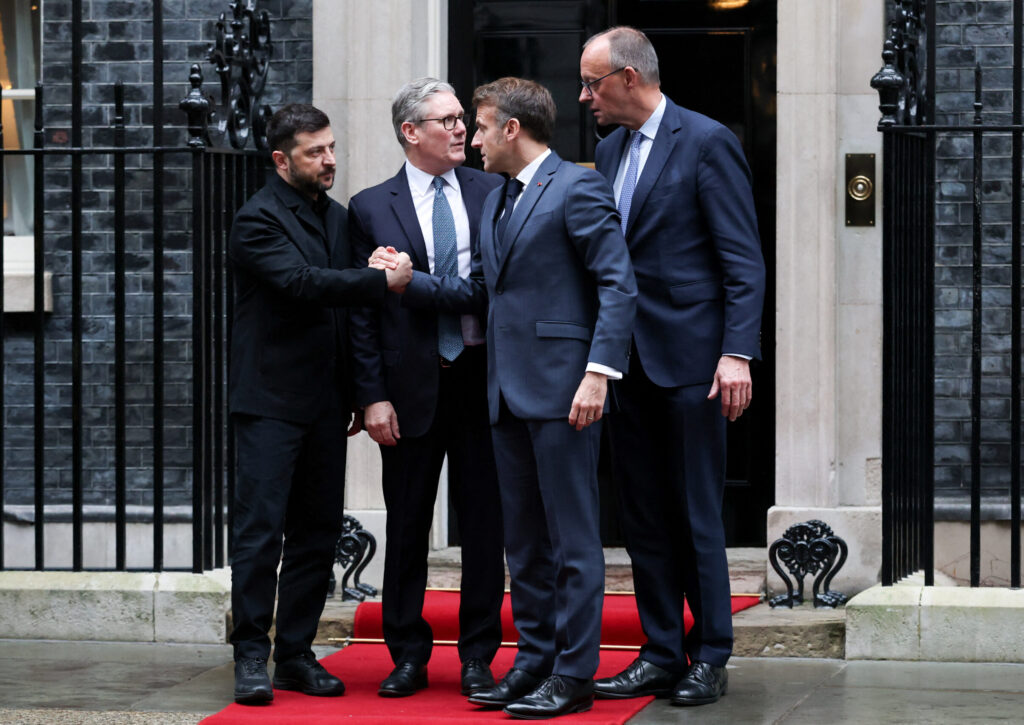
When European leaders convene in Brussels on December 18, continued funding for the Ukrainian war effort will be top of the agenda. However, it remains far from clear whether the European Council meeting will result in a breakthrough. Failure to reach a consensus could have catastrophic consequences for Ukraine and may prove disastrous for the future of European security.
The most realistic financing option currently under consideration is a so-called reparations loan backed by frozen Russian assets. With more than $200 billion of immobilized Russian Central Bank assets currently held in Europe, this loan would be sufficient to bankroll Ukraine’s defense for the coming two years, with Russian reparations set to cover repayments.
European officials are also mulling an alternative format that would involve a joint debt guaranteed by the EU budget. This approach would generate around $100 billion over the coming two years. However, while the reparation loan would place the financial burden on Russia, this approach would introduce new demands on the already overstretched budgets of individual EU member states.
Using frozen Russian funds as security for a major Ukrainian loan would send a message to Moscow about Kyiv’s ability to continue defending itself for years to come. Advocates of the reparations loan see it as a justified move to make Russia pay for the invasion, but the proposal faces obstacles on both sides of the Atlantic.
The Trump administration has reportedly been working behind the scenes to obstruct the reparations loan. US officials argue that the frozen Russian assets should instead become bargaining chips during negotiations with Putin to end the war.
Belgium, which hosts the largest portion of immobilized Russian funds in Europe, remains the main obstacle. The Belgian government has complained that seizing the Russian assets will expose it to legal liabilities that could bankrupt the country. Meanwhile, Belgian Prime Minister Bart de Wever claims that Moscow has “let us know that if the assets are seized, Belgium, and me personally, will feel the effects for eternity.”
Stay updated
As the world watches the Russian invasion of Ukraine unfold, UkraineAlert delivers the best Atlantic Council expert insight and analysis on Ukraine twice a week directly to your inbox.
The debate over further funding for Ukraine comes at the precise moment when Russia’s own economic model is showing signs of fragility. Indeed, some forecasts indicate that Putin’s war economy will face mounting challenges in 2026 that could have a major impact on the Kremlin’s ability to continue the invasion. This may be a factor driving Moscow’s determination to block further EU funding for Ukraine.
As Russian military spending reaches new highs, the Kremlin is rapidly burning through strategic reserves. At the same time, revenues from Russia’s economically crucial energy exports have recently fallen to multi-year lows amid mounting sanctions pressures and escalating long-range Ukrainian attacks on oil and gas industry infrastructure across the Russian Federation.
For now, Putin can still afford to pay his military. However, as Russia’s economic outlook worsens, he will have to prioritize the invasion of Ukraine over other state expenditures, while shifting the burden increasingly onto the Russian public. These trends do not imply imminent collapse, but they do expose a vulnerability reminiscent of the late Soviet era that Western governments could exploit in order to push the Russian dictator toward the negotiating table.
Eurasia Center events

One of the best ways to pressure Putin is by backing Ukraine. Right now, Kyiv faces a massive funding gap for the coming year that could have serious implications for the war. Unless Ukraine can secure tens of billions of dollars in additional financing, it will be extremely difficult to pay for the military, rebuild battered energy infrastructure, and cover basic social expenditures.
Crucially, a lack of Western financial backing for Ukraine will also embolden Russia. Why should Putin consider ending the invasion when Ukraine is running out of money and Kyiv’s Western partners are showing such obvious signs of hesitation?
Europe’s reluctance to pay for Ukraine’s defense is shortsighted, to say the least. If Russia’s invasion succeeds, European governments will soon have to boost defense spending to levels that would dwarf the current cost of backing Ukraine.
A recent New York Post article highlighted the sheer scale of the likely price tag for Europe if Russia achieves victory in Ukraine. Citing research by Scandinavian think tanks, the report predicted that the expense of fortifying Europe’s eastern flank against a triumphant Russia would be approximately $1.6 trillion, or more than double the likely figure required to finance the Ukrainian war effort for four more years.
The EU’s reparations loan initiative is lawful, financially sound, and strategically necessary. By hesitating now, Western leaders risk repeating the same mistakes that shaped earlier phases of Russia’s invasion, when delayed decisions and piecemeal support only served to embolden the Kremlin and prolong the war. If European leaders are unable to act decisively on December 18, Putin will toast another strategic victory and the cost of stopping Russia will rise even further.
Elena Davlikanova is a senior fellow with the Center for European Policy Analysis and Sahaidachny Security Center. Lesia Orobets is the founder of the Price of Freedom air defense initiative and a former member of the Ukrainian parliament.
Further reading
The views expressed in UkraineAlert are solely those of the authors and do not necessarily reflect the views of the Atlantic Council, its staff, or its supporters.

The Eurasia Center’s mission is to enhance transatlantic cooperation in promoting stability, democratic values, and prosperity in Eurasia, from Eastern Europe and Turkey in the West to the Caucasus, Russia, and Central Asia in the East.
Follow us on social media
and support our work
Image: British Prime Minister Keir Starmer, Ukrainian President Volodymyr Zelenskiy, French President Emmanuel Macron, and German Chancellor Friedrich Merz stand at 10 Downing Street, in London, Britain, December 8, 2025. REUTERS/Isabel Infantes