Watch the full event
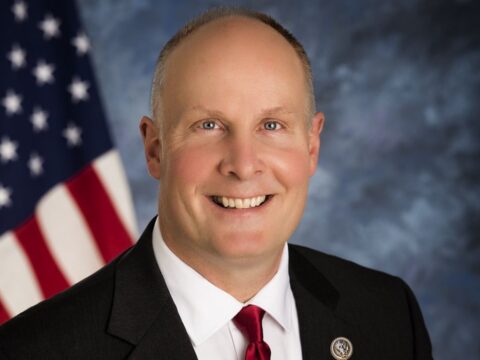
When it comes to China, “we can’t be too concerned about provocation,” said Congressman John Moolenaar (R-MI-2) on Thursday. “We just have to realize that’s the world in which we live and then be clear about American priorities.”
Moolenaar’s remarks at an Atlantic Council Front Page event came just a week after US President Donald Trump and Chinese President Xi Jinping spoke on the phone, with Xi calling Taiwan the “most important issue” in US-China relations. He also reportedly told the US president that the United States “must handle the issue of arms sales to Taiwan with prudence.”
“No matter what we do, it’s going to provoke China,” explained Moolenaar, chairman of the House Select Committee on Strategic Competition between the United States and the Chinese Communist Party (CCP). Later, he added that in many cases, CCP officials don’t actually feel provoked—they are saying so to “change the narrative” in their favor.
Below are more highlights from the conversation, moderated by Markus Garlauskas, the director of the Indo-Pacific Security Initiative of the Scowcroft Center for Strategy and Security.
What Taiwan needs today
- In December, Moolenaar’s select committee released “Ten More for Taiwan,” a compilation of bipartisan recommendations for preserving stability in the Taiwan Strait. Moolenaar highlighted one recommendation: “We need to make sure we get them the munitions that they have purchased that have been promised, and do it in a timely way,” he explained.
- In December, the Trump administration announced an eleven-billion-dollar arms sale to Taiwan. Moolenaar acknowledged that supplying Taiwan with the munitions it has purchased “involves our defense industrial base,” which faces “a challenge across the board” with speed and backlogs.
- But, he added, “I think we really have to give special consideration to Taiwan.”
A US policy pivot?
- Following the release of the US National Defense Strategy, which does not explicitly mention Taiwan, Moolenaar argued that it is still “clear… what our priorities are,” because of the strategy’s insistence on building “a strong denial defense along the First Island Chain,” where Taiwan lies.
- With Trump slated to travel to China in April, Moolenaar said that the “ideal outcome” of that trip would be that “Xi would want to have good relations with Taiwan as a neighbor and view things through an eye of mutual prosperity.” But, Moolenaar continued, “I don’t think that’s going to happen,” with Xi often pivoting to frame the topic as an “internal matter” for China.
- He added that, after China “basically fired a loaded gun at our economy” in the form of rare earth export restrictions, he would like to see Trump tell China that if it wants to be considered “some kind of a reliable economic partner” as the United States looks to diversify its supply chains, “there have to be some changes.”
- In weighing whether the United States needs to adjust its strategic ambiguity policy with regard to Taiwan and China, Moolenaar warned against moving or adding redlines, in favor of instead reinforcing that the “status quo in the Taiwan Strait is a pretty strong redline.”
- “I think what’s more important to me is countering the false narratives every chance we get,” he said. “I think we need to push back” so that “we don’t allow the deception to become reality,” Moolenaar added.
The time is now
- In explaining the US rationale for supporting Taiwan, Moolenaar said that the island is a top trading partner, strengthens supply chain resilience, and plays an important role in “reinforcing American credibility and stability” in the region.
- “If Taiwan falls, the Chinese Communist Party will control the center of gravity along the first island chain, giving Beijing leverage over supply chains, market access, and maritime commerce that directly underpinned US economic power,” he warned.
- In that scenario, he added, China would have a strategic position from which it would be “directly threatening US allies such as Japan and the Philippines, constraining US military operations, and increasing the vulnerability of US territory.”
- Moolenaar noted that the CCP has “increased its provocations, incursions, and coercive actions” against Taiwan and others. The most troubling, he added, is a directive from Xi that, according to US intelligence, orders the People’s Liberation Army to be prepared to take Taiwan by 2027.
- “The coming years will be decisive in shaping Beijing’s calculations,” Moolenaar said. “We cannot afford complacency.”
Katherine Golden is the associate director of editorial at the Atlantic Council.
Watch the full event
Further reading
Tue, Jan 27, 2026
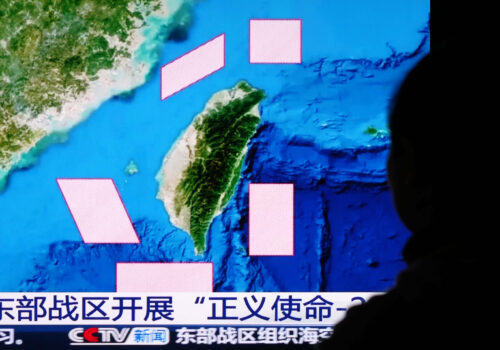
Taiwan has been a strategic blind spot for South Korea
Dispatches By Bee Yun Jo
South Korea is beginning to acknowledge that cross-Strait stability is increasingly a foundational element of overall regional security.

Thu, Dec 18, 2025
Can US leaders convince Americans that Taiwan is worth fighting for?
New Atlanticist By Phillip M. Ramirez
If elected leaders in the United States want to continue to deter Chinese military action, they must work to convince Beijing that Americans would be willing to fight for Taiwan.
Mon, Dec 15, 2025
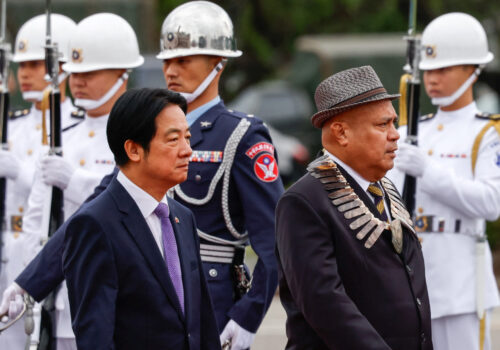
Beijing pressures Taiwan’s remaining diplomatic partners. Here’s what the US should do in response
Report By Kitsch Liao, Nik Foster, Santiago Villa
Taiwan’s shrinking circle of diplomatic partners plays a crucial role in deterring Chinese coercion, and the United States needs a more targeted strategy to help preserve this support and maintain cross-strait stability.
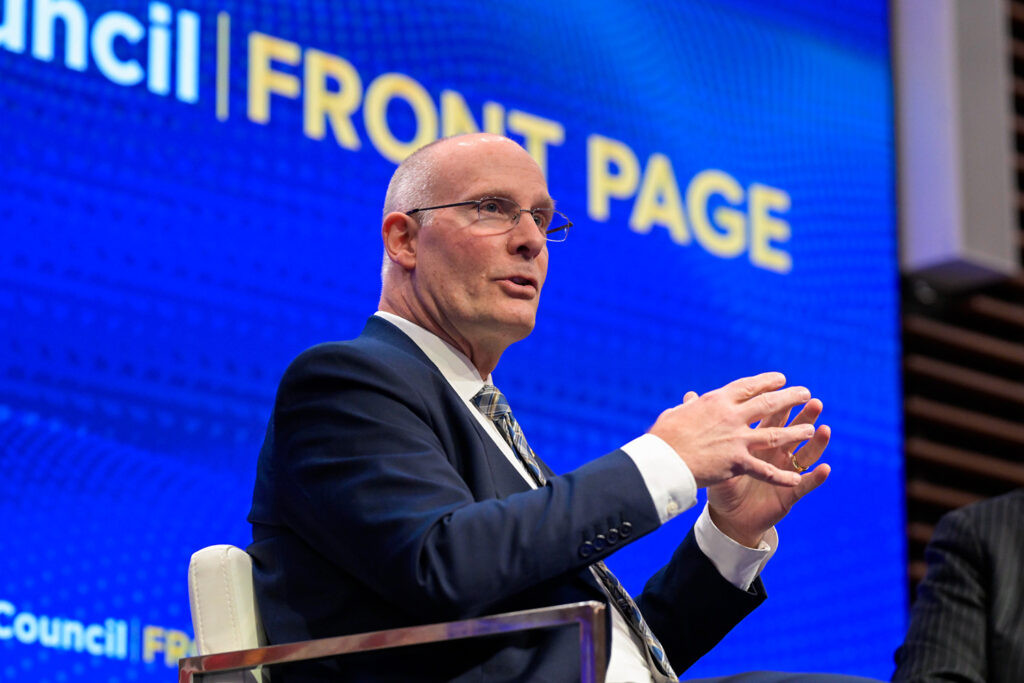
Image: Congressman John Moolenaar speaks at an Atlantic Council Front Page event on February 12, 2026.