How Israeli technology could help solve Iran’s water crisis
Iran is facing a water emergency that hydrologists and environmental experts warn may now be irreversible. Major reservoirs are depleted, groundwater reserves are collapsing, and senior officials are openly warning of citizens rationing water and even evacuating the capital due to water shortages. While the crisis is often attributed to drought or climate change, experts stress that it is overwhelmingly man-made—the cumulative result of decades of over-extraction, mismanagement, and failure to modernize water governance.
Paradoxically, many of the most effective technical solutions to Iran’s water crisis have already been developed by its regional adversary, Israel. Through innovations in drip irrigation, wastewater recycling, desalination, and integrated water management, Israel has achieved water security under harsher natural constraints than Iran faces today. This article argues that Iran’s crisis is no longer a problem of awareness or technology, but of political, financial, and institutional barriers—and that proven Israeli approaches, if accessed indirectly, could still mitigate the most destabilizing consequences of a crisis experts say can no longer be fully reversed.
The geopolitical paradox
The supreme irony is that the technological solutions most appropriate to Iran’s water crisis have been developed and proven by Israel—a country with which Iran has no diplomatic relations and maintains an adversarial posture. Direct technology transfer remains impossible under current political conditions.
However, indirect pathways exist. International water organizations, multilateral development banks, and specialized United Nations agencies could potentially serve as intermediaries for technology transfer and capacity building.
Some Israeli water technologies have become so widely adopted that they’re available through non-Israeli suppliers that manufacture under license or have developed parallel capabilities. The fundamental principles—precision irrigation, advanced wastewater treatment, efficient desalination, smart water management—can be implemented regardless of technology source.
The scope of Iran’s water crisis
Official statistics from the Iranian government show that the average storage level of Iran’s dams stands at only 33 percent, and four out of the five main dams supplying water to Tehran have dried up. The remaining dam is in a highly fragile state, holding only enough water for a few weeks of consumption by the capital.
President Masoud Pezeshkian recently highlighted the severity of the situation, noting that rainfall has been “zero” during the current water year that began two months ago. He warned, “If it does not rain in Tehran within a month, we will have to ration water; if it still doesn’t rain, we will have to evacuate Tehran.”
Conditions in several other provinces are significantly worse than in the capital.
According to Iran’s Ministry of Energy, Iran consumes around 100 billion cubic meters (bcm) of water annually, 90 percent of which is used in agriculture. This exceptional level of agricultural water use is primarily due to widespread reliance on traditional irrigation methods, especially flood irrigation.
More importantly, 60 percent of the country’s total water consumption comes from groundwater aquifers, which are being depleted at an alarming rate. Iran adds 5 bcm annually to its groundwater deficit, leading to widespread land subsidence in major urban areas, particularly Tehran and Isfahan.
Ali Beitollahi, head of the Seismology and Risk Department at the Road, Housing, and Urban Development Research Center, reports that “eighteen provinces are experiencing land subsidence rates exceeding ten centimeters per year. In central Tehran, the rate of subsidence over the past two years has tripled compared with the previous two-year period. Subsidence zones in south and southwest Tehran have expanded by about 40 percent in recent years.”
This is the state of Iran’s capital city—which would ideally be the center of water management. Yet 60 percent of Tehran’s water comes from underground sources. More than half of the city’s 2.5 bcm annual water consumption is used in agriculture, and 30 percent of drinking water is lost through the aging, deteriorating distribution network.
Another major dimension of the crisis is the rapid drying of Iran’s wetlands and lakes. Mohammad-Reza Rezaei-Kouchi, head of the Parliament’s Construction Commission, reports that 66 percent of Iran’s major wetlands have dried up.
Israel’s water revolution: A comparative model
Israel faces many of the same climatic challenges as Iran—limited rainfall, high evaporation rates, and growing demand. Understanding Israel’s approach illuminates the specific technological and policy gaps in Iran’s water system.
Israel pioneered drip irrigation technology in the 1960s, and today approximately 75 percent of Israeli agricultural land uses drip or micro-irrigation systems. These methods deliver water directly to plant roots with precision, reducing water consumption by 30 to 70 percent compared to flood irrigation while often increasing crop yields.
Tehran’s agricultural water waste leads the region. Iranian agriculture consumes around 90 bcm of water, yet neighboring Turkey—with 40 percent less water consumption—produces 30 percent more agricultural output. Iran receives less rainfall than Turkey, but 70 percent of Iran’s rainfall evaporates due to insufficient investment in rainwater harvesting and storage, while Turkey loses about 50 percent.
Taking these numbers into consideration, if Iran adopted Israeli-style drip irrigation across even 50 percent of its agricultural land, water savings could reach 20 to 30 bcm annually—four to six times the country’s current groundwater deficit.
Israel treats and reuses approximately 90 percent of its wastewater for agriculture—the highest rate globally. This contrasts sharply with Iran’s performance.
Iran ranks 103rd out of 180 countries globally in urban wastewater collection and treatment—the worst in its region. Only 50 percent of Iranian households are connected to sewer systems, and only 20 percent of collected wastewater is treated and reused for agriculture or industry.
If Iran had developed wastewater infrastructure comparable to Israel’s, a significant portion of the country’s 8 bcm per year of drinking water consumption could be recycled for non-potable uses. Instead, untreated wastewater is frequently discharged into wells or surrounding areas, contaminating groundwater aquifers.
Israeli wastewater treatment technology, including advanced biological and membrane processes, has been successfully exported to water-scarce regions worldwide. The country’s integrated approach combines centralized treatment plants with sophisticated distribution networks that deliver reclaimed water directly to agricultural users.
Israel now produces approximately 85 percent of its domestic water supply through desalination, operating five major plants along the Mediterranean coast. The country’s reverse osmosis desalination technology has become among the most energy-efficient globally, with costs declining to approximately forty-one cents per cubic meter.
Related reading
Iranian officials have floated the idea of desalinating Caspian Sea water. Meanwhile, Iran has spent two decades examining a project to desalinate Persian Gulf water and transport it to central provinces, but given the overwhelming water consumption in agriculture and the government’s chronic financial constraints, such projects have remained economically unjustifiable. Israeli expertise in modular, cost-effective desalination could help Iran develop feasible projects scaled to municipal, rather than agricultural, needs.
Israel has reduced water network losses to approximately 7 percent through sophisticated monitoring systems, pressure management, and rapid leak detection. Israeli companies have developed artificial intelligence (AI)-powered systems that use acoustic sensors, satellite imagery, and data analytics to identify leaks and optimize distribution.
Tehran loses 30 percent of its drinking water through its aging, deteriorating distribution network. Applying Israeli leak detection and network optimization technology to Tehran’s system could save approximately 0.2 bcm annually for the capital alone—extending the city’s water supply by several weeks during crisis periods.
Israel has developed advanced techniques for managed aquifer recharge, storing treated wastewater and excess seasonal flows underground for later use. This approach stabilizes groundwater levels and helps prevent land subsidence—a critical concern given that 60 percent of Iran’s water consumption comes from groundwater aquifers being depleted at 5 bcm annually.
Israeli experience with aquifer management in the coastal plain, where over-extraction once caused severe saltwater intrusion, offers directly relevant lessons for Iranian cities facing similar threats.
Agricultural transformation: The Israeli model
Despite representing only 8 percent of Iran’s gross domestic product (GDP), agriculture employs one-fifth of the national workforce. Persistent droughts, combined with the government’s inability to support or modernize the sector, have already pushed a quarter of agricultural workers out of the sector over the past decade. Today, only 3.5 million people remain employed in agriculture.
Recent data from the Central Bank of Iran shows that agricultural GDP in spring 2025 shrunk by 8 percent, reinforcing the sector’s growing distress.
Israel’s agricultural sector provides a compelling alternative model. Despite having far less arable land and water resources than Iran, Israel has built one of the world’s most productive agricultural systems through precision irrigation, advanced crop selection, greenhouse technology, and data-driven farming techniques.
Such precision agriculture technology could help Iran maintain or increase agricultural output while dramatically reducing water consumption, potentially enabling a managed transition away from water-intensive crops without triggering mass unemployment.
The Israeli model demonstrates that agriculture can remain economically viable and employ significant populations even with drastically reduced water allocations—but only through technological transformation.
Economic and financial barriers
Since the reimposition of US sanctions in 2018, Iran’s government budget has maintained a deficit equal to one-third of its budget. As a result, government borrowing from banks and financial institutions has increased more than eightfold in seven years.
According to International Monetary Fund data, Iran’s public debt is now around 37 percent of GDP, almost entirely owed to domestic financial institutions, limiting the state’s fiscal flexibility.
The economic pressures underlying Iran’s water and agricultural crises have already sparked devastating unrest. In late December 2025, protests erupted across Iran following the collapse of the rial, rapidly spreading nationwide. The government responded with a brutal crackdown on January 8-9, 2026, with Iran International reporting more than thirty thousand killed—potentially one of the deadliest massacres in modern history. The crackdown underscores how Iran’s compounding environmental, economic, and political failures are creating conditions ripe for instability.
The government lacks both the financial capacity to modernize irrigation and the economic infrastructure to absorb displaced agricultural workers into other sectors. As a result, imposing restrictions on agricultural water use would trigger a surge in unemployment.
These financial constraints make Iranian adoption of Israeli technology particularly challenging. However, the modular nature of many Israeli water solutions—drip irrigation systems can be implemented field-by-field, leak detection can be deployed neighborhood-by-neighborhood—offers opportunities for phased implementation that could begin delivering returns before requiring massive capital outlays.
Moreover, the cost of inaction is becoming prohibitive. Water rationing, urban evacuation, agricultural collapse, and cross-border conflict all carry enormous economic costs that dwarf the investment required for technological modernization.
A choice between ideology and survival
The crisis in Iran is no longer abstract: major dams are empty, land subsidence is accelerating, wetlands are disappearing, and tensions are rising with neighboring countries over shared water resources. Without fundamental transformation, Iran faces escalating urban instability, agricultural decline, mass internal migration, and cross-border friction.
The technical solutions exist. Israel’s transformation from water scarcity to water security over the past six decades demonstrates that even severe natural limitations can be overcome through systematic innovation, integrated management, and sustained investment. The specific technologies Iran needs—drip irrigation, wastewater treatment and reuse, cost-effective desalination, leak detection, and smart management systems—have all been proven at scale.
The question is whether Iran can separate technical necessity from political ideology. The country’s water crisis will not wait for geopolitical realignment. Every year of delay adds 5 bcm to the groundwater deficit, pushes more farmers out of agriculture, accelerates land subsidence, and brings major cities closer to unlivable conditions.
In the absence of structural reforms and adequate financing—which could be partially addressed through adopting proven Israeli technologies and approaches via international intermediaries—the country is approaching a point where emergency measures such as water rationing, mass internal migration, and even partial evacuation of major cities may become unavoidable.
Iran faces a stark choice: find ways to access the world’s most advanced water technologies, regardless of their origin, or continue toward a crisis that threatens the viability of major population centers and the stability of the entire region. Water, unlike politics, cannot be negotiated with ideology. It simply runs out.
Joseph Epstein is the director of the Turan Research Center, a senior fellow at the Yorktown Institute, and a research fellow at the Post-Soviet Conflicts Research Program at Bar Ilan University’s Begin Sadat Center for Strategic Studies.
Dalga Khatinoglu is an expert on Iran’s energy and macroeconomics, and a researcher on energy in Azerbaijan, Central Asia, and Arab countries.
Related Reading
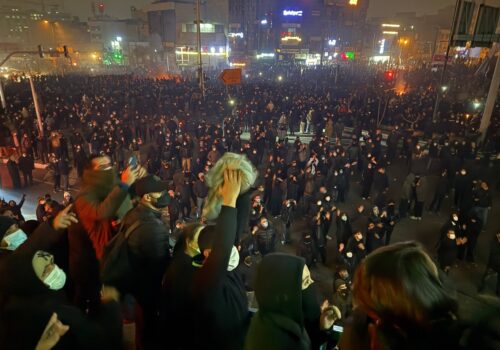

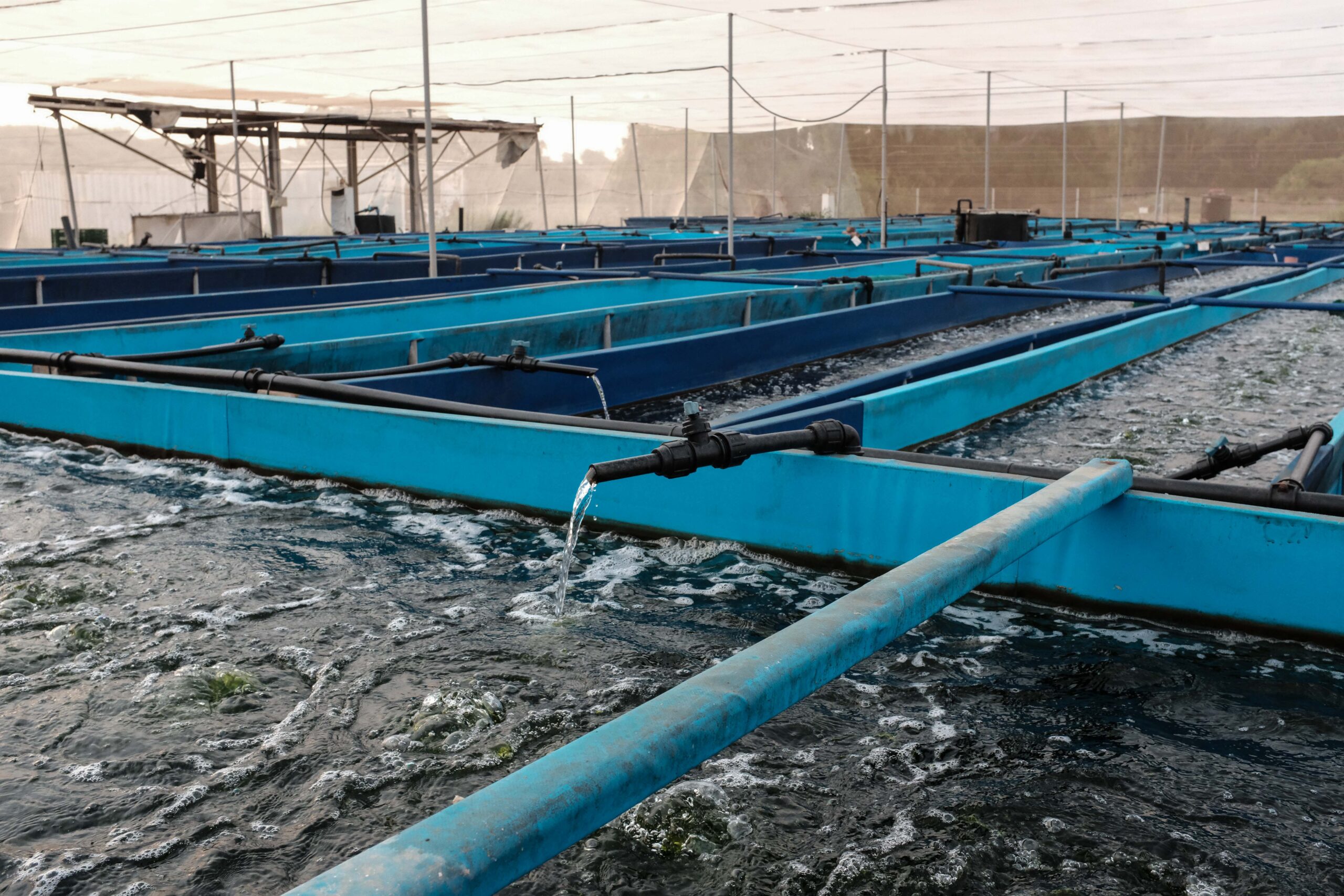
Image: August 5, 2020, Seakura Farm, Hefer Valley Regional Council, Israel: The Seakura Farm, established in 2007, produces clean, organic and nutritious marine Ulva and Gracilaria seaweed in land based pools with ocean water in a controlled environment using highly sustainable technology for the culinary, pharmaceutical and cosmetics industries anticipating a worldwide seaweed market for 2021 of $17B. A recent article published in the journal Nature, 24th July, 2020, claims sulfated polysaccharides derived from seaweed effectively inhibit SARS-CoV-2 in vitro, more potent and perhaps outperforming Remdesivir in blocking COVID-19 virus in cell studies. (Credit Image: © Nir Alon/ZUMA Wire)
