JUST IN
Call it DeLiberation Day. On Friday, the US Supreme Court ruled in a 6-3 decision that the US president does not have the power to unilaterally impose tariffs under the International Emergency Economic Powers Act (IEEPA), the authority Donald Trump invoked to impose tariffs on nearly every trading partner. Trump responded by imposing a 10 percent global tariff under other legal authorities. What will this mean for global trade and the tariff revenue that the United States has already collected? What should we make of the administration’s plan B? Our experts issue their rulings below.
TODAY’S EXPERT REACTION BROUGHT TO YOU BY
- Josh Lipsky (@joshualipsky): Chair of international economics at the Atlantic Council, senior director of the GeoEconomics Center, and former International Monetary Fund advisor
- Barbara C. Matthews: Nonresident senior fellow at the GeoEconomics Center and former US Treasury attaché to the European Union
- L. Daniel Mullaney: Nonresident senior fellow with the Europe Center and GeoEconomics Center, and former assistant US trade representative
How did the court rule?
- With today’s ruling, says Josh, the Supreme Court “told the president that the core pillar of his international economic agenda was unconstitutional.”
- The ruling, Barbara tells us, is “both clear and broad: no part of IEEPA can be construed to authorize the imposition of tariffs in response to any national emergency.”
- Dan believes this affirmation of the legislative branch’s authority over tariffs “may trigger a more assertive Congress, which has already been showing increasing, but cautious, impatience” with the Trump administration’s use of unilateral tariffs.
- Issuing the decision only “days before the Supreme Court sits in front of the president at the State of the Union address was a bold move”— one “perhaps intended to signal the independence of the court,” Dan adds.
- “The immediate financial impact” will be “muddled,” Josh predicts, as issues related to tariff refunds play out in lower courts and the Trump administration turns to other tariff authorities.
Sign up to receive rapid insight in your inbox from Atlantic Council experts on global events as they unfold.
How is the Trump administration responding?
- Today’s ruling “does not end Trump’s tariffs,” Josh tells us. “It just opens a new chapter.” Relative to the Trump administration’s first year, there will be “more uncertainty, more volatility for businesses to navigate, and more fraught trade deals for countries to negotiate.”
- This afternoon, Trump announced an immediate 10 percent global tariff under Section 122 of the Trade Act of 1974—though, as our Trump Tariff Tracker lays out, the law only allows such a tariff for 150 days unless Congress extends it. Trump also said there will be several new investigations of unfair trade practices under Section 301, which could lead to additional tariffs.
- That means, notes Barbara, that the administration “has announced its intention to comply with the Supreme Court decision and withdraw the IEEPA tariffs effective immediately.”
- “Trump’s tariff arsenal now must follow ‘regular order,’” Barbara explains, “which requires traditional findings of trade distortions by foreign countries” to justify tariffs against them, which she says is “a slow administrative process.”
- Dan tells us that there could be an upside for the White House in losing its favored tariff authority: Trump’s “sweeping tariffs have been problematic for the administration’s agenda in some key respects—resulting in numerous exclusions and unfulfilled threats—so a more tailored approach is probably called for in any case.”
- As Barbara notes, Trump also announced today his intention “to fight in court” against lawsuits from companies seeking refunds of the IEEPA tariffs, which add up to $175 billion. The White House seems to be interpreting the Supreme Court’s silence on “whether or how refunds should be provided” as “providing [it] maximum flexibility” in answering these questions.
- “Companies have a fiduciary duty to their shareholders,” which “means they need to sue to get refunds even if that risks the ire of the administration,” Josh observes. “But there is strength in numbers here, so expect those lawsuits to come in fast and furious over the coming weeks.”
How will US trading partners respond?
- As Josh sees it, the incentive for US trade partners that already have made deals with the Trump administration “is likely to keep the deal you have” even if backup tariff authorities face legal challenges, “rather than risk unraveling an agreement which at least has provided some stability.” He expects Japan and the European Union to maintain their trade agreements with the Trump administration. However, Josh argues, countries still finalizing trade deals with the United States “will now have a little more leverage” after the ruling.
- And if trade partners do “choose to unwind or walk away from the 2025 deals,” Barbara warns, “the adverse impact on the US economy could be significant.”
Related Reading
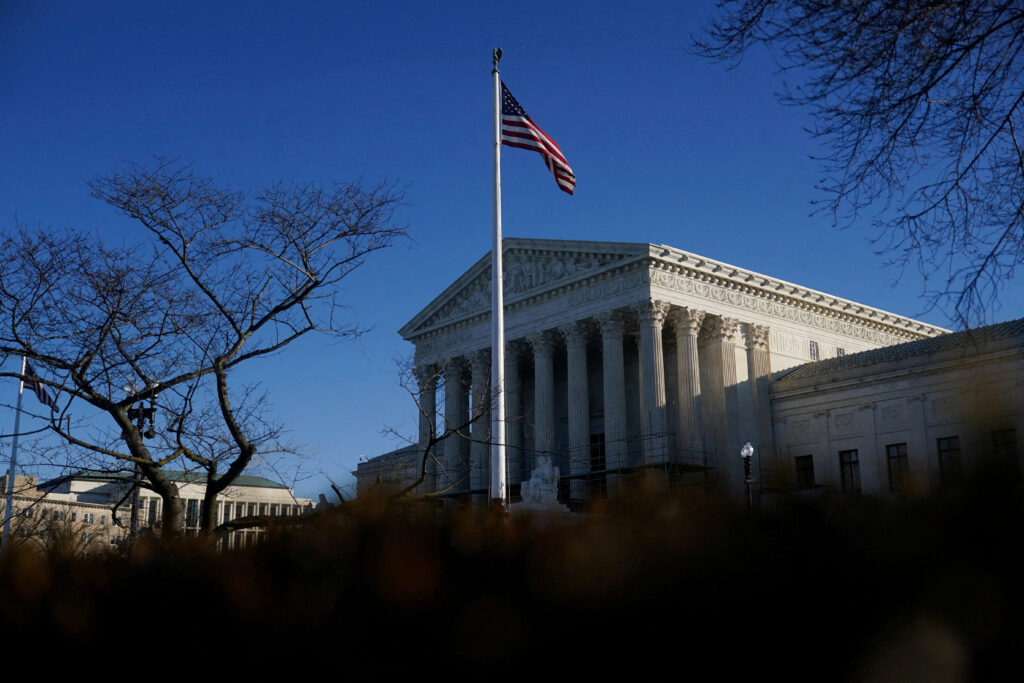
Image: A general view of US Supreme Court as justices could issue at least one ruling in several major cases pending including a decision on the legality of President Donald Trump's sweeping global tariffs, in Washington, D.C., U.S., January 20, 2026. (REUTERS/Nathan Howard)