The state of great power competition in the Gulf
The Gulf region is at a pivotal moment as global power dynamics shift from unipolarity to a decentered system of regional powers. While the United States remains the only true global superpower, China and Russia are regional powers with limited global influence. This creates a unique opportunity for Gulf leaders to shape their own political, economic, and security agendas, prioritizing stability and development.
The states of the Gulf Cooperation Council (GCC) are leveraging interest-based partnerships, maintaining strategic ties with China and Russia while deepening defense and economic relationships with the United States. Recent agreements, such as the 2023 US-Bahrain Comprehensive Security Integration and Prosperity Agreement, highlight the Gulf’s preference for the predictability of a rules-based international order. Despite their illiberal domestic systems, GCC leaders value the stability and market access provided by Western-led governance.
De-escalation remains a key priority for the Gulf, as demonstrated by initiatives like Saudi Vision 2030, the Abraham Accords, and the India-Middle East-Europe Economic Corridor (IMEC). However, regional tensions since October 2023 have disrupted progress, emphasizing the need for external powers to support Gulf stability and development agendas. While the United States is seen as an essential partner, there is growing potential for deeper Gulf-European collaboration.
This moment of transition in the global order presents both challenges and opportunities for Gulf leaders, who are shaping their region’s future amidst great-power competition.
This issue brief is the result of a collaboration between the Atlantic Council’s Scowcroft Middle East Security Initiative and the Konrad-Adenauer-Stiftung Regional Programme Gulf States, which set the stage for a series of Track II discussions in Qatar, the United Arab Emirates, and Saudi Arabia on the state of play of great power competition in the Gulf with regional, US, and European experts and policymakers.
Read the full issue brief
About the author

In partnership with
Related reading
explore the program
The Scowcroft Middle East Security Initiative (SMESI) provides policymakers fresh insights into core US national security interests by leveraging its expertise, networks, and on-the-ground programs to develop unique and holistic assessments on the future of the most pressing strategic, political, and security challenges and opportunities in the Middle East.
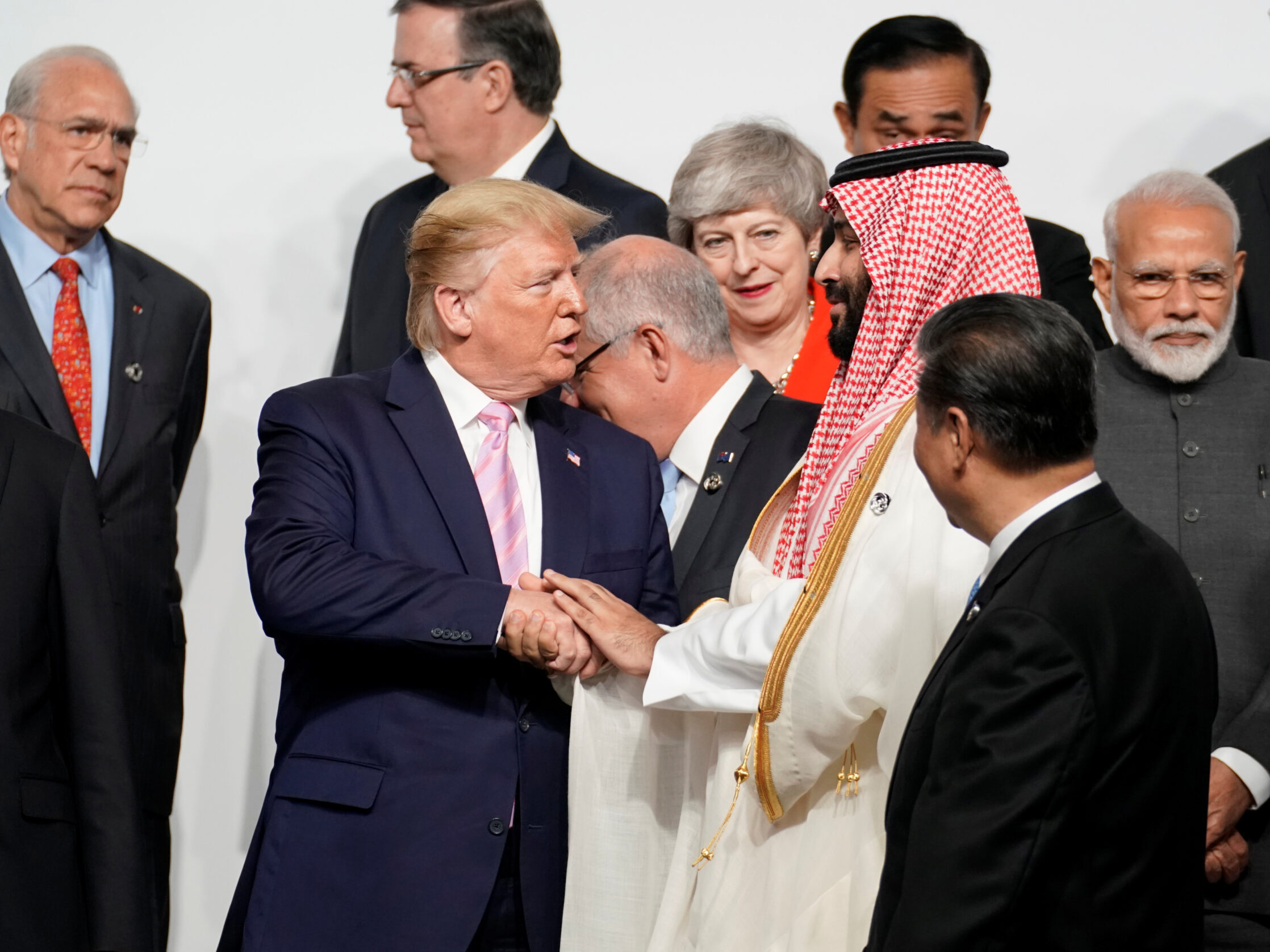
Image: Saudi Arabia's Crown Prince Mohammed bin Salman shakes hands with U.S. President Donald Trump during a family photo session at the G20 leaders summit in Osaka, Japan, June 28, 2019. REUTERS/Kevin Lamarque
