Featured analysis

Latest analysis

Dollar Plaza Accord

Econographics

Feb 18, 2022

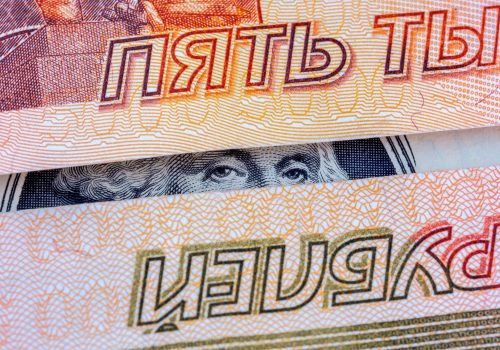
Russia and China: Partners in dedollarization

By Mrugank Bhusari, Maia Nikoladze

Russia has virtually stopped receiving Dollars for its exports to China. Does the US have reason to be concerned?

China
Economy & Business

Econographics

Feb 17, 2022

The path forward on the US-China technology competition

By Clete R. Willems

2022 will be a key inflection point for trade and technology policy. Congress will decide how to proceed with China competitiveness legislation, the Administration will be finalizing the its Indo-Pacific trade agenda, and both will assess concerns about the size and activity of large US technology platforms. Democrats and Republicans should depoliticize these issues and consider their policy choices through the lens of strengthening US economic and technological competitiveness with China.

China
Defense Technologies

Econographics

Feb 9, 2022

US fiscal policy must be ready for the return of secular stagnation

By Jeff Goldstein

In the years ahead the United States will likely move past current inflation challenges and will once again be battling secular stagnation.

Economy & Business
Fiscal and Structural Reform

EconoGraphics

Feb 6, 2022

Global Sanctions Dashboard: Groundhog edition

By Julia Friedlander, Michael Albanese, Maia Nikoladze and Castellum.AI

Who sanctions Russia and why, Colombia’s narcotics trafficking, Iran’s balancing act, and Chinese military sanctions.

Belarus
China

Econographics

Feb 3, 2022

Foreign Direct Product Rule: Is Russia the next Huawei?

By Annie Froehlich

In response to Russia activity in Ukraine the US is considering deploying a Russia-focused Foreign Direct Product Rule (FDPR). If such a rule is implemented, it could cripple Russia’s ability to source critical items produced from US-origin technology.

Defense Technologies
Economy & Business

Econographics

Jan 31, 2022

Ukraine and Dollar Weaponization

By George Pearkes

America has responded to Russian aggression with an unconventional weapon: the dollar.

Economy & Business
Financial Sanctions and Economic Coercion

Econographics

Jan 31, 2022

Strengthening ties: China and the GCC

By Inbar Pe’er, Niels Graham and Mrugank Bhusari

As China continues expanding its trade ties across the world while the US focuses on its domestic economy, the US will find itself without a seat at the table when the norms for the multilateral trading system are set.

China
Economy & Business

Econographics

Jan 28, 2022

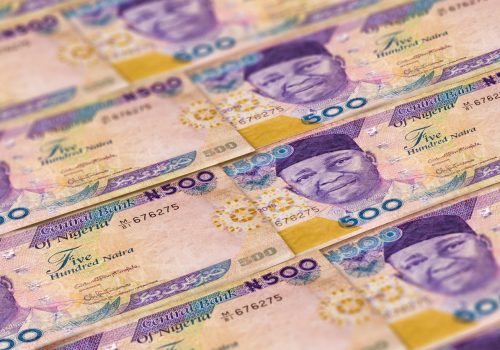
eNaira: Same Naira, more possibilities for innovation

By Naomi Aladekoba

Nigeria’s eNaira aims to improve the availability and access to central bank money, support a resilient payments system, encourage financial inclusion, and reduce the cost of processing cash.

Digital Currencies
Digital Policy

Econographics

Jan 13, 2022

Up, up, & away: Global stock growth in 2022

By Niels Graham

In 2022 stock markets generating impressive returns in despite uncertainty over the pandemic. Market gains will likely continue into 2022.

China
Economy & Business

Econographics

Jan 10, 2022

Is the US going to screen outbound investment?

By Sarah Bauerle Danzman

There is a growing consensus in Washington that the U.S. government needs more tools to prevent the People’s Republic of China (PRC) from using U.S. capital markets to amass military capabilities and control supply chain chokepoints.

China
Economy & Business

Content

EconoGraphics

Oct 21, 2015

TTIP in Europe

By Global Business and Economics

On October 10th, hundreds of thousands of concerned German citizens marched in Berlin to protest the proposed Transatlantic Trade and Investment Partnership (TTIP). TTIP's critics argue it benefits corporations at the expense of ordinary citizens, while its proponents argue it provides significant economic growth.

Economy & Business
European Union

EconoGraphics

Oct 13, 2015

Breaking Down Walls: How Will American Agricultural Producers Fare Under TPP?

By Global Business and Economics

On October 5th, Trans-Pacific Partnership (TPP) trade negotiations were concluded in Atlanta. The deal faced criticism from some on a lack of transparency, but details are now beginning to emerge on the settlement. Even with TPP's lack of transparency, there were clear tension points between negotiators on topics such as biologics, dairy products, and rules of origin for the automaking industry. This week's Econographic looks specifically at one of the potential winners of the trade deal, the American agricultural sector.

Economy & Business
Indo-Pacific

EconoGraphics

Oct 6, 2015

How Can We Bridge Automaking Standards for Growth?

By Global Business and Economics

The recent Volkswagen scandal has refocused consumers on automaking standards and CO2 emissions. These differences have also been one of the sticking points in TTIP negotiations. Both the American and European automaking sectors have rigorous standards, and as might be expected hold similar regulations.

Economy & Business
European Union

EconoGraphics

Sep 29, 2015

How Does The Most Recent Greek Bailout Deal Compare With The Past Two Agreements?

By Global Business and Economics

The latest Memorandum of Understanding between the EU Institutions and the Greek Government passed in August, leaves Tsipras only one additional month to implement eighty-five initiatives. These reforms cover a diverse range of topics, from consolidating taxation policies to health and education reform.

Economy & Business
European Union

EconoGraphics

Sep 22, 2015

Migrant Flows and the Future of Europe

By Global Business and Economics

As Europe confronts the migrant crisis, much of the current coverage remains fixed on short run trends, but in order to have a comprehensive perspective it is necessary to project these trends into the future. In spite of commonly held concerns of migrants' effect on European identity, many of these nations' birthrates and outflows of migrants will actually be higher than their intake of migrants. Negative flows of migrants could further weaken pension plans, as aging European populations struggle to balance social welfare models with demographic realities.

Afghanistan
Economy & Business

EconoGraphics

Sep 15, 2015

Has the Renminbi Arrived as an International Currency?

By Global Business and Economics

As China slowly transitions from an investment and export based economy to a consumer based economy, the Chinese must also liberalize both their monetary affairs and the management of their currency. By increasing the wealth of Chinese consumers via their currency's value, domestic demand will supplant the role of exports. For this process to be completed, the Chinese currency, the Renminbi, must assume its place in the package of globally dominant currencies.

China
Economy & Business

EconoGraphics

Jul 28, 2015

Where Are US Sanctions Imposed?

By Global Business and Economics

On July 14, the United States, along with the P5+1, struck a deal with Iran to ease the heavy financial and banking sanctions that starved the country's economy. Over the next decade, financial and trade sanctions will gradually be lifted, giving Iran the ability to export its plentiful oil and gas reserves and to purchase goods from abroad.

Economy & Business
Financial Sanctions and Economic Coercion

EconoGraphics

Jul 22, 2015

Has Greece Been Effective at Downsizing Its Public Sector?

By Global Business and Economics

Greece and its EU counterparts made progress last week on negotiations, but some policy makers question whether Greece will truly adopt the measures necessary to recover economic stability.

Economy & Business
Fiscal and Structural Reform

EconoGraphics

Jul 14, 2015

Should Greece’s Request for Additional Debt Relief Be Dismissed?

By Global Business and Economics

Unsatisfied with the proposed austerity measures, Greece has been pushing for a comprehensive debt relief package from its creditors. In public, Greece has appealed to the 1953 London Conference when Western Germany was forgiven over half of its debt. One of Germany's creditors then: Greece.

Economy & Business
Eurozone

EconoGraphics

Jul 7, 2015

How Does Greece’s Public Debt Compare to Puerto Rico’s?

By Global Business and Economics

As Greece reaches crisis over its debts to Europe, Puerto Rico's public debt has reached an impressive $72 billion, nearly 70% of its economic output. Meanwhile, Greece has slashed the growth of its debt since 2012.

Economy & Business
Greece