GET UP TO SPEED
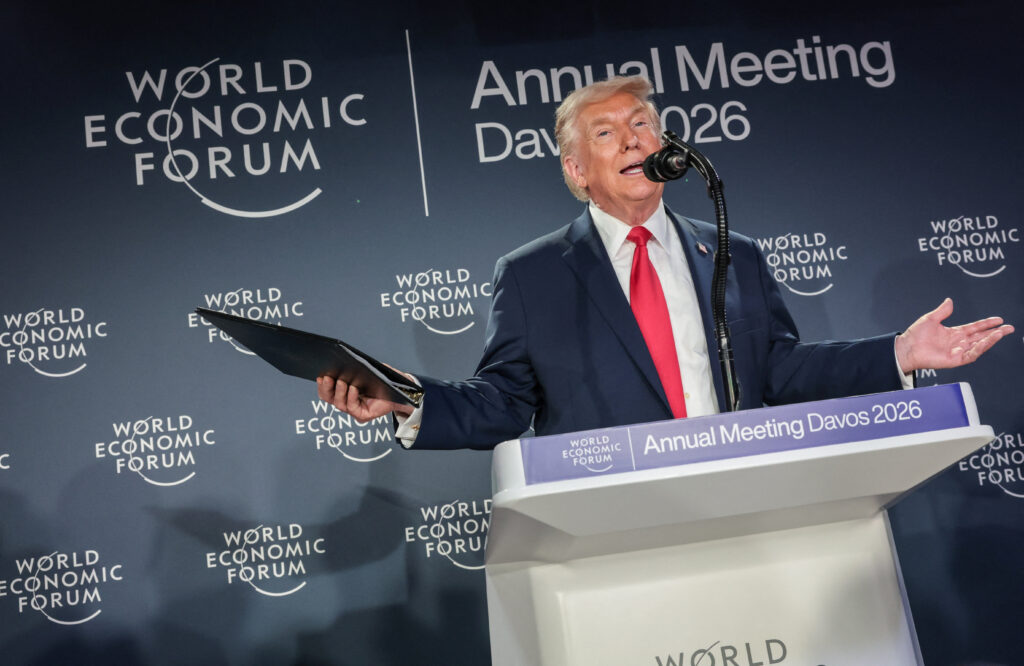
Today started with ice and ended with a thaw. Shortly after a speech at the World Economic Forum in Davos, Switzerland—in which he made his case for why the United States should own the “big, beautiful piece of ice” that is Greenland—Donald Trump announced that he had reached a “framework of a future deal” on the issue. The breakthrough came after Trump met with NATO Secretary General Mark Rutte, and led to the US president dropping his tariff threats against European nations that had opposed the US acquisition of the semiautonomous Danish territory. According to Trump, the deal will concern potential US rights over Greenland’s minerals, as well as the island’s involvement in his administration’s proposed “Golden Dome” missile defense system. Below, our experts shed light on all the transatlantic tumult.
TODAY’S EXPERT REACTION BROUGHT TO YOU BY
- Josh Lipsky (@joshualipsky): Chair of international economics at the Atlantic Council, senior director of the GeoEconomics Center, and former International Monetary Fund advisor
- Matthew Kroenig (@MatthewKroenig): Vice president and senior director of the Scowcroft Center for Strategy and Security
- Tressa Guenov: Director for programs and operations and senior fellow at the Scowcroft Center for Strategy and Security, and former US principal deputy assistant secretary of defense for international security affairs
- Jörn Fleck (@JornFleck): Senior director of the Europe Center and former European Parliament staffer
Tariff troubles
- Now that Trump appears to have backed down from both his military and economic threats, “Europe is breathing a sigh of relief,” Josh reports from the World Economic Forum, but it’s one that “will be short-lived.”
- Don’t expect Europe to jump back in to last year’s US-EU trade deal, which Brussels paused in recent days. European leaders “feel like they’ve been burned by the volatility, paid a political price at home, and want commitments that next weekend they don’t wake up to new tariff threats,” Josh tells us. “Businesses, many of which said as much privately to the Trump administration this week in Davos, want the same” sort of commitments.
- “Markets had their say” as well, Josh writes, noting that fears of a US-EU trade war drove up bond yields in recent days. That’s “the exact kind of pressure point that made Trump relent” in April 2025 when he paused his “Liberation Day” tariffs. “With mortgage rates shooting up” in response to the volatility, says Josh, “Trump showed that he can be especially sensitive to the bond markets.”
Sign up to receive rapid insight in your inbox from Atlantic Council experts on global events as they unfold.
NATO’s next steps
- “The idea that Trump would attack a NATO ally was always hard to imagine,” says Matt, who argues that “Trump’s threats were clearly part of his now-trademark style of building leverage to force a negotiation.”
- Matt now expects a future deal to include “increased military presence in Greenland from Denmark and other NATO allies and increased access and basing for the United States.”
- The “hard work” ahead for negotiators, he explains, will be “hammering out an agreement that addresses Trump’s legitimate security concerns while also respecting the sovereignty of NATO allies.”
- Matt identifies several cases that could provide “creative solutions,” including “the United Kingdom’s ‘sovereign base area’ in Cyprus, the bishop of Urgell and the president of France’s ‘shared sovereignty’ over Andorra, and the United States’ possession of a perpetual lease in Guantanamo Bay, Cuba.”
The bigger picture
- But even if a deal gets done, says Tressa, Trump’s pressure campaign against Europe over Greenland could have consequences for security issues that must be solved on both sides of the Atlantic: “A sustained atmosphere of crisis has the potential to detract from Trump’s own success in getting NATO countries to spend 5 percent of gross domestic product on defense and, he hopes, buy American products.” She points out that “many of the countries that he threatened with tariffs are the ones who have stepped up defense spending the most.”
- Jörn agrees on the lasting impact of “Trump’s willingness to engage in brinkmanship with the Alliance, Europe’s economy, and personal relationships with key leaders.” The approach “has destroyed much of the domestic political space in Europe for those arguing that Europe has a weak hand and therefore few options but to engage, assuage, and accommodate” the US president, “even if few European leaders will say this out loud for now.”
- Still, while “Davos is sometimes criticized for a lot of talk but little action, this year no one can doubt the forum mattered,” Josh adds. “Having Trump meet in person with leaders—privately—is where the US-European alliance was, at least temporarily, put back on track.”
Further reading

Tue, Jan 20, 2026
At Davos, Trump’s 19th-century instincts will collide with 21st-century uncertainty
Inflection Points By Frederick Kempe
The Greenland dispute has turned the World Economic Forum in Davos into the epicenter of transatlantic discord.

Mon, Jan 19, 2026
Greenland, Davos, and a week that could redefine the transatlantic alliance
Dispatches By
This week’s World Economic Forum in Davos will play host to transatlantic leaders at a volatile moment following Trump’s tariff threats against Europe over Greenland.
Sat, Jan 17, 2026
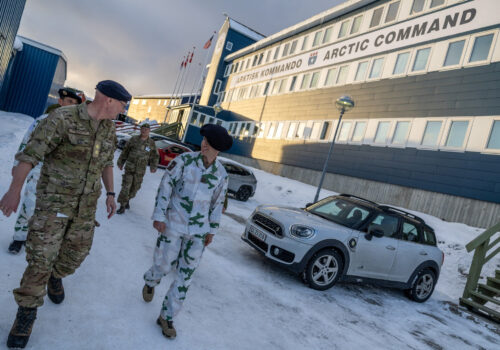
The US and NATO can avoid catastrophe over Greenland and emerge stronger. Here’s how.
Dispatches By Daniel Fried
If the White House is interested in a deal, then there is space to make one through the recently announced working group.
Image: US President Donald Trump speaks during a reception with business leaders, at the 56th annual World Economic Forum (WEF), in Davos, Switzerland, on January 21, 2026. (REUTERS/Jonathan Ernst)