From the DRC to Sudan, Trump’s disruptive moves could revive stalled negotiations
This article is part of the Scowcroft Center for Strategy and Security’s series Inside Trump’s Peace Plans, which assesses the patterns, tools, and strategic choices that characterize Trump’s peace deals, and evaluates whether they can deliver lasting results.
The Trump administration’s global push for peace is aimed both at ending wars and at improving the president’s chances of winning a Nobel Peace Prize. Regardless of the motivations, the diplomatic energy the administration is expending to resolve conflicts in Africa is creating movement and shaking up systems in a way that could break stalemates or at least disrupt patterns of violence for short-term gains.
US President Donald Trump’s proclivity for dealmaking and leveraging influence may not generate long-term solutions, but the administration’s disruption of the conflict between the Democratic Republic of the Congo (DRC) and Rwanda represents an unorthodox approach to creating negotiation space. Stepping into this space created by Trump’s style could offer an opportunity to forge new short-term paths to peace.
Unconventional moves, unforeseen results?
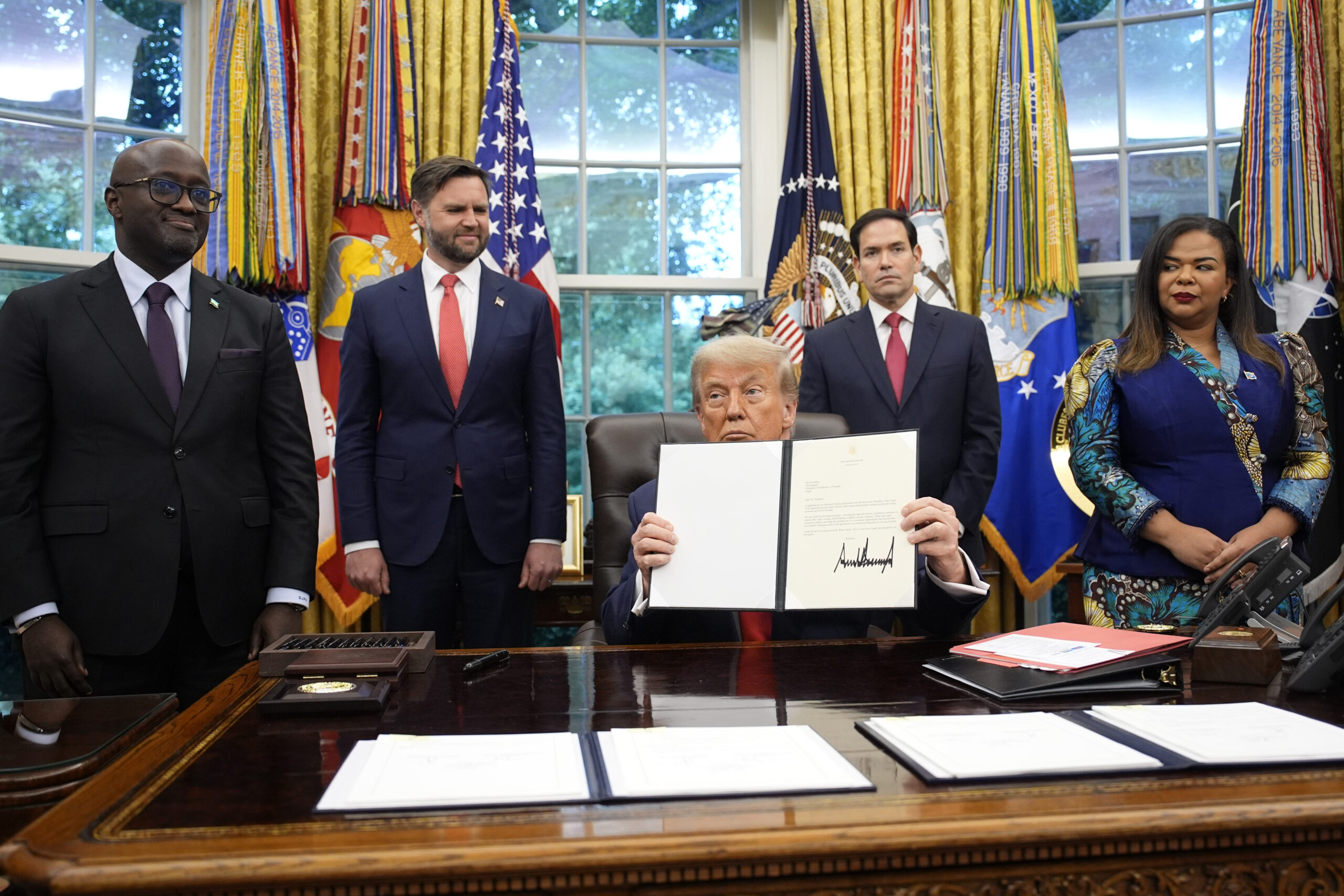
Building on the diligent efforts of the Joe Biden administration, the Trump team gave significant political weight to the DRC-Rwanda negotiations early in the term by tapping Massad Boulos, the US senior advisor for Africa—and father-in-law of the president’s daughter Tiffany Trump—to lead the talks. This resulted in a “declaration of principles” in April, followed by the “Washington Accord” in June, both signed by the countries’ foreign ministers. Then, on December 4, the presidents of the DRC and Rwanda signed the “Joint Declaration” in Washington, with Trump and leaders from Qatar, Kenya, Angola, Togo, Burundi, Uganda, and Nigeria witnessing.
This peace agreement was violated just four days later, and the Rwandan-backed M23 militia continues to gain ground in eastern DRC. Burundi’s involvement in the conflict is also increasingly concerning. However, the US administration’s diplomatic investment has created international momentum for peace, providing the parties and regional actors more room to maneuver in their respective domestic politics. For the DRC, the political push from the White House has generated a buzz of activity in the critical-minerals sector, as exemplified by myriad recent forums in Washington policy circles and the interest of several companies in capitalizing on the “peace.” Similarly, Rwanda, which has long faced criticism for greenwashing and sportswashing its reputation for human rights abuses and autocracy, has had the opportunity to burnish its image as a promoter of peace on the global stage by signing this series of high-profile agreements. In that sense, both countries are already benefiting from Trump’s political signaling, though the stickiest details of a long-term solution remain unaddressed.
In Sudan, US foreign policy faces its toughest test
The same may be true in Sudan, where Trump recently announced that he intends to focus on resolving the crisis after meeting with Saudi Crown Prince Mohammed bin Salman. While there might be a short-term gain, the US approach is unlikely to deliver a sustainable political path toward an enduring peace. Still, Boulos’s engagement on Sudan could inject some much-needed energy into a stalled mediation process led by the United States, Saudi Arabia, Egypt, and the United Arab Emirates (UAE). A lasting resolution to the conflict in Sudan, where the world’s largest humanitarian disaster is unfolding, would be a real feather in Trump’s cap.
Most Sudan watchers have argued that any solution must start with the United States exerting political pressure on the UAE to terminate its support for the Rapid Support Forces (RSF), a Darfur-based paramilitary group. In January, the outgoing Biden administration determined that the RSF has committed genocide, and continued Emirati support has allowed the group to perpetrate more atrocities, such as those widely reported during its late October siege of the Sudanese city of El Fasher. However, the UAE is an important US ally and a key strategic partner in other global conflicts—from the war in Gaza to countering the Houthi threat in Yemen. Using US leverage to squeeze Abu Dhabi on Sudan has therefore proven politically impractical.
If Trump were to pull it off, an Emirati pivot on Sudan would indeed result in a power shift on the battlefield. Still, spearheading an effort for lasting peace would require another seismic political shift. The US administration would also need to elevate legitimate Sudanese political actors who could lead this fractious and war-ravaged country—and that is no easy feat. After all, neither of the two main belligerents, the Sudanese Armed Forces or the RSF, maintains any political legitimacy, as Michelle Gavin of the Council on Foreign Relations argues. If Trump or Boulos could pick up those two giant rocks—Emirati support for the RSF and legitimate Sudanese political leadership—and move them even inches forward, that would represent real progress that evaded the Biden administration.
Small wins can produce big diplomatic yields
As Trump continues his pursuit of a Nobel Peace Prize, there are myriad other conflicts across the African continent that may receive a burst of diplomatic attention as his administration seeks to unlock sustainable paths to peace. The Ethiopia-Egypt-Sudan dispute around Nile River water access and the Grand Ethiopian Renaissance Dam (GERD) may be one of those cases. Although it should be acknowledged that Trump has previously overstated his claim of resolving the conflict, he could still theoretically pull off an agreement, as argued by Allison Lombardo and Peter Quaranto. While Ethiopian Prime Minister Abiy Ahmed has little motivation to strike a deal on the GERD, Egypt might be more amenable to negotiations.
During his July 2025 travel to North Africa, Boulos continued discussions with Egyptian President Abdel Fattah el-Sisi on both the GERD and on emerging space to possibly broker a deal on Libya. There may yet be developments in this arena as the US administration seeks to create opportunities for energy-sector deals for US companies.
The administration is also pursuing solutions to several other security challenges in Africa, including the metastasizing terrorist threats in Mali and across West Africa. Here, the United States has been increasingly sidelined, with regimes from Burkina Faso to Niger pivoting to Moscow. However, there is an opportunity to redirect Sahelian states’ attention away from Russian patrons if the United States steps up with its own counterterrorism support.
In northern Somalia, a new collaboration between Somaliland and Puntland may provide a vehicle for the United States to advance locally driven counterterrorism solutions aimed at containing or degrading threats posed by the Somali affiliate of the Islamic State of Iraq and al-Sham, al-Shabaab, and even the Houthis operating in the Red Sea region. Likely with a lighter touch than was needed to advance DRC-Rwanda negotiations, the Trump administration could make near-term counterterrorism gains that may open space for partner governments—including Western allies, Turkey, the UAE, and Qatar—to share burdens and claim political and diplomatic wins.
It is easy to criticize the administration’s nontraditional approach to peace promotion, particularly when paired with sizable tariffs, visa bans, and misleading narratives about marginalized groups in South Africa and Nigeria. However, the reality is that the political disruption that Trump’s style can generate, combined with his unpredictable decision-making and pursuit of the Nobel Peace Prize, has shifted political thinking about what is possible in the DRC and Rwanda. With sustained and credible engagement, similar diplomatic openings could emerge in Sudan, Libya, and other terrorism hot spots in Africa. In many of these cases, small victories may prove more valuable than prolonged stalemates.
Maureen Farrell is a nonresident senior fellow at the Atlantic Council’s Scowcroft Center for Strategy and Security and vice president for global partnerships at Valar, a Nairobi-based strategic advisory and risk firm. She previously served as the deputy assistant secretary of defense for African affairs and director for African affairs at the US National Security Council.
Related content
Explore the program

The Scowcroft Center for Strategy and Security works to develop sustainable, nonpartisan strategies to address the most important security challenges facing the United States and the world.
Image: US President Donald Trump speaks during a meeting with Democratic Republic of the Congo Foreign Minister Therese Kayikwamba Wagner (R) and Rwandan Foreign Minister Olivier Nduhungirehe (2nd-L) in the Oval Office of the White House in Washington, DC, USA on June 27, 2025.