At the end of January, CSIS estimated that Russia has suffered approximately 1.2 million casualties during the full-scale invasion of Ukraine. If accurate, this figure would represent the greatest loss incurred by a major power in any war since World War II. The exact number of Russian soldiers killed and wounded in Ukraine remains hotly debated, but nobody would seriously question the fact that the invasion has led to catastrophic losses.
As casualties continue to mount, Russia is seeking to recruit men from abroad to replenish the ranks of its depleted army. The BBC Russian service recently estimated that around 20,000 men from foreign countries have signed up to join Russia’s invasion, with many recruited from former Soviet republics as well as low-income nations in the Middle East, South Asia, and Africa.
Foreign recruitment is increasingly popular with the Putin regime as it allows Moscow to avoid another round of politically risky mobilization, which could easily destabilize Russian society. By paying foreigners to fight in Ukraine, the Kremlin is able to shift the war’s bloodiest burden away from Russian households and minimize any potential backlash on the home front.
Stay updated
As the world watches the Russian invasion of Ukraine unfold, UkraineAlert delivers the best Atlantic Council expert insight and analysis on Ukraine twice a week directly to your inbox.
Russia’s military recruitment efforts are global in scope and span many countries. The issue of African recruitment has made headlines in recent weeks following the publication of footage showing the apparent mistreatment of African men in the Russian army. A number of videos surfaced on social media in January that appeared to depict the verbal and physical abuse of Africans by their Russian colleagues, who referred to them as “disposables” and mocked one recruit who was seen with an anti-tank mine strapped to his chest.
Russian military recruiters have targeted Africa with particular intensity. More than 1,400 African nationals have been identified as serving in the Russian army, with one in five reported dead. These confirmed figures may only represent a small portion of the overall total. The Kremlin is accused of sending African men to fight in Ukraine after first attracting them to Russia with false promises of ordinary jobs or non-combat military roles. Many survivors have complained of finding themselves on the front lines of the invasion with little to no military training.
Eurasia Center events

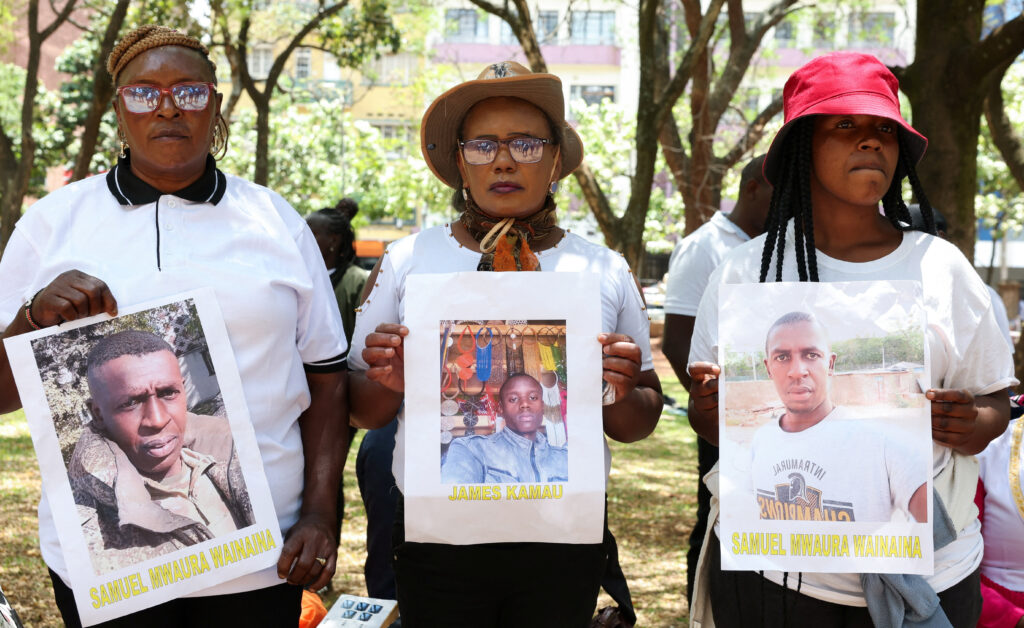
The growing number of African men serving in the Russian military is sparking international alarm, with a number of African nations voicing their concerns. A Kenyan intelligence report released on February 19 claimed that at least 1,000 Kenyans have been recruited to fight for Russia through clandestine recruitment networks. Officials in Nairobi are now moving to shut down an estimated 600 recruiting agencies, and are pushing Moscow to ban the recruitment of Kenyan soldiers.
South African government officials have entered into talks with their Russian counterparts on the issue and are hoping to repatriate 17 of their nationals. These men were reportedly recruited for combat roles in Russia via a scheme involving the daughter of former South African president Jacob Zuma. Nigeria’s foreign ministry has also warned citizens about a rise in illegal recruitment schemes sending fighters to Russia, following reports that two Nigerians were killed in Ukraine.
Meanwhile, women from South Africa and other parts of the continent are reportedly being targeted and tricked into working in Russian drone factories. Most are recruited via social media adverts for jobs in the catering and hospitality industries. The South African authorities have warned citizens about online campaigns promising jobs and study in Russia. As awareness increases across Africa, media coverage is highlighting the dangers facing Africans who seek lucrative employment in Russia.
The Kremlin will likely attempt to enlist more Africans in 2026 as Russia struggles to find sufficient numbers of domestic recruits amid mounting battlefield losses. Around 422,000 Russian nationals signed contracts with the military last year, a 6 percent drop from 2024, according to recent reports. In addition to availability, foreign troops are also cheaper to recruit than Russian citizens, who in many cases now expect unprecedented enlistment bonuses as well as other benefits including salaries far in excess of national averages.
Russia’s growing reliance on African soldiers is a powerful symbol of an invasion that has gone horribly wrong for Vladimir Putin. The Kremlin dictator expected to decapitate and subjugate Ukraine in a matter of days. Instead, as the invasion enters a fifth year, Putin finds himself forced to recruit troops from around the world in order to avoid destabilizing Russia and threatening the survival of his own regime.
Katherine Spencer is a program assistant at the Atlantic Council’s Eurasia Center.
Further reading
The views expressed in UkraineAlert are solely those of the authors and do not necessarily reflect the views of the Atlantic Council, its staff, or its supporters.

The Eurasia Center’s mission is to enhance transatlantic cooperation in promoting stability, democratic values, and prosperity in Eurasia, from Eastern Europe and Turkey in the West to the Caucasus, Russia, and Central Asia in the East.
Follow us on social media
and support our work
Image: Relatives of Kenyans believed to be fighting for Russia in Ukraine hold photographs of their kin during a demonstration demanding accountability for all Kenyans in Russia, in downtown Nairobi, Kenya, February 19, 2026. (REUTERS/Monicah Mwangi)