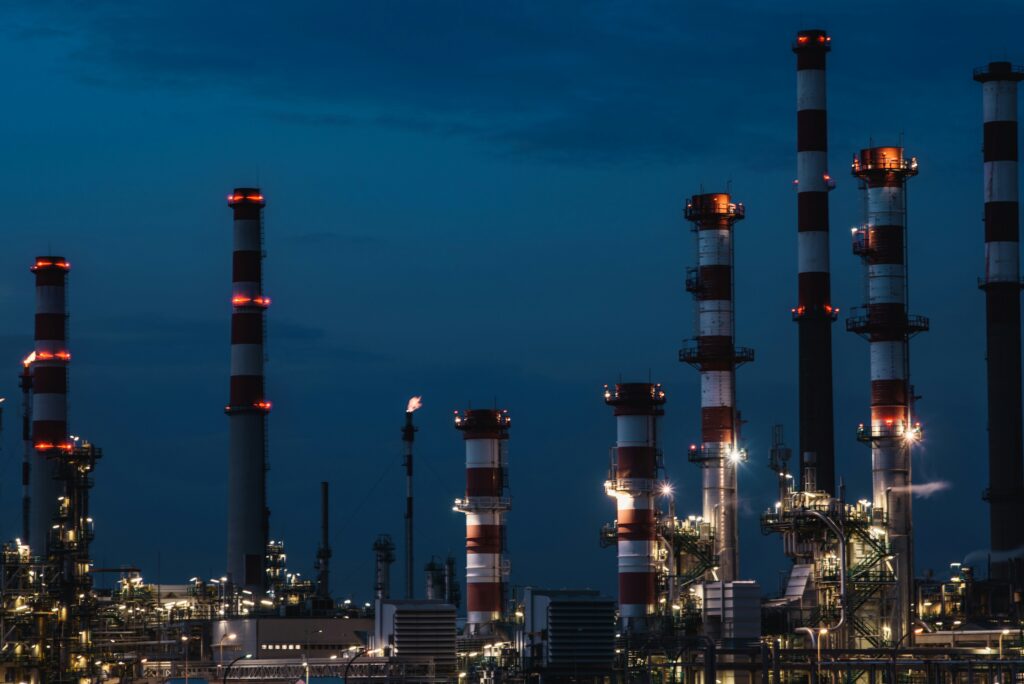
Last year was a turning point in US energy policy. In 2025, the United States became the first country to export more than 100 million tons of liquefied natural gas (LNG) in a single year, while oil production reached a record high of 13.6 million barrels a day.
Over the past decade and a half, the United States has moved from the shale revolution, through the 2014–2015 oil and gas crisis, to a phase of consolidation in its domestic upstream sector. The energy dominance agenda during President Donald Trump’s first term contributed to an improved market environment for shale gas. Large players acquired smaller, highly leveraged entities whose value lay in strong business fundamentals—excellent shale basin economics and technical expertise—but whose balance sheets had become unsustainable. Business and political goals aligned: the administration emphasized domestic investment and keeping US hydrocarbon deposits in US hands.
The results are now clear. The United States is the world’s largest producer of hydrocarbons and biggest exporter of LNG. Not only is the country fully energy self‑sufficient in terms of oil and gas, but it’s also playing a pivotal role in global markets for crude oil, natural gas, LNG, and liquefied petroleum gas (LPG), with a strong outlook for maintaining this position over the next ten to fifteen years. From dominance to abundance, the United States has become the most powerful “petrostate” in the world—or, more expansively, a “hydrocarbon-state” that combines resource abundance with technological, financial, and geopolitical power. The hydrocarbon-state is in direct competition with “electrostates,” whose influence rests primarily on electricity systems, new energy supply chains, and critical raw materials. Taking into account that China can be now considered an electrostate, Washington’s pursuit of an essential position in global hydrocarbons brings this choice into a wider logic of geopolitical rivalry.
This competition for global energy primacy pushes Europe to the sidelines. However, rather than yielding, European leaders have an opportunity to cultivate agency in the evolving global energy architecture to ensure the region’s economic resilience, while strengthening long-standing ties with the United States.
The US dual-pronged overseas strategy
Parallel to the latest US security strategy and mounting geopolitical tensions, the US oil and gas industry is expanding its efforts overseas. It is doing so in two ways: by intensifying exports of domestically produced hydrocarbons, and through direct investments outside of the United States. The directions of export are already shifting as a result of tensions with China and the realignment of Russian hydrocarbon flows. Europe and Southeast Asia have gained importance in US exports of crude oil, LNG, and LPG, and, in the medium-term, India and selected African countries are likely to join this pattern.
In terms of production, foreign assets are designed to complement the US shale foundation—in both production and reserves—while diversifying upstream portfolios and reducing exposure to single‑basin risk. The underlying logic of the current overseas push is to focus on regions and basins where American firms can deploy the competitive advantages they have refined in shale: data‑driven reservoir management, drilling and completion efficiency, disciplined capital allocation, and integrated supply chains. And obviously financial resources.
The closest area of interest geographically is the Montney shale basin in British Columbia and Alberta, Canada. Montney remains attractive for building inventory, offers promising LNG export prospects, and currently features lower asset prices than the Permian Basin. Latin America is another natural theater of expansion. Beyond Venezuela, unconventional resources such as Vaca Muerta in Argentina and emerging production in Mexico are prime candidates for US majors in the coming decade. Production from Vaca Muerta—the largest unconventional hydrocarbon deposit in South America, with a low breakeven price—and other plays may in the near future become significant competition for US LNG and LPG, which further sharpens US interest in being present there as an investor rather than merely as an exporter.
In the Eastern Mediterranean, US companies have been active for almost a decade, particularly in the Levant Basin and on the Israeli shelf. Today, this presence is extending to Turkey, ultra‑deepwater prospects in the Black Sea basin, and attempts to acquire assets previously held by Russian firms, such as Qurna‑2 in Iraq. Chevron and ExxonMobil have long maintained a strong position in Kazakhstan’s Tengiz field (and in ExxonMobil’s case, a stake in Kashagan).
Europe in the new energy architecture: dependence with agency
These developments are profoundly reshaping Europe’s energy landscape. As Russian hydrocarbon flows have been curtailed or redirected, US LNG and, increasingly, US‑linked production in Europe’s extended neighborhood have taken on a central role in the continent’s security of supply. Hydrocarbon exports from the United States to Europe are likely to continue—or even increase—despite rising tensions and growing awareness of the European Union’s energy dependence on American molecules. The growing share of US companies in hydrocarbon production in regions that underpin Europe’s hydrocarbon base—such as Algeria, the Levant Basin, Turkey, and Kazakhstan—further increases US influence over the European energy market.
This trend unfolds against a backdrop of difficult debates among allies. European policymakers and publics have raised legitimate concerns about price levels for imported LNG, about the risk of “replacing one dependence with another,” and about the interaction between US energy policy, domestic industrial support, and European climatepolicy. Transatlantic rhetoric has at times been sharp, and energy has not been immune to broader trade and regulatory disputes. World leaders are still far from resolving these challenges, yet these tensions do not alter the structural reality: for the foreseeable future, a US‑centric hydrocarbon system is becoming one of the pillars of Europe’s energy security.
The key strategic question for Europe is therefore not whether this hydrocarbon-state will exist—that question is already answered by market trends and investment decisions—but whether European actors will remain mostly passive importers, or whether they will claim agency as co‑investors and co‑architects of this new system.
Why European companies should join—not just buy from—America’s hydrocarbon-state
The current investment trend outside the United States is opening a window of opportunity for other players from different geographies—including national oil companies—to collaborate with US firms on joint projects. As long as these partners bring tangible value and can adapt to the US way of operating, there is space for durable partnerships. European companies should be at the forefront of this shift.
There are reasons for that. First, risk management: equity stakes and long‑term partnerships in upstream and midstream projects provide a more resilient hedge against supply disruptions and price spikes than relying solely on contractual arrangements at European terminals. Second, industrial strategy: tighter integration into hydrocarbon value chains can support Europe’s energy‑intensive industries and chemical sector as they navigate an uneven and often volatile transition.
This logic should not be confined to traditional oil and gas majors. Large utilities, midstream operators, and industrial champions in chemicals, steel, and fertilizers, as well as European financial and infrastructure investors, all have a stake in the stability, affordability, and predictability of hydrocarbon supply during the transition period. For them, joining the second wave of US‑led expansion—as partners in the Montney, Vaca Muerta, Eastern Mediterranean, North African gas and LNG, or Caspian projects—is a way to move from the position of pure price‑takers to that of co‑shapers.
Managing asymmetry: toward a balanced transatlantic framework
None of this eliminates the asymmetries inherent in a world where the United States is the central hydrocarbon-state. In crises, Washington and US companies will inevitably hold levers that affect European energy prices and flows. But the appropriate response for Europe is not to wish this reality away, nor to retreat into defensive rhetoric about dependence. It is to embed US strength in a balanced, rules‑based framework and to use transatlantic cooperation to manage that asymmetry.
This implies several parallel tracks. On the commercial side, long‑term contracts and joint investments should be structured to share risks and benefits more equitably across cycles. On the regulatory and security side, closer coordination is needed so that critical energy infrastructure in Europe and its neighborhood is not dominated by adversarial actors, and so that climate and energy security policies on both sides of the Atlantic reinforce rather than undermine each other. On the political level, the difficult conversations among allies about pricing, industrial policy, and climate ambition should be understood as part of the necessary calibration of a maturing energy partnership—not as a reason for Europe to abstain from engaging with the United States’ second overseas wave.
In this sense, the emergence of the United States as a hydrocarbon-state is both a challenge and an invitation. If European companies and policymakers choose to participate actively, they can help ensure that the new energy architecture doesn’t only strengthen US power, but also enhances the resilience and strategic autonomy of the wider transatlantic community.
Michał Kurtyka is a distinguished fellow at the Atlantic Council’s Global Energy Center.
Mateusz Kędzierski is a public and regulatory affairs manager at GASPOL and senior energy advisor at the JTI, a boutique advisory and analytical platform operating at the intersection of energy and natural resources policy, regulation, markets and infrastructure.
stay connected
Sign up for PowerPlay, the Atlantic Council’s bimonthly newsletter keeping you up to date on all facets of the energy transition:
related content
our work

The Global Energy Center develops and promotes pragmatic and nonpartisan policy solutions designed to advance global energy security, enhance economic opportunity, and accelerate pathways to net-zero emissions.
Image: Refinery (Maksym Kaharlytskyi, Unsplash, https://unsplash.com/photos/red-and-white-tower-under-blue-sky-during-night-time-u13zBF4r56A)