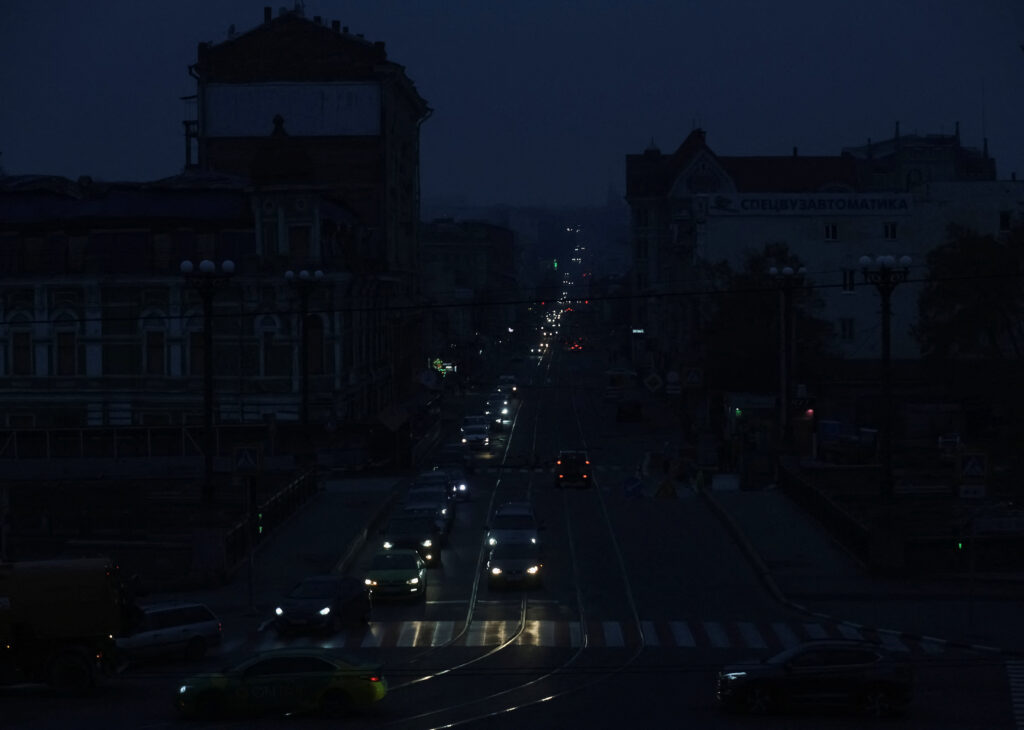
Situated just thirty kilometers from the Russian border, Ukraine’s former capital Kharkiv has been a front line city ever since the onset of Russia’s full-scale invasion in February 2022. With Putin’s army now advancing to the east and the bombardment of civilian targets intensifying, Kharkiv residents are facing what may become the most difficult winter of the entire war.
In October alone, Russia bombed Kharkiv more than eighty times. Many of these attacks involved different categories of drones, reflecting the changing nature of the war. Russia now relies mostly on a mix of first-person view (FVP) drones, loitering munitions, Shahed drones, and guided aerial bombs. These weapons systems are all far cheaper and faster to produce than missiles, making it easier for the Kremlin to maintain the intensity of the bombardment and destabilize the life of the city.
The recent appearance of FVP drones within the city limits has created an additional layer of unease for the approximately 1.3 million people currently living in Kharkiv. Technical modifications introduced in 2025 have increased the range of Russian FVP drones, enabling them to reach Kharkiv and nearby settlements previously regarded as relatively safe. This has dramatically altered the threat environment, pointing to a continued escalation in Russia’s use of drones against urban populations.
Stay updated
As the world watches the Russian invasion of Ukraine unfold, UkraineAlert delivers the best Atlantic Council expert insight and analysis on Ukraine twice a week directly to your inbox.
As the bombardment of Kharkiv intensifies, events taking place one hundred kilometers to the east are reshaping the city’s broader security outlook. In recent months, advancing Russian troops have attempted to reoccupy Kupiansk. This strategically important city came under Russian occupation during the initial phase of the full-scale invasion before being liberated during Ukraine’s successful September 2022 counteroffensive. Renewed Russian gains in this direction would further strain Ukraine’s defenses and expand the aerial threat looming over Kharkiv.
As the front line creeps closer to Kharkiv, the main threat remains air strikes. Russian attacks focus on civilian targets including energy infrastructure, apartment blocks, schools, hospitals, and shopping malls. The overall intention is clear: Russia aims to degrade municipal infrastructure, disrupt essential services, and make the city unlivable for its inhabitants.
One of the most shocking attacks in recent months took place on October 22, when Russia carried out a targeted drone strike on a Kharkiv kindergarten. On that occasion, images of firefighters carrying young children from the burning building made global headlines. However, the vast majority of attacks targeting the Kharkiv population do not attract the attention of international audiences.
Eurasia Center events

Alongside drones, Kharkiv residents must also now contend with extended periods of darkness. In early November, a major Russian bombardment caused the city’s energy supply system to collapse, leaving entire districts without electricity, heating, and light. Local residents have had to adapt to the realities of life without power while navigating the city in the winter gloom. For the Kharkiv population, this has meant returning to familiar blackout routines developed during earlier Russian winter bombing campaigns.
Despite these pressures, Kharkiv continues to function and maintain an air of normality. Everyday life in the city is in many ways defined by a culture of resilience that is both practical and disciplined, reflecting years of adaptation under fire.
Utilities crews repair power lines within hours of each new Russian attack. Municipal workers immediately clear away debris from air strikes and make sure the city remains tidy, even in the most extreme of circumstances. Teachers hold classes in specially constructed underground schools or metro stations. Doctors treat patients behind boarded up windows. Each individual demonstration of resilience is a direct rejection of Russia’s efforts to depopulate Kharkiv.
In order to maintain this remarkable resilience, Kharkiv requires continued international support. Most of all, this means additional air defenses. Supporting Kharkiv is not just a matter of humanitarian assistance. It is a strategic investment in European security.
Today, Kharkiv serves as a vital bastion in eastern Ukraine. The city’s endurance makes it possible to reinforce Ukrainian front line units, bolster the country’s defenses, offer a safe haven to the region’s civilian population, and prevent the war from spreading further west. A secure Kharkiv means a stronger Ukraine and a safer Europe, but this will only be possible with help from the international community.
Maria Avdeeva is a Ukrainian security analyst. The views in this article are her own and are expressed in a personal capacity.
Further reading

The views expressed in UkraineAlert are solely those of the authors and do not necessarily reflect the views of the Atlantic Council, its staff, or its supporters.


The Eurasia Center’s mission is to enhance transatlantic cooperation in promoting stability, democratic values, and prosperity in Eurasia, from Eastern Europe and Turkey in the West to the Caucasus, Russia, and Central Asia in the East.
Follow us on social media
and support our work
Image: Traffic moves through Kharkiv city center without electricity after critical civil infrastructure was hit by Russian drone and missile attacks, amid Russia's attack on Ukraine. November 9, 2025. REUTERS/Vyacheslav Madiyevskyy