Featured analysis

Latest analysis

EconoGraphics

Nov 6, 2015

The Steady Rise of Europe’s Fringe

By Nico Catano

The past five years have forced the European Union to face significant challenges both internally and externally — from the recession to the ongoing migrant crisis.

Economy & Business Europe & Eurasia

EconoGraphics

Oct 29, 2015

The Old World and the New Economy

By Global Business and Economics

One of the most significant challenges currently facing European leaders is how to shepherd their economies, particularly their businesses, into the modern era. In the United States, massive tech giants rapidly blossom from small startups, significantly impacting the economy over the past decade.

Economy & Business Europe & Eurasia

EconoGraphics

Oct 21, 2015

TTIP in Europe

By Global Business and Economics

On October 10th, hundreds of thousands of concerned German citizens marched in Berlin to protest the proposed Transatlantic Trade and Investment Partnership (TTIP). TTIP's critics argue it benefits corporations at the expense of ordinary citizens, while its proponents argue it provides significant economic growth.

Economy & Business European Union

EconoGraphics

Oct 13, 2015

Breaking Down Walls: How Will American Agricultural Producers Fare Under TPP?

By Global Business and Economics

On October 5th, Trans-Pacific Partnership (TPP) trade negotiations were concluded in Atlanta. The deal faced criticism from some on a lack of transparency, but details are now beginning to emerge on the settlement. Even with TPP's lack of transparency, there were clear tension points between negotiators on topics such as biologics, dairy products, and rules of origin for the automaking industry. This week's Econographic looks specifically at one of the potential winners of the trade deal, the American agricultural sector.

Economy & Business Indo-Pacific

EconoGraphics

Oct 6, 2015

How Can We Bridge Automaking Standards for Growth?

By Global Business and Economics

The recent Volkswagen scandal has refocused consumers on automaking standards and CO2 emissions. These differences have also been one of the sticking points in TTIP negotiations. Both the American and European automaking sectors have rigorous standards, and as might be expected hold similar regulations.

Economy & Business European Union

EconoGraphics

Sep 29, 2015

How Does The Most Recent Greek Bailout Deal Compare With The Past Two Agreements?

By Global Business and Economics

The latest Memorandum of Understanding between the EU Institutions and the Greek Government passed in August, leaves Tsipras only one additional month to implement eighty-five initiatives. These reforms cover a diverse range of topics, from consolidating taxation policies to health and education reform.

Economy & Business European Union

EconoGraphics

Sep 22, 2015

Migrant Flows and the Future of Europe

By Global Business and Economics

As Europe confronts the migrant crisis, much of the current coverage remains fixed on short run trends, but in order to have a comprehensive perspective it is necessary to project these trends into the future. In spite of commonly held concerns of migrants' effect on European identity, many of these nations' birthrates and outflows of migrants will actually be higher than their intake of migrants. Negative flows of migrants could further weaken pension plans, as aging European populations struggle to balance social welfare models with demographic realities.

Afghanistan Economy & Business

EconoGraphics

Sep 15, 2015

Has the Renminbi Arrived as an International Currency?

By Global Business and Economics

As China slowly transitions from an investment and export based economy to a consumer based economy, the Chinese must also liberalize both their monetary affairs and the management of their currency. By increasing the wealth of Chinese consumers via their currency's value, domestic demand will supplant the role of exports. For this process to be completed, the Chinese currency, the Renminbi, must assume its place in the package of globally dominant currencies.

China Economy & Business

EconoGraphics

Jul 28, 2015

Where Are US Sanctions Imposed?

By Global Business and Economics

On July 14, the United States, along with the P5+1, struck a deal with Iran to ease the heavy financial and banking sanctions that starved the country's economy. Over the next decade, financial and trade sanctions will gradually be lifted, giving Iran the ability to export its plentiful oil and gas reserves and to purchase goods from abroad.

Economy & Business Financial Sanctions and Economic Coercion

EconoGraphics

Jul 22, 2015

Has Greece Been Effective at Downsizing Its Public Sector?

By Global Business and Economics

Greece and its EU counterparts made progress last week on negotiations, but some policy makers question whether Greece will truly adopt the measures necessary to recover economic stability.

Economy & Business Fiscal and Structural Reform

Content

EconoGraphics

May 5, 2015

Creating the Digital Single Market

By Global Business & Economics Program

European E-Commerce is still largely confined within national borders.

Economy & Business Europe & Eurasia

EconoGraphics

Apr 28, 2015

Do Sanctions Work After All?

By Global Business & Economics

International Relations scholars disagree about whether economic sanctions are an effective tool to coerce countries to follow a certain course of action.

Economy & Business Europe & Eurasia

EconoGraphics

Apr 21, 2015

Exit, or Voice?

By Global Business & Economics

In March, the UK, Germany, Italy, and France decided to join the China-led Asian Infrastructure Investment Bank (AIIB), shocking the Obama administration.

Brazil China

EconoGraphics

Apr 14, 2015

Who is Investing Abroad?

By Global Business & Economics

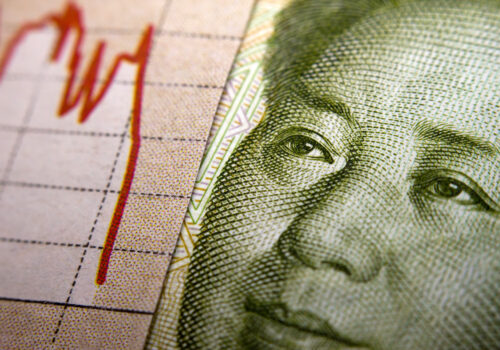
While the US still leads the world in outflowing Foreign Direct Investment (FDI), the emerging markets are catching up quickly. Chinese outflowing FDI, in particular has grown tremendously: since 2005, it increased more than 30-fold in 8 years from $5 billion to $166 billion. While initial Chinese foreign investments focused on natural resource industries, over time the investments have spread to diverse industries like agriculture, manufacturing, and professional services. BRIC FDIs are emerging as key growth drivers for low income countries, improving their business environment, building infrastructure, creating jobs, and adding much-needed revenue to government coffers.

China Russia

EconoGraphics

Apr 7, 2015

Is Europe still vulnerable to a Greek default?

By Global Business & Economics Program

Private banks throughout Europe have significantly reduced their exposure to Greek debt (bank, public, and non-bank private sector debt) over the last five years. After Greece came under market pressure and eventually obtained ECB and IMF financial assistance in 2010, most European banks started to rapidly reduce their exposure to Greece. For instance, between 2010 and 2014 French banks' holdings decreased from $63 billion to $2 billion.

Economy & Business Eurozone

EconoGraphics

Mar 31, 2015

The IMF’s Changing Role in Europe

By Global Business & Economics

The International Monetary Fund's purpose and scope of work have changed since its founding after World War II. Whereas at first the Fund aimed to maintain monetary and exchange-rate stability among its members who were primarily advanced economies, today it faces its first credible challenge to its status as the world's lender of last resort.

Economy & Business Financial Regulation

EconoGraphics

Mar 24, 2015

How Much Does it Cost for Cubans to Access Information?

By Global Business & Economics

When President Obama announced his landmark policy shift towards Cuba, easing the 54-year-old embargo, one of the first companies to announce they would begin operating in Cuba was Netflix. The online video company's decision was surprising, if only because Cuba's internet is one of the slowest in the world.

Americas Cuba

EconoGraphics

Mar 17, 2015

Who Will Finance Public Debt?

By Global Business & Economics Program

Today, the cap on US government spending (or the "debt ceiling") is officially reinstated, and with it, the threat of another clash over the national debt. Policymakers will have a runway of just months before they must decide to lift the cap on borrowing or temporarily allow it to be raised

Brazil China

EconoGraphics

Mar 11, 2015

The Benefits of a Strong Dollar: Where Should You Go on Your Next Vacation?

By Global Business & Economics

There’s never been a better time to be a tourist—as long as you’re paying in dollars. Major currencies worldwide have plunged in value, meaning each US dollar buys more euros and renminbi today than it did one year ago.

Americas Economy & Business

EconoGraphics

Mar 3, 2015

Who Will Collapse First?

By Global Business & Economics

Both the Ukrainian and Russian economies are suffering from recent events. While weak domestic institutions and a fight with insurgents in the country's East plague Ukraine, sanctions and low prices for oil and gas are hurting the Russian economy.

Economy & Business Europe & Eurasia