Featured analysis

Latest analysis

Econographics

Jul 10, 2025

The stablecoin race

By <span class="gta-embed–tax–expert gta-post-embed–tax–expert">Hung Tran</span>, <span class="gta-embed–tax–expert gta-post-embed–tax–expert">Barbara C. Matthews</span>

Each country’s agenda is motivated by questions about the sustainability of the dollar’s dominant global role.

Digital Currencies Economy & Business
Stablecoins

Econographics

Jul 8, 2025

Stablecoins are trending, but what frictions and risks are getting overlooked?

By <span class="gta-embed–tax–expert gta-post-embed–tax–expert" >Ashley Lannquist</span>

Stablecoin usage is complex for consumers, and large-scale adoption could introduce new challenges for financial stability and regulatory oversight.

Digital Currencies Economy & Business

Econographics

Jul 7, 2025

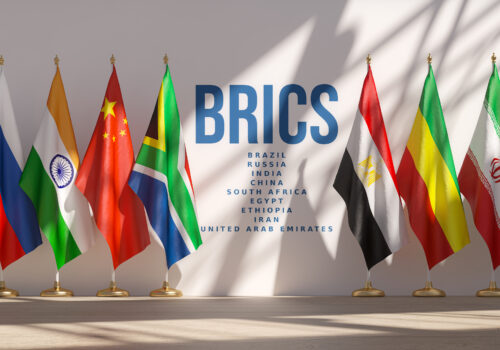
Building BRICS

By <span class="gta-embed–tax–expert gta-post-embed–tax–expert">Bart Piasecki</span>

Fifteen years after its founding, BRICS has evolved into a formidable counterweight to Western dominance in global economic governance. Yet despite its growing influence, the bloc’s ability to translate bold rhetoric into concrete results remains uncertain.

Brazil China

Econographics

Jun 23, 2025

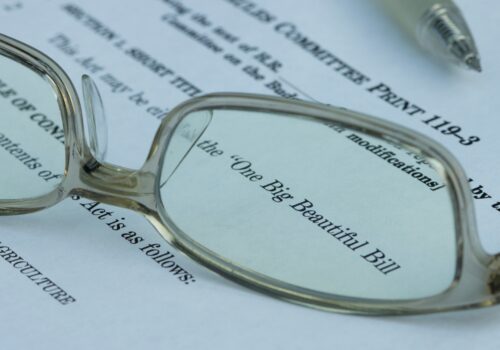
From trade wars to capital wars: Section 899 could rattle global capital markets

By <span class="gta-embed–tax–expert gta-post-embed–tax–expert" >John Satory</span>

Section 899 of the One Big Beautiful Bill Act plans to tax certain foreign investors, testing investor confidence in America's financial leadership and market stability.

Economy & Business Financial Regulation

Econographics

Jun 19, 2025

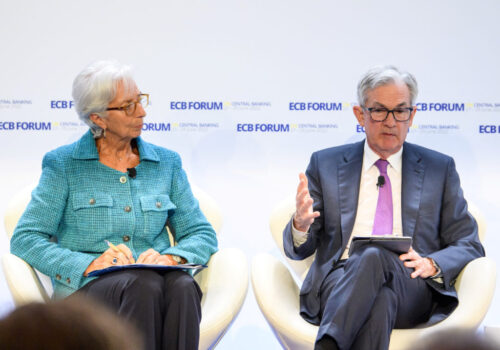
Hawks vs. doves: The split between the Fed and the ECB

By <span class="gta-embed–tax–expert gta-post-embed–tax–expert">Bart Piasecki</span>

While the ECB signals an end to its rate-cutting cycle, the Fed hesitates. This article explores the macroeconomic and policy reasons behind it.

Economy & Business European Union

Econographics

Jun 17, 2025

Anonymous shell companies pose a threat to US national security. Here is how to address it.

By <span class="gta-embed–tax–expert gta-post-embed–tax–expert" >Julie Brinn Siegel</span>

On March 26, the Department of the Treasury scrapped critical federal rules that would have made most anonymous shell companies illegal. The rules would also have prevented them from being abused by drug cartels, human traffickers, foreign adversaries like Iran and China, terrorist groups, and other bad actors.

China Economy & Business

Econographics

Jun 12, 2025

The objectives of transatlantic financial services regulation and the future of international cooperation

By <span class="gta-embed–tax–expert gta-post-embed–tax–expert" >Matthew L. Ekberg</span>

Much has been written in recent weeks about heightened geopolitical tensions and the impact of policy changes concerning international trade on global markets. Less has been said about the growing shift in focus on both sides of the Atlantic—and across the English Channel—on the next stage of development for financial services regulation.

Economy & Business European Union

Econographics

Jun 6, 2025

The search for safe assets

By <span class="gta-embed–tax–expert gta-post-embed–tax–expert">Hung Tran</span>

The deterioration of the US fiscal outlook has put international investors, especially foreign central banks, in a quandary. There is no good alternative to US Treasuries as safe reserve assets.

Economy & Business Europe & Eurasia

Econographics

Jun 2, 2025

Hong Kong highlights China’s policy of decoupling from US financial markets

By <span class="gta-embed–tax–expert gta-post-embed–tax–expert">Jeremy Mark</span>

The political benefits of an international financial center with Chinese characteristics will outweigh the pain that decoupling inflicts on China’s private sector.

China Economy & Business

Econographics

May 29, 2025

After partial relief, what’s next for Syria sanctions?

By <span class="gta-embed–tax–expert gta-post-embed–tax–expert" >Alex Zerden</span>

Syria remains a high-risk jurisdiction due to years of conflict, endemic corruption, state institution collapse, narcotrafficking of captagon, insufficient anti-money laundering efforts, and inadequate financing of terrorism controls.

Economy & Business Financial Sanctions and Economic Coercion

Content

EconoGraphics

Apr 14, 2015

Who is Investing Abroad?

By <span class="gta-embed--tax--expert gta-post-embed--tax--expert" >Global Business & Economics</span>

While the US still leads the world in outflowing Foreign Direct Investment (FDI), the emerging markets are catching up quickly. Chinese outflowing FDI, in particular has grown tremendously: since 2005, it increased more than 30-fold in 8 years from $5 billion to $166 billion. While initial Chinese foreign investments focused on natural resource industries, over time the investments have spread to diverse industries like agriculture, manufacturing, and professional services. BRIC FDIs are emerging as key growth drivers for low income countries, improving their business environment, building infrastructure, creating jobs, and adding much-needed revenue to government coffers.

China Russia

EconoGraphics

Apr 7, 2015

Is Europe still vulnerable to a Greek default?

By <span class="gta-embed--tax--expert gta-post-embed--tax--expert" >Global Business & Economics Program</span>

Private banks throughout Europe have significantly reduced their exposure to Greek debt (bank, public, and non-bank private sector debt) over the last five years. After Greece came under market pressure and eventually obtained ECB and IMF financial assistance in 2010, most European banks started to rapidly reduce their exposure to Greece. For instance, between 2010 and 2014 French banks' holdings decreased from $63 billion to $2 billion.

Economy & Business Eurozone

EconoGraphics

Mar 31, 2015

The IMF’s Changing Role in Europe

By <span class="gta-embed--tax--expert gta-post-embed--tax--expert" >Global Business & Economics</span>

The International Monetary Fund's purpose and scope of work have changed since its founding after World War II. Whereas at first the Fund aimed to maintain monetary and exchange-rate stability among its members who were primarily advanced economies, today it faces its first credible challenge to its status as the world's lender of last resort.

Economy & Business Financial Regulation

EconoGraphics

Mar 24, 2015

How Much Does it Cost for Cubans to Access Information?

By <span class="gta-embed--tax--expert gta-post-embed--tax--expert" >Global Business & Economics</span>

When President Obama announced his landmark policy shift towards Cuba, easing the 54-year-old embargo, one of the first companies to announce they would begin operating in Cuba was Netflix. The online video company's decision was surprising, if only because Cuba's internet is one of the slowest in the world.

Americas Cuba

EconoGraphics

Mar 17, 2015

Who Will Finance Public Debt?

By <span class="gta-embed--tax--expert gta-post-embed--tax--expert" >Global Business & Economics Program</span>

Today, the cap on US government spending (or the "debt ceiling") is officially reinstated, and with it, the threat of another clash over the national debt. Policymakers will have a runway of just months before they must decide to lift the cap on borrowing or temporarily allow it to be raised

Brazil China

EconoGraphics

Mar 11, 2015

The Benefits of a Strong Dollar: Where Should You Go on Your Next Vacation?

By <span class="gta-embed--tax--expert gta-post-embed--tax--expert" >Global Business & Economics</span>

There’s never been a better time to be a tourist—as long as you’re paying in dollars. Major currencies worldwide have plunged in value, meaning each US dollar buys more euros and renminbi today than it did one year ago.

Americas Economy & Business

EconoGraphics

Mar 3, 2015

Who Will Collapse First?

By <span class="gta-embed--tax--expert gta-post-embed--tax--expert" >Global Business & Economics</span>

Both the Ukrainian and Russian economies are suffering from recent events. While weak domestic institutions and a fight with insurgents in the country's East plague Ukraine, sanctions and low prices for oil and gas are hurting the Russian economy.

Economy & Business Europe & Eurasia

EconoGraphics

Feb 24, 2015

Is the US Still Leading in Global Trade?

By <span class="gta-embed--tax--expert gta-post-embed--tax--expert" >Global Business & Economics Program</span>

In the last two decades, the Asia Pacific region has signed sixty-five free trade agreements. South America, Eurasia, and Europe combined have signed over one-hundred and fifty agreements. Over the same period, the US has signed twelve agreements.

Americas East Asia

EconoGraphics

Feb 17, 2015

EconoGraphics – EU Energy Dependency

By <span class="gta-embed--tax--expert gta-post-embed--tax--expert" >Global Business & Economics Program</span>

A great part of Europe is highly dependent on Russian energy, which helps to explain many of the concerns Europeans have over the developments in Ukraine.

Economy & Business Energy & Environment

EconoGraphics

Feb 10, 2015

Is Austerity to Blame for the Collapse of the Political center in the European Union?

By <span class="gta-embed--tax--expert gta-post-embed--tax--expert" >Global Business & Economics Program</span>

Radical political parties in the Eurozone—including Syriza in Greece, Podemos in Spain, and Sinn Féin in Ireland—are riding a wave of popularity. The continent’s debt crisis has pitted the creditor countries, most importantly Germany, against debtor countries like Greece. On an international level, the northern European creditors have managed to implement policies that are forcing […]

Economy & Business European Union