Featured analysis

Latest analysis

Bremain vs Brexit

Nov 18, 2015

Considering Brexit

By Nico Catano

On November 10th, Downing Street released David Cameron’s long awaited letter to European Council President Donald Tusk on Great Britain’s envisioned reforms to the European Union (EU). With a portion of the ruling Conservative party desiring an EU exit, as well as the rising prominence of the UK Independence Party, unity should not be taken for granted.

Economy & Business
European Union

EconoGraphics

Nov 12, 2015

EU Economy: Still Work to be Done

By Nico Catano

The road to recovery in Europe remains a work in progress, as European Central Bank (ECB) leader Mario Draghi faces legacies of the 2008 recession. One notable challenge remaining for the European economy is Non-Performing Loans (NPLs).

Economy & Business
Europe & Eurasia

EconoGraphics

Nov 6, 2015

The Steady Rise of Europe’s Fringe

By Nico Catano

The past five years have forced the European Union to face significant challenges both internally and externally — from the recession to the ongoing migrant crisis.

Economy & Business
Europe & Eurasia

EconoGraphics

Oct 29, 2015

The Old World and the New Economy

By Global Business and Economics

One of the most significant challenges currently facing European leaders is how to shepherd their economies, particularly their businesses, into the modern era. In the United States, massive tech giants rapidly blossom from small startups, significantly impacting the economy over the past decade.

Economy & Business
Europe & Eurasia

EconoGraphics

Oct 21, 2015

TTIP in Europe

By Global Business and Economics

On October 10th, hundreds of thousands of concerned German citizens marched in Berlin to protest the proposed Transatlantic Trade and Investment Partnership (TTIP). TTIP’s critics argue it benefits corporations at the expense of ordinary citizens, while its proponents argue it provides significant economic growth.

Economy & Business
European Union

EconoGraphics

Oct 13, 2015

Breaking Down Walls: How Will American Agricultural Producers Fare Under TPP?

By Global Business and Economics

On October 5th, Trans-Pacific Partnership (TPP) trade negotiations were concluded in Atlanta. The deal faced criticism from some on a lack of transparency, but details are now beginning to emerge on the settlement. Even with TPP’s lack of transparency, there were clear tension points between negotiators on topics such as biologics, dairy products, and rules of origin for the automaking industry. This week’s Econographic looks specifically at one of the potential winners of the trade deal, the American agricultural sector.

Economy & Business
Indo-Pacific

EconoGraphics

Oct 6, 2015

How Can We Bridge Automaking Standards for Growth?

By Global Business and Economics

The recent Volkswagen scandal has refocused consumers on automaking standards and CO2 emissions. These differences have also been one of the sticking points in TTIP negotiations. Both the American and European automaking sectors have rigorous standards, and as might be expected hold similar regulations.

Economy & Business
European Union

EconoGraphics

Sep 29, 2015

How Does The Most Recent Greek Bailout Deal Compare With The Past Two Agreements?

By Global Business and Economics

The latest Memorandum of Understanding between the EU Institutions and the Greek Government passed in August, leaves Tsipras only one additional month to implement eighty-five initiatives. These reforms cover a diverse range of topics, from consolidating taxation policies to health and education reform.

Economy & Business
European Union

EconoGraphics

Sep 22, 2015

Migrant Flows and the Future of Europe

By Global Business and Economics

As Europe confronts the migrant crisis, much of the current coverage remains fixed on short run trends, but in order to have a comprehensive perspective it is necessary to project these trends into the future. In spite of commonly held concerns of migrants’ effect on European identity, many of these nations’ birthrates and outflows of migrants will actually be higher than their intake of migrants. Negative flows of migrants could further weaken pension plans, as aging European populations struggle to balance social welfare models with demographic realities.

Afghanistan
Economy & Business

EconoGraphics

Sep 15, 2015

Has the Renminbi Arrived as an International Currency?

By Global Business and Economics

As China slowly transitions from an investment and export based economy to a consumer based economy, the Chinese must also liberalize both their monetary affairs and the management of their currency. By increasing the wealth of Chinese consumers via their currency’s value, domestic demand will supplant the role of exports. For this process to be completed, the Chinese currency, the Renminbi, must assume its place in the package of globally dominant currencies.

China
Economy & Business

Content

Econographics

Jan 28, 2026

China’s property slump deepens—and threatens more than the housing sector

By Jeremy Mark

China's property sector slump is in its fifth year, with no end in sight. This poses real risks to the banking system and the country's financial stability.

China
Economy & Business

Econographics

Jan 26, 2026

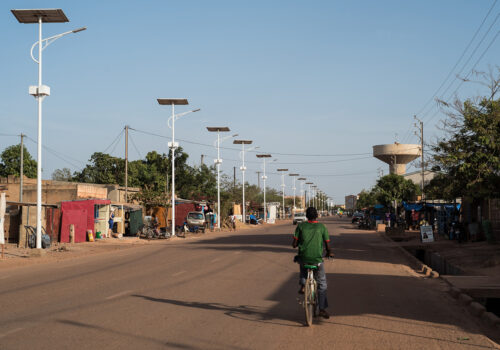
Africa enters 2026 facing a debt crisis. The answer lies in regional solutions.

By Juliet Lancey

The solution to debt crises in African nations lies in global and regional cooperation.

Africa
Financial Regulation

Econographics

Jan 22, 2026

When will Wall Street’s tolerance for uncertainty run out?

By Jessie Yin, Josh Lipsky

In a decade of geoeconomic shocks, few events have truly shaken investor confidence. But Wall Street may be too complacent to political volatility.

Economy & Business
Macroeconomics

Econographics

Jan 22, 2026

As markets turn volatile, leverage is back in the spotlight

By Hung Tran

Market turmoil has returned, highlighting how rising leverage plays a part in making the global financial system more fragile and vulnerable to shocks.

Economy & Business
Financial Regulation

Econographics

Jan 15, 2026

What to watch as China prepares its digital yuan for prime time

By Alisha Chhangani

The changes China is implementing around the e-CNY signal a more mature phase for the digital yuan—and an overall shift toward a much broader geopolitical ambition.

China
Digital Currencies

EconoGraphics

Jan 12, 2026

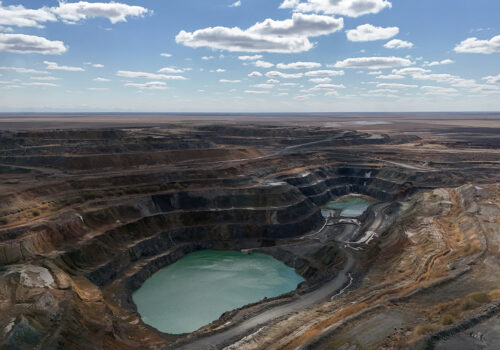
Rare earth mining could solve, not worsen, Central Asia’s water troubles

By Andrew D’Anieri

States in the region can capture a net “water dividend” by reinvesting mining revenues in water-saving infrastructure and technologies.

Central Asia
Critical Minerals

Econographics

Nov 25, 2025

Why the Millennium Challenge Corporation is vital to the future of US competitiveness

By Sohan Dasgupta

The United States is leveraging its unmatched economic power to reshape global partnerships, secure critical resources, and counter adversaries. Through a retooled Millennium Challenge Corporation, Washington is forging strategic alliances, strengthening supply chains, and opening billion-person markets for American companies.

Economy & Business
United States and Canada

Econographics

Nov 25, 2025

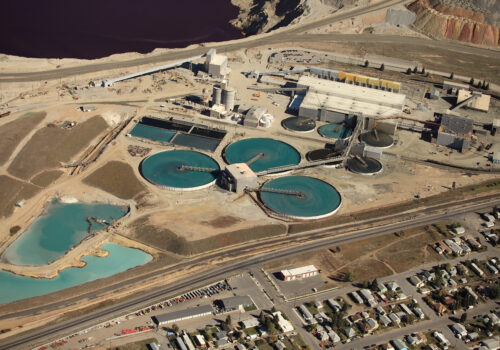
On critical minerals, the US needs more than just supply. It needs refining power.

By Bart Piasecki

Expanding global processing capacity remains a crucial—and currently missing—step in strengthening US supply-chain control and export competitiveness.

Critical Minerals
Economy & Business

Econographics

Nov 13, 2025

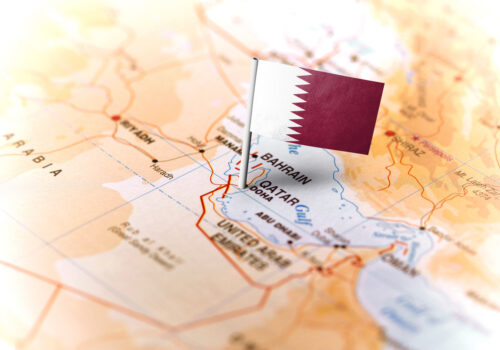
How the US can balance Qatar’s mediation role with the fight against terrorist financing

By Lesley Chavkin

Qatar has achieved an outsized role on the global stage, but the spotlight has come with persistent scrutiny of the tiny Gulf country’s efforts to counter the financing of terrorism.

Economy & Business
Financial Crimes & Illicit Trade

Econographics

Nov 12, 2025

Yes, tech stocks have taken a hit. But the real danger lies elsewhere.

By Hung Tran

Tech stocks’ sharp selloff has grabbed headlines, but the real risk may be in tightening US dollar funding. As the Fed drains liquidity and repo rates surge above policy benchmarks, hedge funds and foreign banks—holding trillions in dollar assets—face rising pressure. The danger isn’t just market volatility, but whether global finance can withstand a squeeze in the world’s core funding system.

Economy & Business