Featured analysis

Latest analysis

Econographics

Jan 19, 2024

The IMF’s perspective on CBDCs

By Tobias Adrian

Tobias Adrian outlines the IMF’s view on CBDCs’ potential for payment systems, financial inclusion, and cross-border payments, emphasizing innovation and collaboration for effective implementation.

Digital Currencies
Digital Policy
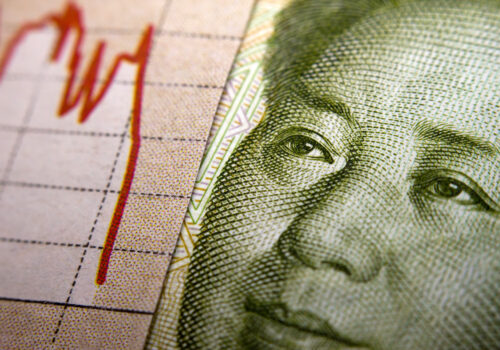
China, In the center of the capital in a new commercial building construction

Econographics

Jan 10, 2024

China’s local government debts are coming due

By Jeremy Mark

China’s economic slowdown brings local government debts into sharp focus, threatening infrastructure and social services.

China
Economy & Business
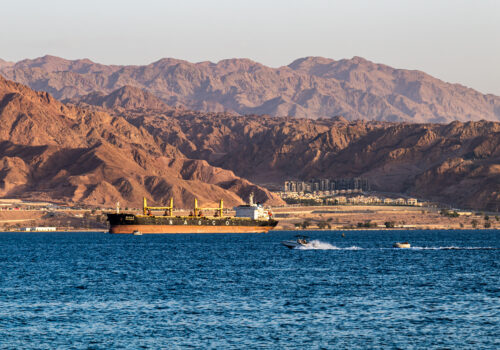
The view of boats on the red Sea.

Econographics

Jan 8, 2024

The long shadow of the Red Sea shipping disruption

By Alex Mills

Recent attacks on shipping moving through the red sea have exposed broader risks around international maritime commerce. Policy makers must use this wake-up call to build a more resilient international shipping ecosystem.

East Africa
Economy & Business

Econographics

Jan 3, 2024

Five under-the-radar economic trends that could define 2024

By Josh Lipsky, Sophia Busch

We picked five under-the-radar trends that will matter for the global economy in 2024. Each shows the potential weak spots in the global economy alongside the forces that could stabilize growth.

China
Economy & Business
Building with EU flags

Econographics

Dec 19, 2023

Three next steps for the EU’s approach to economic security

By Elmar Hellendoorn

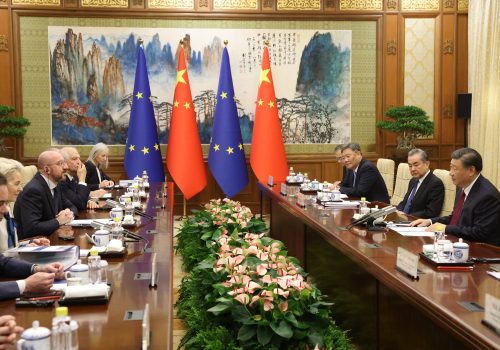
The EU’s Strategy on Economic Security, published this summer, was the first official effort to present a more coherent view on the European policy approach at the intersection of economics and geopolitics. In the end, however, the EU’s approach to economic security can only be successful if it is tied to Europe’s long-term political objectives.

European Union
Eurozone
Ships on Red Sea

Econographics

Dec 18, 2023

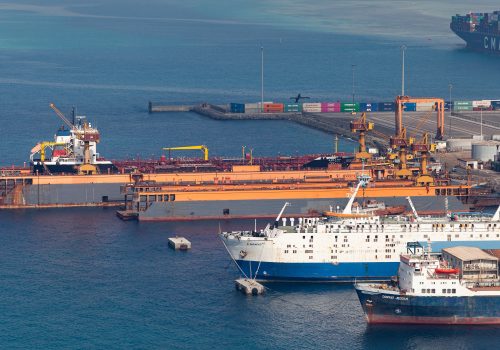
What attacks in the Red Sea could mean for the global economy

By Hung Tran

Recent missile attacks on ships in the Red Sea by Iran-backed Houthi rebels have escalated regional tensions and disrupted global trade. Large shipping companies are now avoiding the route, causing significant costs and delays, which is impacting the the already fragile economy.

Economy & Business
Macroeconomics

Econographics

Dec 11, 2023

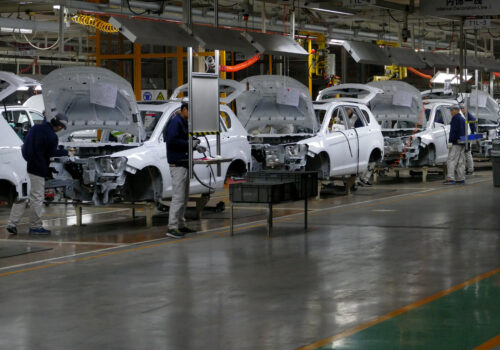
China’s manufacturing overcapacity threatens global green goods trade

By Niels Graham

Chinese lending is exacerbating a growing glut in its green manufacturing sector. Beijing is increasingly looking abroad to absorb excess capacity. This may have devastating effects for the global trading system as economies move to protect their own domestic industry.

China
Economy & Business

Econographics

Dec 7, 2023

Germany’s debt brake isn’t working

By Hung Tran

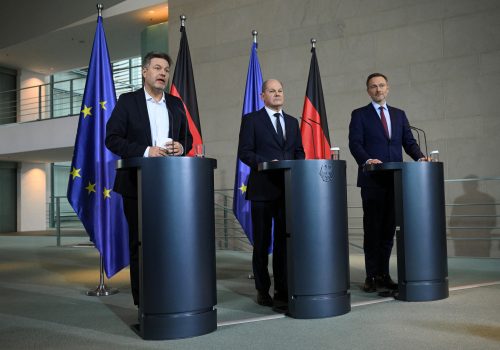
Germany’s coalition government was dealt a fiscal crisis when the country’s Constitutional Court ruled that repurposing €60 billion of unspent money from the pandemic emergency support facility to the Climate and Transformation Fund was unconstitutional.

Economy & Business
Financial Regulation

Econographics

Dec 1, 2023

Financialization has increased economic fragility

By Hung Tran

Since the 1980s, financial activities and assets have played an increasingly dominant role in the global economy. At the same time, underlying economic activity as measured by global GDP has been growing more slowly. The result has been an ever-larger gap between the volume and value of financial activity relative to the real economy. And […]

Financial Regulation
Macroeconomics

Econographics

Nov 30, 2023

Geoeconomic fragmentation is threatening the green energy transition

By Amin Mohseni-Cheraghlou

The energy transition depends on trade—and on China. Geoeconomic fragmentation could impact global climate targets.

Africa
China

Content

EconoGraphics

Oct 13, 2015

Breaking Down Walls: How Will American Agricultural Producers Fare Under TPP?

By Global Business and Economics

On October 5th, Trans-Pacific Partnership (TPP) trade negotiations were concluded in Atlanta. The deal faced criticism from some on a lack of transparency, but details are now beginning to emerge on the settlement. Even with TPP's lack of transparency, there were clear tension points between negotiators on topics such as biologics, dairy products, and rules of origin for the automaking industry. This week's Econographic looks specifically at one of the potential winners of the trade deal, the American agricultural sector.

Economy & Business
Indo-Pacific

EconoGraphics

Oct 6, 2015

How Can We Bridge Automaking Standards for Growth?

By Global Business and Economics

The recent Volkswagen scandal has refocused consumers on automaking standards and CO2 emissions. These differences have also been one of the sticking points in TTIP negotiations. Both the American and European automaking sectors have rigorous standards, and as might be expected hold similar regulations.

Economy & Business
European Union

EconoGraphics

Sep 29, 2015

How Does The Most Recent Greek Bailout Deal Compare With The Past Two Agreements?

By Global Business and Economics

The latest Memorandum of Understanding between the EU Institutions and the Greek Government passed in August, leaves Tsipras only one additional month to implement eighty-five initiatives. These reforms cover a diverse range of topics, from consolidating taxation policies to health and education reform.

Economy & Business
European Union

EconoGraphics

Sep 22, 2015

Migrant Flows and the Future of Europe

By Global Business and Economics

As Europe confronts the migrant crisis, much of the current coverage remains fixed on short run trends, but in order to have a comprehensive perspective it is necessary to project these trends into the future. In spite of commonly held concerns of migrants' effect on European identity, many of these nations' birthrates and outflows of migrants will actually be higher than their intake of migrants. Negative flows of migrants could further weaken pension plans, as aging European populations struggle to balance social welfare models with demographic realities.

Afghanistan
Economy & Business

EconoGraphics

Sep 15, 2015

Has the Renminbi Arrived as an International Currency?

By Global Business and Economics

As China slowly transitions from an investment and export based economy to a consumer based economy, the Chinese must also liberalize both their monetary affairs and the management of their currency. By increasing the wealth of Chinese consumers via their currency's value, domestic demand will supplant the role of exports. For this process to be completed, the Chinese currency, the Renminbi, must assume its place in the package of globally dominant currencies.

China
Economy & Business

EconoGraphics

Jul 28, 2015

Where Are US Sanctions Imposed?

By Global Business and Economics

On July 14, the United States, along with the P5+1, struck a deal with Iran to ease the heavy financial and banking sanctions that starved the country's economy. Over the next decade, financial and trade sanctions will gradually be lifted, giving Iran the ability to export its plentiful oil and gas reserves and to purchase goods from abroad.

Economy & Business
Financial Sanctions and Economic Coercion

EconoGraphics

Jul 22, 2015

Has Greece Been Effective at Downsizing Its Public Sector?

By Global Business and Economics

Greece and its EU counterparts made progress last week on negotiations, but some policy makers question whether Greece will truly adopt the measures necessary to recover economic stability.

Economy & Business
Fiscal and Structural Reform

EconoGraphics

Jul 14, 2015

Should Greece’s Request for Additional Debt Relief Be Dismissed?

By Global Business and Economics

Unsatisfied with the proposed austerity measures, Greece has been pushing for a comprehensive debt relief package from its creditors. In public, Greece has appealed to the 1953 London Conference when Western Germany was forgiven over half of its debt. One of Germany's creditors then: Greece.

Economy & Business
Eurozone

EconoGraphics

Jul 7, 2015

How Does Greece’s Public Debt Compare to Puerto Rico’s?

By Global Business and Economics

As Greece reaches crisis over its debts to Europe, Puerto Rico's public debt has reached an impressive $72 billion, nearly 70% of its economic output. Meanwhile, Greece has slashed the growth of its debt since 2012.

Economy & Business
Greece

EconoGraphics

Jun 30, 2015

Is There a Precedent for Greece’s Bank Holiday?

By Global Business and Economics

The Greek Government officials called for a bank holiday on Sunday which went into full effect Monday, June 29th. Although the country plans to open its banks' doors next Monday, its financial duress is far from over.

Economy & Business
Greece