Content

New Atlanticist

Jun 29, 2020

A divided Taliban could unleash a new proxy war in Afghanistan

By Jared Schwartz and Yelena Biberman

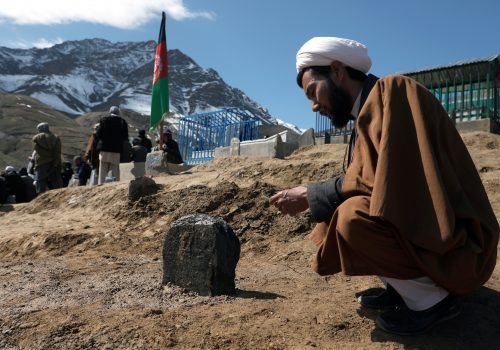
The shift in the balance of power within the Taliban has the potential to upend Afghan security, India-Pakistan relations, and the US military withdrawal from Afghanistan.

Afghanistan
Conflict

The future is here

Jun 29, 2020

Grim virus milestones marked by India, Brazil, and US; Amazon workers stay home

By Atlantic Council

The number of coronavirus cases topped 10 million and deaths surpassed 500,000 worldwide, with the grim milestones marked by an increase in cases in India, Brazil, and the United States. Amazon workers in Germany stayed off work on safety concerns.

Coronavirus

New Atlanticist

Jun 29, 2020

NAFTA’s successor is about to take effect. Here’s why it will be good for North America—and bad for the WTO

By Hung Tran

While the USMCA preserves free-trade flows among the three member countries, its use by the United States as a template for future trade negotiations, starting with the EU and the United Kingdom, would have a far-reaching effect on future developments of world trade.

Mexico
Trade and tariffs

UkraineAlert

Jun 27, 2020

Russia is quietly occupying Ukraine’s information space

By Taras Kuzio

Viktor Medvedchuk is Ukraine's leading pro-Kremlin politician and a personal friend of Vladimir Putin. Medvedchuk's expanding media empire is sparking concerns over Russian influence in Ukraine's information space.

Conflict
Disinformation

AfricaSource

Jun 26, 2020

The Sudan Partnership Conference: A turning point for Sudan?

By Cameron Hudson

The world came to Berlin yesterday (at least virtually) as part of a United Nations, European Union, and German government-sponsored “Partners Forum for Sudan.” By all accounts, it was a triumph, and potentially a turning point, for the fragile transitional civilian government of Prime Minister Abdalla Hamdok, pulling in an announced $1.8 billion in assistance to Sudan.

Africa
Democratic Transitions

New Atlanticist

Jun 26, 2020

What’s behind Russia’s decision to ditch its ban on Telegram?

By Justin Sherman

For years, the Kremlin was involved in cat-and-mouse efforts to block the use of Telegram, the encrypted messaging app, within Russia. Concerns about Telegram stem from the Kremlin’s concerns about the internet in general. The app enables the free flow of information, and especially when that information is encrypted, as Telegram’s is, the Kremlin sees the state’s narratives, its law enforcement surveillance capabilities, and Russia’s culture and public sphere as under threat. On June 18, however, Russia’s internet and media regulator Roskomnadzor said that it’s ending requirements to restrict Telegram access.

Cybersecurity
Internet

New Atlanticist

Jun 26, 2020

Germany may not like the American messenger. But it should heed his message.

By Jeffrey Lightfoot

The US president and the German government have given up on one another and withdrawn to their own camps, ignoring the growing structural issues in their bilateral ties that promise to linger no matter who wins the US presidential elections this fall.

Defense Policy
Germany

The future is here

Jun 26, 2020

Texas rows back on reopening; cash is king as business mulls future rebound

By Atlantic Council

Younger people make up a bigger proportion on coronavirus sufferers in the United States, where Texas rowed back on reopening the state as cases increased. Cash is king as companies prepare for what might come next for the economy, while bank payouts came into focus by regulators.

Coronavirus

IranSource

Jun 26, 2020

Just how happy are Iranians with their lives?

By Nadereh Chamlou

Iran ranks 118 out of 153 countries on the UN’s 2020 World Happiness Index (WHI), slightly above the lowest quintile—the least happy.

Iran
Middle East

New Atlanticist

Jun 25, 2020

What’s at stake in Trump’s plans to withdraw troops from Germany

By Katherine Golden

On June 15, US President Donald J. Trump confirmed press reports that he is planning to pull 9,500 US troops out of Germany, leaving 25,000 in the country. Here’s how the Atlantic Council’s experts are assessing the decision and its significance.

Defense Policy
Germany