Through our Rafik Hariri Center for the Middle East and Scowcroft Middle East Security Initiative, the Atlantic Council works with allies and partners in Europe and the wider Middle East to protect US interests, build peace and security, and unlock the human potential of the region.
Meet our blogs

All commentary & analysis

MENASource

Jan 26, 2016

The YPG-PKK connection

By Aaron Stein and Michelle Foley

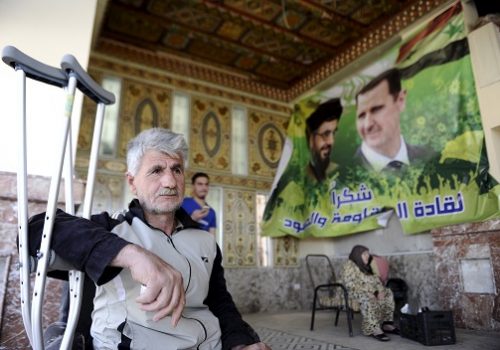
In mid-July 2012, the Syrian government withdrew its forces from a large amount of territory along the Turkish border. This move allowed the Democratic Union Party (PYD), a Kurdish nationalist group linked to the Kurdistan Workers’ Party (PKK)—a US- and Turkish-designated terrorist group—to take administrative and military control over the self-declared cantons of Efrin, Kobani […]

Syria
Turkey

New Atlanticist

Jan 21, 2016

How Do You Disrupt ISIS’ Social Media Strategy and Safeguard Freedoms?

By Ashish Kumar Sen

NSA Director Michael S. Rogers says online censorship goes to the ‘heart of the whole American construct’ The Obama administration is “trying to come to grips with” how to prevent terrorists from using technology as a recruiting tool, while at the same time safeguarding individual freedoms, Adm. Michael S. Rogers, the Commander of US Cyber […]

Cybersecurity
Security & Defense

New Atlanticist

Jan 21, 2016

Will Iran receive the sanctions relief it expects?

By Matthew Kroenig

Last week marked “implementation day” of the Joint Comprehensive Plan of Action, better known as the Iran nuclear deal. With the deal formally in effect, Iran will begin receiving sanctions relief, leading many to conclude, as NPR recently reported, that “European and Asian companies are expected to flock to Iran now that the UN sanctions […]

Iran
Nuclear Nonproliferation

New Atlanticist

Jan 14, 2016

Indonesia an obvious target as ISIS seeks to expand footprint

By John T. Watts

The terrorist attacks in Indonesia’s capital, Jakarta, on January 14 are concerning, but hardly surprising. The Islamic State of Iraq and al-Sham (ISIS) has claimed responsibility for the attacks, a first for the group inside the world’s largest Muslim country. It is clear that ISIS is seeking to increase its global footprint and searching for […]

Indo-Pacific

New Atlanticist

Jan 4, 2016

The Saudi/Iran Break: Politics of Fear in the Gulf

By Richard LeBaron

Saudi Arabia’s decision to break diplomatic ties with Iran represents another chapter in the politics of fear that have dominated Saudi military and diplomatic moves since the ascension of King Salman just shy of a year ago. The fear finds its main source in the Saudi conviction that Iran is intent on displacing it as […]

International Organizations
Iran

MENASource

Dec 18, 2015

The US-Iraq Disconnect over Fighting ISIS

By Nussaibah Younis

Time and time again, the US administration has said that the Islamic State (ISIS or ISIL) cannot be defeated in Iraq without local Sunnis spearheading the fight.

Iraq

Event Recap

Dec 10, 2015

Implementing Camp David: US-GCC Security Cooperation Since the Summit

By Brent Scowcroft Center

President Obama convened leaders from the Gulf Cooperation Council (GCC) states in May 2015 to discuss reassurance and security cooperation in light of the P5+1 nuclear agreement with Iran. The United States and Gulf Arab monarchies agreed to improve future cooperation on ballistic missile defense, counter-proliferation, counterterrorist financing, cybersecurity, and a range of other issues. […]

New Atlanticist

Dec 8, 2015

Is the United States a Less Reliable Ally?

By Ashish Kumar Sen

Some Arab Gulf states seen looking at Russia, China as ‘alternatives’ The United States’ friends and allies in the Middle East see Washington as a less reliable partner and are “talking fairly openly about alternatives” such as Russia and China, retired Gen. James L. Jones, Jr., a former US National Security Advisor, said on Dec. […]

International Organizations
Iran

MENASource

Nov 19, 2015

Tunisia’s Ruling Party Crisis

By Katherine Wolff and Elissa Miller

Nidaa Tounes may have to answer to a jaded constituency in the elections for failing its voters. While the current crisis is unlikely to trigger government collapse, it hampers the party’s ability to serve as a unified countervailing force to Ennahda and underscores the fragile nature of Tunisia’s balance of political power.

Democratic Transitions
Middle East

MENASource

Nov 18, 2015

Red-Teaming ISIS

By Bilal Y. Saab

If the Islamic State’s (ISIS or ISIL) intent behind the deadly attacks in France was to cause death, pain, and panic among Western societies (what transnational jihadists call “the far enemy”) then mission accomplished. But more importantly, what is ISIS’s ultimate purpose for this act of mass murder in Paris and possibly others in the […]