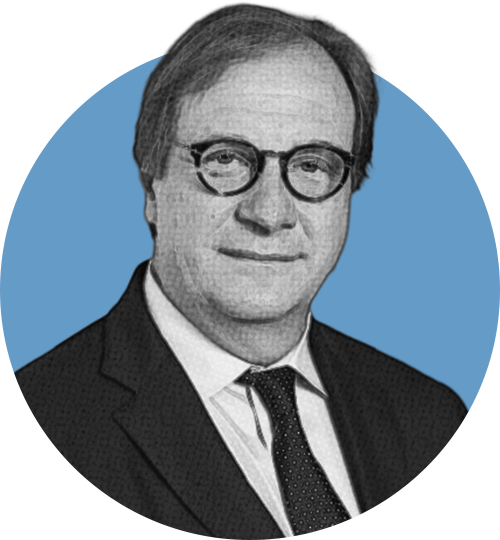


Few matters are universal, but this is one of them: When a significant mentor fundamentally disapproves of your direction, it is time for reflection. That is more so if you are US Treasury Secretary Scott Bessent, if that mentor is legendary investor Stanley Druckenmiller, and if that public rebuke revolves around US solvency and the well-being of 320 million Americans.
Druckenmiller’s opinion piece in the Wall Street Journal, under the headline “Let the Bond Market Speak,” has been roiling fixed-income markets ever since it was published on Monday. Lay aside all the esoteric technical arguments, and Druckenmiller’s point is clear: The man who taught Bessent that markets ultimately defeat governments fears his protégé is wagering US credibility on the proposition that the opposite can be true.
The matter in question is Bessent’s move on August 19, in response to the cost of US long-term borrowing reaching a twenty-year high, to double the size of bond buybacks to four billion dollars per operation. Druckenmiller points out that Bessent prompted yields to rally within minutes, but by afternoon “the market’s verdict was swift and correct,” and US government debt continued to trade down. When Bessent’s action failed to move the market in the intended way, Treasury officials said they could use the Treasury General Account to intervene in an even more powerful manner.
“The long-term Treasury yield is the most important price in the world,” dictating trading in a $31.5 trillion global market, Druckenmiller wrote. “It is also the only fiscal disciplinarian the U.S. has left. Neither party will run on entitlement reform. Both have spent the past decade expanding commitments while ignoring arithmetic.” Democracies, he argued, only repair their finances “when the cost of inaction becomes visible and immediate.”
Put bluntly, the only way we have to scream at political leaders about the generational threat of unsustainable deficits and profligate spending is through the bond markets, and as Druckenmiller sees, it the Trump administration is trying to hit mute.
“The bond market wasn’t being a vigilante, as some would argue,” Druckenmiller wrote. “It was being a pushover that had finally begun to clear its throat, and Treasury moved to quiet even that.”
Druckenmiller’s public rebuke is noteworthy given that he helped shape Bessent’s career—and Bessent has given his mentor high praise in the past. “In macro, there’s Stan and then there’s everybody else,” Bessent told the Financial Times in a March 7, 2025, profile under the headline: “‘Druckonomics’: Wall St veteran poised to shape the new US economic order.”
Druckenmiller brought Bessent into Soros Fund Management in the early 1990s, and they worked together on the celebrated 1992 bet against the British pound, earning their hedge fund one billion dollars and forcing sterling’s withdrawal from the European Exchange Rate Mechanism. When Bessent left to start his own fund, he continued to consult Druckenmiller closely, even on a daily basis according to some reports.
Although his mentees include Bessent and Federal Reserve Chair Kevin Warsh, Druckenmiller is trying from the outside to right the federal ship before the costs of doing so escalate further.
CNBC’s markets guru Jim Cramer said yesterday that Bessent faces a choice between the long-term view of his mentor Druckenmiller and the short-term demands of his boss, US President Donald Trump.
“I think there’s a sub-rosa theme here,” Cramer said, “which is that Bessent, remember who you are … I know this isn’t you. I know you learned that we don’t do this, that we rational people don’t do this.”
The larger issue is neither the size of Bessent’s purchases nor the mechanics of how they influence the bond market. Rather, it’s whether the Trump administration and Congress heed the market’s message regarding the need for greater fiscal discipline or instead leave the far greater cost to future generations.
Some of the power of the Druckenmiller–Bessent dispute was lost yesterday when the investor conceded that he had used artificial intelligence (AI) in preparing his opinion piece. The Wall Street Journal opinion editor Paul Gigot defended Druckenmiller, noting that “AI is a fact of modern life” and “nobody can doubt that his op-ed is his genuine opinion.”
The arguments over the appropriate use of AI in preparing publications, and the requisite transparency about it, will continue, and they are important. The more immediate issue is whether Bessent’s effort to curtail Treasury sell-offs through government intervention will calm markets or instead, as Druckenmiller argues, only prompt investors to test yields further and thus prompt even larger interventions.
“You can’t buy your way out of a solvency conversation with liquidity tools,” Druckenmiller wrote. “You can only postpone the conversation and raise the eventual price.” Elsewhere, he argued, “Debt management that even appears to follow the political calendar spends the one asset that took two centuries to accumulate: the credibility of the Treasury market.”
The markets will ultimately determine whether Druckenmiller or the Trump administration is right. The answer could define the future of US global financial leadership and credibility.