
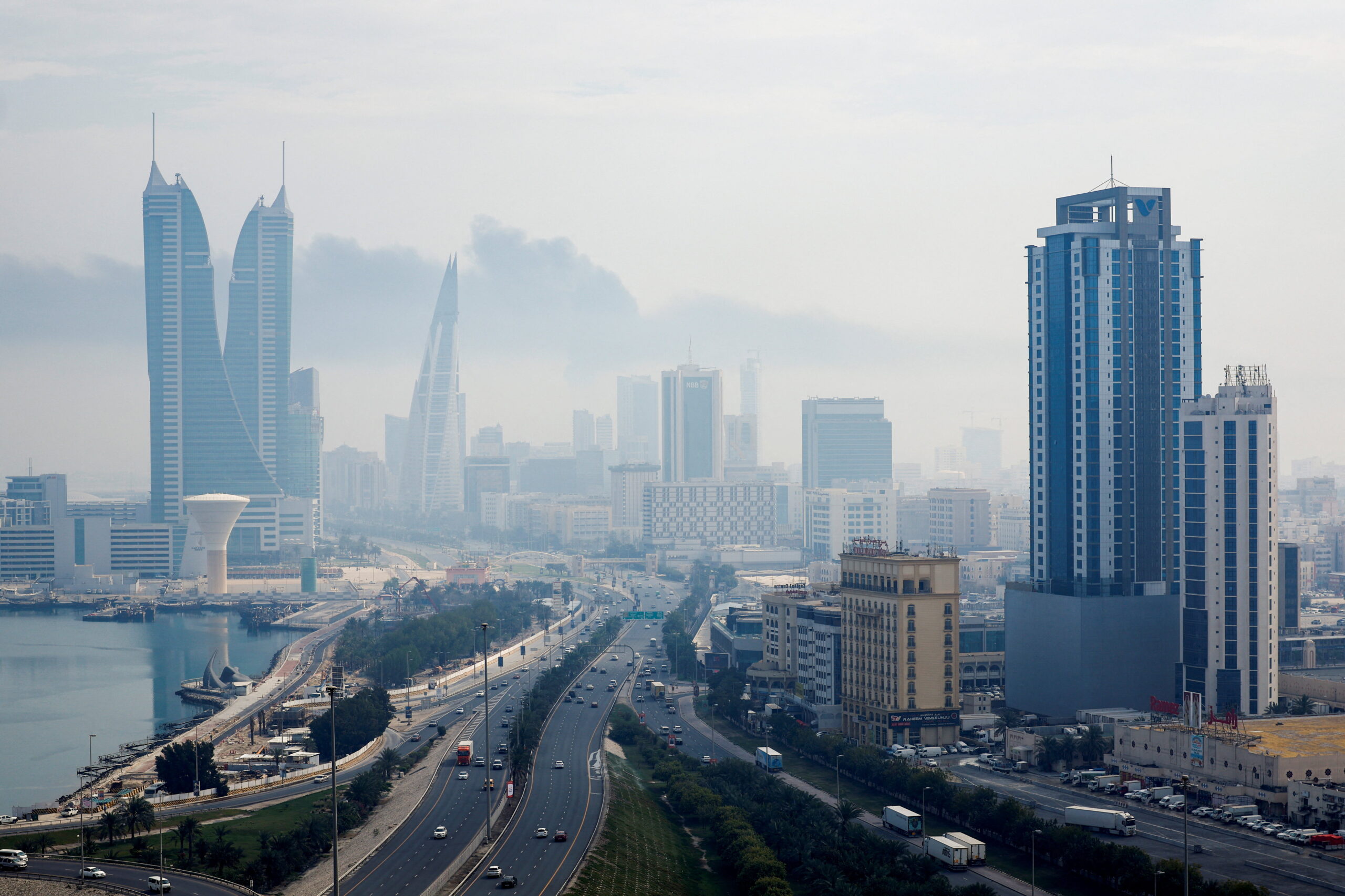
MANAMA—Last week, President Donald Trump asserted that the war with Iran “militarily is effectively over.” As it happens, I was in Bahrain when this statement was made.* In the days that followed, Iran launched two drone attacks against that country, reportedly targeting a US military base.
Earlier this week, US Central Command announced that a third aircraft carrier strike force is now in its area of responsibility, a naval force posture that the region has not witnessed since President George W. Bush launched the US invasion of Iraq. It remains unclear whether this third carrier will reinforce the existing deployment or replace another carrier. Strategists in the region understand, perhaps better than most, that such deployments can acquire a momentum of their own. Thus a surge of forces, even if initially intended to project strength and encourage diplomacy, can end up instigating the very war that it was meant to deter. Indeed, that dynamic contributed to the US decisions to go to war both in 2003 and earlier this year.
So notwithstanding Trump’s claim, and contrary to a core political message from the US midterms, the proverbial clouds of war continue to gather. While most in the region would prefer the status quo and anticipate an environment without any “decisive resolution,” they nevertheless continue preparations for a return to major combat operations, either by design or through a miscalculation by Washington or Tehran that quickly escalates. And yet, life in Bahrain, as in many neighboring countries, goes on with a striking degree of normality that belies the continued tensions in the region.
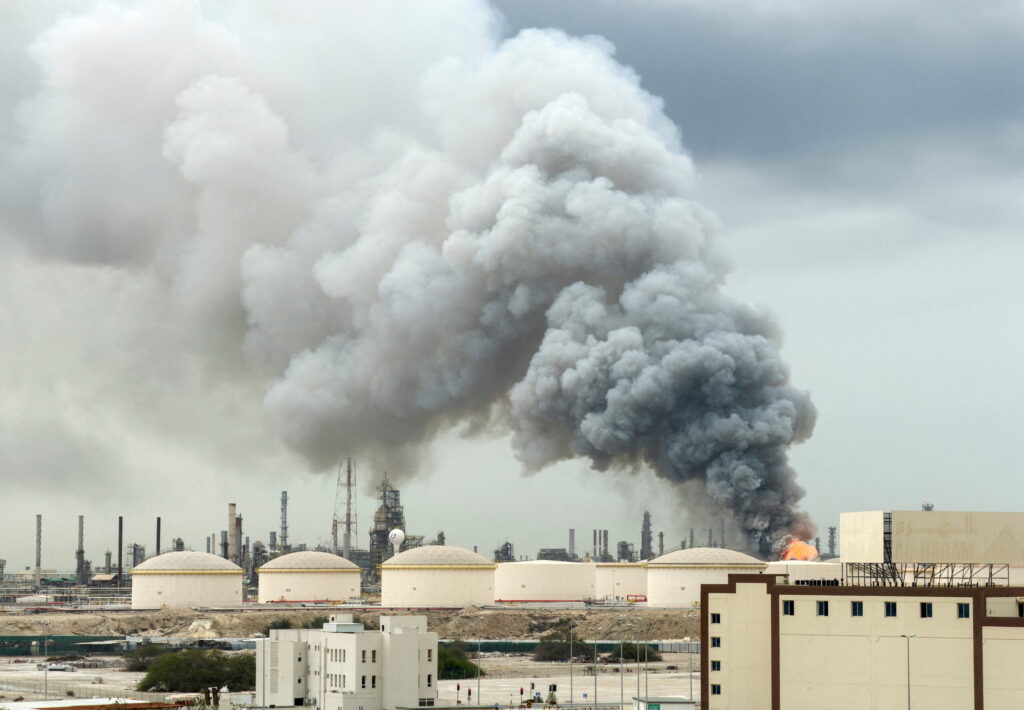
While the peoples across the Gulf share many commonalities, their governments’ strategies are diverging. It no longer makes sense, if it ever truly did, to talk about the Gulf as a singular polity with a collective viewpoint, and this war has sharpened the differences among the individual governments. Moreover, these governments are entering an “age of agency,” in which the influence of outside powers declines in relative terms and each government feels more empowered to act to protect its own interests. These governments will do so unilaterally if they possess the capacity to do so. More often, however, countries will act through the region’s ever-shifting multilateral and bilateral relationships.
Accommodation to power has been a traditional instinct in this region, and thus it is predictable that some governments, most notably in Oman, have reacted to Iranian attacks by seeking to legitimize rather than reject Iranian aggression. This expectation of accommodation also explains the recent report that the Houthis demanded $51 billion from Saudi Arabia to halt their attacks on the kingdom, which Riyadh quickly rejected.
Another important factor is the perception in many capitals that the US has become an increasingly unpredictable, often undependable, and sometimes disruptive power. Most leaders and policymakers in the Gulf would prefer to deal with a US that is as reliable in protecting the region as it was in previous generations. But after finding the US too absent in providing sufficient security against Iran, some of these countries have concluded that they must hedge by exploring different partnerships. So Kuwait, which was just attacked yet again, feels forced to prepare for a future in which it expects less from Washington. And Saudi Arabia, having been attacked from its east, north and south, signed the Mecca Joint Defense Agreement with Turkey and Pakistan in August and has sought to involve Syrian forces in operations against the Houthis.
At the same time, Qatar, after a phase of “strategic shock” from being attacked by Iran and suffering the sharpest economic contraction in the region, has doubled down on its high-profile role as a mediator, making itself indispensable to the Trump administration’s diplomacy with Hamas and Iran. Of course, this role requires Qatar to maintain a degree of trust with those malign actors, which predictably attracts vitriol from those who would instead prefer to confront them.
Conversely, the United Arab Emirates (UAE), with its significant resources, has concluded that it will reinforce relations with those who provided material assistance in its moment of need. That far-too-short list explicitly includes both the United States and Israel.
With relatively limited energy production, high debt, and a small population, Bahrain does not possess anything close to the riches of its neighbors in Qatar, Saudi Arabia, or the UAE. Given this and the other immutable constraints of its geography and demographics, it is easy to imagine, for example, Bahrain choosing to acquiesce to Iranian power. Bahrain is, after all, the only Gulf state with a Shia majority. Or it might have allowed itself to be perceived solely as a Saudi protectorate, given its economic dependence and strong ties with the kingdom.
Instead, Bahrain moved closer to the United States. It has hosted the US Naval Forces Central Command and the US Fifth Fleet for decades. Under President George H. W. Bush, the United States and Bahrain signed a Defense Cooperation Agreement in 1991, formalizing this relationship. Under President George W. Bush, Bahrain became a major non-NATO ally in 2002, and Washington and Manama signed a free trade agreement in 2004. In 2020, at the end of Trump’s first term, Bahrain joined the Abraham Accords and uniquely did not request any special favors from Washington in return. And then under President Joe Biden the US and Bahrain signed a Comprehensive Security Integration and Prosperity Agreement in 2023.
Meanwhile, Bahrain is advancing regional integration in new ways. Earlier this month, for example, Bahrain hosted the signing of an agreement to advance plans for a railway network across the Gulf. Leaders here suggest that countries not yet able to join the Abraham Accords adopt the principles outlined in the accompanying declaration.
Bahrain has not sought out Russia or China as possible alternatives to the US, nor has it developed private understandings with hostile nonstate actors such as Hamas or the Houthis. Indeed, while the UAE (in 2022) and Saudi Arabia (in 2023) sent ambassadors to Tehran in what turned out to be a fruitless effort to improve relations, Bahrain refused to do so. At the same time, it has been able to maintain strong relations—and essential financial lifelines—with both Riyadh and Abu Dhabi, notwithstanding the continuing challenges in the Saudi-Emirati relationship.
Given all of this, the importance of the US-Bahrain relationship is well understood by US policymakers who have spent time working on Middle East security. But given Bahrain’s generally low profile compared to its neighbors, the relationship’s importance is less recognized outside that community—while others see Bahrain purely through the lens of it being an undemocratic monarchy with a decidedly mixed human rights record. As a result, Bahrain is often overlooked or taken for granted in Washington. When members of Congress visit the region, many of them don’t make time for a stop in Manama. The Trump administration didn’t send one of its ubiquitous regional envoys or anyone of cabinet rank to the Manama Dialogue earlier this month, an absence that was noticed by many in attendance.
Note: The Bahraini Embassy to the United States is a donor to the Atlantic Council’s Middle East Programs but did not fund this trip to the Middle East.