Featured analysis

Latest analysis

EconoGraphics

Apr 14, 2015

Who is Investing Abroad?

By <span class="gta-embed–tax–expert gta-post-embed–tax–expert" >Global Business & Economics</span>

While the US still leads the world in outflowing Foreign Direct Investment (FDI), the emerging markets are catching up quickly. Chinese outflowing FDI, in particular has grown tremendously: since 2005, it increased more than 30-fold in 8 years from $5 billion to $166 billion. While initial Chinese foreign investments focused on natural resource industries, over time the investments have spread to diverse industries like agriculture, manufacturing, and professional services. BRIC FDIs are emerging as key growth drivers for low income countries, improving their business environment, building infrastructure, creating jobs, and adding much-needed revenue to government coffers.

China Russia

EconoGraphics

Apr 7, 2015

Is Europe still vulnerable to a Greek default?

By <span class="gta-embed–tax–expert gta-post-embed–tax–expert" >Global Business & Economics Program</span>

Private banks throughout Europe have significantly reduced their exposure to Greek debt (bank, public, and non-bank private sector debt) over the last five years. After Greece came under market pressure and eventually obtained ECB and IMF financial assistance in 2010, most European banks started to rapidly reduce their exposure to Greece. For instance, between 2010 and 2014 French banks' holdings decreased from $63 billion to $2 billion.

Economy & Business Eurozone

EconoGraphics

Mar 31, 2015

The IMF’s Changing Role in Europe

By <span class="gta-embed–tax–expert gta-post-embed–tax–expert" >Global Business & Economics</span>

The International Monetary Fund's purpose and scope of work have changed since its founding after World War II. Whereas at first the Fund aimed to maintain monetary and exchange-rate stability among its members who were primarily advanced economies, today it faces its first credible challenge to its status as the world's lender of last resort.

Economy & Business Financial Regulation

EconoGraphics

Mar 24, 2015

How Much Does it Cost for Cubans to Access Information?

By <span class="gta-embed–tax–expert gta-post-embed–tax–expert" >Global Business & Economics</span>

When President Obama announced his landmark policy shift towards Cuba, easing the 54-year-old embargo, one of the first companies to announce they would begin operating in Cuba was Netflix. The online video company's decision was surprising, if only because Cuba's internet is one of the slowest in the world.

Americas Cuba

EconoGraphics

Mar 17, 2015

Who Will Finance Public Debt?

By <span class="gta-embed–tax–expert gta-post-embed–tax–expert" >Global Business & Economics Program</span>

Today, the cap on US government spending (or the "debt ceiling") is officially reinstated, and with it, the threat of another clash over the national debt. Policymakers will have a runway of just months before they must decide to lift the cap on borrowing or temporarily allow it to be raised

Brazil China

EconoGraphics

Mar 11, 2015

The Benefits of a Strong Dollar: Where Should You Go on Your Next Vacation?

By <span class="gta-embed–tax–expert gta-post-embed–tax–expert" >Global Business & Economics</span>

There’s never been a better time to be a tourist—as long as you’re paying in dollars. Major currencies worldwide have plunged in value, meaning each US dollar buys more euros and renminbi today than it did one year ago.

Americas Economy & Business

EconoGraphics

Mar 3, 2015

Who Will Collapse First?

By <span class="gta-embed–tax–expert gta-post-embed–tax–expert" >Global Business & Economics</span>

Both the Ukrainian and Russian economies are suffering from recent events. While weak domestic institutions and a fight with insurgents in the country's East plague Ukraine, sanctions and low prices for oil and gas are hurting the Russian economy.

Economy & Business Europe & Eurasia

EconoGraphics

Feb 24, 2015

Is the US Still Leading in Global Trade?

By <span class="gta-embed–tax–expert gta-post-embed–tax–expert" >Global Business & Economics Program</span>

In the last two decades, the Asia Pacific region has signed sixty-five free trade agreements. South America, Eurasia, and Europe combined have signed over one-hundred and fifty agreements. Over the same period, the US has signed twelve agreements.

Americas East Asia

EconoGraphics

Feb 17, 2015

EconoGraphics – EU Energy Dependency

By <span class="gta-embed–tax–expert gta-post-embed–tax–expert" >Global Business & Economics Program</span>

A great part of Europe is highly dependent on Russian energy, which helps to explain many of the concerns Europeans have over the developments in Ukraine.

Economy & Business Energy & Environment

EconoGraphics

Feb 10, 2015

Is Austerity to Blame for the Collapse of the Political center in the European Union?

By <span class="gta-embed–tax–expert gta-post-embed–tax–expert" >Global Business & Economics Program</span>

Radical political parties in the Eurozone—including Syriza in Greece, Podemos in Spain, and Sinn Féin in Ireland—are riding a wave of popularity. The continent’s debt crisis has pitted the creditor countries, most importantly Germany, against debtor countries like Greece. On an international level, the northern European creditors have managed to implement policies that are forcing […]

Economy & Business European Union

Content

Econographics

May 7, 2024

The Enrico Letta Report and the state of the EU’s Capital Market Union

By <span class="gta-embed--tax--expert gta-post-embed--tax--expert">Hung Tran</span>

The Letta report emphasizes transforming the EU's fragmented markets by prioritizing harmonization over new financial products, but achieving this requires a significant and sustained effort.

Economy & Business Europe & Eurasia
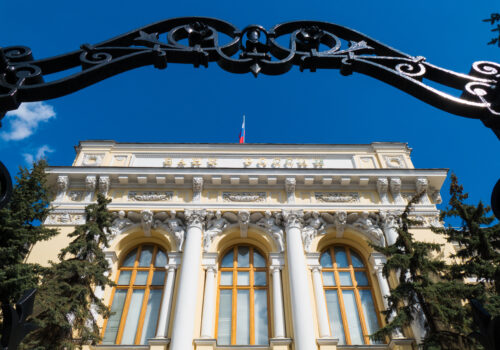
Central bank building with gate

Econographics

May 2, 2024

Understanding the plan to create a $50 billion Ukraine bond from Russia’s blocked assets

By <span class="gta-embed--tax--expert gta-post-embed--tax--expert">Charles Lichfield</span>, <span class="gta-embed--tax--expert gta-post-embed--tax--expert">Mrugank Bhusari</span>

The United States is pushing the G7 to consider a sovereign loan of $50 billion to Ukraine which would be repaid using the interest income on blocked Russian assets. Where does this $50 billion figure come from?

Financial Sanctions and Economic Coercion Russia

Econographics

May 1, 2024

How to improve the technical skill of the US national security workforce

By <span class="gta-embed--tax--expert gta-post-embed--tax--expert" >Lesley Chavkin, Eitan Danon, and Sigal Mandelker</span>

We cannot expect to compete on the world stage without equipping the US civil service with the skills and experience needed to understand and harness the technological trends that will define the future. But if we want our best and brightest—our most ambitious and innovative—women and men to pursue federal service, we have to do a better job of proactively making the case why.

Economy & Business United States and Canada

Econographics

Apr 30, 2024

The yen’s travails in an era of geopolitical rivalry

By <span class="gta-embed--tax--expert gta-post-embed--tax--expert">Hung Tran</span>

In an era marked by geopolitical tensions, the yen's depreciation underscores the broader economic fallout from a persistently strong dollar and rising US interest rates.

Economy & Business Indo-Pacific
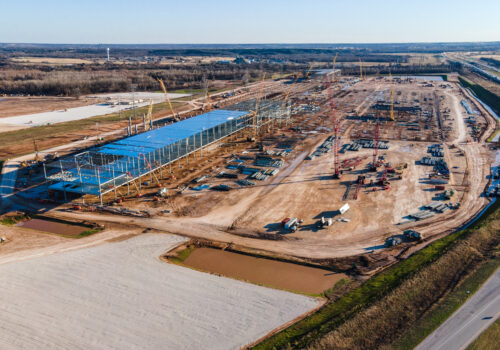
Factory under construction

Econographics

Apr 29, 2024

The IMF warms to industrial policy—but with caveats

By <span class="gta-embed--tax--expert gta-post-embed--tax--expert" >Walter Frick</span>

Industrial policy is making a comeback around the world. There’s no better sign of this than the new attention paid to subsidies by bastions of the Washington consensus like the International Monetary Fund (IMF), which has historically been very skeptical of them.

Fiscal and Structural Reform International Financial Institutions

Econographics

Apr 25, 2024

The basics of CBDC

By <span class="gta-embed--tax--expert gta-post-embed--tax--expert" >Alisha Chhangani and Leila Hamilton</span>

The race for the future of money is on, so here are the key items to catch you up on what a central bank digital currency is—and what it isn’t.

Digital Currencies Economy & Business
Brazil G20 bilboard

Econographics

Apr 12, 2024

Brazil’s approach to the G20: Leading by example

By <span class="gta-embed--tax--expert gta-post-embed--tax--expert">Hung Tran</span>

Brazil’s non-aligned, cooperative, and practical approach holds out the promise of a constructive outcome for this year’s G20 meetings—especially if progress is measured by concrete global initiatives.

Brazil G20

Econographics

Apr 9, 2024

Breaking down Janet Yellen’s comments on Chinese overcapacity

By <span class="gta-embed--tax--expert gta-post-embed--tax--expert">Hung Tran</span>

It is reasonable to criticize and complain to China, but policymakers should remember that an end to overcapacity would mean a major shift in China’s economic model—which is exceedingly unlikely.

China Economy & Business
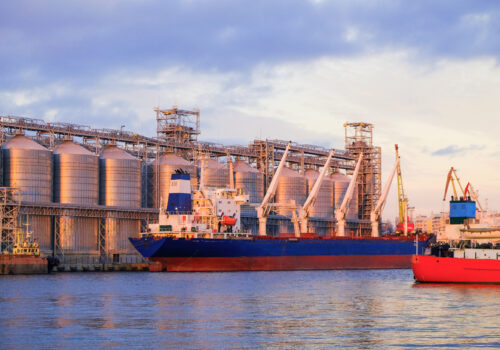
Bulk carrier ship in river port. Dry cargo grain elevator trade. Agrarian maritime facility. Cargo ship in the sea. Sunset view. factory on the water.

Econographics

Apr 5, 2024

Ukraine’s grain exports are crucial to Africa’s food security

By <span class="gta-embed--tax--expert gta-post-embed--tax--expert" >Yulia Bychkovska</span>

Moscow is trying to increase Africa’s dependence on its imports by blocking the exports of Ukrainian grain. By helping Ukraine sell its grain, the West can offer the African continent an alternative to Russia’s grain and decrease Russia’s profits.

Africa Financial Sanctions and Economic Coercion

Econographics

Mar 28, 2024

Understanding the debate over IMF quota reform

By <span class="gta-embed--tax--expert gta-post-embed--tax--expert">Hung Tran</span>

The politics and mathematics of reform are tougher than they appear. A simple reform matching quotas to global economic weight will not be welcomed by many countries.

Africa China