Featured analysis

Latest analysis

Econographics

Feb 17, 2022

The path forward on the US-China technology competition

By Clete R. Willems

2022 will be a key inflection point for trade and technology policy. Congress will decide how to proceed with China competitiveness legislation, the Administration will be finalizing the its Indo-Pacific trade agenda, and both will assess concerns about the size and activity of large US technology platforms. Democrats and Republicans should depoliticize these issues and consider their policy choices through the lens of strengthening US economic and technological competitiveness with China.

China
Defense Technologies

Econographics

Feb 9, 2022

US fiscal policy must be ready for the return of secular stagnation

By Jeff Goldstein

In the years ahead the United States will likely move past current inflation challenges and will once again be battling secular stagnation.

Economy & Business
Fiscal and Structural Reform

EconoGraphics

Feb 6, 2022

Global Sanctions Dashboard: Groundhog edition

By Julia Friedlander, Michael Albanese, Maia Nikoladze and Castellum.AI

Who sanctions Russia and why, Colombia’s narcotics trafficking, Iran’s balancing act, and Chinese military sanctions.

Belarus
China

Econographics

Feb 3, 2022

Foreign Direct Product Rule: Is Russia the next Huawei?

By Annie Froehlich

In response to Russia activity in Ukraine the US is considering deploying a Russia-focused Foreign Direct Product Rule (FDPR). If such a rule is implemented, it could cripple Russia’s ability to source critical items produced from US-origin technology.

Defense Technologies
Economy & Business

Econographics

Jan 31, 2022

Ukraine and Dollar Weaponization

By George Pearkes

America has responded to Russian aggression with an unconventional weapon: the dollar.

Economy & Business
Financial Sanctions and Economic Coercion

Econographics

Jan 31, 2022

Strengthening ties: China and the GCC

By Inbar Pe’er, Niels Graham and Mrugank Bhusari

As China continues expanding its trade ties across the world while the US focuses on its domestic economy, the US will find itself without a seat at the table when the norms for the multilateral trading system are set.

China
Economy & Business

Econographics

Jan 28, 2022

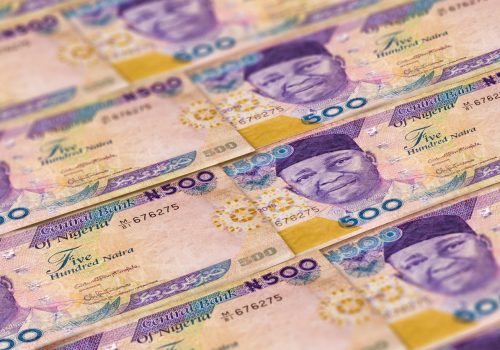
eNaira: Same Naira, more possibilities for innovation

By Naomi Aladekoba

Nigeria’s eNaira aims to improve the availability and access to central bank money, support a resilient payments system, encourage financial inclusion, and reduce the cost of processing cash.

Digital Currencies
Digital Policy

Econographics

Jan 13, 2022

Up, up, & away: Global stock growth in 2022

By Niels Graham

In 2022 stock markets generating impressive returns in despite uncertainty over the pandemic. Market gains will likely continue into 2022.

China
Economy & Business

Econographics

Jan 10, 2022

Is the US going to screen outbound investment?

By Sarah Bauerle Danzman

There is a growing consensus in Washington that the U.S. government needs more tools to prevent the People’s Republic of China (PRC) from using U.S. capital markets to amass military capabilities and control supply chain chokepoints.

China
Economy & Business

Econographics

Jan 5, 2022

How secure is Social Security?

By Amin Mohseni-Cheraghlou

The Social Security System is estimated to run out of reserves in just 12 years. However, reform is possible and through a combination of tax increases and retirement changes, Social Security can regain solvency

Economy & Business
Fiscal and Structural Reform

Content

EconoGraphics

Jul 6, 2017

The Big Chill(ing effect)

By Samuel Weitzman

In March 2014, the United States and the European Union (EU) issued the first in a series of sanctions against the Russian Federation for its destabilization of Ukraine and annexation of Crimea. These restrictions, which initially focused on senior Russian government officials and private individuals, have expanded to include large corporations, financial institutions, and even entire economic sectors. In retaliation, Russia has adopted counter-sanctions of its own.

Economy & Business
European Union

EconoGraphics

Jun 20, 2017

Balancing Act

By Samuel Weitzman

On June 12, in US President Donald J. Trump’s first full cabinet meeting, the new US Trade Representative Robert Lighthizer briefly encapsulated the young administration’s philosophy on international trade: “Deficits do matter, and ours are coming down.” This is not a particularly partisan view; Trump’s opponent in the 2016 presidential election, former Secretary of State Hillary Clinton, spoke out against the Trans-Pacific Partnership (TPP) during her campaign despite supporting it previously.

Economy & Business
Trade and tariffs

EconoGraphics

Jun 9, 2017

A Vital Foreign Policy Tool

By Ole Moehr

This is the first EconoGraphic as part of our recently launched Economic Sanctions Initiative. The initiative aims to promote dialogue between the public and the private sector to investigate how to improve the design and implementation process of economic sanctions.

Economy & Business
European Union

EconoGraphics

Apr 19, 2017

The European Stability Mechanism

By Lu Ding & Ole Moehr

The global economic and financial crisis, which originated in the United States in 2008, ultimately triggered a sovereign debt crisis in Europe in 2010. As a result of sky high debts, economies lacking in competitiveness, and over lenient banking regulations, the credit ratings of the Eurozone members Cyprus, Greece, Ireland, Portugal, and Spain plummeted. These countries began facing prohibitively high interest rates when they attempted to borrow from international credit markets.

Economy & Business
European Union

EconoGraphics

Mar 17, 2017

The United States Needs Europe And Vice Versa (Pt. 3)

By Lu Ding & Ole Moehr

This EconoGraphic is the final edition of a three-part series on why the United States and Europe need each other. The series highlights excerpts from the EuroGrowth Task Force’s inaugural report on European economic growth and why it matters for US prosperity.

Economy & Business
Europe & Eurasia

EconoGraphics

Mar 7, 2017

The United States Needs Europe And Vice Versa (Pt. 2)

By Lu Ding & Ole Moehr

US economic ties with the European Union (27) generate the largest global bilateral trade flows, worth an estimated $2.4 billion per day. The massive volume of US-EU (27) bilateral trade promotes prosperity on both sides of the Atlantic.

Economy & Business
Europe & Eurasia

EconoGraphics

Feb 22, 2017

The United States Needs Europe and Vice-Versa

By Lu Ding & Ole Moehr

The United States is the world’s largest recipient of global foreign direct investment (FDI). On a current-cost basis, the US FDI stock was more than three times larger than that of the second largest destination country in 2014, the most recent year from which statistics are available. Despite the current fragile global economy and great political uncertainty, foreign investment in the United States remains strong.

Economy & Business
European Union

EconoGraphics

Dec 12, 2016

Refer-Ending Renzi’s Government

By Filippos Letsas

On December 4, Italian voters rejected former Prime Minister Renzi’s constitutional reform referendum. The result of the referendum renewed concerns about the economic recovery in Italy, stability of the Euro, broader European economic integration, and rising populism across Europe. In the week following the referendum, global markets have focused their attention on the ailing Italian banking sector.

Economy & Business
Europe & Eurasia

EconoGraphics

Nov 29, 2016

The United States Needs China and Vice-Versa

By Filippos Letsas

Over the last decade, China’s large holdings of US debt have helped the Bank of China keep the value of the renminbi artificially low. This strengthened China’s competitive position in the global markets, allowing for cheaper Chinese exports and contributed significantly to China’s large trade surplus, which now accounts for about half of the total US trade deficit.

China
Economy & Business

EconoGraphics

Oct 25, 2016

CETA: Why “Comprehensive” Matters

By Filippos Letsas

On October 14th, the regional parliament of Wallonia, a French-speaking region of 3.6 million people in Belgium, voted to block the Comprehensive Economic and Trade Agreement (CETA), a proposed trade agreement between the European Union (EU) and Canada, which has been negotiated for over 7 years.

Economy & Business
European Union