Featured analysis

Latest analysis

Econographics

Nov 7, 2025

Pharmaceuticals are China’s next trade weapon

By Niels Graham

China supplies most critical drug ingredients to the US, and the dependency is only growing. After the rare earths truce, pharma is an area to watch.

China Economy & Business

Econographics

Oct 13, 2025

Expect IMF-World Bank meeting debates over China, the US, Ukraine, and more—behind closed doors

By Martin Mühleisen

Behind closed doors, delegates are likely to tackle questions around Washington's relationship with the IMF, China's economic performance, and the role of the Bretton Woods institutions.

China Financial Regulation

Econographics

Oct 8, 2025

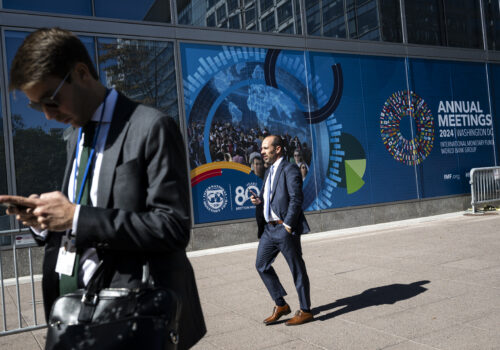
From US tariffs to Argentina’s crisis: The five important issues at next week’s IMF-World Bank Annual Meetings

By Hung Tran

The IMF and the World Bank will face five important issues, which span both near-term economic prospects and more fundamental, longer-term challenges confronting the global economy.

Argentina Financial Regulation

Econographics

Sep 18, 2025

China’s economy remains trapped in the doldrums

By Jeremy Mark

New statistics from Beijing describe a country mired in a slowdown. Efforts to juice the economy late last year have failed to stimulate sustained recovery.

China Economy & Business

Econographics

Sep 16, 2025

The Supreme Court’s decision on Trump tariffs will have lasting impact on US economic statecraft

By Stephanie Connor

Regardless of how the Supreme Court rules, the case will shape US economic policy for years to come.

Economy & Business Trade and tariffs

Econographics

Sep 15, 2025

The Fed struggles to balance Trump’s demands with economic reality

By Jessie Yin

The US Federal Reserve balances both inflation and employment as part of its dual mandate. Mounting political pressure could jeopardize its ability to maintain financial stability.

Economy & Business Macroeconomics

Econographics

Aug 25, 2025

Everybody wants a stablecoin, even China

By Ananya Kumar

From Beijing’s perspective, a successful offshore yuan-denominated stablecoin could replace some existing yuan transactions, increase the purchases of offshore bonds, and even make them technologically more efficient.

China Digital Currencies

Econographics

Aug 22, 2025

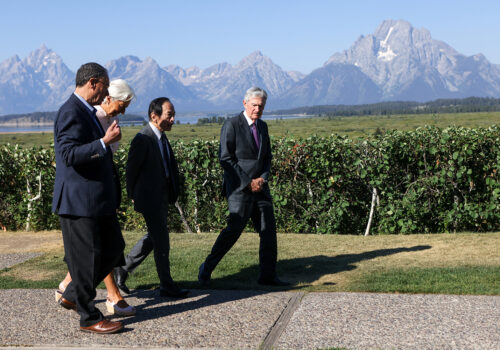
Trump’s challenges to the Fed’s independence loom over Jackson Hole Symposium

By Alisha Chhangani

As Trump tests the limits of what he can do, the credibility of the Fed—and by extension, global financial stability—is increasingly at risk.

Economy & Business Macroeconomics

Econographics

Jul 31, 2025

Beijing extends and pretends to deal with its mountain of local government debt

By Jeremy Mark

Beijing's three-year local debt restructuring plan fails to actually address the trillions of dollars weighing on local governments and will only cause greater problems down the road.

China Economy & Business

Econographics

Jul 29, 2025

Safeguarding Uyghur human rights: The US should leverage economic statecraft tools to end Uyghur forced labor

By Nazima Tursun

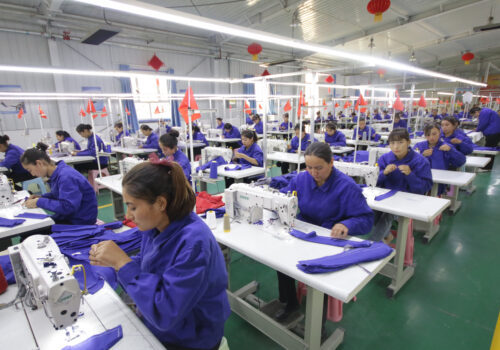
Through sanctions and the adoption of anti-forced labor legislation, the United States has led the global effort to combat China’s forced labor practices. While these measures have moved the needle in the fight against forced labor, widespread tariffs and the absence of new punitive measures targeting forced labor may cause progress to stagnate.

China Economy & Business

Content

EconoGraphics

Dec 12, 2016

Refer-Ending Renzi’s Government

By Filippos Letsas

On December 4, Italian voters rejected former Prime Minister Renzi’s constitutional reform referendum. The result of the referendum renewed concerns about the economic recovery in Italy, stability of the Euro, broader European economic integration, and rising populism across Europe. In the week following the referendum, global markets have focused their attention on the ailing Italian banking sector.

Economy & Business Europe & Eurasia

EconoGraphics

Nov 29, 2016

The United States Needs China and Vice-Versa

By Filippos Letsas

Over the last decade, China’s large holdings of US debt have helped the Bank of China keep the value of the renminbi artificially low. This strengthened China’s competitive position in the global markets, allowing for cheaper Chinese exports and contributed significantly to China’s large trade surplus, which now accounts for about half of the total US trade deficit.

China Economy & Business

EconoGraphics

Oct 25, 2016

CETA: Why “Comprehensive” Matters

By Filippos Letsas

On October 14th, the regional parliament of Wallonia, a French-speaking region of 3.6 million people in Belgium, voted to block the Comprehensive Economic and Trade Agreement (CETA), a proposed trade agreement between the European Union (EU) and Canada, which has been negotiated for over 7 years.

Economy & Business European Union

EconoGraphics

Oct 7, 2016

Europe′s Fiscal Burden in Focus

By Filippos Letsas

The European Union’s (EU) Stability and Growth Pact requires Eurozone countries to annually lay out their fiscal plans for the following three years. The European Commission (EC) then compares the member states’ reports with its own projections and those produced by independent bodies, such as the International Monetary Fund (IMF), to evaluate whether the member states are on track to reach their Medium-Term Budgetary Objectives (MTOs).

Economy & Business European Union

EconoGraphics

Sep 30, 2016

Myanmar: Post-Sanctions Landscape

By Filippos Letsas

On the occasion of Myanmar’s State Counselor Aung San Suu Kyi’s recent visit to the United States (U.S.), President Obama announced that executive sanctions on Myanmar would soon be lifted. This will grant Myanmar greater access to the U.S. market and encourage U.S. companies to invest in the country. Trade between the two countries remains at relatively low levels (i.e. $225 million in 2015), with U.S. investment to Myanmar accounting for only 0.2% of the country’s Foreign Direct Investment (FDI).

Economy & Business Financial Sanctions and Economic Coercion

EconoGraphics

Sep 13, 2016

TTIP = So (Ger)Many Benefits

By Filippos Letsas

As the most export-driven major economy in the European Union (EU), Germany stands to benefit greatly from a robust Transatlantic Trade and Investment Partnership (TTIP) agreement.

Economy & Business European Union

EconoGraphics

Jul 12, 2016

Taking Stock of European Banks: Improvements Amid Challenges

By Nathaniel Rome

Since the British referendum, Europe’s banking sector has come under renewed scrutiny from financial markets as well as European Union officials and finance ministers. A primary focus is on Italy - which has accumulated $400 billion in gross bad loans - and the EU-Italy talks about how to recapitalize the weak Italian banks.

Economy & Business European Union

EconoGraphics

Jun 29, 2016

Econographics – TTIP

By Nathaniel Rome

The United Kingdom’s (UK) vote last week to leave the European Union (EU) has raised questions about the future of the Transatlantic Trade and Investment Partnership (TTIP). TTIP is a trade agreement currently being negotiated by the United States (US) and the EU that will eliminate tariffs, reduce red tape, and set a new standard for international trade agreements. Following the Brexit vote, US Trade Representative Michael Froman and European Commissioner for Trade Cecilia Malmström released statements reaffirming their commitment to TTIP.

Economy & Business European Union

Bremain vs Brexit

Jun 21, 2016

London Riches Falling Down

By Nathaniel Rome

London is the undisputed financial capital of Europe, and is rivaled only by New York City for the top spot worldwide (Global Financial Centers Index). When competing on a level playing field, London outperforms other major European financial centers because of the superior human capital, infrastructure, and regulatory environment of the city. London dominates 78 percent of European FOREX trading and generates a trade surplus worth tens of billions of pounds (UK Office of National Statistics).

Economy & Business European Union

Bremain vs Brexit

Jun 9, 2016

Britannia, Rule the Trade!

By Nathaniel Rome & TK Spandhla

The decades following World War II experienced an explosion of global trade. The annual growth rate of global exports averaged 8 percent in the 1950s, 9 percent in the 1960s, and 20 percent in the 1970s (World Trade Organization). During this boom of global trade, the volume of UK exports grew in absolute terms. However, up until the mid-1970s, the UK trade growth lagged behind the global average.

Economy & Business European Union