Featured analysis

Latest analysis

Econographics

Jan 26, 2026

Africa enters 2026 facing a debt crisis. The answer lies in regional solutions.

By Juliet Lancey

The solution to debt crises in African nations lies in global and regional cooperation.

Africa Financial Regulation

Econographics

Jan 22, 2026

When will Wall Street’s tolerance for uncertainty run out?

By Jessie Yin, Josh Lipsky

In a decade of geoeconomic shocks, few events have truly shaken investor confidence. But Wall Street may be too complacent to political volatility.

Economy & Business Macroeconomics

Econographics

Jan 22, 2026

As markets turn volatile, leverage is back in the spotlight

By Hung Tran

Market turmoil has returned, highlighting how rising leverage plays a part in making the global financial system more fragile and vulnerable to shocks.

Economy & Business Financial Regulation

Econographics

Jan 15, 2026

What to watch as China prepares its digital yuan for prime time

By Alisha Chhangani

The changes China is implementing around the e-CNY signal a more mature phase for the digital yuan—and an overall shift toward a much broader geopolitical ambition.

China Digital Currencies

EconoGraphics

Jan 12, 2026

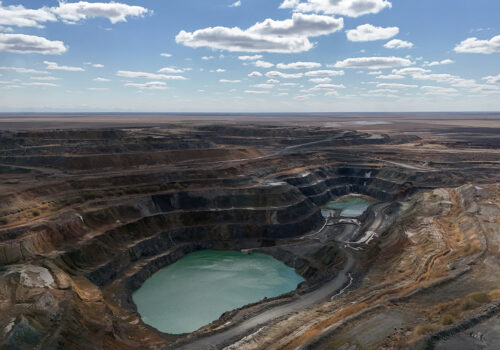
Rare earth mining could solve, not worsen, Central Asia’s water troubles

By Andrew D’Anieri

States in the region can capture a net “water dividend” by reinvesting mining revenues in water-saving infrastructure and technologies.

Central Asia Critical Minerals

Econographics

Nov 25, 2025

Why the Millennium Challenge Corporation is vital to the future of US competitiveness

By Sohan Dasgupta

The United States is leveraging its unmatched economic power to reshape global partnerships, secure critical resources, and counter adversaries. Through a retooled Millennium Challenge Corporation, Washington is forging strategic alliances, strengthening supply chains, and opening billion-person markets for American companies.

Economy & Business United States and Canada

Econographics

Nov 25, 2025

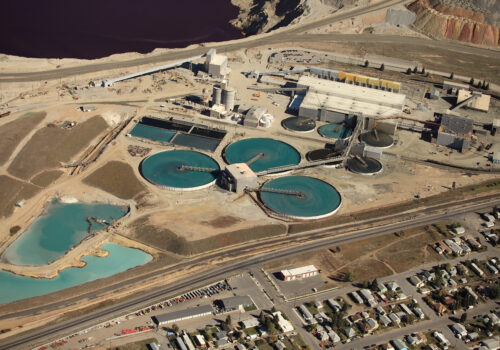
On critical minerals, the US needs more than just supply. It needs refining power.

By Bart Piasecki

Expanding global processing capacity remains a crucial—and currently missing—step in strengthening US supply-chain control and export competitiveness.

Critical Minerals Economy & Business

Econographics

Nov 13, 2025

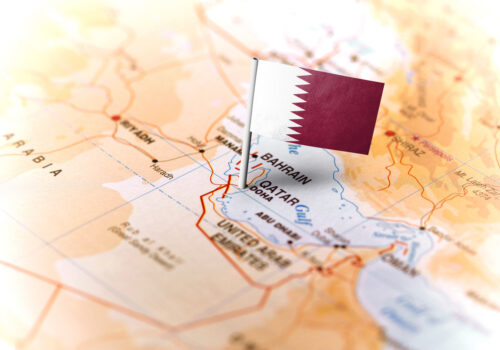
How the US can balance Qatar’s mediation role with the fight against terrorist financing

By Lesley Chavkin

Qatar has achieved an outsized role on the global stage, but the spotlight has come with persistent scrutiny of the tiny Gulf country’s efforts to counter the financing of terrorism.

Economy & Business Financial Crimes & Illicit Trade

Econographics

Nov 12, 2025

Yes, tech stocks have taken a hit. But the real danger lies elsewhere.

By Hung Tran

Tech stocks’ sharp selloff has grabbed headlines, but the real risk may be in tightening US dollar funding. As the Fed drains liquidity and repo rates surge above policy benchmarks, hedge funds and foreign banks—holding trillions in dollar assets—face rising pressure. The danger isn’t just market volatility, but whether global finance can withstand a squeeze in the world’s core funding system.

Economy & Business

Econographics

Nov 7, 2025

Without development finance, the United States can’t deliver on strategic investment

By Jessie Yin

The United States isn't the only traditional lender to move from aid to investment. But the current administration is going to struggle to achieve its strategic goals without effective development finance.

Economy & Business Inclusive Growth

Content

EconoGraphics

Jun 1, 2016

Not The Time to Falter: Economic Sanctions Against Russia

By Alvaro Morales Salto Weis

As the European Union (EU) prepares to unanimously extend its economic sanctions on Russia when they expire on July, it is a good opportunity to take a closer look. After Russia´s illegal annexation of Crimea and interference in Eastern Ukraine, the U.S. and the EU enacted economic sanctions in a coordinated manner, which were followed by other Allies and partners like Canada and Australia.

Economy & Business Europe & Eurasia

EconoGraphics

Apr 13, 2016

Europe’s Path to Budget Equilibrium

By Alvaro Morales Salto Weis & TK Spandhla

The European Union’s 28 member nations are required by Stability and Growth Pact to keep their budget deficits to within 3 percent of GDP. According to the European Commission forecast (as of winter 2016) six countries will exceed this level in 2016: the U.K., France, Spain, Greece, Croatia and Portugal. Romania will post a deficit at the threshold. This is an improvement from 2009 and 2010, when no fewer than 22 EU countries overstepped the deficit limit.

Economy & Business European Union

EconoGraphics

Apr 1, 2016

The European Refugee Surge: Transforming Challenges into Opportunities

By Alvaro Morales Salto Weis & TK Spandhla

Asylum applications to the European Union (EU) set an all-time record in 2015, more than doubling the 2014 figure, according to EUROSTAT. After the recent agreement between Turkey and the EU, the influx of refugees is expected to decrease significantly.

Afghanistan Europe & Eurasia

Bremain vs Brexit

Mar 24, 2016

A Costly Goodbye

By Alvaro Morales Salto Weis & TK Spandhla

On June 23, British citizens will decide on a referendum whether the UK stays or leaves the EU. The consequences of a vote to leave, or Brexit, could decide the UK’s place in the world for generations.

Economy & Business European Union

EconoGraphics

Mar 24, 2016

The French Way of Reforms

By Alvaro Morales Salto Weis & TK Spandhla

France’s economy has struggled to grow in recent years, expanding by a mere 1.1% in 2015. Meanwhile its unemployment rate has stubbornly lingered around 10%, with a slight upwards trend.

Economy & Business Fiscal and Structural Reform

EconoGraphics

Mar 14, 2016

A Tale of Two QE’s

By Alvaro Morales Salto Weis & TK Spandhla

On March 10, the European Central Bank (ECB) announced an expansion of its Quantitative Easing Program (QE), increasing the amount of government bonds it buys monthly from €60 billion to €80 billion. It also extended the range of assets it purchases to include investment grade non-bank corporate bonds. On top of that, the ECB lowered already negative deposit interest rates further down, to -0.4%, and its main interest rate to 0%. So, why have Central Banks embraced QE?

Economy & Business European Union

EconoGraphics

Mar 4, 2016

TTIP: Window of Opportunity is Closing

By Alvaro Morales Salto Weis & TK Spandhla

The 12th round of negotiations for the Transatlantic Trade and Investment Partnership (TTIP) concluded last week in Brussels on an optimistic tone. The Chief Negotiator for the EU announced significant advances in most negotiating areas, including on the Investor-State-Dispute Settlement (ISD), which had been frozen for months. His US counterpart expressed confidence in reaching an ambitious deal in the second half of the year, rejecting calls for a “TTIP lite”.

Economy & Business European Union

EconoGraphics

Feb 25, 2016

TTIP: Cutting the Red Tape

By Global Business and Economics

The 12th round of negotiations for the Transatlantic Trade and Investment Partnership (TTIP) unfolded this week in Brussels between the EU and their American counterparts. At a time when both parties are stuck with weak growth (and persistent high unemployment in Europe), the importance of TTIP cannot be understated.

Economy & Business European Union

EconoGraphics

Feb 23, 2016

Tug of Budget War in Brussles

By Global Business and Economics

In the past weeks, the Portuguese government and EU authorities have engaged in a tug of war over the Portuguese budget proposal for 2016. The European Commission (EC) warned the newly elected anti-austerity government that it risked “serious non-compliance” with the EU’s fiscal rules. Finally, Lisbon narrowly avoided becoming the first Eurozone country to have its budget rejected by Brussels, as it agreed to additional tax hikes and spending cuts.

Economy & Business European Union

EconoGraphics

Feb 16, 2016

Dreaming Big: Size Matters

By Global Business and Economics

Why are Google, Apple or Facebook American-born but not European? Concerns about Europe’s lack of innovative start-ups prompted the European Commission (EC) to launch the Entrepreneurship 2020 Action Plan, aimed at bolstering entrepreneurship culture.

Economy & Business Europe & Eurasia