Where the Russia-Ukraine peace talks stand after Abu Dhabi
GET UP TO SPEED
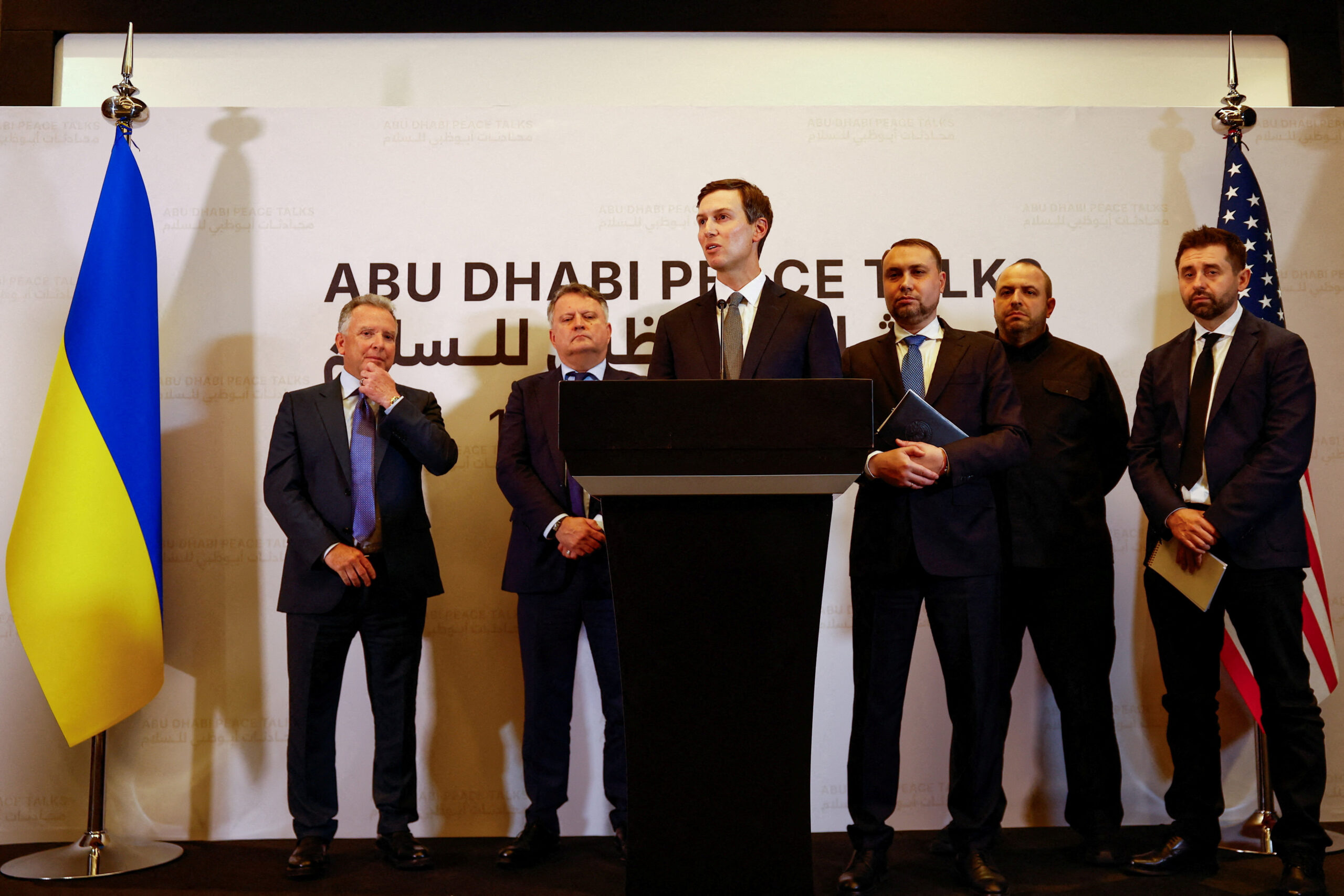
They’re talking again. Two days of negotiations to end Russia’s war in Ukraine concluded in Abu Dhabi on Wednesday, the first trilateral US-Ukraine-Russia talks since February. While Russia and Ukraine agreed in principle to a prisoner swap, there were no major breakthroughs on a ceasefire or territory. However, the talks did put Europe’s security architecture onto the agenda, even as European officials remained outside the negotiations for now. With US envoys slated to head to Moscow tomorrow, then to Dublin, our experts assess what changed, what didn’t, and what comes next.
TODAY’S EXPERT REACTION BROUGHT TO YOU BY
- John Herbst (@JohnEdHerbst): Senior director of the Eurasia Center and former US ambassador to Ukraine
- Michael Carpenter (@mikercarpenter): Distinguished fellow with the Atlantic Council’s Eurasia Center, Europe Center, and Transatlantic Security Initiative, former senior director for Europe at the National Security Council, and former US ambassador to the Organization for Security and Co-operation in Europe (OSCE)
- Oksana Nechyporenko (@ksanan): Nonresident senior fellow with the Atlantic Council’s Eurasia Center and former chief of staff and head of the advisory group to the Ukrainian prime minister
- Jörn Fleck (@JornFleck): Senior director of the Atlantic Council’s Europe Center and a former European Parliament staffer.
The immediate outcomes for Ukraine
- John says that Russia and Ukraine agreeing to a large-scale prisoner exchange is “a success” and “certainly good news for Ukraine given the abuse their prisoners endure in Russian hands.”
- But Michael notes that “predictably, the talks ended without a breakthrough” on a broader settlement. Nor was there any apparent progress on a ceasefire, which remains a priority for Ukrainian negotiators. “Ukrainians are enduring yet another dark and cold winter” that began in October, Oksana adds, so “everyone is dreaming of a ceasefire.”
- Ukrainian President Volodymyr Zelenskyy welcomed discussions of security guarantees for Ukraine, John points out, with Washington reportedly floating guarantees modeled on NATO’s Article 5. But Russian President Vladimir Putin would likely “seek additional territorial cessions from Ukraine in exchange,” John warns.
- A US negotiator reported “a little bit of flexibility” from Russia and Ukraine in private conversations but gave no specifics, John tells us. His conclusion: “None of this suggests that a clear step toward peace was made.”
European architectural plans
- Ahead of the Abu Dhabi talks, US negotiators said they would broaden the agenda to include Europe’s security architecture, which Russia has long pressed for. This was “a mistake,” Michael says. “Whenever Moscow is unwilling to make concessions, it reverts to demanding a renegotiation of European security, just as it did in late 2021 and early 2022.”
- Europeans, too, are also “extremely concerned” about Washington entertaining Moscow’s longstanding demands, Jörn says. Russia’s interest in the topic, he argues, is “thinly disguised code for questioning, and where possible undermining,” Central European countries’ NATO membership and the Alliance’s “transatlantic link.”
- Michael notes that Europe’s post–Cold War security architecture was built around major arms control agreements, ranging from the Treaty on Conventional Armed Forces in Europe to New START, and the OSCE as a forum for addressing concerns. “Russia has violated or abandoned every one of these agreements and dismantled the architecture we built together,” Michael adds, lending little credence to the Kremlin’s reliability as a negotiating partner now.
- “Ukraine is an intrinsic part of any new European security,” Oksana argues. She doesn’t necessarily see broadening the negotiations as a distraction from ending Russia’s war but warns that the Kremlin “can always use any excuse to distract from negotiations” if it has no intention of reaching a deal.
Sign up to receive rapid insight in your inbox from Atlantic Council experts on global events as they unfold.
A European seat at the table
- Washington’s decision to broaden talks to include Europe’s security architecture also came with a push to bring Europeans into negotiations, despite Russian resistance. John sees this as a “gesture to Ukraine after all the US concessions over the past month to Moscow,” including the White House agreeing to the diesel deal with Russia and waiving the Lindsey Graham sanctions.
- Jörn welcomes a European seat at the negotiating table but sees the outcome more as “European damage control over the last few days.” And Russia remains strongly against including Europeans in talks, adding “insult to injury,” Jörn notes, when Russia’s chief negotiator “effectively called for a Yalta-type agreement” after the talks.
- To secure Russia’s agreement on European participation in the next round, US envoys Jared Kushner and Steve Witkoff are heading to Moscow tomorrow to meet with Putin, before they fly to Dublin to meet with Zelenskyy. But the US mindset needs to change heading into those meetings, Michael argues. “Until US negotiators recognize that ending this war requires applying asymmetric pressure on Russia, the fighting will continue and peace will remain elusive.”
Related Reading
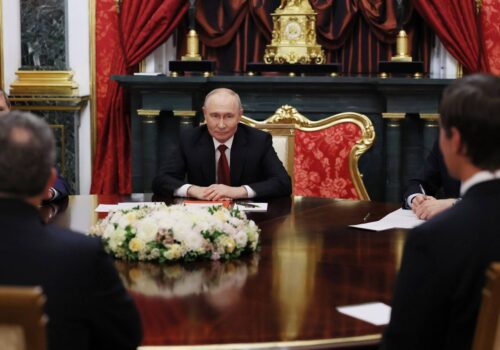
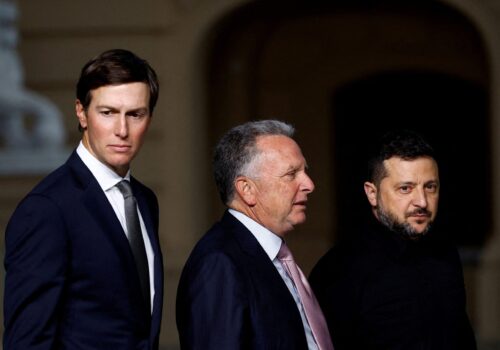

Image: Jared Kushner, US President Donald Trump's son-in-law, speaks during a briefing with David Arakhamia, head of the Ukrainian parliament's majority faction, Rustem Umerov, the head of the Ukrainian delegation, US Special Envoy Steve Witkoff, and Sergiy Kyslytsya, First Deputy Head of the Office of the President of Ukraine, on the second day of UAE-hosted trilateral talks between the United States, Russian and Ukrainian delegations in Abu Dhabi, United Arab Emirates, November 11, 2026. (Rula Rouhana via Reuters Connect)