Click to read the transcript
This transcript is AI-generated. Check against delivery.
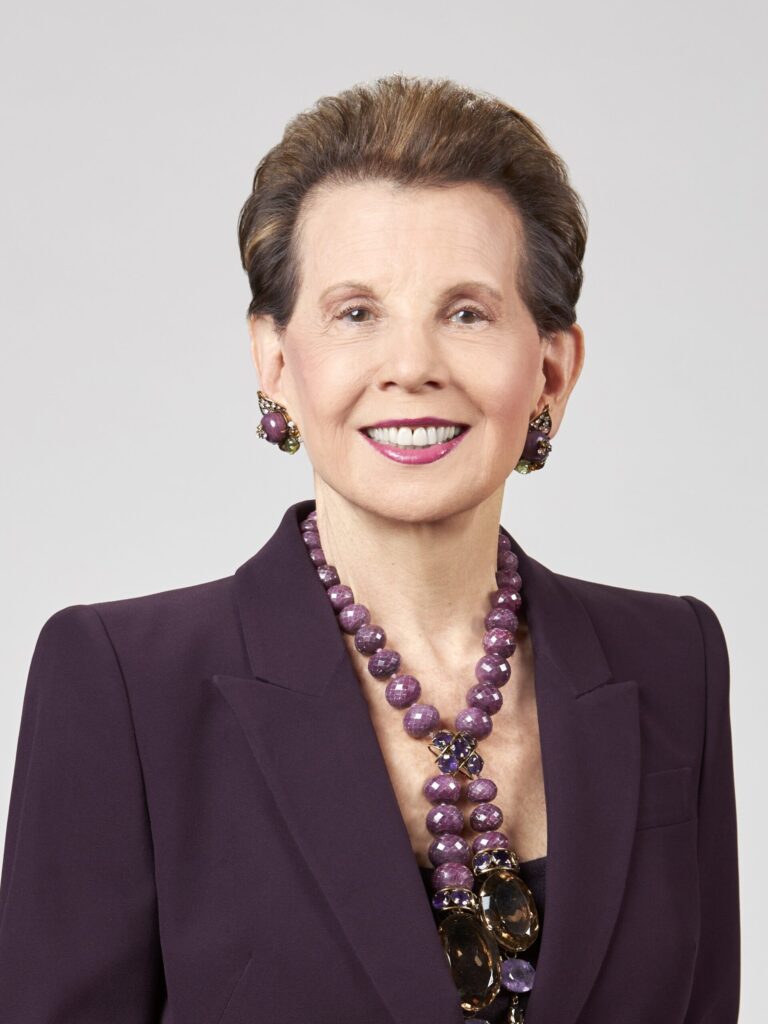
Adrienne Arsht:
Good morning. Welcome to the Atlantic Council in New York. For more than six decades, the Atlantic Council has brought together leaders across government, business, civil society, and the international community to address the forces shaping our world.
And increasingly, one of those forces is sports. Sports is about competition and performance. That we know. But its reach today extends far beyond the field of play—or do we now call it the pitch?
It brings people and cultures together. It creates economic opportunity. It drives investment in infrastructure and technology. It really creates connections between people and countries, where traditional channels sometimes struggle to do so.
That reality demands us to think differently about the world of sports. And so today, I’m delighted to announce the launch of the Atlantic Council’s Power of Sports Center.
That’s just the beginning. I believe deeply in the Council, and I am proud to be an inaugural founding partner of this effort, thus my shirt.
As an avid Formula One fan, and I always carry the schedule with me, I believe deeply that sport not only brings us together but teaches us so much.
In Formula One, there is speed, excitement. Actually, I think probably there is speed and excitement in everything we do. Sometimes a little too much.
But in sports, we also focus so much on resilience. Resilience: The ability to adapt under pressure, recover from setbacks, and keep moving forward. Resilience is one of the sport’s most powerful lessons. And if you want to check that out this weekend, in Azerbaijan, there is an F1 race.
Sports also creates opportunities for cooperation. We saw that firsthand during this summer’s World Cup when the Atlantic Council’s World Cup Ambassador Dialogues brought together ambassadors from competing countries. Those countries would never have shown up on a panel under foreign policy.
But when these were brought together, they discussed not only the matches but also how sports deepens ties between their nations. As executive vice chair of the Atlantic Council, I’ve had the privilege of watching the Council continually expand the ways in which it brings people together around global challenges and opportunities.
The Power of Sports Center gives us another powerful platform to do just that—bring together athletes, policymakers, business leaders, investors, innovators—and don’t forget doctors and scientists—and many others to explore how sports can help shape a more connected and prosperous world.
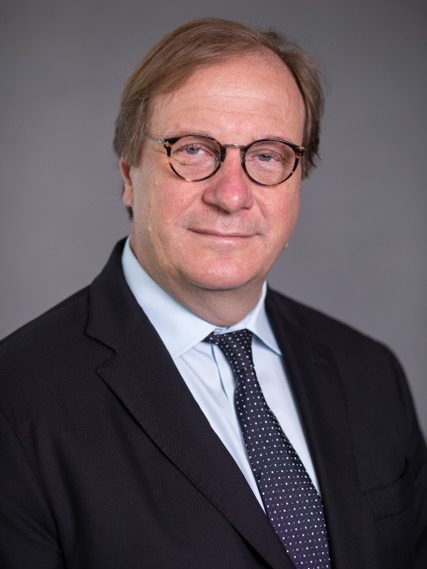
This conversation today builds upon the work we have already been doing in sports. Fred Kempe, who will moderate today, has led the Atlantic Council as president and CEO since 2007.
Before coming to the Council, Fred spent more than twenty-five years at The Wall Street Journal. His career has always sat at the intersection of global affairs, leadership, and international engagement.
He’s also an avid sports fan. He took me to a baseball game and we sat right behind home plate. It was wonderful. And I think he’d never, never miss an opportunity to play tennis.
Today we have with us a very important player and also now executive.
I want to say that unfortunately, Dimitar Berbatov cannot be with us. He got stuck in Madrid due to flight and technology disruptions. I think some cables and other things caused that to happen, but we will bring him back. So, we can focus on Cindy Parlow Cone.
She is president of the US Soccer Federation and a trailblazer in American soccer. She was a member of the 1999 FIFA World—Women’s World Cup championship team and two Olympic gold medal-winning teams. She is a member of the National Soccer Hall of Fame.
I asked her where she kept her medals and she said, “well, they’re huge. I bring them out when I visit schoolchildren.” I wish we could have qualified for that. But her leadership on so many levels, as we will hear as Fred and she have a conversation, is really important. It teaches us a lot, and it’s a great kickoff for our Power of Sports Center. And with that, I will turn it over to Fred and Cindy.
Frederick Kempe:
Greetings to all of you in the room and greetings to everyone in our virtual audience around the world. So Adrienne, thank you so much for that great introduction. Cindy, I have to tell you one thing. When we launched the Adrienne Arsht Latin America Center, we were keeping it secret. And I just got to know Adrienne, but I got to know her well enough to code name the project the Lindsey Vonn Project. And if any of you don’t know, Lindsey Vonn, you know, is one of the most famous downhill skiers in history. And it was because I learned that if I were on the slopes with Adrienne, I would not want to be in front of her, and I would want to be in her slipstream. So if you want to get things done, then you get them done with Adrienne Arsht. And that also applies to the Power Sports Center.
The Atlantic Council has always been interested in forces that shape the world, beyond traditional boundaries of government and geopolitics, and sports is increasingly one of those forces.
I had one of the leaders of the Atlantic Council come to me and say, you know, there’s war in Ukraine, war in the Middle East, tensions with China and the US, issues regarding artificial intelligence, you know, why are you launching a Power Sports Center at a time when the world is in such torment, where there’s such great volatility? And I said, exactly for that reason.
Here’s a force that brings people together, brings people together diplomatically, brings people together, millions together on a fair playing field. And win or lose, people play the sport again with each other and want to continue doing it. So there’s much that we’re going to be doing in this center that will be announced. But it is certainly all around sports for good, and there’s no one who represents that better than Cindy.
It’s a global industry, but its influence goes well beyond the business of sport, touches diplomacy, international relations, shapes cities and infrastructure, drives technology and investment, creates opportunities for young people and communities, and perhaps most importantly, it has a remarkable ability to bring people together across borders, cultures, and differences.
Many in the world seemed to think that the United States had some xenophobia. And then the World Cup came along and the world saw cities throughout the United States embrace teams of every culture. And suddenly the world knew that that’s not who Americans were and it was sport who sent that message.
The opportunity we see with the Sports Center is to bring together people shaping sport, with people using sport as a platform for broader impact to explore what’s possible at that intersection.
We’re fortunate that this center begins with an extraordinary group of founding partners. And before we get started in our conversation, I want to first recognize and thank our founding partners. Atlantic Council Executive Vice Chair Adrienne Arsht, again, thank you. Atlantic Council Chairman John F.W. Rogers of Goldman Sachs, he’s on a plane coming back right now. Atlantic Council Board Member, Member of the Executive Committee of our board, Larry Di Rita, head of global public policy and president, Greater Washington, DC, Bank of America. It’s great to have Bank of America in as a founding partner.
In a few minutes, one of our international advisory board members, Ebru Özdemir of Limak Holding, will be here. She’s the chairperson of one of the biggest infrastructure companies in Turkey, which is at the moment working on a 105,000-capacity stadium in Barcelona, which I will attend for the Clásico on October 25th.
And it’s an honor here to have Sacha Dragić, the CEO of Superbet Technology. Sacha, thank you so much for joining as a founding partner. And then Tarek Mansour, founder and CEO of Kalshi, will join us as well as a founding partner. So, each of these founding partners brings a different perspective, network, and set of experiences to the effort. Together, they represent the kind of cross-sector leadership that we believe is essential to understanding and harnessing, the power of sports, and they are a global group. So, we’re deeply grateful for their partnership.
Let me say a couple of things about Cindy. Then I’m going to tee up a video message from Luis García, and then we’ll go into our conversation.
So sports is one of the few forces powerful enough to turn strangers into teammates, spectators into communities, and national competition into shared humanity. Few leaders understand that power from as many perspectives as Cindy Parlow Cone. She scored seventy-five goals for the United States, won a World Cup, two Olympic gold medals, entered the National Soccer Hall of Fame. Then she moved, as Adrienne said, from the field to the boardroom, becoming the first woman and the first former senior national team player to lead US Soccer, helping to achieve an equal pay agreement, which we’ll talk about, and guiding the sport at a moment of unprecedented possibility.
So, as we launch the Atlantic Council’s Power of Sports Center, I can think of no better person to help us explore not only how sport produces champions, but how it can produce stronger communities, greater equality, and a better world. So, it’s just wonderful to have you here.
But before we go there, Luis Javier García-Sanz, who is—any of you who are soccer fans know that name. Spanish former professional footballer who played as a versatile winger, attacking midfielder for Barcelona, Atlético Madrid, Liverpool. He’s best remembered for his time at Liverpool, where his knack for scoring crucial goals helped the team win the UEFA Champions League in 2005, FA Cup 2006. He’ll be a part of this new center.
Ebru, I’ve already thanked you for for your founding partnership. It’s great to have you here. So let’s tee up Luis García sending us a short video message of congratulations.
Luis García:
Hello, everyone. Luis García here. I just wanted to say congratulations to everyone at the Atlantic Council on the launch of the Power of Sport Center. I’ve been lucky enough to spend all my life around football as a player, as an analyst, and now as a club executive. And one thing has been always very clear to me: Sports are about much more than what happens on the field. Football has taken me all over the world. I play with teammates from different countries, compete in front of fans from every kind of background, and I see how quickly sports can create connections between people.
You can walk into a stadium almost anywhere in the world, and even if you don’t speak the same language, you already have something in common. I think that’s what really matters, especially today. Sports can open doors and start conversations, can give young people opportunities, bring communities together, and help people see each other differently. So congratulations once again to the Atlantic Council, and I’m excited to see where you take this. And I wish the Power Sports Center every success.
See you soon.
Frederick Kempe:
Isn’t that wonderful? And if I don’t have this wrong, and you probably recognize from the screen, he’s now a broadcaster and TV personality as well. And so he’s made the transition.
It is such an honor to talk to you. Let’s go back to origins. So from Tennessee.
Cindy Parlow Cone:
Memphis, Tennessee.
Frederick Kempe:
Memphis, Tennessee. So take us back, not to the final whistle or the medal ceremony at the Olympics, but the first moment when you understood that soccer might change your life.
Cindy Parlow Cone:
Oh, I don’t think I really realized what sport was doing for me until I went off to college. I went to the University of North Carolina. I grew up in a time where I wasn’t told how good I was all the time. I coached youth for a long time, and they grew up being told a very different story than I was told. And so, first of all, I didn’t know that I was that good at sport.
But I was this very quiet, reserved kid. And sport was the one place, specifically soccer, where I could be myself. I didn’t have to apologize for wanting to be the best. I didn’t have to apologize for being strong or smart. I was actually celebrated for those things. And it was the place where I felt like I belonged the most.
And so growing up and being a quiet, reserved kid and finding my place in sport and then learning a bunch of different leadership styles through sport, as you talk about, I literally grew up on the national team. I joined the national team at seventeen years old. I was surrounded by the most incredible leaders I have ever seen: Julie Foudy, Carla Overbeck, Mia Hamm, and so many others. I could tell stories for days on what they taught me. I think I don’t know that there was a moment that I realized sports was going to change my life. But I think if I had to choose one, it was when I finally figured out that I could get an education at a top university because I was good at my sport.
Because it opened up doors for me.
Frederick Kempe:
Yeah, that’s a moment to—it’s a very powerful moment. Let’s go to another powerful moment. You were part of the legendary—and Adrienne talked about that—you were part of the legendary 1999 World Cup team, and you won two Olympic gold medals. When you look at that, what sets apart a bunch of great players and a team that wins championships?
Cindy Parlow Cone:
Well, I think it’s no different than business. Right? What sets a great business apart from an average business? What our winning teams were is we brought together a bunch of very talented, hardworking, passionate people. We aligned behind goals, and then we set up an environment for each individual to succeed so that the team could then be successful. And I think the other piece that often gets overlooked is that we deeply cared about each other and each other’s success.
In some instances with the national team, in some events, I was a starter. And other times I was a reserve, a substitute coming off of the bench. And regardless of what my role on the team was, it wasn’t like I was ever wishing for someone to break their leg so I could sub into the game. Right? There was a genuine care for all of my teammates. And so if we can create that in sport and then create it in business and in our schools and in society, I really think sport can lead the change.
That’s why I’m so excited by what you guys are doing here, because I think sport can be something that really unites the world and brings us together and help change the world.
Frederick Kempe:
Thank you for that, Cindy. So one other personal question. I’ve always been interested in learning through adversity, learning through defeat. Was there a defeat period you were not playing well, the team was set back, that taught you as much as a victory?
Cindy Parlow Cone:
Yeah, I’m not of the mindset that you have to lose to learn lessons. I don’t like losing. I’m still not—to this date, I’m not good at it. I’m a work in progress. I’m trying. But I think one of the things that kind of shifted my thinking was when I was sixteen years old, I got cut from the U-21 national team.
And I went back to one of my coaches and I was like, that coach doesn’t know anything. They don’t know what they’re talking about, even though I was only sixteen trying to make this U-21 team, I thought I should make it. And my coach was calm and looks at me and was like, Cindy, did the coach give you any information of things that you needed to work on? I was like, yeah, yeah, but it doesn’t matter. He was like, well, what were those things? And so I rattled them off. And so he’d be like, come back on Monday. We’ll start working on those.
And we did. And slowly but surely, I was seeing why he wanted me to work on those things. But fast forward to about six months later, I actually ended up making the women’s national team. And this was the team that was moving to Florida to go into residency camp.
So I left the University of North Carolina to live and train with all of my national team teammates. I still had a poster of them up on my wall at home. So remember, I was seventeen at this point. And so I think being cut from that team and having also a mentor kind of put me in my place that I did have things that I needed to work on in my game and that if I worked on those things, maybe I could achieve more. So I think that was probably the biggest setback of my career.
Frederick Kempe:
Thank you for sharing that. This conversation is definitely not about me, but the biggest setback of my career is that I wasn’t good enough to be a professional sports player.
And I loved basketball. I was too short to be a forward, too slow to be a guard, and so I had to go into journalism and international affairs. That wasn’t a bad outcome.
So one of the things you’ve done that’s really magnificent when we talk about the Atlantic Council Power Sports Center, is we want to work on sports for good. You helped produce the first agreement by a national federation to equalize World Cup prize money between its women’s and men’s teams.
So what’s harder, performing in an Olympic final when millions are watching or achieving that equal pay outcome?
Cindy Parlow Cone:
No question about it, achieving equal pay. Playing in the Olympics was easy compared to that.
Frederick Kempe:
And tell us how it came about. I think the story of someone going from being an athlete to being a negotiator of this major situation and now running what you’re running, those aren’t necessarily the same skills. So walk us through it.
Cindy Parlow Cone:
I would disagree. I think they are a lot of the same skills. But I’ll take you back to that moment in time. This was March of 2020. You guys might remember something else that was happening in our world during this time.
I became president of US Soccer basically the day our world was shutting down due to COVID. My predecessor had resigned because US Soccer had just filed a very offensive legal brief in our litigation over equal pay. And so, here I was, thrown into the leadership position at US Soccer, and I immediately thought about everything that I wasn’t. I had never been an executive at a Fortune 500 company. Hell, I’d never been an executive of any type anywhere.
I didn’t have my MBA. And I went through like, I don’t, I don’t, I don’t. And it was a moment in time, and I sat back. I was like, yeah, okay, those things are true. I don’t have any of those experiences, but what do I bring to US Soccer? And how do I help in this situation?
And I had been a part of high-performing teams my entire life. I’d either been on them, put them together, rebuilt them, because I also had a pretty long coaching career as well.
And I knew what high-performing teams looked and felt like. And so, I knew that I was going to need a kick-ass team to turn this thing around at US Soccer.
And so that’s what I started doing.
Frederick Kempe:
By the way, Cindy asked me ahead of this program whether she could use a curse word. So I was waiting for that moment.
Cindy Parlow Cone:
True story. And so I’m thrust into this equal pay fight, of which I had already been in for two decades. And so, now I’m president and I’m like, okay, I believe in equal pay. Let’s do this. We’re going to get this done quickly.
It was not a quick process. We had two things going on. We had the women’s national team litigation against us for equal pay. And then we had the CBA negotiations that we had with both our men’s and our women’s national teams. And to solve the women’s national team litigation was fairly simple. It was coming up with a number for back pay, which was fine. But I wanted to solve equal pay forever, not just for what had happened in the past.
And so, as we were getting into the CBA negotiations with the men’s team and our women’s team in US Soccer, it was improving. It was proving to be very challenging because I wanted to get to one CBA, one collective CBA.
And that became pretty evident pretty early on that that was not going to work because the women wanted different things from the men. The men wanted different things from the women. And so I said, okay, I get that, and that makes sense to me. But when you look at the terms, I want a fourth grader to be able to tell me that these are equal.
And so we went back and forth a while and every time we negotiated with the men’s team, I would invite the women’s team to observe.
And every time we negotiated with the women’s team, the men’s teams and their lawyers could observe as well. So trying to be entirely transparent.
And things weren’t moving as quickly as I would like. And that’s rarely the case. Nothing ever moves as quickly as I would like it to. But I’m still working on that.
But finally, I drew a line in the sand. And I told both teams and I told the media that I would not sign a CBA without FIFA World Cup prize money being equalized. And I didn’t really care how we did it.
We could help them figure it out or they could get together and figure it out. And I have to give them credit. They kept coming back to the table. I don’t know how many of you guys have done CBA negotiations. But I’m sure many of you in this room have been in negotiations of some sort. But at one moment, it feels like it’s all coming together, and the next moment, it feels like it’s all falling apart, and then you start building it back up, and then it feels like it’s falling apart again. This was a process for two years.
But then we came to an agreement. And I should backtrack a little bit. The biggest challenge for US Soccer is that FIFA sets the World Cup prize money, not US Soccer. We’re kind of a pass-through to the teams. And so the women wanted to receive the same amount of prize money as if they had won the Men’s World Cup. And as you can imagine, the prize money difference that FIFA allots for the Men’s World Cup versus the Women’s World Cup is drastically different, and we weren’t in a position financially to make that up, make up that difference.
And so what we ultimately decided to do was pool and share. So the Men’s World Cup just happened. So we’ll pool the winnings from the Men’s World Cup from this year. Women’s World Cup is next summer in Brazil. So whatever the women win in that World Cup will go into the same pool and will be split evenly among the players that participated in each tournament.
Frederick Kempe:
Thank you for that. So I want to get to questions. And we started a little bit late because because of traffic in New York and security measures and all the other things that make this week so special.
You talked about the pay. US Soccer does so much. We’re not able to talk about everything you do, but one of the things you address is making the game more accessible.
In America, elite youth soccer, even though all you really need—and part of the reason soccer is such the sport all around the world—is a ball, and you need a couple of goals.
But it’s also expensive and can be difficult to access. How do you convert great spectacles—World Cup, Los Angeles Olympics coming, the 2031 World Cup—how do you convert that into lasting opportunities for children who currently have no safe to place to play. I know you’ve made that neighborhood-level access a legacy goal of your own.
Cindy Parlow Cone:
Yeah, so I mentioned earlier that sport was kind of my refuge. It’s where I belonged. I played basketball, I played softball, I was on the swim team, and I played soccer.
And obviously soccer was the sport that I chose to go with, although I did love basketball a lot and played through high school. But soccer was the sport for me. And I think if the prices that it costs to play elite soccer were the same cost when I was growing up, I would have never had the opportunity. My family could not have afforded it. And so, it has become a mission of mine to make sure that every kid that wants to play our game has the opportunity to play our game.
So, we launched the Soccer Forward Foundation under US Soccer. And so, this is the legacy of the 2026 Men’s World Cup that we just all experienced to make sure that every kid can play. So, we’re working to get soccer into every elementary, middle, and high school by 2032.
Personally, I know I’m the leader and the person that I am today because of all the life lessons I learned through this sport. And I want every kid to have that opportunity to learn those lessons as well. They don’t have to be an elite player or go on the national team or play professionally.
But I’m a true believer that sport is a great unifier and it also teaches our young kids so many life lessons. And I’m a believer in that through sport, we’re teaching the next future leaders of our cities, of our states, of our country, and of the world. And so, we know with women executives, over 90 percent of women executives played sports.
Frederick Kempe:
Hmm.
Cindy Parlow Cone:
Right? So, I don’t know what the numbers are on the men’s side, but I think through sport and building the leadership we want to see in the world and the change that you’re trying to make and impact, on society across the globe, I think a wonderful way to do that is through sport and exactly what you’re doing as well. So Soccer Forward Foundation is our legacy for 2026. And so if anyone wants to help me get soccer to every school so that every kid can grow up with a ball at their feet, I would love to hear from you.
Frederick Kempe:
We’d like to take that on. We’ll help. We’ll do what we can do to support that and many other projects around sports for good.
So we have time for just a couple of questions. Can I see who we’ve got here? We’ll go here and then we’ll go here. And if you could stand so the camera can see you, that would be great, and introduce yourself and your question.
Mark Boris Andrianič:
Thank you very much. Good morning, everyone. My name is Mark Boris Andrianič. And first of all, wow, what a story. Thanks so much, Cindy, for sharing your inspiring and powerful story. We need more leaders like you. And I’m not just talking about the world of sports, but the world of politics and all the other worlds.
Frederick Kempe:
This is a former minister of the Slovenian government.
Mark Boris Andrianič:
Come to Slovenia, we need you. Fred, and the second big thanks goes to you and Adrienne for your leadership in setting up this center.
Having known you for many, many years, I know that your passion for sports is absolutely real. So, thank you so much for making this a reality.
And allow me to say a couple of words on behalf of the Super Technologies, a company that is very proud and excited to become the inaugural founding partner of the Power of Sports Center. This is a leading European sports entertainment and technologies group.
It was started in Romania, but then expanded throughout Central and Eastern Europe. And now also globally. It’s a company that has strong ties with the United States and, as I mentioned before, global ambition. We’re very happy to have our founder here today together with his wife Augusta and the entire leadership.
And let me also add that Sacha, the founder, together with his wife Augusta, they’re also through Superbet Foundation, the largest investors in the world of chess globally, supporting this game all around the world and bringing it closer to everyone, especially the younger generation.
So on the behalf of the entire team—
Frederick Kempe:
And hoping to get it into the Olympics.
Mark Boris Andrianič:
Absolutely, that’s our next big objective. So we’re excited to be part of this. We look forward to welcoming all of you in Europe, where I hope the next step of this center will be. And yes, Good luck, and we’re super happy to support you and make this a great success.
Frederick Kempe:
Thank you so much. So I don’t see a question in that one, but thank you for—thank you for that endorsement. There we go.
Bob Castro:
Thank you for that, because it’s a great lead-in. I’m Bob Castro, formerly in the Secretary of State’s Office of Global Partnerships. Cindy, you and I met on the field of the Congressional Game a few years ago, which when I was a Capitol Hill staffer, we envisioned.
Now, spouse of a US ambassador to a soccer-loving country who is herself a varsity athlete. And we’ve done a lot of successful things. Yesterday, I was approached by an ambassador from a country we were previously posted in about bringing their national team to the US and perhaps having an exchange. And I reminded him, and I would love to get your take, on the opportunities, not just at that big stage, not just at that big level, but to build diplomacies, I think—when Adrienne and I have spoken before, this is the vision of what this activity is with the Atlantic Council—to get, and not just under-17 or under-20 national teams, but youth on exchanges.
I, as a former national referee program member, got to referee in five or six different countries. And so what can we do to encourage this at a more grassroots level to get people-to-people exchanges, with real people, not just stars? As we know, there are more and more US national team members, women and men, playing in Europe and playing in other countries. How can we leverage that, please?
Cindy Parlow Cone:
Well, I think that international exchange is really important, and mostly we see it at the elite level. But I was—about ten years ago, I took a trip to India, and I worked with an organization called Goals for Girls, and we taught leadership and life skills through the game of soccer, football for those of you.
And so we brought girls from different slums in India to this event. And we basically just ran exercises and taught different leadership skills through those exercises. And I remember distinctly one day after I’d run a session, This nine-year-old girl comes up to me with tears in her eyes.
And I was like, oh no, what did I do? And I was asking her if she was okay, like, does she need something? What’s wrong? And she looks at me, tears coming down her face.
At that moment, she had realized that she could be a leader. It was quite literally a foreign concept to her. That she and her slum in India could somehow have a positive impact on somebody else’s life.
And I think a lot of times we think about scale instead of each individual impact and then the ripple effect of that one person’s impact.
So fast forward, this nine-year-old girl decided that she wanted to make a change in her community. And in her community, there were massive piles of trash as you walk down the street. And so she got a group of her friends together and figured out how to clean up this trash so that they would actually have a place to play soccer.
So now think about all the other kids that are having that opportunity to play soccer, to learn those leadership skills, those life skills. And we have no idea the ripple effect of that, right? And so, I think as you all move forward, and as we move forward with Soccer Forward, and working together, we find a way to measure that impact and to try to really understand the ripple effect of the things that we think are small, right?
Cleaning up a pile of trash in a slum of India. But what is the ripple effect of that and the impact of that not only in India, not only in that slum, but across the world? And I think that’s what we’re both looking to do, to have that impact both locally and internationally.
Frederick Kempe:
Thank you for that. So, great. We’ve run over time, but I’m going to take one last question even though people in the back may be a little bit upset at me. I also want to greet Dhani Jones, with a dozen years as a linebacker with the NFL, and he’s a person who’s also devoting his life to doing sport for good. Did you have a question, or—okay, we’ll take the question there. Let’s pick up these two, then we’re going to slow. I’ll be really fast.
Dhani Jones:
Thank you so much, Fred. Thank you so much, Adrienne, for all the good work that you’re doing. Cindy, thank you so much. You know, one of the things you talked about was refuge as a young person within the world of sports, and I think that’s a powerful message. But I wonder, as I am a father of four beautiful children who thrive on the football field, the soccer field, the basketball court, in the world of sports, and I think about how dollars and cents at the NIL level will impact their refuge.
When I go to different games and I see parents, and sometimes I might be a little bit out of control, but I’m working on myself. As you said, you work on yourself. Some of them are so passionate because the fact that they believe that their next paycheck is coming from their child.
And so when we think about the world of NIL and we think about refuge, how do you think that begins to shape the mindset of the young person that is now going into a game of which they profess to love when it might actually be the parent that professes to go after their paycheck.
Frederick Kempe:
And one last question here, and I apologize that we can’t—we’ve run out of time.
Audience Question:
Hi, thank you. Thanks, Fred, and thank you, Cindy, for being here today. My question is, your negotiations with women’s sports and women for equal pay in sports, That was just one instance, but we haven’t achieved it yet. So, what are the other stumbling blocks that you’re finding? And are you watching the new season of Ted Lasso?
Cindy Parlow Cone:
Yes. So, we have achieved equal pay at US Soccer. But this is a bigger problem than at US Soccer, right? And so, I’m hopeful that while we’re leading the way, that there are more federations and more organizations, sports teams and otherwise, that follow our lead. That’s the ripple effect that I’m talking about, right? And so, it’s not just one action, it’s the follow-on actions. And as I was talking to some of your people, Fred, and as you guys are starting to move forward on this, talking about it and getting people together to talk and collaborate is a great, but we need action, right?
And so, not just getting to be a think tank, but actually going and doing and really having that impact to change. And so, yes, we still have a lot of work to do as a society, both here in the US as well as globally, on equal pay, equal treatment. But hopefully we’re making progress, and we can’t let perfection get in the way of progress. So let’s celebrate every step that we’re taking toward that as well.
Frederick Kempe:
And for the international people in our audience, and I do see a lot of other questions, but I’m sorry, we won’t get to them. The international people in our audience who don’t know what NIL is, perhaps you can also answer Dhani’s question because it could change the nature even of high school sports.
Cindy Parlow Cone:
Yeah. NIL is name, image, and likeness. So many of you may have heard of this because of what’s going on in the university level in the US, and name, image, likeness, specifically with football and basketball mostly, but other sports are included as well.
And we’re trying to figure out now that sports just aren’t a way to get a free education and go to school. Or that you have to be at the elite level to go to the professional. Like, you can now get name, image, and likeness deals at the university level, which is a whole other path for individuals to get paid money now. It used to just be that you got your school paid for and you got a free education.
Now you get paid to go to school, which I want back pay. But yeah, I mean, it is a forever-changing landscape right now at the college level.
But then at the senior—at the professional level, name, image, and likeness is key moneymaker for a lot of the professional athletes.
Frederick Kempe:
A good thing or a bad thing?
Cindy Parlow Cone
Well, I like that the athletes are getting paid for what they’re doing. I do think I think that especially at the college level, there needs to be some parameters, right? And figuring out what are the right parameters there. But I think for the most part, name, image, likeness is a good thing.
My concern as a female athlete is to make sure that female athletes are getting similar or equal name, image, and likeness deals. And so I think there’s a lot to learn about name, image, and likeness. And I think we’re just getting started on that. And I think there’s a lot more to come and it’s going to keep moving.
Frederick Kempe:
Wonderful. So thank you all for being here. Thank you so much to our founding partners. We have now launched the Atlantic Council Power of of Sports Center, I can’t think of anyone better to help us launch it than, than Cindy Parlow Cone. So thank you so much.
Cindy Parlow Cone:
Thank you, Fred. Thank you, Adrienne.
The Atlantic Council is proud to announce the launch of The Power of Sports Center, a new convening and content platform highlighting the geopolitical importance of the $2 trillion global sports industry.
On Tuesday, September 22, at 10:00 a.m. ET, US Soccer President Cindy Parlow Cone joined Atlantic Council President and CEO Frederick Kempe for a conversation on the future of global football and the growing role of sport as a force for leadership, diplomacy, and international engagement, with a special video message from legendary soccer star Luis García. They discussed how the Power of Sports Center will bring together heads of state, athletes, commissioners, owners, CEOs, investors, and innovators to build partnerships, advance ideas, and drive global development.
This event is part of our #ACinNY series, happening on the sidelines of the United Nations General Assembly. See the rest of the line-up and register for more events here.
If you are interested in attending one of our events in-person, email events@atlanticcouncil.org and indicate in the subject line the event for which you’d like to register.

Welcome Remarks
Adrienne Arsht
Executive Vice Chair and Founder, Adrienne Arsht Latin America Center; Adrienne Arsht National Security Resilience Initiative, Scowcroft Center for Strategy and Security,
Atlantic Council
Speakers

Cindy Parlow Cone
President,
US Soccer

Luis García
Football analyst, ESPN;
CEO, Johor Darul Takzim FC;
Former UEFA Champions League winner
Moderated by
Frederick Kempe
President and CEO,
Atlantic Council
Stay connected
Atlantic Council TV
Watch this event and more content on ACTV
Follow the conversations shaping our world. Available on all major platforms.
Follow the conversation on X